Choosing the right clamp meter can make solar troubleshooting faster, safer, and far less frustrating. For PV work, the best tools combine high DC voltage ratings, true-RMS accuracy, and features built for real-world field testing.
Below, we focus on clamp meters for solar installations that help installers and technicians measure current, verify power, and work confidently around modern solar arrays.
Best 10 Clamp Meters for Solar Installations Picks for 2026
Utility-PV Pro
Fluke 393 FC Solar Clamp Meter
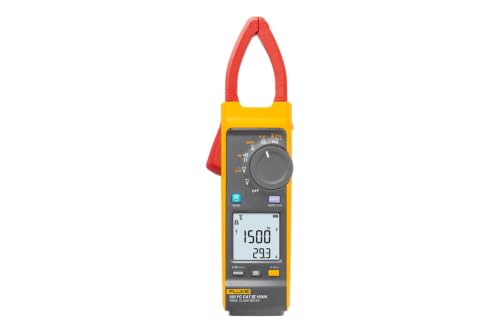
- CAT III 1500 V rating for solar safety
- Thin jaw for tight combiner-box access
- IP54-rated and includes iFlex
Best For: Technicians needing a rugged, high-voltage solar clamp meter
High-Voltage Meter
Megger DCM1500S Solar Clamp Meter
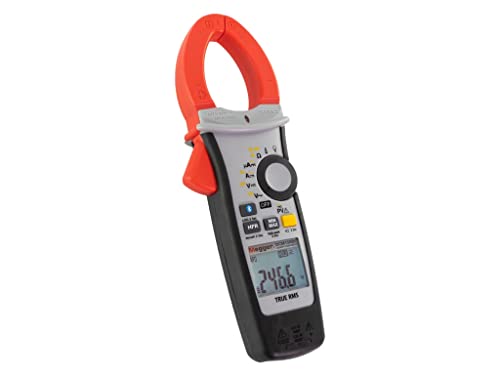
- 2000 V DC rating for solar work
- Measures up to 1500 A AC/DC
- Smart Hold with auto ranging
Best For: Solar pros needing a high-capacity meter for voltage and current checks
Test-and-Measure Bundle
Fluke 393FC with Irradiance Kit

- CAT III 1500 V rated clamp meter
- Includes irradiance and temperature measurement
- MC4 test leads for solar testing
Best For: Installers wanting a clamp meter bundle with added solar test tools
Connected Field Meter
KPS DCM8500PV Bluetooth Solar Clamp Meter

- 2000 V DC and 1500 V AC measurement
- Bluetooth app support for logging
- True RMS with broad diagnostic functions
Best For: Field technicians needing wireless reporting and multi-function testing
PV Field Pro

- CAT III 1500 V safety for PV work
- Thin jaw fits crowded combiner boxes
- Includes iFlex and MC4 test leads
Best For: Installers needing a solar-focused clamp meter kit with PV leads
High-Voltage Value Pick
Triplett CMS1500 Solar Clamp Meter

- Up to 1500VAC and 2500VDC testing
- True RMS with LPF, Lo Z, and inrush capture
- Includes leads, probe, batteries, and case
Best For: Teams wanting broad solar diagnostic features in one clamp meter
Industrial High-Voltage Pick
Klein CL910 2000V 2000A Clamp Meter

- Measures DC voltage up to 2000V
- Handles AC/DC and inrush current up to 2000A
- Backlit display with integrated work light
Best For: High-power solar and renewable energy installations
Solar PV Field Meter
Flir CM78-PV Solar Clamp Meter

- 1000A clamp with CAT III 1500V rating
- True RMS, VFD, and LoZ for field accuracy
- Includes MC4 PV plugs and IR thermometer
Best For: Installers who want PV-ready measurements and thermal checks
Rugged Solar HV Meter
Jonard ACM-1500DC Solar Clamp Meter
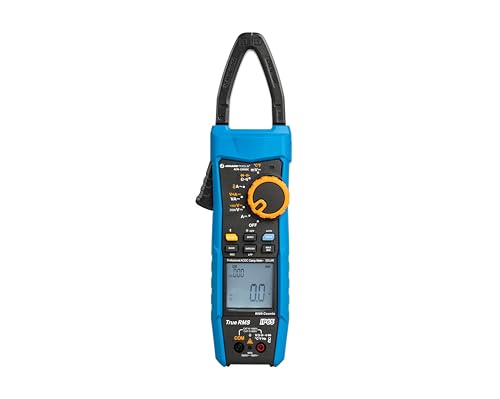
- Measures up to 2500V DC and 999.9A AC/DC
- Bluetooth logging with onboard data storage
- IP65-rated housing for outdoor use
Best For: Technicians who need rugged high-voltage testing and logging
All-in-One Solar Tester
ZIBOO 393 True RMS Clamp Meter

- 1000A AC/DC with True RMS and zero function
- 1500V DC support for solar and industrial work
- Adds inrush, VFD, LoZ, NCV, and temperature tests
Best For: Techs wanting one meter for PV and general diagnostics
Utility-PV Pro – Fluke 393 FC Solar Clamp Meter
If you want clamp meters for solar installations that are built around safety and everyday field efficiency, the Fluke 393 FC is a strong fit. It combines CAT III 1500 V rating, a thin jaw for tight combiner-box access, and DC power measurement for practical PV troubleshooting.
Best For: Technicians who need a rugged, high-voltage clamp meter for solar install and service work.
Pros:
- CAT III 1500 V rating supports high-voltage solar work
- Thin jaw helps reach cables in crowded combiner boxes
- IP54 rating adds outdoor durability
- DC power measurement, audio polarity, and visual continuity streamline checks
Cons:
- Focuses on core solar electrical testing rather than broad specialty features
- Not the most feature-heavy option for data logging or app-based reporting
Overall, this is a practical solar clamp meter for crews that value safe high-voltage handling and fast access in tight PV enclosures. The included iFlex and Fluke Connect support add useful versatility without complicating the tool.
High-Voltage Meter – Megger DCM1500S Solar Clamp Meter
For clamp meters for solar installations where voltage headroom matters, the Megger DCM1500S is built with a strong solar-focused spec list. It supports up to 2000 V DC, 1500 V AC, and 1500 A AC/DC, giving installers a broad measurement range for PV field work.
Best For: Solar professionals who want a high-capacity clamp meter for voltage and current checks.
Pros:
- 2000 V DC capability suits demanding solar applications
- 1500 V AC support broadens measurement flexibility
- Measures up to 1500 A AC/DC
- Smart Hold and auto ranging help simplify routine testing
Cons:
- Supplied notes focus on core electrical specs, with fewer workflow extras listed
- No mention of app connectivity or irradiance/temperature accessories
This is a straightforward solar clamp meter for users who prioritize voltage range and current capacity over extra bundled features. Its smart hold and auto-ranging functions make it a practical choice for faster on-site measurements.
Test-and-Measure Bundle – Fluke 393FC with Irradiance Kit
If you need clamp meters for solar installations plus more complete PV test coverage, this Fluke bundle adds irradiance and temperature tools to the 393FC platform. It keeps the same CAT III 1500 V safety rating and thin-jaw access, while expanding into solar irradiance, ambient temperature, module temperature, and array orientation checks.
Best For: Installers who want a clamp meter bundle with solar irradiance and temperature measurement tools.
Pros:
- CAT III 1500 V rated clamp meter for solar safety
- Thin jaw helps reach tight combiner-box wiring
- Includes irradiance meter and PV module/ambient temperature measurement
- MC4 test leads are included for solar-compatible testing
Cons:
- Bundle is more specialized than a basic clamp meter-only setup
- Uses a larger accessory kit, which may be more than some users need
This kit makes sense when the job calls for more than electrical readings alone. For solar commissioning or inspection tasks, the added irradiance and temperature tools can reduce the need to carry separate instruments.
Connected Field Meter – KPS DCM8500PV Bluetooth Solar Clamp Meter
For clamp meters for solar installations that need modern logging and broad diagnostics, the KPS DCM8500PV stands out with Bluetooth and a solar-oriented measurement range. It measures up to 2000 V DC, 1500 V AC, and 600 A AC/DC, and adds app-based recording for inspections and maintenance.
Best For: Field technicians who want wireless reporting and a multi-function solar clamp meter.
Pros:
- Measures up to 2000 V DC and 1500 V AC for solar applications
- Bluetooth works with the KPS Link App for monitoring and reporting
- True RMS testing includes resistance, capacitance, frequency, temperature, continuity, diode, and low-current signals
- HFR and non-contact voltage detection support safer field testing
Cons:
- Lower current range than some higher-capacity clamp meters
- Feature-rich design may be more than needed for simple checks
This is a strong option when documentation and multi-function testing are part of the workflow. Its backlit display, Bluetooth logging, and high safety ratings make it well suited to demanding PV field jobs.
PV Field Pro – Fluke 393FC Solar Clamp Kit
If you need clamp meters for solar installations, this Fluke 393FC kit is built for safer high-voltage work in PV arrays and crowded combiner boxes. It combines CAT III 1500 V protection with DC power measurement and MC4 test leads for regular testing, measurements, and troubleshooting.
Best For: Solar technicians who want a high-voltage clamp meter kit with PV-focused test leads and compact jaw access.
Pros:
- CAT III 1500 V rating supports safer solar testing.
- Thin jaw helps reach cables in tight combiner boxes.
- Includes 18-inch iFlex and MC4 PV test leads.
- Supports DC power measurement plus audio polarity and visual continuity checks.
Cons:
- Focused on solar and electrical test use rather than general-purpose convenience features.
- No display or ruggedness details were provided beyond the safety rating.
Overall, this is a purpose-built solar testing kit for installers who value high-voltage safety and PV-specific accessories. The thin jaw and included leads make it especially practical for routine field work on solar power plants.
High-Voltage Value Pick – Triplett CMS1500 Solar Clamp Meter
Triplett CMS1500 1000A AC/DC Solar Clamp Meter | True RMS, Measures up to 1500VAC/2500VDC
Check Price On AmazonAmong clamp meters for solar installations, the Triplett CMS1500 is aimed at high-voltage photovoltaic testing with a wide measurement range and True RMS accuracy. It can measure AC/DC current up to 1000A, supports up to 1500VAC/2500VDC, and adds practical tools like LPF, Lo Z, and inrush capture for field diagnostics.
Best For: Solar installers and maintenance teams that need a feature-rich clamp meter with high-voltage capability and broad test coverage.
Pros:
- Measures up to 1500VAC and 2500VDC for photovoltaic work.
- True RMS helps with noisy or non-sinusoidal waveforms.
- Includes inrush capture, LPF, Lo Z, and NCV detection.
- Comes with test leads, thermocouple probe, batteries, and carrying case.
Cons:
- CAT IV-600V rating is lower than the headline solar voltage limits.
- At 2.4 pounds, it is not the lightest option listed.
The CMS1500 stands out for packing many diagnostic functions into one solar-ready meter. If you want broad utility for installation and maintenance work, it offers a strong balance of range, safety features, and included accessories.
Industrial High-Voltage Pick – Klein CL910 2000V 2000A Clamp Meter
If your search for clamp meters for solar installations points toward large-scale systems, the Klein CL910 is designed for demanding high-voltage applications like solar panel installations and wind turbine systems. It measures DC voltage up to 2000V and current up to 2000A, while True RMS and auto-ranging help you work through complex waveforms with less guesswork.
Best For: Technicians working on high-power solar farms and other industrial renewable energy systems.
Pros:
- DC voltage measurement up to 2000V for high-demand solar work.
- 2000A AC/DC and inrush current capability.
- Auto-ranging True RMS improves accuracy on complex loads.
- Backlit display and integrated work light improve visibility.
Cons:
- IP40 protection is less weather-resistant than higher-IP alternatives.
- Features are geared toward industrial high-voltage use, not compact everyday utility.
The CL910 is the most heavy-duty option in this group for high-voltage solar and renewable energy work. Its combination of 2000V measurement, 2000A current range, and strong visibility features makes it well suited to tougher jobsite conditions.
Solar PV Field Meter – Flir CM78-PV Solar Clamp Meter
For clamp meters for solar installations, the FLIR CM78-PV is built for fast field checks on PV strings and high-voltage circuits. It combines a 1000A clamp, CAT III 1500V rating, TRMS accuracy, LoZ, VFD mode, and included MC4 PV plugs and test leads, so it covers the core measurements installers need on solar work.
Best For: Solar installers who want a high-voltage clamp meter with PV-ready accessories and thermal spotting in one tool.
Pros:
- Measures solar string DC power and performance up to 1500 kVA
- CAT III 1500V rating with CAT III-1500V MC4 PV plugs and test leads included
- True RMS, VFD mode, and LoZ mode for more dependable readings
- Built-in non-contact IR thermometer with laser pointer for spotting overheating components
Cons:
- Battery-powered handheld meter, so runtime depends on battery condition
- More specialized than a basic clamp meter if you only need standard electrical testing
Overall, the CM78-PV is a strong fit when solar work calls for both high-voltage measurement and quick troubleshooting of hot spots. Its PV-focused accessories and thermal feature make it especially practical for installation and maintenance checks.
Rugged Solar HV Meter – Jonard ACM-1500DC Solar Clamp Meter
Among clamp meters for solar installations, the Jonard ACM-1500DC stands out for its high-voltage range and outdoor-ready build. It measures up to 2500V DC and 999.9A AC/DC, adds True-RMS reading, Bluetooth data transfer, and IP65 protection, making it suited to demanding PV and high-voltage jobs.
Best For: Solar and high-voltage technicians who need a rugged clamp meter with Bluetooth logging and weather resistance.
Pros:
- Measures up to 2500V DC and 999.9A AC/DC
- CAT IV 600V and CAT III 1500V safety ratings with double insulation
- IP65 dust and water resistance for tougher outdoor environments
- Bluetooth and onboard storage for saving and transferring test results
Cons:
- Large conductor capacity is useful, but the meter is still aimed at specialized work
- Requires AA batteries, so you’ll want spares on hand for longer job days
This model is a good match when the jobsite is harsh and documentation matters. The combination of high-voltage capability, data storage, and IP65 protection makes it especially practical for solar field diagnostics.
All-in-One Solar Tester – ZIBOO 393 True RMS Clamp Meter
If you want clamp meters for solar installations that also handle broad troubleshooting tasks, the ZIBOO 393 gives you a wide feature set at a practical level. It measures up to 1000A AC/DC, supports 1500V DC for solar and industrial work, and adds inrush, VFD, LoZ, NCV, temperature, capacitance, and resistance testing.
Best For: Installers and service techs who want one meter for PV checks plus general electrical diagnostics.
Pros:
- 1000A AC/DC True RMS clamp meter with zero function for DC accuracy
- 1500V DC capability suited to solar/PV and other high-voltage applications
- Includes inrush, VFD, LoZ, NCV, temperature, capacitance, and resistance tests
- Backlit LCD and built-in flashlight help in dark panels and cramped spaces
Cons:
- CAT III 1000V / CAT IV 600V rating is lower than some 1500V-focused solar meters
- Feature-rich design may be more than needed for simple clamp-only jobs
The ZIBOO 393 is a flexible option when you need more than current measurement from a solar clamp meter. Its mix of high-voltage support and troubleshooting modes makes it useful for installation, maintenance, and general electrical service work.
How We Picked the Best Clamp Meters for Solar Installations
We prioritized tools suited to photovoltaic work, not general-purpose electrical use. That means looking for high DC voltage ratings, accurate AC/DC current measurement, true-RMS performance, and safety certifications appropriate for solar service environments. We also favored meters with practical field features such as backlit displays, Bluetooth or app connectivity, visual continuity indicators, and rugged housings for jobsite use.
Quick Comparison: What Matters Most
When comparing Clamp Meters for Solar Installations, the most important spec is whether the meter is truly rated for the voltages you will encounter in PV strings and combiner boxes. After that, compare current range, clamp jaw size, display readability, and any solar-specific extras such as irradiance measurement or DC power calculation. Connectivity can help with documentation, but it should not come at the expense of safety or measurement clarity.
Key Buying Factors for Clamp Meters for Solar Installations
Voltage and Safety Rating
Choose a meter with a CAT rating and DC voltage ceiling that match your work. For many solar applications, 1500V DC capability is a major advantage, while higher DC ratings may suit specialized systems. Safety ratings should align with the equipment and procedures used on site.
DC Current Accuracy and True-RMS
Solar diagnostics often involve both DC and AC measurements, so accurate clamp performance matters. True-RMS support is useful for systems with non-sinusoidal loads, inverters, and mixed electrical conditions.
Solar-Specific Functions
Some Clamp Meters for Solar Installations add irradiance measurement, PV test leads, power calculations, or polarity indicators. These features can reduce setup time and help verify whether low output is caused by the array, wiring, or environmental conditions.
Durability and Usability
Look for bright displays, reliable backlighting, sturdy jaws, and a grip that is comfortable with gloves. IP ratings can be helpful for dusty or damp rooftops and service calls.
Who Should Buy Which Clamp Meters for Solar Installations?
Installers and commissioning techs should lean toward high-voltage, solar-specific meters with clear safety ratings and added test functionality. Service technicians who work across mixed systems may prefer a versatile clamp meter with strong AC/DC range and easier everyday readability. If you document jobs frequently, Bluetooth-enabled models can simplify reporting and recordkeeping.
For most buyers, the best choice is the meter that matches your system voltage, measurement needs, and workflow. The right clamp meter should make solar testing safer, quicker, and more repeatable without overcomplicating the job.