Choosing the right clamp meter can make electrical troubleshooting faster, safer, and far less frustrating. For DIYers, the best models balance clear readings, useful auto-ranging features, and dependable safety ratings.
This roundup focuses on practical DIY clamp meters for home projects, appliance checks, and basic electrical diagnostics—without paying for features you may never use.
Best 10 DIY Clamp Meters Picks for 2026
Home DIY AC Tester
AstroAI 2000 Counts Clamp Meter

- AC current only; no DC current measurement
- Adds NCV, live wire test, capacitance, and continuity
- Includes backlight, flashlight, data hold, and batteries
Best For: DIY users who mainly need AC current and basic electrical checks
Compact Electrician Pick
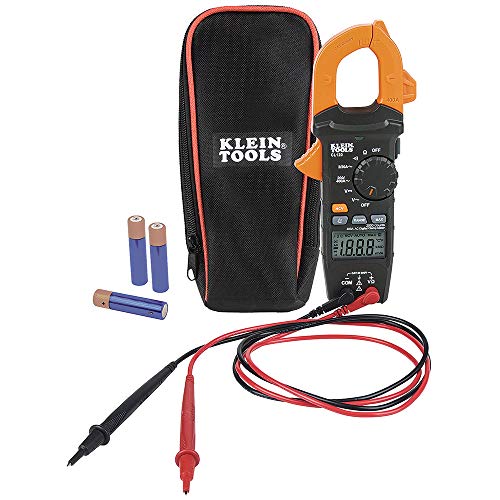
- AC current via clamp; voltage, resistance, continuity via leads
- Integrated NCVT and backlit display for easier troubleshooting
- Includes case, safety-capped leads, and AAA batteries
Best For: Compact everyday electrical testing with a trusted brand
Feature-Rich Diagnostic Tool

- TRMS meter measures AC/DC current up to 600A
- Real-time curve recording helps track intermittent faults
- Rechargeable battery and color TFT display
Best For: Advanced DIY and automotive troubleshooting with DC current support
Compact Value Pick

- Palm-sized meter for AC current up to 400A
- Adds AC/DC voltage, resistance, continuity, and diode testing
- Includes backlight, data hold, max lock, and AAA batteries
Best For: Portable everyday testing for home, automotive, and appliance work
Versatile Everyday Choice
AstroAI 4000 Counts Blue Clamp Meter
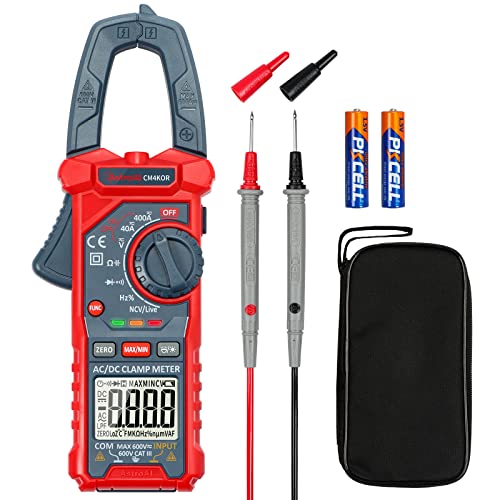
- AC/DC current and voltage plus multiple test modes
- NCV alerts, backlight, flashlight, data hold
- Compact jaw design for narrow spaces
Best For: DIY users needing a practical all-purpose clamp meter
Feature-Rich Tester
KAIWEETS HT206D True-RMS Clamp Meter

- True-RMS for non-linear loads and added accuracy
- LowZ and LPF help reduce ghost voltage issues
- Includes temperature testing and NCV detection
Best For: Users who need advanced testing for motors and VFDs
Compact Backup Pick
AstroAI 4000 Counts Black Clamp Meter
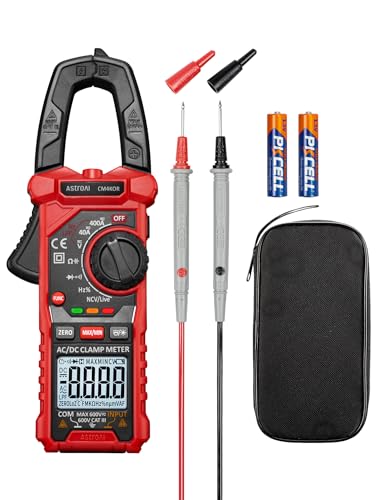
- Same broad AC/DC measurement set as the blue model
- NCV alerts plus backlight and flashlight
- Slim body and large jaw for tight spaces
Best For: DIY users wanting a compact general-purpose clamp meter in black
Smart AI-Powered Pick
KAIWEETS Smart Digital Clamp Meter 600A TRMS

- AI auto-measures multiple electrical values
- 600A True RMS with 6000 counts
- Extra-large 1.42" jaw and NCV support
Best For: DIY users and beginners needing an easy all-in-one clamp meter
Budget AC-Only Option
AstroAI Digital Clamp Meter 2000 Counts

- Measures AC current and common electrical values
- Includes NCV, live wire test, and backlit LCD
- Does not test DC current
Best For: Home users focused on basic AC troubleshooting
Versatile D-Jaw Choice
KAIWEETS Digital Clamp Meter KC604

- AC/DC current, voltage, and temperature support
- D-shaped jaw opens to 1.1 inches
- Backlight, flashlight, and lead storage
Best For: DIYers needing broad measurement coverage in a compact meter
Home DIY AC Tester – AstroAI 2000 Counts Clamp Meter
If you want a practical DIY clamp meters option for basic electrical troubleshooting, this AstroAI model covers the essentials without getting too complicated. It handles AC current, AC/DC voltage, resistance, capacitance, continuity, diode checks, live wire tests, and NCV, making it a flexible pick for household projects and general repairs. Just note that it does not test DC current, and current readings require clamping around a single conductor, not the full power cord.
Best For: Home users who need a versatile, easy-to-carry clamp meter for AC current checks and everyday electrical diagnosis.
Pros:
- Measures AC current plus AC/DC voltage, resistance, capacitance, continuity, diode, live wire, and NCV
- Includes data hold, max/min, auto shut-off, backlit LCD, flashlight, and continuity buzzer
- Non-contact voltage testing adds a useful safety check for quick troubleshooting
- Comes with AAA batteries, test leads, and a storage bag
Cons:
- Cannot measure DC current
- Current measurement requires clamping a single wire, not the entire cord
- Not the most advanced option for users who need deeper diagnostic features
This is a sensible starter-level clamp meter for DIY work where AC current and general electrical testing matter most. Its feature set is broad enough for common home and light industrial tasks, while the included safety and convenience features make day-to-day use straightforward.
Compact Electrician Pick – Klein Tools CL120 Clamp Meter
The Klein Tools CL120 is a straightforward choice for DIY clamp meters buyers who want a compact, trusted tool for core electrical checks. It measures AC current through the clamp, while AC/DC voltage, resistance, and continuity are handled with test leads. The integrated NCVT in the jaw and backlit display make it practical for home troubleshooting and electrician-style work.
Best For: Users who want a compact clamp meter for AC current testing and everyday voltage and continuity checks.
Pros:
- Measures AC current, AC/DC voltage, resistance, continuity, and NCVT
- Auto-ranging helps select the proper measurement range
- Backlit display improves visibility in low light
- Includes carrying case, safety-capped test leads, and 3 AAA batteries
Cons:
- Designed for AC current measurement rather than DC current clamping
- More limited in scope than multifunction models with temperature or data logging
- Optional magnetic hanger requires separate accessories
For buyers who want a practical, compact meter from a familiar brand, the CL120 keeps the feature set focused on common electrical tasks. It is a clean fit for basic diagnosis where accuracy, portability, and easy readability matter more than advanced analysis tools.
Feature-Rich Diagnostic Tool – FNIRSI DMC-100 Clamp Meter
Among DIY clamp meters, the FNIRSI DMC-100 stands out for users who want more than a basic readout. It measures AC/DC current up to 600A, supports TRMS, and adds voltage, resistance, capacitance, frequency, temperature, NCV, live wire testing, continuity, and diode checks. The real-time curve recording and color TFT display make it especially useful when you need to watch a circuit change over time.
Best For: Technicians and advanced DIY users who want detailed diagnostics, logging, and DC current capability.
Pros:
- TRMS clamp meter with AC/DC current up to 600A
- Real-time curve recording plus stored historical data for troubleshooting intermittent faults
- 2-inch TFT color screen with adjustable brightness and dual themes
- Rechargeable 1500mAh battery with Type-C charging
Cons:
- Voltage measurement must be done with the test leads
- More complex than a simple basic clamp meter for casual users
- Advanced features may be more than needed for quick household checks
This is the most diagnostics-focused option in the group, especially if you need DC current measurement and trend tracking. For automotive, RV, and home repair work, the display, recording features, and rechargeable design make it a strong fit for troubleshooting sessions.
Compact Value Pick – KAIWEETS KC400 Clamp Meter
If you want DIY clamp meters in a smaller, more portable format, the KAIWEETS KC400 is built around easy everyday use. It measures AC current up to 400A, AC/DC voltage, resistance, continuity, and diode polarity, with auto-ranging and a simple FUNC button for quick switching. The compact body and included batteries make it an approachable choice for household, automotive, and appliance work.
Best For: Users who want a compact, general-purpose clamp meter for home repairs and small electrical jobs.
Pros:
- Measures AC current, AC/DC voltage, resistance, continuity, and diode checks
- Palm-sized body is easier to carry than many traditional clamp meters
- Backlight, data hold, max value lock, and auto power-off improve usability
- CAT III 600V rating and included AAA batteries add convenience
Cons:
- 2000-count display is less detailed than higher-count diagnostic meters
- AC current range tops out at 400A
- Best suited to routine testing rather than deeper analysis
The KC400 keeps things simple and portable, which is helpful if you want one meter for common household and vehicle checks. Its feature set covers the essentials well, making it a practical pick when convenience matters more than advanced recording or specialty functions.
Versatile Everyday Choice – AstroAI 4000 Counts Blue Clamp Meter
For DIY clamp meters shoppers who want one tool for common electrical checks, this AstroAI model covers a lot of ground without getting complicated. It measures AC/DC current and voltage, plus resistance, capacitance, frequency, continuity, diode, and live wire tests, making it practical for household troubleshooting and basic industrial work.
Best For: DIY users who want a compact, multi-function clamp meter for general electrical troubleshooting.
Pros:
- Measures AC/DC current, AC/DC voltage, resistance, capacitance, frequency, and continuity
- Includes NCV detection with sound and light alarms for quick voltage checks
- Backlit LCD, flashlight, data hold, max/min, and auto power off add convenience
- Large jaw opening and slim body help in narrow spaces
Cons:
- Uses a 4000-count display, which is less detailed than higher-count models
- Current measurement still requires clamping around a single wire, not the whole cord
This is a solid all-around pick if you want a compact clamp meter with broad measuring functions and helpful everyday features. Its safety rating and NCV alerts make it especially useful for common home and workshop checks.
Feature-Rich Tester – KAIWEETS HT206D True-RMS Clamp Meter
If you want DIY clamp meters with more measurement and protection features, the KAIWEETS HT206D stands out. It adds True-RMS accuracy for non-linear loads, along with LowZ and LPF functions to help reduce ghost voltage issues and improve readings on variable frequency drive signals.
Best For: Users who need a more advanced clamp meter for motors, VFDs, and mixed home or workshop testing.
Pros:
- True-RMS design for more accurate readings on non-linear loads
- Measures AC/DC current, AC/DC voltage, frequency, duty cycle, resistance, capacitance, continuity, diode, and temperature
- LowZ and LPF help with ghost voltage and variable frequency drive measurements
- NCV detection, red-warning backlit display, flashlight, and K-type thermocouple included
Cons:
- More features may be more than casual users need
- Current measurement still requires clamping around one wire only
This is the most feature-heavy option in the group, especially if you deal with motors or other situations where True-RMS and filtering matter. The 36-month service also adds peace of mind for a tool that may see frequent use.
Compact Backup Pick – AstroAI 4000 Counts Black Clamp Meter
For DIY clamp meters buyers who like the AstroAI feature set but want a black finish, this version offers the same practical measuring range and compact design. It reads AC/DC current and voltage, resistance, capacitance, frequency, continuity, diode, live wire tests, and includes NCV detection for quick checks.
Best For: DIY users who want a compact, multi-function clamp meter in a black finish.
Pros:
- Measures AC/DC current, AC/DC voltage, capacitance, frequency, duty cycle, resistance, diode, and continuity
- NCV testing uses sound and light alarms to signal weak or strong AC presence
- Backlit LCD, flashlight, data hold, max/min, continuity buzzer, and auto power off
- Large jaw opening and slim size help in tight working areas
Cons:
- Shares the same 4000-count class as the blue version, so it is not a high-resolution meter
- Clamp use is limited to current measurement around a single conductor
This is a straightforward choice if you want the AstroAI feature set in a different color and value a compact, easy-to-handle tool. It is best viewed as a general-purpose clamp meter for home and shop troubleshooting rather than a specialized electrical analyzer.
Smart AI-Powered Pick – KAIWEETS Smart Digital Clamp Meter 600A TRMS
If you want one of the more beginner-friendly DIY clamp meters, this KAIWEETS model stands out for its AI-powered auto-measurement. It can identify AC/DC voltage, AC/DC current, resistance, continuity, capacitance, diodes, and temperature without manual range switching, which makes it easier to use on home, automotive, and light industrial jobs.
Best For: DIY users and beginners who want an all-in-one clamp meter with automatic measurement and strong everyday versatility.
Pros:
- Auto-identifies and measures multiple electrical values without manual selection.
- 600A True RMS clamp with 6000 counts for more accurate readings on complex waveforms.
- Extra-large 1.42″ jaw helps with safer current checks in tighter spaces.
- Includes NCV, inrush current, frequency measurement, flashlight, and backlit display.
Cons:
- More advanced feature set may be more than casual users need.
- Requires batteries and includes multiple accessories to keep track of.
This is a strong pick if you want a feature-rich DIY clamp meter that reduces setup guesswork and still covers a wide range of electrical tasks. The included thermocouple, carry case, and long support window add extra value for hands-on users.
Budget AC-Only Option – AstroAI Digital Clamp Meter 2000 Counts
This AstroAI model is a practical entry-level choice for DIY clamp meters if you mainly need AC current and basic electrical checks. It measures AC/DC voltage, AC current, resistance, capacitance, continuity, diode, live wire testing, and NCV, but note that it cannot test DC current.
Best For: Home users who want a straightforward clamp meter for AC current work and everyday troubleshooting.
Pros:
- Measures AC current plus AC/DC voltage, resistance, capacitance, continuity, diode, live wire, and NCV.
- Helpful extras like data hold, max/min, auto shut-off, flashlight, and backlit LCD.
- Includes two AAA batteries, test leads, and a storage bag.
- Built to CAT III 600V safety standards with visual and audible alarms.
Cons:
- Cannot test DC current.
- 2000-count display is less detailed than higher-resolution models.
If your DIY projects focus on basic AC-side diagnostics, this clamp meter covers the essentials without adding too much complexity. Just make sure the missing DC current function is not a deal-breaker for your needs.
Versatile D-Jaw Choice – KAIWEETS Digital Clamp Meter KC604
For DIY clamp meters that balance versatility and convenience, this KAIWEETS KC604 offers True-RMS measurement with AC/DC current, AC/DC voltage, temperature, capacitance, frequency, resistance, continuity, diode, and NCV. Its D-shaped jaw opens to 1.1 inches, making it easier to clamp onto common cables for household, solar, automotive, and industrial troubleshooting.
Best For: DIYers and electricians who want a compact clamp meter with broad measurement coverage and a secure D-shaped jaw.
Pros:
- Measures AC/DC current and voltage, plus temperature, capacitance, frequency, resistance, continuity, diode, and NCV.
- D-shaped jaw opens to 1.1 inches for convenient cable clamping.
- Backlit LCD, flashlight, test lead storage, and low battery indicator improve day-to-day use.
- Includes thermocouple, case, leads, and CAT III 600V certification.
Cons:
- 4000-count display is less detailed than higher-count smart models.
- Only rated to 1.1-inch jaw opening, which may limit larger conductors.
This is a well-rounded pick if you want a practical meter for mixed DIY electrical work without going all the way to a smarter, more expensive model. The included safety features and accessories make it a solid everyday tool.
After comparing the top options, the best choice depends on how often you test, what you measure, and whether you want simple everyday use or more advanced diagnostics. DIY Clamp Meters are especially useful because they let you measure current without breaking the circuit, which makes them more convenient than many standard multimeters for wired loads and troubleshooting.
How We Picked the Best DIY Clamp Meters
We prioritized models with clear display counts, auto-ranging, practical measurement modes, and features that matter for home users, such as NCV detection, continuity, resistance, capacitance, and AC/DC support where available. We also favored compact designs, readable jaws, and options with TRMS for more reliable results on variable signals.
Quick Comparison
If you want the simplest path, look for an entry-level meter with basic AC current, voltage, resistance, and continuity. If you need broader troubleshooting capability, step up to a TRMS model with higher counts, NCV, inrush measurement, or temperature testing. For heavier use, a more advanced smart meter can offer better readability and faster workflow.
Key Buying Factors for DIY Clamp Meters
Accuracy and Display Count
Higher count meters can show finer resolution, which helps when you want more detail during testing. For many home projects, 2000 to 6000 counts is plenty, but the real value comes from stable readings and a clear display.
Current Range and Jaw Design
Make sure the clamp range fits your typical jobs. Smaller jaws can be easier to use in tight panels, while wider jaws suit larger cables. A comfortable grip and smooth clamp action also make repeated testing easier.
AC/DC and TRMS Support
Not every DIY project needs DC current or TRMS, but both can be helpful if you work with batteries, solar gear, electronics, or variable loads. If you mostly test household circuits, AC-focused models may be enough.
Safety and Extra Functions
Look for non-contact voltage detection, continuity checks, and solid insulation ratings. These features improve confidence during routine troubleshooting and can help you verify circuits before making changes.
Who Should Buy Which DIY Clamp Meters?
Beginners should choose a straightforward clamp meter with auto-ranging and the core measurement modes. Home improvers who troubleshoot outlets, appliances, or small systems may prefer a more capable TRMS model with extra functions. Advanced DIYers working on complex electrical projects should consider a smarter, higher-count meter with broader measurement support and better visibility.
In short, the best DIY Clamp Meters are the ones that match your actual projects—not the ones with the most features on paper. Pick the simplest meter that covers your needs, then upgrade only if your work starts demanding more precision or flexibility.