A power outage in an apartment can interrupt your internet, lighting, phone charging, and other essentials. A portable power station offers indoor-friendly battery backup without the exhaust or fuel storage concerns of a gas generator.
The right size depends on what you need to run and for how long. These 10 options range from compact units for small electronics to higher-capacity stations for longer outages.
Best 10 Emergency Power Solutions for Apartments Picks for 2026
High-Capacity Pick

- 3,584Wh battery; 3,600W AC output
- Wheels and telescopic handle
- 77.2 pounds; needs storage space
Best For: Larger backup loads where floor space is available
Compact UPS Pick

- 1,024Wh battery; 1,800W AC output
- UPS switchover rated at 10ms or less
- 25-pound compact design
Best For: Router and PC backup with portable everyday power
Lightweight Essentials Pick
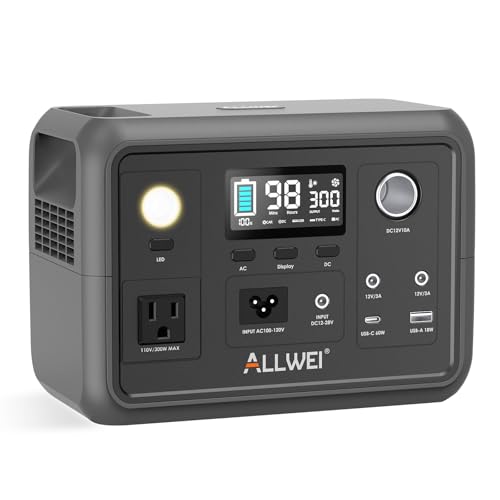
- 256Wh battery; 300W continuous output
- 6.4 pounds with six output ports
- Solar panel sold separately
Best For: Portable charging and low-wattage essentials
Grab-and-Go Pick

- 192Wh battery; 300W continuous output
- Two AC outlets and four other ports
- Bag and SOS flashlight included
Best For: Compact device charging during short outages
Lightweight Laptop Backup
288Wh 350W Portable Power Station

- 288Wh capacity; 350W continuous AC output
- Six ports, including 60W USB-C
- 8.2 pounds; wall, car, or solar recharging
Best For: Portable backup for small apartment essentials
Multiport Essentials Backup
EnginStar 296Wh 300W Power Station

- 296Wh capacity and 300W AC output
- Eight ports, including two AC outlets
- Wall, car, or compatible solar charging
Best For: Connecting several low-power devices during an outage
Higher-Capacity Apartment Backup
EcoFlow DELTA 3 Classic 1024Wh
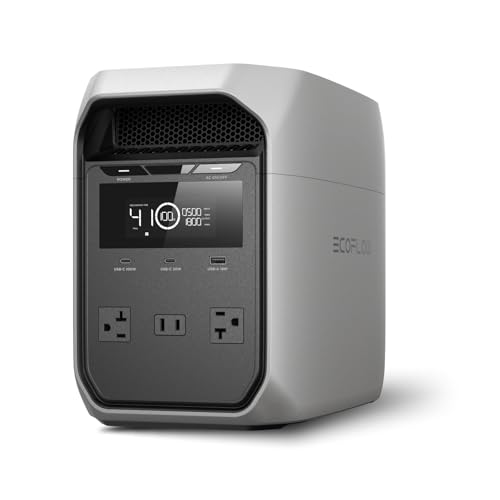
- 1024Wh battery; 1800W continuous AC output
- Stated 0–80% AC charge in 45 minutes
- Under-10ms switchover; weighs 26.7 pounds
Best For: Higher-capacity appliance and electronics backup
Best with Extra Features

- 1,024Wh LiFePO4 capacity
- 2,000W output; 3,000W peak
- 49-minute AC recharge with HyperFlash
Best For: Backing up several apartment essentials
Mid-Size UPS Pick
LIBRIDS 640Wh Portable Power Station

- 640Wh capacity; 600W output
- Four AC outlets and eight ports
- 10ms UPS switchover
Best For: Router and electronics backup with multiple AC outlets
Compact Essentials Pick
Powkey 192Wh Portable Power Station

- 192Wh capacity; weighs 4.7 pounds
- One 200W AC outlet plus five other ports
- Built-in emergency light
Best For: Small-device charging and outage lighting
High-Capacity Pick – Jackery HomePower 3600 Plus
For emergency power solutions for apartments, the Jackery HomePower 3600 Plus offers substantial backup capacity: 3,584Wh and 3,600W AC output. Its wheeled design helps with moving it, though you will need room to store a 77.2-pound unit.
Best For: Apartment residents who need to run larger appliances during an outage and have space for a full-size power station.
Pros:
- 3,584Wh capacity and 3,600W output support more demanding loads than compact models.
- Wheels and a telescopic handle make it easier to reposition.
- Supports AC, solar, hybrid AC/DC, and generator charging.
Cons:
- At 77.2 pounds, it is not convenient to carry up stairs.
- 240V output requires a parallel setup; the listed unit provides 120V output.
This is the capacity-first option if you can accommodate its size. Check your appliance wattages and apartment rules before planning a home-backup setup.
Compact UPS Pick – BLUETTI Elite 100 V2
The BLUETTI Elite 100 V2 is a middle-ground choice among emergency power solutions for apartments. Its 1,024Wh battery and 1,800W rated AC output cover many everyday essentials, while the 25-pound body is easier to store and move than a full-size backup station.
Best For: Keeping a router or PC powered through brief interruptions while retaining portable backup for other essentials.
Pros:
- Built-in UPS function has a stated switchover time of 10ms or less.
- Reaches a stated 80% charge in about 45 minutes with AC fast charging.
- Eleven ports and app control add flexibility for multiple devices.
Cons:
- 1,024Wh capacity provides less stored energy than larger home-backup units.
- Check connected equipment’s UPS requirements; a 10ms switchover may not suit every device.
This is a practical balance of output, portability, and fast recharging for an apartment. Estimate runtime from the actual draw of the devices you plan to connect.
Lightweight Essentials Pick – ALLWEI 300W Power Station
If your emergency power solutions for apartments mainly need to cover phones, a laptop, and other low-wattage devices, the ALLWEI 300W is a manageable option. It pairs a 256Wh LiFePO4 battery with 300W continuous AC output in a 6.4-pound package.
Best For: Residents prioritizing a small, easy-to-carry backup for charging devices and powering compatible low-wattage equipment.
Pros:
- Six output ports include a 60W USB-C port and one AC outlet.
- Pass-through operation allows charging the station and devices at the same time.
- Built-in LED light includes an SOS mode.
Cons:
- 300W continuous output rules out higher-wattage appliances.
- Solar charging requires a separately sold panel.
The ALLWEI makes sense as a small emergency kit rather than a whole-apartment power source. Confirm your devices’ wattage and expected runtime against its 256Wh capacity.
Grab-and-Go Pick – DaranEner NEOX 192Wh
The DaranEner NEOX is one of the smaller emergency power solutions for apartments: its 192Wh battery and 300W continuous output are suited to short-term device charging and compatible small electronics. A carrying bag and built-in flashlight make it easy to keep with an outage kit.
Best For: A compact backup for phones, laptops, and other devices within its 300W output limit.
Pros:
- Six ports include two AC outlets, USB-C, USB-A, and DC output.
- Includes a carrying bag and a flashlight with SOS mode.
- LiFePO4 battery is rated for more than 3,500 charging cycles.
Cons:
- 192Wh capacity limits runtime, especially when powering several devices.
- Solar panels and solar or car charging cables are not included.
Choose this for portability and basic outage preparedness, not sustained appliance backup. Before relying on its AC outlets, verify both the device’s running wattage and the runtime you need.
Lightweight Laptop Backup – 288Wh 350W Portable Power Station
For emergency power solutions for apartments, this 288Wh station is a compact way to keep small essentials running during an outage. It weighs 8.2 pounds and supplies 350W of continuous pure sine wave AC power through two outlets.
Best For: Apartment residents who want portable backup for phones, laptops, lights, and other devices under 350W.
Pros:
- Six outputs include two AC outlets, 60W USB-C, two 18W USB-A ports, and a 12V car port.
- Pure sine wave output and battery-management protections suit everyday electronics.
- Recharges from a wall outlet, car socket, or compatible solar panel.
Cons:
- 350W continuous output rules out higher-wattage appliances.
- Wall charging is limited to a stated 90W maximum.
Choose this one for a light, flexible electronics backup—not as a substitute for power to an entire apartment. Check each device’s wattage before connecting it.
Among emergency power solutions for apartments, the EnginStar R300 emphasizes multiple connections in a small package. Its 296Wh battery, 300W AC output, and eight output ports make it useful for keeping several low-power devices connected during a blackout.
Best For: Residents who need backup connections for phones, a laptop, and compatible low-power DC devices.
Pros:
- Two pure sine wave AC outlets plus regulated DC, USB-A, and USB-C outputs.
- Compact design; the listing describes it as weighing 6.5 pounds.
- Supports wall, car, and compatible solar-panel charging.
Cons:
- 300W output cannot run appliances that exceed its rating.
- USB-C output is rated at 18W, and a solar panel is not included.
This is a practical choice when outlet variety matters more than high appliance wattage. Verify your devices’ power requirements, particularly for CPAP or DC equipment, before relying on it.
For emergency power solutions for apartments that need more capacity, the EcoFlow DELTA 3 Classic pairs a 1024Wh battery with 1800W continuous AC output. It is better suited to larger household loads than the smaller stations here, provided each appliance stays within the unit’s limits.
Best For: Apartment residents prioritizing higher-capacity backup for appliances and electronics, with fast wall recharging.
Pros:
- 1024Wh capacity with 1800W continuous output and a stated 3600W surge rating.
- Stated 0–80% AC recharge time of 45 minutes.
- Under-10ms automatic switchover and app-based monitoring.
Cons:
- At 26.7 pounds, it is substantially heavier than a small electronics backup.
- Solar charging requires an optional panel; listed DELTA extra batteries are not compatible.
The extra capacity and output make this the stronger fit when you want to support more than phones and laptops. For sensitive equipment, confirm its power and transfer-time requirements rather than assuming any backup switch will suit it.
Best with Extra Features – Anker SOLIX C1000 Gen 2
For emergency power solutions for apartments, the Anker SOLIX C1000 Gen 2 offers a substantial 1,024Wh battery in a portable unit you can move between rooms. Its 2,000W output gives you more flexibility than a small device-only backup.
Best For: Apartment households that want to back up several essentials and recharge quickly between outages.
Pros:
- 1,024Wh LiFePO4 battery with 2,000W output and 3,000W peak output.
- Supports up to 10 devices and offers under-10ms UPS switchover.
- Can fully recharge from AC in 49 minutes with HyperFlash enabled in the app.
Cons:
- At 11.3 kg, it is less convenient to carry than a small power bank.
- The stated 1.8-hour solar recharge requires up to 600W of compatible solar input.
This is the strongest fit of the three for broader apartment backup, particularly if fast AC recharging matters. Check your devices’ wattage and expected runtime against its output and 1,024Wh capacity.
Mid-Size UPS Pick – LIBRIDS 640Wh Portable Power Station
The LIBRIDS 640Wh is a middle-ground choice among emergency power solutions for apartments: it has more capacity than a compact battery pack without stepping up to a 1,024Wh unit. Four AC outlets make it practical for grouping essential electronics in one place.
Best For: Keeping a router, laptop, or other compatible essentials powered through an outage.
Pros:
- 640Wh capacity, 600W output, and 1,200W surge rating.
- Four AC outlets among eight output ports.
- 10ms UPS switchover, pure sine wave output, and a stated 1.5-hour AC recharge.
Cons:
- Its 600W continuous output limits which appliances it can run.
- It must be kept away from rain, moisture, and other wet conditions.
Choose this if UPS functionality and multiple AC sockets matter more than maximum capacity. Confirm that your combined device load stays within the 600W output limit.
Compact Essentials Pick – Powkey 192Wh Portable Power Station
If storage space is your priority, this Powkey 192Wh model is one of the more compact emergency power solutions for apartments in this lineup. It weighs 4.7 pounds and has a built-in light for navigating a dark room during an outage.
Best For: Charging small devices and keeping a light handy when apartment power goes out.
Pros:
- 192Wh LiFePO4 battery in a 4.7-pound unit with a foldable handle.
- Six ports, including one 120V AC outlet rated for up to 200W.
- Built-in light with brightness settings, strobe, and SOS modes.
Cons:
- The AC outlet is limited to devices rated at 200W or less.
- Its 192Wh capacity is better suited to small-device backup than prolonged appliance use.
- A solar panel is not included.
Its small size makes it easy to store for occasional outages, but check the power draw and expected runtime of anything you plan to plug into the AC outlet.
How We Picked the Best Emergency Power Solutions for Apartments
We focused on portable battery stations with a range of stated capacities and AC output ratings, from 192Wh compact models to the 3,584Wh Jackery. For apartment use, we considered whether a unit is suited to everyday essentials, how much space it may take up, and whether its advertised output matches the devices a buyer plans to plug in. We also considered charging flexibility, while avoiding the assumption that every apartment has a usable balcony or access to solar panels.
Published watt-hour and watt ratings are useful starting points, not runtime guarantees. Actual results depend on the devices connected, conversion losses, battery reserve, and the power station’s operating conditions.
Quick Comparison: Match Capacity to the Outage
The 192–296Wh models are the most compact choices in this list. Consider them for phones, a router, lights, or a laptop, provided the combined load stays within the unit’s output limit. The LIBRIDS 640Wh sits between those small backups and the 1,024Wh group: the BLUETTI Elite 100 V2, EcoFlow Delta 3 Classic, and Anker SOLIX C1000 Gen 2. Check the Anker’s current specifications when comparing exact output and charging features.
The Jackery HomePower 3600 Plus has the largest stated capacity and AC output here. It is the option to examine for more demanding or longer-duration needs, but its size, weight, price, and storage requirements may matter more in a small apartment.
Key Buying Factors for Emergency Power Solutions for Apartments
Capacity and Realistic Runtime
Capacity is measured in watt-hours (Wh). Estimate your essential devices’ wattage and hours of use, then allow extra capacity for energy lost when supplying AC power. For example, a 20W router running for 10 hours uses about 200Wh before those losses. If refrigeration or medical equipment is essential, check its measured consumption and startup demand rather than relying on a general capacity category.
Output, Outlets, and Charging
Continuous AC output must cover everything running at once; surge capability matters for devices with motors or compressors. Count the AC, USB, and DC ports you actually need. Check wall-charging time and whether the unit can charge while powering devices if that matters to your plan. Solar charging is useful only where panels can receive adequate light and building rules permit their placement.
Storage and Safe Indoor Use
Check dimensions, weight, cable clearance, and ventilation requirements before buying. Portable power stations avoid generator exhaust, but they still need to be used and stored according to the manufacturer’s instructions. Keep an appropriate charging cable accessible so the battery is ready when an outage starts.
Who Should Buy Which Emergency Power Solutions for Apartments?
Choose a 192–296Wh model if portability and backup for a few low-draw essentials are your priorities. Consider the 640Wh LIBRIDS if you want a middle-ground capacity. Look at the 1,024Wh stations for a broader mix of electronics or more runtime, comparing their outputs and physical sizes carefully. Choose the 3,584Wh Jackery only if your power needs justify the additional space and expense. If a device is critical to your safety or health, confirm compatibility and arrange a separate contingency rather than depending on a single battery.