The right portable power bank keeps your devices running without adding more weight or capacity than you need. A phone charger for a day trip is a different purchase from a battery meant to power a laptop or provide backup at a campsite.
These 10 picks span compact USB-C chargers and small portable power stations. Start with your devices, then compare usable capacity, output limits, charging options, and portability.
Best 10 Energy Efficient Portable Power Banks Picks for 2026
Best DC Power Station

- 256Wh LiFePO4 battery
- Up to 200W combined DC output
- Four USB ports; solar charging supported
Best For: Higher-demand USB gear on camping trips
Best Compact AC Backup
HOWEASY 120W Portable Power Station

- 88Wh battery; 120W running AC output
- Eight outputs, including two AC outlets
- 2.3 lb with an LED flashlight
Best For: Small AC and USB devices while camping
Best Light Daily Carry
INIU 10000mAh 45W Portable Charger

- 10,000mAh capacity
- 45W fast-charging output
- Replaceable braided USB-C cable
Best For: Compact everyday phone and tablet backup
Best Higher-Capacity Travel Pick

- 20,000mAh capacity
- 45W output; charges three devices
- Built-in USB-C cable and flashlight
Best For: Weekend trips and multiple phone charges
Long-Life Battery Pick
powkey 96Wh 100W Laptop Power Bank
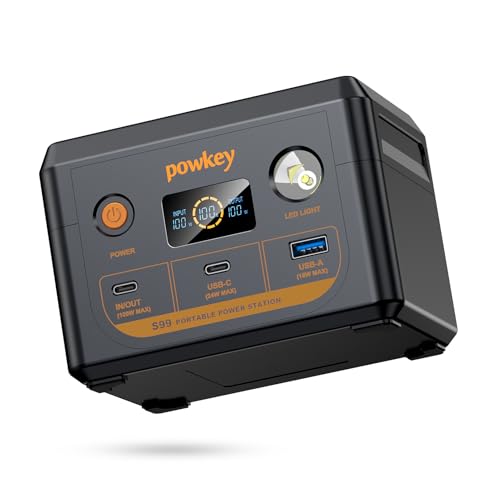
- 96Wh battery with 100W USB-C input/output
- LiFePO4 rated for 3,000-plus cycles
- About 980 g; 100W charger needed for fastest recharge
Best For: Travelers prioritizing battery longevity and laptop charging
Cable-Ready Travel Pick
Anker 25K 165W Laptop Power Bank

- 25,000mAh capacity and 165W total output
- Two integrated USB-C cables
- Charges up to four devices; charger not included
Best For: Travelers who want laptop power without packing extra cables
High-Output Display Pick

- 25,000mAh with 170W combined output
- Dual USB-C ports rated up to 140W each
- TFT charging display; listed weight 580 g
Best For: Travelers charging high-power USB-C devices
Best Slim Phone Charger

- 10,000mAh phone-focused capacity
- About 8.6 oz with a slim profile
- Two-way USB-C charging
Best For: Everyday smartphone backup power
Best Heavy-Duty Pick
Daran 89.6Wh LiFePO4 Power Station

- 89.6Wh LiFePO4 battery
- More than 3,500 rated cycles
- Seven outputs, including 100W AC
Best For: Quiet, repeat-use camping or outage backup
Best Higher-Wattage Mini Station

- Stated 98Wh capacity
- Two AC outlets rated at 135W
- 65W USB-C PD input/output
Best For: Compact AC and USB-C power while traveling or camping
Best DC Power Station – Jackery Explorer 240D
For shoppers comparing energy efficient portable power banks, the Explorer 240D stands out for its 256Wh LiFePO4 battery and claimed 95% DC-to-DC conversion efficiency. Its four USB ports deliver up to 200W combined, with up to 140W from one port.
Best For: Camping or travel setups that need substantial USB power without an AC outlet.
Pros:
- Three USB-C ports and one USB-A port can power four devices at once.
- Supports USB-C, solar, car, and AC-DC dual-input recharging.
- Weighs 4.85 lb and includes a USB-C cable that doubles as a carrying strap.
Cons:
- No AC outlet for standard wall-plug devices.
- Solar charging requires a compatible setup.
This is the most capable USB-focused option here for laptops and other higher-demand devices, provided you do not need AC power.
Best Compact AC Backup – HOWEASY 120W Portable Power Station
The HOWEASY is a compact choice among energy efficient portable power banks when you need actual AC outlets for low-wattage gear. Its 88Wh battery, 120W running AC output, and eight output ports suit small electronics rather than power-hungry appliances.
Best For: Camping or short outages when small AC devices and USB gear both need power.
Pros:
- Two 110V AC outlets alongside USB and DC outputs.
- Weighs 2.3 lb and has a carrying handle.
- Recharges from an AC outlet, a compatible solar panel, or a car socket; includes an LED flashlight.
Cons:
- 120W running output excludes many larger appliances.
- Solar panel is not included.
Choose it for outlet flexibility in a small package, not for extended runtime or high-wattage equipment.
Best Light Daily Carry – INIU 10000mAh 45W Portable Charger
If your search for energy efficient portable power banks is really about carrying less bulk, this INIU pairs a 10,000mAh capacity with 45W charging. The maker says its TinyCell design is 40% smaller and 36% lighter than conventional chargers, though it does not provide a conversion-efficiency figure.
Best For: Commuters and travelers who want a small phone or tablet backup.
Pros:
- 45W output supports quick charging for compatible devices.
- Detachable braided USB-C cable can be replaced if needed.
- Two USB-C connections and one USB-A connection offer charging flexibility.
Cons:
- 10,000mAh capacity provides less reserve than the larger options here.
- No AC outlet for wall-plug equipment.
Its replaceable cable makes more sense for everyday use than a permanently attached cord if compact carry is your priority.
Best Higher-Capacity Travel Pick – INIU 20000mAh 45W Power Bank
Among energy efficient portable power banks for longer trips, this INIU offers a useful capacity-to-size trade-off: 20,000mAh in a body the maker says is 30% smaller than comparable-capacity banks. It weighs 11.5 oz and provides up to 45W output; no conversion-efficiency rating is supplied.
Best For: Weekend travel when multiple phone charges matter more than minimal weight.
Pros:
- 20,000mAh capacity is rated for about four phone charges by the maker.
- Built-in braided USB-C cable eliminates a separate charging cord.
- Can charge up to three devices simultaneously and includes a flashlight.
Cons:
- At 11.5 oz, it is less pocket-friendly than a smaller 10,000mAh bank.
- Built-in cable is less flexible to replace than a detachable one.
This is the stronger pick for time away from outlets, while the smaller INIU model is easier to carry every day.
Long-Life Battery Pick – powkey 96Wh 100W Laptop Power Bank
For shoppers comparing energy efficient portable power banks, the powkey stands out for its stated 3,000-plus-cycle LiFePO4 battery rather than a measured efficiency rating. Its 96Wh capacity and up-to-100W USB-C output make it a practical option for charging a laptop while traveling or working outdoors.
Best For: Travelers and remote workers who prioritize battery longevity and laptop-capable USB-C output.
Pros:
- 96Wh capacity stays under the stated 100Wh airline carry-on threshold.
- 100W USB-C input/output supports laptops and fast recharging with a suitable charger.
- LiFePO4 battery is rated for more than 3,000 charge cycles.
Cons:
- At about 980 g, it is a substantial addition to a travel bag.
- Its 90%-in-one-hour recharge claim requires a 100W charger.
Choose this model if long-term battery use matters more than a lightweight carry. The supplied specifications list three ports, despite a separate claim that it can charge four devices simultaneously, so check the available connections against your setup.
Among energy efficient portable power banks, this Anker is a convenient travel choice for its 25,000mAh capacity and integrated cables; the supplied notes do not provide an energy-efficiency measurement. It offers up to 165W total output for charging several devices away from an outlet.
Best For: Laptop users who want built-in cables and four-device charging for trips.
Pros:
- Two built-in USB-C cables reduce the need to pack separate cords.
- Three USB-C connections support up to 100W each, subject to the 165W total-output limit.
- Two cables plus USB-C and USB-A ports can charge four devices at once.
Cons:
- A charger is not included.
- The built-in cables may be less flexible than choosing your own cable lengths.
This is the most cable-convenient option here, especially if you regularly switch between a laptop and smaller devices. Its stated airline carry-on compatibility adds appeal for flights, but simultaneous charging still shares the 165W output budget.
If you are shopping for energy efficient portable power banks to support demanding USB-C devices, the EcoFlow pairs 25,000mAh capacity with up to 170W total output. Its two 140W USB-C ports and status display are useful for monitoring high-power charging, although the supplied notes do not quantify conversion efficiency.
Best For: Travelers who want high-wattage USB-C charging and visible battery and power information.
Pros:
- Two USB-C ports each support up to 140W, within the 170W combined-output limit.
- Charges up to three devices using two USB-C ports and one 33W USB-A port.
- TFT display shows battery level and charging details.
Cons:
- At a listed 580 g, it is heavier than a small phone-only power bank.
- No built-in cable is listed in the supplied notes.
Pick this one when USB-C wattage and an at-a-glance display matter more than cable integration. Its stated flight-approved design makes it travel-oriented, while the 170W ceiling is worth remembering when charging multiple devices together.
Best Slim Phone Charger – Anker PowerCore Slim 10000
For shoppers comparing energy efficient portable power banks, the Anker PowerCore Slim 10000 is a compact choice for everyday phone charging. Its 10,000mAh battery is rated for up to two iPhone 15 charges, though the supplied details do not establish a measured efficiency rating.
Best For: Commuters and travelers who want a slim backup battery for a smartphone.
Pros:
- Weighs about 8.6 oz and measures roughly 6 × 2.8 × 0.6 inches.
- USB-C supports both charging devices and recharging the power bank.
- Includes a USB-C cable and an 18-month limited warranty.
Cons:
- Its 10,000mAh capacity is aimed at phones rather than extended laptop or campsite power.
- A full recharge takes approximately five hours.
Choose this if pocket-friendly size matters more than AC outlets or high-capacity backup power. Its stated charging estimates help set expectations, but actual results will vary by device and use.
Best Heavy-Duty Pick – Daran 89.6Wh LiFePO4 Power Station
Among energy efficient portable power banks, the Daran stands out for its 89.6Wh LiFePO4 battery, rated for more than 3,500 cycles. That lifespan claim speaks to longevity, not a verified energy-conversion efficiency figure.
Best For: Campers and households wanting a small, quiet backup for multiple low-wattage devices.
Pros:
- Seven outputs include two 100W AC sockets, two USB-C ports, two USB-A ports, and a DC port.
- Supports wall, USB-C, car, and optional solar recharging; the stated wall-charging time is 0–80% in 1.5 hours.
- Fanless operation, an LED status display, and a flashlight suit campsite or outage use.
Cons:
- AC devices must stay within the stated 100W operating limit.
- At 2.54 lb, it is backpack-friendly rather than pocket-sized; a solar panel and cable are not included.
The LiFePO4 chemistry and broad port selection make this a practical choice for repeated light-duty use. Check the wattage of any appliance before relying on its AC sockets.
Best Higher-Wattage Mini Station – HOWERASY 98Wh Power Station
If your search for energy efficient portable power banks includes compact AC-capable stations, the HOWERASY pairs a stated 98Wh capacity with 135W AC output. Its supplied specifications do not quantify conversion efficiency, so the main buying distinction is its port and power mix.
Best For: Travelers and campers who need USB-C charging plus AC power for devices within the 135W limit.
Pros:
- Seven outputs include two AC outlets, a 65W USB-C PD port, USB-A ports, and DC ports.
- Weighs 2.3 lb and measures 6.6 × 4 × 3 inches.
- Supports wall, car, USB-C PD, and compatible solar-panel recharging.
Cons:
- The 135W AC rating rules out higher-power appliances.
- The notes give conflicting battery figures of 98Wh and 99Wh; confirm the marked capacity and current airline rules before flying.
This is the more flexible pick when you need modest AC output alongside 65W USB-C PD. Its stated 80%-in-one-hour charging claim is useful, but recharge speed depends on the input method.
How We Picked the Best Energy Efficient Portable Power Banks
We compared these 10 options by their stated capacity, output ratings, available ports, and intended use. The lineup includes pocket-size phone chargers, higher-output laptop banks, and portable power stations with features such as AC outlets. Because published specifications do not establish how much energy reaches your device, we do not treat a larger mAh or Wh figure as proof of greater efficiency.
Quick Comparison
For everyday phone charging, the 10,000mAh Anker and INIU models are the lighter-duty choices; the INIU adds a stated 45W output for compatible devices. The 20,000mAh INIU offers more capacity while retaining a 45W rating. For laptops and multiple devices, compare the 25,000mAh Anker and EF ECOFLOW banks, or the powkey model if its 100W USB-C PD output suits your laptop.
The Jackery Explorer 240D, HOWEASY 120W, Daran 89.6Wh, and HOWERASY 98Wh are better starting points when you need power-station features rather than just USB charging. Check the exact ports and continuous output of each before assuming it can run a particular appliance.
Key Buying Factors for Energy-Efficient Portable Power Banks
Capacity and Usable Energy
Look for watt-hours (Wh) when comparing devices with different battery voltages; mAh figures alone can be misleading across product types. Expect less energy at the output than the battery’s stated capacity because conversion, heat, cables, and standby electronics cause losses. An AC outlet adds flexibility but generally involves another conversion step, so use USB-C for compatible devices when practical.
Output, Ports, and Recharge Time
Match a power bank’s single-port USB-C Power Delivery rating to your laptop’s charging needs. A high combined output does not guarantee the same wattage from every port, especially when several devices are connected. If you need an AC outlet, check its continuous rating rather than relying on a peak figure. Also check the bank’s input rating and the charger required to refill it; a large battery that recharges slowly may be inconvenient between trips.
Travel and Longevity
For flights, verify the battery’s Wh rating against your airline’s current rules; do not assume that a product described as flight-approved meets every itinerary’s requirements. Size and weight matter if you carry it daily. Battery chemistry, warranty, and replaceability can also affect long-term value, but model-specific lifespan claims need supporting test data.
Who Should Buy Which Energy Efficient Portable Power Banks?
Choose a 10,000mAh USB-C bank for a small everyday backup, or step up to 20,000–25,000mAh if you charge several devices or travel longer between outlets. Prioritize adequate single-port USB-C wattage for a laptop. Choose a portable power station if you specifically need AC power or a larger battery for camping and outages—and accept the extra bulk. The most energy-efficient choice is usually the smallest unit that reliably covers your devices and runtime, using a direct charging port whenever possible.