Choosing a flexible solar panel with adhesive backing is about more than wattage. The best options balance bendability, weather protection, and secure mounting for curved or low-clearance surfaces.
Below, we focus on practical picks for RVs, boats, vans, and off-grid setups, with an eye toward easy installation, durability, and real-world charging performance.
Best 10 Flexible Solar Panel with Adhesive Backing Picks for 2026
Best for Curved Surfaces

- Bends to fit curved or uneven roofs
- Lightweight 4.4 lb design
- IP67 junction box for outdoor use
Best For: RV, boat, van, and trailer owners who need a low-profile panel for irregular surfaces.
Best for Lightweight Install
100W Flexible Solar Panel, 12V PERC
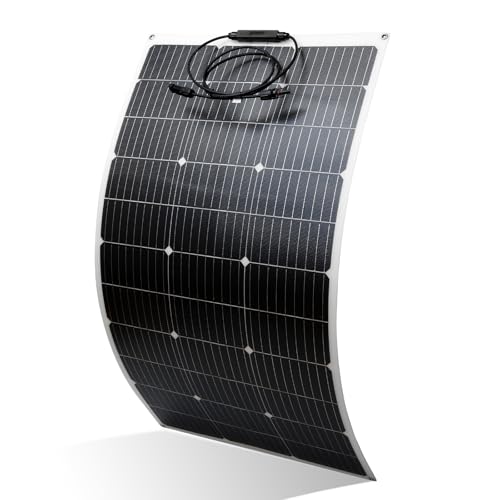
- Only 4.19 lbs for easier handling and mounting
- Flexible design works well on curved or tight surfaces
- IP67 waterproofing helps it stand up outdoors
Best For: RV, boat, and DIY installs where low weight and easy placement matter most.
Best for Curved-Roof Installations
Renogy 50W Flexible Solar Panel

- Bends for curved roofs and irregular surfaces
- Lightweight, thin, and low-profile
- Suited to marine, RV, van, and teardrop setups
Best For: Curved-surface installations on vans, RVs, boats, and other off-grid mobile rigs.
Best for Curved Roofs
DOKIO 200W Flexible ETFE Solar Panels

- Bends up to 30° for curved roofs and marine surfaces
- ETFE top sheet offers better durability and light transmission
- MC4 connectors make wiring easier for RV and off-grid setups
Best For: RV, boat, and van owners who need a lightweight panel for curved or tight mounting spaces.
Best for Off-Grid Battery Charging

- 200W total from two 100W flexible panels
- Lightweight monocrystalline design for curved surfaces
- Includes a 30A charge controller for battery charging
Best For: Campers, van owners, and off-grid users needing a lightweight flexible charging kit.
Best for Everyday Use

- Two 100W panels with series/parallel wiring options
- Bends up to 30° for curved RV, boat, or trailer surfaces
- ETFE face and MC4 connectors improve durability and setup
Best For: Curved or space-limited mobile setups that need a lightweight, adaptable solar option.
Best for Drill-Free Curved Surfaces
Solarapex 100W Flexible Solar Panel

- Ultra-thin 2.6mm flexible build
- ETFE coating with IP68 waterproofing
- Adhesive or silicone-friendly installation
Best For: RV, boat, and camper owners who want an easy-to-mount panel for curved surfaces.
Best with Extra Features
DOKIO 100W Flexible ETFE Solar Panel

- Bends up to 30° for curved installs
- Lightweight ETFE design for mobile use
- MC4 connectors simplify wiring
Best For: RV, marine, van, and trailer owners with curved or space-limited mounting areas.
Best for Lightweight RV Mounts
Solarapex 2-Pack 100W Flexible Solar Panel

- 200W total output from two 100W panels
- ETFE coating with IP68 waterproofing
- Lightweight, curved-surface-friendly design
Best For: RV, boat, and van owners who want a durable lightweight panel for curved or adhesive-style mounting.
Best for Curved Mounts
DOKIO 100W Flexible ETFE Solar Panel

- Ultra-light 2.3 lb build for easy mobile installs
- Bends up to 30° for curved RV, van, or boat surfaces
- ETFE coating and MC4 connectors support practical off-grid use
Best For: Travelers and DIY installers who need a lightweight panel for curved or irregular surfaces.
Best for Curved Surfaces – 100W Flexible 12V Solar Panel
If you need a flexible solar panel with adhesive backing for a boat, RV roof, van, or other uneven surface, this 100W 12V model is built for tricky installs. Its thin, lightweight design and high-bend rating make it easier to place where rigid panels would be hard to mount, while the 9BB monocrystalline cells aim for solid efficiency in a compact footprint.
Best For: Owners of RVs, boats, trailers, and vans who need a lightweight panel that conforms to curved or irregular mounting surfaces.
Pros:
- Highly flexible design suits curved roofs and other uneven surfaces
- Lightweight 4.4 lb build is easier to handle and install
- 9BB monocrystalline cells deliver up to 23% conversion efficiency
- IP67 junction box adds water and dust resistance for outdoor use
Cons:
- Adhesive backing is not clearly included, so mounting may require extra hardware or sealant
- 100W output may be limited for larger power demands
- Best performance depends on careful placement and surface preparation
For buyers comparing a flexible solar panel with adhesive backing, this is a practical pick when fit and weight matter more than maximum wattage. It is especially appealing for mobile setups where a low-profile panel is easier to integrate than a traditional framed module.
Best for Lightweight Install – 100W Flexible Solar Panel, 12V PERC
If you need a flexible solar panel with adhesive backing for curved or space-limited surfaces, this 100W 12V panel is built for simple, low-profile mounting on RVs, boats, balconies, and rooftops. Its ultra-thin, lightweight design makes it easier to handle than rigid panels while still offering practical off-grid charging for everyday use.
Best For: RV owners, boaters, and DIY users who want a lightweight panel that can mount cleanly on curved or compact surfaces.
Pros:
- Ultra-lightweight at 4.19 lbs for easier lifting and positioning
- Flexible form factor suits curved roofs, decks, and portable setups
- IP67 waterproof rating adds better outdoor durability
- PERC monocrystalline cells are designed for efficient energy capture
Cons:
- 100W output may be too limited for larger power needs
- Flexible panels can be less rigid and protective than framed panels
- Adhesive mounting may require careful surface prep for best results
This flexible solar panel with adhesive backing makes the most sense when you value easy installation, low weight, and a clean fit over maximum wattage. It’s a solid pick for adding solar power to curved or tight spaces without the bulk of a traditional panel.
Best for Curved-Roof Installations – Renogy 50W Flexible Solar Panel
If you need a flexible solar panel with adhesive backing for a van, RV, boat, or other curved surface, this Renogy 50W panel is built for that job. It bends more than most rigid-style modules, stays lightweight, and is designed for low-profile installations where traditional glass panels would be awkward or too heavy.
Best For: Owners of vans, boats, RVs, and teardrops who want a slim, mount-on-curves solar panel for off-grid charging.
Pros:
- High flexibility makes it easier to install on curved roofs and irregular surfaces
- Very lightweight and thin for a stealthy, low-drag setup
- Backed by durability ratings for wind and snow resistance
- Works well for marine, RV, cabin, and vehicle applications
Cons:
- Adhesive mounting is recommended, so installation is less plug-and-play than rigid panels
- 50W output is modest for larger power demands
- Not ideal if you want a panel you can easily reposition later
Overall, this is a strong pick if your priority is a flexible solar panel with adhesive backing that can conform to curved surfaces without adding much weight or height. It is especially practical for mobile setups where fit, simplicity, and a discreet profile matter more than maximum wattage.
Best for Curved Roofs – DOKIO 200W Flexible ETFE Solar Panels
If you need a flexible solar panel with adhesive backing for an RV, boat, camper van, or trailer, this DOKIO 200W set is built for low-profile installs where rigid panels won’t fit. The semi-flexible ETFE design, MC4 connectors, and 18V output make it a practical option for 12V battery charging and mobile off-grid use.
Best For: Curved or space-limited rooftops and mobile setups that need a lightweight, adaptable solar solution.
Pros:
- Flexible up to 30°, making it suitable for curved van roofs and boat surfaces.
- ETFE top layer improves wear resistance and light transmission.
- MC4 connectors simplify wiring for series or parallel configurations.
- Lightweight, slim panels are easier to transport and mount than rigid glass panels.
Cons:
- Needs proper ventilation; it should not be mounted flat against combustible surfaces.
- Installation is more finicky than rigid panels because heat management matters.
- Adhesive-style mounting still requires careful surface prep and cable routing.
Overall, this is a strong pick if you want a flexible solar panel with adhesive backing for a curved or compact install, but it works best when you follow the cooling and mounting guidance closely. It’s more about adaptable placement than maximum convenience, so plan the install carefully.
Best for Off-Grid Battery Charging – 200W Flexible Solar Panel Kit
If you want a flexible solar panel with adhesive backing for charging a 12V or 24V battery bank on a van, boat, RV, or campsite setup, this 200W kit is built for practical off-grid use. The two 100W monocrystalline panels are lightweight and bendable, making them easier to place on curved or space-limited surfaces than rigid panels.
Best For: Campers, vehicle owners, and off-grid users who need a lightweight flexible panel kit for basic battery charging and portable solar setups.
Pros:
- Two 100W panels provide a 200W total output for small off-grid charging jobs
- Flexible, lightweight design works better on curved surfaces than rigid panels
- Includes a 30A charge controller for a more complete battery-charging kit
Cons:
- Not ideal if you need maximum output from a single compact panel
- Adhesive-style installation may require careful surface prep for best results
This is a solid fit if you want a flexible solar panel with adhesive backing-style setup for off-grid charging rather than a permanent rooftop power system. It stands out more for versatility and kit convenience than for high-end efficiency or heavy-duty installation hardware.
Best for Everyday Use – DOKIO 200W Flexible 2-Pack
If you need a flexible solar panel with adhesive backing-style versatility for an RV, boat, or camper roof, the DOKIO 200W kit is a practical pick. It pairs two 100W semi-flexible panels with MC4 connectors, so you can wire for higher voltage or higher current depending on your setup. The ETFE surface and lightweight build make it easier to fit into places rigid panels can’t.
Best For: Curved or space-limited mobile setups where a lightweight, bendable solar solution is more useful than a rigid glass panel.
Pros:
- Two-panel 200W kit gives you series/parallel wiring flexibility
- Up to 30° bend helps it conform to curved surfaces
- ETFE top layer offers better wear resistance and light transmission
- Lightweight, slim design is easier to mount in tight spaces
Cons:
- Not a true peel-and-stick adhesive-backed panel
- Needs ventilation space and careful mounting for safe cooling
- More setup planning than a simple rigid panel kit
Overall, this is a strong fit if you want a flexible solar panel with adhesive backing-like installation potential for mobile off-grid use, but still need to respect heat and mounting limitations. It is less about quick stick-on convenience and more about adaptable placement with better wiring options.
Best for Drill-Free Curved Surfaces – Solarapex 100W Flexible Solar Panel
If you need a flexible solar panel with adhesive backing for an RV roof, boat deck, or other curved surface, this Solarapex 100W panel is built for easy placement without a bulky frame. Its lightweight 2.6mm profile, ETFE coating, and IP68 waterproofing make it a practical option for off-grid charging where weather resistance and low mounting weight matter.
Best For: RV owners, boaters, and campers who want a lightweight, drill-free solar solution for curved or space-limited installs.
Pros:
- Flexible, ultra-thin design conforms to curved roofs and decks
- ETFE surface and IP68 rating improve durability in harsh outdoor use
- Lightweight build is easier to mount than traditional glass panels
- Can be installed with adhesive tape or silicone for non-permanent setups
Cons:
- Adhesive installation may need extra prep for a secure long-term bond
- Lower durability than rigid panels in some high-impact mounting scenarios
- Not ideal if you need the highest possible output from limited roof space
Overall, this is a solid pick if you want a flexible solar panel with adhesive backing for easier, low-profile installation on vehicles or marine surfaces. It balances portability, weather protection, and convenience better than many rigid-panel alternatives.
Best with Extra Features – DOKIO 100W Flexible ETFE Solar Panel
If you need a flexible solar panel with adhesive backing for a curved RV roof, boat, or camper setup, this DOKIO 100W panel is built for lightweight off-grid charging without the bulk of rigid glass modules. Its semi-flexible design, ETFE surface, and MC4 connectors make it a practical pick for mobile installs where space and weight matter.
Best For: RV, marine, van, and trailer owners who need a lightweight panel for curved or tight mounting areas.
Pros:
- Flexible up to 30° for curved surfaces and compact installs
- Lightweight, slim design is easier to mount than rigid panels
- ETFE top layer adds durability and better light transmission
- MC4 connectors simplify wiring for off-grid systems
Cons:
- Not ideal for direct mounting on combustible surfaces without ventilation
- Requires careful installation to avoid heat buildup under the panel
- Adhesive or mounting method may need to be purchased separately
Overall, this is a strong fit if you want a flexible solar panel with adhesive backing potential for mobile use, but you should plan the mount carefully and leave room for cooling. It makes more sense for curved roofs and lightweight applications than for permanent flat-roof installs where rigid panels may be simpler.
Best for Lightweight RV Mounts – Solarapex 2-Pack 100W Flexible Solar Panel
If you want a flexible solar panel with adhesive backing-friendly install options for curved or low-profile surfaces, this Solarapex 2-pack stands out for its lightweight build, ETFE top layer, and fiberglass-reinforced durability. It’s a practical choice for RV roofs, boats, vans, and other off-grid setups where you need solid output without adding much weight.
Best For: RV owners, boaters, and campers who want a lightweight 200W flexible panel that can be mounted with tape or silicone on curved surfaces.
Pros:
- Ultra-light and thin, making it easier to mount on curved or weight-sensitive surfaces
- ETFE coating and IP68 waterproofing help it handle harsh outdoor conditions
- Fiberglass laminate adds impact resistance and shatter protection for longer life
- Drill-free install options work well for adhesive-backed applications
Cons:
- Adhesive/tape mounting is not included, so you’ll need to source your own materials
- Best results depend on careful installation and a clean, properly prepared surface
- Not ideal if you need a rigid panel with a traditional frame and tilt mount
Overall, this is a strong pick if you need a flexible solar panel with adhesive backing-style installation flexibility and want a durable, travel-ready setup for RV or marine use. The combination of low weight, weather resistance, and 200W output makes it especially appealing for non-permanent installs.
Best for Curved Mounts – DOKIO 100W Flexible ETFE Solar Panel
If you need a flexible solar panel with adhesive backing for an RV, van, boat, or trailer, the DOKIO 100W is built around lightweight portability and curved-surface compatibility rather than permanent roof-duty installs. Its thin ETFE-laminated design and pre-drilled mounting points make it a practical choice for seasonal or mobile off-grid setups.
Best For: Curved or irregular surfaces where low weight, simple mounting, and 12V charging matter more than maximum power density.
Pros:
- Only 2.3 lb and very thin, so it’s easy to carry and install on mobile setups
- Bends up to 30° to fit vans, campers, trailers, boats, and tents
- ETFE surface helps with durability and light transmission compared with PET
- MC4 connectors make expansion into larger systems straightforward
Cons:
- Not intended as a permanent roof replacement or heavy-duty walk-on panel
- Requires careful ventilation and mounting to avoid heat buildup
- Adhesive or VHB mounting may need extra edge support on moving vehicles
Overall, this is a solid fit if your flexible solar panel with adhesive backing needs to conform to a curved surface and stay lightweight for travel. It’s less about rugged, permanent installation and more about easy, adaptable off-grid charging.
How We Picked the Best Flexible Solar Panel with Adhesive Backing
We prioritized panels that make sense for curved roofs, fiberglass decks, and other uneven surfaces where a Flexible Solar Panel with Adhesive Backing is most useful. The shortlist emphasizes build quality, waterproofing, weight, output ratings, and compatibility with 12V battery systems.
We also looked for models that are easier to install in compact spaces, including semi-flexible panels, lightweight designs, and kits that reduce the number of extra parts you need to buy.
Quick Comparison
If you want the simplest setup, a single 100W panel is often the easiest starting point. If you need more daily power, a two-panel 200W setup can be a better fit. Smaller 50W panels work well for maintenance charging or limited roof space, while higher-efficiency ETFE and monocrystalline options tend to offer stronger long-term value.
Key Buying Factors for a Flexible Solar Panel with Adhesive Backing
Wattage and Real-World Output
Higher wattage generally means faster charging, but only if your available sun exposure and charge controller can support it. Match output to your battery bank and daily energy use instead of choosing the largest panel available.
Flex Rating and Surface Fit
Check how much the panel can bend and whether it suits your roof or deck shape. A true flexible panel should sit flush without stressing the cells or lifting at the edges.
Durability and Weather Resistance
For marine and RV use, look for waterproof ratings, UV-resistant surfaces, and reinforced layers such as ETFE or fiberglass backing. These materials help the panel hold up under heat, moisture, and vibration.
Mounting Method and Adhesion
Adhesive backing can simplify installation, but surface prep matters. Clean, dry, and properly degreased mounting areas improve bond strength and reduce the risk of edge lift over time.
System Compatibility
Make sure the panel voltage matches your battery setup and that connectors work with your controller or inverter. For multi-panel installs, confirm whether series or parallel wiring is the better choice.
Who Should Buy Which Flexible Solar Panel with Adhesive Backing?
Choose a 50W panel if you only need trickle charging, battery maintenance, or power for small accessories. Go with a 100W panel if you want the most balanced option for RVs, vans, and boats. Pick a 200W kit if you need more meaningful off-grid charging and want to reduce setup guesswork with bundled components.
If your priority is a low-profile install on a curved surface, a Flexible Solar Panel with Adhesive Backing is usually the best fit. If maximum output per square foot matters more than install simplicity, look for the most efficient monocrystalline and ETFE-backed models in your budget.