Hybrid renewable systems can keep power flowing when solar alone falls short, especially during cloudy, stormy, or winter-heavy conditions. For low-wind locations, the right balance of turbine, solar input, controller, and storage matters more than headline wattage.
This roundup highlights the best hybrid wind solar kit for low wind areas across different budgets and use cases, from portable off-grid setups to larger split-phase systems.
Best 9 Hybrid Wind Solar Kit for Low Wind Areas Picks for 2026
Best for Low-Wind Off-Grid Basics
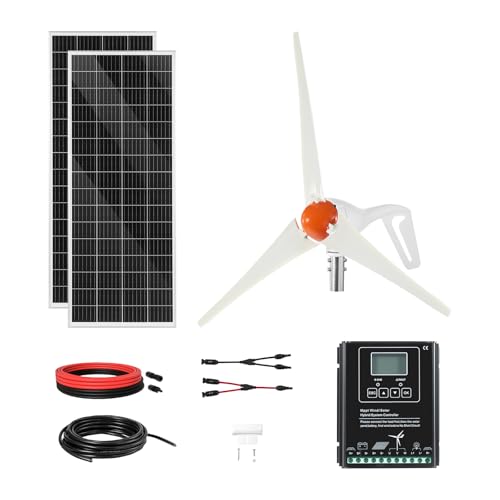
- Solar + wind combo improves off-grid charging consistency
- MPPT controller adds smarter power management and protections
- Low 2.5 m/s wind start-up helps in marginal breeze conditions
Best For: Off-grid campers, RV owners, and cabin users who want a practical hybrid system for light-wind areas.
Best for Split-Phase Systems
ExpertPower 6500W Hybrid Solar Inverter
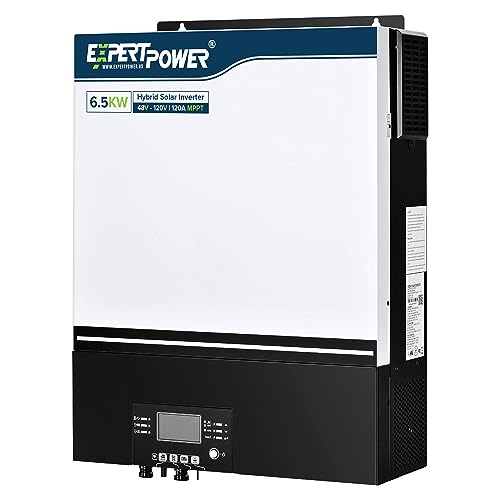
- 120A MPPT controller with up to 8000W solar input
- Split-phase ready with 2 units and up to 6-unit parallel
- Works with LiFePO4, AGM, GEL, and SLA batteries
Best For: Off-grid users who need a scalable inverter for 120V/240V loads and flexible battery support.
Best for Low-Wind Off-Grid Power

- Hybrid solar + wind design for mixed weather
- Starts generating wind power at just 3 m/s
- Includes controllers for off-grid battery use
Best For: Off-grid users in low-wind areas who want a flexible backup power setup.
Best for Low-Wind Starts

- Starts at 2.5 m/s for lighter breezes
- Charge controller included for hybrid setups
- Five blades and yaw system help capture wind
Best For: RV, cabin, and marine users adding wind support to a solar-powered off-grid system.
Best Off-Grid Home Power Kit
ExpertPower 10KWH 3240W Solar Kit
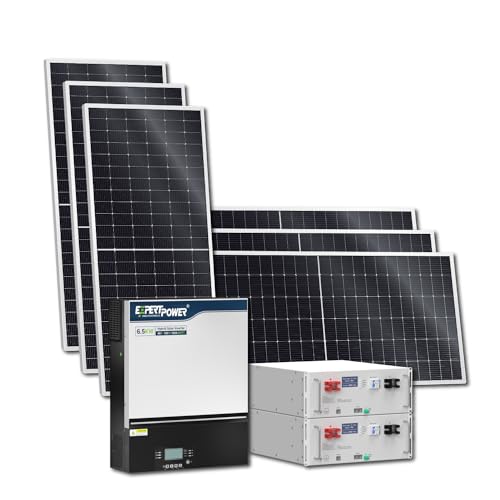
- 10KWh LiFePO4 storage for stronger backup runtime
- 6.5KW hybrid inverter with 120A MPPT charge control
- Bifacial panels and expansion-ready system design
Best For: Off-grid homes, cabins, and backup power buyers who want a scalable solar-first system.
Best for Low-Wind Backup Power

- Hybrid solar + wind setup for inconsistent weather
- MPPT controller supports 12V/24V batteries
- Includes panels, turbine, inverter, and brackets
Best For: Off-grid buyers who want a compact hybrid setup for variable weather and light wind conditions.
Best for Low-Wind Hybrid Setups
12000W Vertical Axis Wind Turbine Kit

- Breeze-friendly vertical-axis design
- MPPT controller for hybrid charging
- Lower-noise option for off-grid sites
Best For: Off-grid buyers who want a wind supplement for solar systems in light-wind locations.
Best Hybrid Off-Grid Kit
1000W Vertical Axis Wind Turbine + Solar
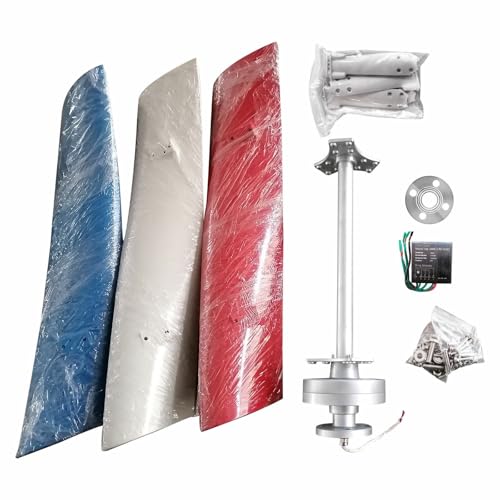
- Hybrid wind + solar setup for more consistent off-grid charging.
- Low start speed and quiet vertical-axis design.
- Includes MPPT controller, inverter, and mounting hardware.
Best For: Off-grid cabins, RVs, boats, and small backup systems in low-wind locations.
Best for Low-Wind Off-Grid Basics – VEVOR 12V 400W Solar Wind Kit
If you want a hybrid wind solar kit for low wind areas, this VEVOR 12V 400W bundle gives you a practical mix of solar and wind generation in one off-grid package. The two 100W monocrystalline panels handle steady daylight charging, while the 200W turbine adds backup production when the breeze is available, making it a flexible fit for RVs, boats, cabins, and camping setups.
Best For: Off-grid buyers who want an affordable solar-and-wind combo for backup power, especially where wind is light but not completely absent.
Pros:
- Includes both solar panels and a wind turbine for more dependable hybrid charging
- MPPT hybrid controller helps improve power conversion and protects the system
- Low 2.5 m/s start-up speed suits breezier periods in marginal wind sites
- Useful for RV, boat, cabin, rooftop, and camping applications
Cons:
- Wind output will still be limited in very calm locations
- 400W total rating is modest for larger household power needs
- Installation takes more setup than a solar-only kit
As a hybrid wind solar kit for low wind areas, this package makes the most sense when you want solar to carry the load and wind to contribute whenever conditions improve. It is a sensible entry-level off-grid option, but shoppers with higher energy demands should look at larger systems.
Best for Split-Phase Systems – ExpertPower 6500W Hybrid Solar Inverter
If you’re building a hybrid wind solar kit for low wind areas, this ExpertPower inverter is a strong fit when you want solar-first charging, battery flexibility, and support for larger AC loads. The built-in 120A MPPT controller, dual PV inputs, and split-phase capability make it a practical core for off-grid cabins, home backup, or a mixed renewable setup.
Best For: Off-grid buyers who need a 120V/240V-ready inverter with strong solar charging and room to expand.
Pros:
- 120A MPPT controller with up to 8000W solar input for serious charging capacity
- Split-phase support with two units, plus up to 6-unit parallel expansion
- Works with multiple battery types, including LiFePO4, AGM, GEL, and SLA
- Wi-Fi monitoring and detachable LCD make system checks easier
Cons:
- Split-phase 120V/240V operation requires two units, raising total cost
- Advanced setup may be overkill for small basic backup systems
- Inverter-focused design means you’ll still need separate wind components if using wind power
For buyers comparing a hybrid wind solar kit for low wind areas, this model makes the most sense as the electrical heart of the system rather than the renewable source itself. It shines where you want efficient PV charging, battery versatility, and scalable output for bigger homes, cabins, or multi-device off-grid setups.
Best for Low-Wind Off-Grid Power – 500W Solar Wind Hybrid Kit
If you want a hybrid wind solar kit for low wind areas, this Giosolar 500W bundle is built to keep charging options open when conditions change. It combines four 100W monocrystalline panels with a 100W turbine, so you can lean on solar on calm days and add wind support when the breeze picks up.
Best For: Off-grid cabins, sheds, RVs, boats, and homeowners who want a compact hybrid setup with both solar and wind input.
Pros:
- Hybrid design helps produce power in sunny, windy, or mixed weather.
- Four 100W monocrystalline panels offer solid solar input for the size.
- Wind turbine starts at a low 3 m/s, which is helpful in lighter-breeze locations.
- Includes both wind and solar controllers for broader off-grid compatibility.
Cons:
- Panel and turbine output will still depend heavily on local weather and placement.
- PWM controller is less efficient than MPPT for some battery setups.
- Installation is more involved than a single-source solar kit.
This is a practical pick if you need a hybrid wind solar kit for low wind areas and want a backup source when solar alone is not enough. It makes the most sense for users who value flexibility over a simple plug-and-play install.
Best for Low-Wind Off-Grid Kits – 1200W Vertical Axis Hybrid Solar Kit
If you need a hybrid wind solar kit for low wind areas, this 1200W vertical-axis system is built around an easy-start turbine and two 100W monocrystalline panels for more dependable off-grid charging. The vertical blade design, low starting wind speed, and automatic 12V/24V switching make it a practical fit for remote setups where wind is inconsistent and solar can fill the gaps.
Best For: Cabins, RVs, farms, and remote properties that need a compact wind-and-solar backup system with low-wind performance.
Pros:
- Vertical-axis turbine is designed to perform better at lower wind speeds.
- Hybrid setup adds 200W of solar to support charging when wind drops.
- Auto-switching 12V/24V compatibility simplifies off-grid integration.
- Low-noise, low-vibration design is easier to live with near occupied spaces.
Cons:
- Solar output is limited compared with larger panel arrays.
- Needs proper mounting and site planning to get the most from the turbine.
- Not a whole-home replacement for high-demand electrical loads.
Overall, this is a sensible pick if you want a hybrid wind solar kit for low wind areas without overcomplicating the setup. It’s most compelling as a compact off-grid power helper for supplemental charging rather than a primary high-capacity system.
Best for Low-Wind Starts – Wind Turbine 400W 12V Kit
If you’re building a hybrid wind solar kit for low wind areas, this 400W 12V turbine is worth a look because it’s designed to start generating at just 2.5 m/s and pairs with a charge controller for simple hybrid system integration. It’s a practical option for RVs, cabins, boats, and small off-grid setups where every bit of supplemental wind power counts.
Best For: RV owners, cabin users, and marine/off-grid buyers who want a compact wind turbine that can complement a solar setup in light wind conditions.
Pros:
- Low 2.5 m/s cut-in speed helps it start in lighter breezes
- Includes a charge controller for easier system setup
- Five-blade design and yaw system improve wind capture
- Built for marine, RV, home, and cabin use
Cons:
- Best as a supplement to solar, not a primary power source
- Wind output will still depend heavily on local conditions
- Installation may be more involved than plug-and-play gadgets
For shoppers comparing a hybrid wind solar kit for low wind areas, this model stands out more for its low-start performance and system-ready design than for raw wattage. It makes the most sense when you want a compact wind add-on to boost a solar array in breezy-but-not-windy locations.
Best Off-Grid Home Power Kit – ExpertPower 10KWH 3240W Solar Kit
If you want a serious backup setup that can also serve as a hybrid wind solar kit for low wind areas, this ExpertPower package is built around high-capacity storage, a 6.5KW hybrid inverter, and bifacial solar panels. It’s geared toward users who want an all-in-one off-grid foundation for a cabin, home, or remote property, with room to expand later.
Best For: Homeowners, cabin owners, and off-grid buyers who want a scalable solar battery system with hybrid inverter support and strong backup capability.
Pros:
- Large 10KWh LiFePO4 battery bank provides dependable stored power for backup or off-grid use.
- 6.5KW hybrid inverter with 120A MPPT helps manage solar charging and power transitions efficiently.
- Bifacial panels can improve output in strong sunlight and reflect light from surrounding surfaces.
Cons:
- Installation is complex and requires solid electrical knowledge or a qualified installer.
- Important balance-of-system parts like cables, breakers, and mounting hardware are not included.
For buyers comparing a hybrid wind solar kit for low wind areas, this is less about wind generation and more about building a robust solar-first energy system that can pair with other sources. It’s a practical choice if you want dependable storage, inverter flexibility, and a path to expand your off-grid setup over time.
Best for Low-Wind Backup Power – 640W Hybrid Solar Wind Kit
If you need a hybrid wind solar kit for low wind areas, this 640W system is built to keep charging moving when sunlight or wind alone is inconsistent. The package combines two 120W solar panels, a 400W turbine, a hybrid MPPT controller, and a 1000W inverter, making it a practical off-grid starter for cabins, RVs, sheds, and remote sites.
Best For: Buyers who want a compact off-grid hybrid setup that can harvest both solar and light wind power in variable weather.
Pros:
- Hybrid design helps offset weak sun or intermittent wind conditions
- MPPT controller supports 12V/24V systems and multiple battery types
- Low starting wind speed makes it more useful in breezy but not windy locations
- Includes inverter and brackets for a more complete installation package
Cons:
- Still depends on usable wind; very calm areas will rely mostly on solar
- Installation is more involved than a basic solar-only kit
- Output will vary widely based on site conditions and battery setup
As a hybrid wind solar kit for low wind areas, this system makes the most sense for buyers who want redundancy and seasonal flexibility more than maximum simplicity. It is a better fit for off-grid backup and light-to-moderate power needs than for heavy continuous loads.
Best for Low-Wind Hybrid Setups – 12000W Vertical Axis Wind Turbine Kit
If you want a wind add-on that can complement a hybrid wind solar kit for low wind areas, this vertical-axis turbine is designed around easy-starting, 360° wind capture, and quieter operation. The MPPT controller and wide voltage options make it a practical fit for off-grid charging setups where you want steady supplemental power rather than a noisy, high-maintenance turbine.
Best For: Homeowners, cabins, boats, and off-grid users looking for a vertical turbine that can pair with solar in light to moderate wind conditions.
Pros:
- Vertical-axis design can catch wind from any direction without a yaw system
- Low start torque and breeze startup help in lighter wind conditions
- MPPT controller improves charging control in hybrid systems
- Lower-noise profile suits homes, cabins, and marina installs
Cons:
- Large claimed wattage may be optimistic for real-world low-wind output
- Best treated as a supplemental generator, not a solar replacement
- Installation and tower quality will strongly affect performance
For a hybrid wind solar kit for low wind areas, the main appeal here is the combination of all-direction wind capture, lower startup demands, and controller support. It makes the turbine more realistic as a supplemental source when solar alone needs help, especially on sites with inconsistent breezes.
Best Hybrid Off-Grid Kit – 1000W Vertical Axis Wind Turbine + Solar
If you need a hybrid wind solar kit for low wind areas, this 12V/24V system is built to squeeze value from light breezes while the included 200W of solar helps fill in the gaps. The vertical-axis turbine starts at a low cut-in speed, runs quietly, and pairs with an MPPT controller plus a 2000W inverter for basic off-grid power support in cabins, RVs, boats, and remote sheds.
Best For: Off-grid users who want a compact wind-and-solar setup with inverter support for cabins, RVs, boats, or small backup systems.
Pros:
- Hybrid wind + solar design helps produce power when wind is inconsistent.
- Low start speed and quiet vertical-axis operation suit calmer locations.
- Includes MPPT controller and 2000W inverter for a more complete kit.
Cons:
- Solar capacity is limited at 200W, so it’s not a full-home backup solution.
- Real-world output will still depend heavily on mounting height and exposure.
This is a practical hybrid wind solar kit for low wind areas if you want redundancy from both wind and sun without piecing together separate components. It makes the most sense for modest off-grid loads rather than heavy continuous demand.
How We Picked the Best Hybrid Wind Solar Kit for Low Wind Areas
We focused on systems that combine wind and solar in a way that still makes sense when airflow is inconsistent. Priority went to controller quality, usable output range, system voltage, expansion potential, and whether the kit is realistic for cabins, RVs, boats, or backup power.
For a Hybrid Wind Solar Kit for Low Wind Areas, the most important question is not just peak wattage; it is whether the kit can collect enough energy from multiple sources without wasting input or requiring oversized hardware.
Quick Comparison
Smaller 12V and 24V kits are usually easier to install and better for modest loads, battery charging, and mobile use. Larger 48V or split-phase systems suit higher consumption, more battery capacity, and home backup applications. Vertical-axis turbines can be appealing in turbulent or shifting wind, while horizontal-axis units often perform better in cleaner airflow.
Key Buying Factors for a Hybrid Wind Solar Kit for Low Wind Areas
Wind Type and Real-World Conditions
Low-wind regions often have inconsistent gusts rather than steady speeds. Look for a turbine with a low start-up speed and a controller designed to manage variable input. If your site is especially turbulent, a vertical-axis design may be easier to keep productive.
Solar Capacity and Battery Matching
In many low-wind installs, solar will carry more of the daily load than wind. Make sure the panel wattage and battery bank are matched to your actual usage, because under-sized storage can waste good generation and over-sized storage can hide poor charging performance.
Controller and Inverter Quality
A strong hybrid controller helps balance both inputs and protects batteries from poor charging behavior. If you need AC output, check inverter continuous power, surge rating, and whether the system supports your required voltage or split-phase setup.
Installation and Maintenance
Choose hardware you can mount securely and service easily. In low-wind areas, there is no benefit to a system that is difficult to align, oversensitive to vibration, or hard to inspect.
Who Should Buy Which Hybrid Wind Solar Kit for Low Wind Areas?
Choose compact 12V kits for RVs, boats, sheds, and small backup loads. Step up to 24V or larger panel-and-turbine kits if you want better charging capacity for cabin use or moderate off-grid living. Consider 48V inverter-based systems if you are building a serious whole-home backup setup, plan to expand batteries, or want higher efficiency over longer cable runs.
If your location is truly low wind, favor hybrid kits with strong solar contribution and treat the turbine as a secondary generator, not the main energy source. That approach usually delivers the most reliable real-world performance.