Keeping a fridge at the right temperature is easier when you can see it at a glance. The best refrigerator thermometers for beginners help you spot unsafe temperature swings before food spoils.
Below, you’ll find simple, easy-to-use options with clear displays, reliable readings, and helpful features like max/min memory, alarms, and magnetic mounting.
Best 10 Refrigerator Thermometers for Beginners Picks for 2026
Simple Analog Pick
Classic Stainless Steel Fridge Thermometer 2-Pack

- Large dial with color-coded zones
- No batteries required
- Stainless steel, reusable 2-pack
Best For: beginners who want a simple analog fridge or freezer check
Alert-Ready Upgrade
Wireless Fridge and Freezer Thermometer with Alarm

- Wireless fridge and freezer sensors
- Customizable temperature alarms
- LCD display with multiple placement options
Best For: beginners who want alerts and remote monitoring
Easy Bulk Option
4-Pack Large Dial Analog Thermometers

- Four thermometers in one pack
- Large dial with flexible placement
- Stainless steel, waterproof design
Best For: beginners who need multiple simple thermometers
Digital Readout Pick
Waterproof LCD Fridge Thermometer with Min/Max
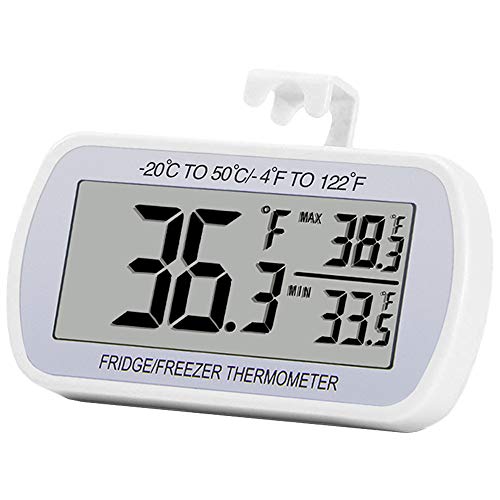
- Large LCD with big digits
- Max/min tracking for temperature changes
- Hook, magnet, and stand options
Best For: beginners who want a compact digital thermometer with history tracking
Budget-friendly basic pick
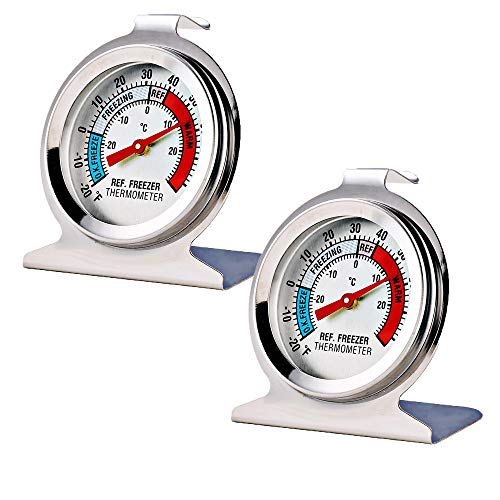
- Large dial for easy reading
- Wide base and hook placement
- Stainless steel, battery-free design
Best For: Simple fridge and freezer monitoring
Feature-packed digital pick

- Big LCD display with large digits
- Max/min tracking helps monitor changes
- Hook, magnet, and stand placement
Best For: Users who want easy digital monitoring
Commercial-grade classic pick

- Battery-free instant mechanical reading
- NSF certified with stainless steel build
- Shatter-proof lens for added durability
Best For: Durable, food-safe temperature checks
Digital Waterproof Pick
Waterproof Fridge Thermometer 2-Pack
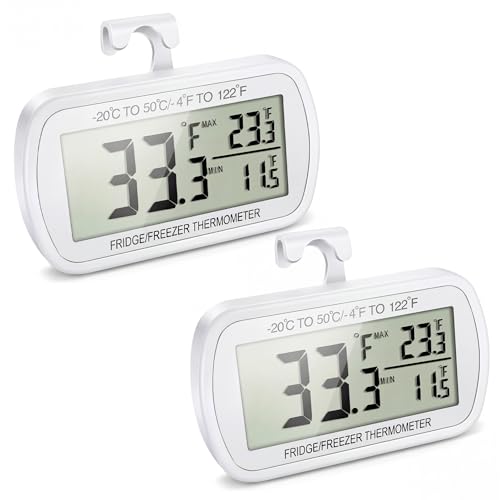
- Large LCD shows current, max, and min temps.
- Simple 3-button controls are easy to learn.
- Stand, hook, or magnet placement options.
Best For: Beginners who want an easy-to-read digital thermometer with flexible placement.
Classic No-Battery Choice
Large Dial Fridge Thermometers

- Big analog dial is easy to read.
- No batteries needed for operation.
- 4-pack covers multiple fridges or coolers.
Best For: Beginners who prefer a simple analog thermometer with no batteries required.
Backlit Digital Upgrade

- Backlit LCD is easy to read in dark spaces.
- Coin-open battery cover simplifies replacement.
- IPX6 waterproofing adds extra durability.
Best For: Beginners who want a brighter screen and extra convenience features.
Simple Analog Pick – Classic Stainless Steel Fridge Thermometer 2-Pack
If you want refrigerator thermometers for beginners that are easy to place and easy to read, this 2-pack keeps things straightforward. The large dial uses clear blue and red zones, and the mechanical design means there are no batteries to manage.
Best For: Beginners who want a basic, reusable analog thermometer for a fridge, freezer, or cooler.
Pros:
- Large dial with clear color zones for quick reading
- No battery power required
- Can be hung or placed in different positions
- Stainless steel build with a glass protective lens
Cons:
- Analog design does not offer digital alerts or logging
- Temperature reading is manual rather than remote
This is a practical entry-level option if you mainly want a simple temperature check without extra features. The 2-pack also gives you a spare or lets you monitor more than one cold storage space.
Alert-Ready Upgrade – Wireless Fridge and Freezer Thermometer with Alarm
For refrigerator thermometers for beginners who want more reassurance, this wireless set adds remote monitoring and customizable alarms. It includes one sensor for the fridge and one for the freezer, with readings sent to an easy-to-read LCD display.
Best For: New users who want temperature alerts and a wireless display instead of checking a dial inside the appliance.
Pros:
- Wireless setup with one fridge sensor and one freezer sensor
- Customizable temperature alarms for spikes or door-left-open issues
- LCD display with magnetic backing, wall mount, and stand options
- Multipurpose silicone sensor straps and included suction cups
Cons:
- More features may take a little more setup than a basic analog model
- Requires batteries for digital operation
This is a strong choice if you want a beginner-friendly thermometer that does more than simply show temperature. The alarm function makes it especially useful when you want quick notice of changes.
Easy Bulk Option – 4-Pack Large Dial Analog Thermometers
If you need refrigerator thermometers for beginners and want a simple way to cover multiple spots, this 4-pack keeps the job uncomplicated. Each thermometer uses a large analog dial, a wide base, and an integrated hook so placement is flexible inside the refrigerator.
Best For: Beginners who want several easy-to-read thermometers for different fridge or freezer locations.
Pros:
- 4-pack gives you multiple thermometers for one or more appliances
- Large dial analog design is easy to read
- Wide base and integrated hook allow flexible placement
- Stainless steel construction with waterproof and freezer-safe notes
Cons:
- No digital display or alarm features
- Manual reading only, with no battery-powered convenience
This is a practical pick if you want a straightforward analog thermometer and value getting several units at once. It’s especially useful when you want to monitor multiple shelves, coolers, or freezers without buying separate models.
Digital Readout Pick – Waterproof LCD Fridge Thermometer with Min/Max
Among refrigerator thermometers for beginners, this digital model is a good fit if you prefer a clear screen and a little more tracking detail. It shows large digits on an LCD display, records max/min values, and includes hook, magnet, and stand placement options.
Best For: Beginners who want a compact digital thermometer with a readable screen and basic temperature history.
Pros:
- Large LCD display with big digits
- Max/min record function helps track temperature changes
- Hook, magnet, and stand mounting options
- Waterproof IPX3 structure and included battery
Cons:
- Uses a small digital sensor style rather than a simple dial
- Needs battery power, so eventual replacement may be required
This model offers more visibility than a basic analog thermometer while staying compact and easy to place. It’s a sensible step up for beginners who want digital convenience without a complicated setup.
Budget-friendly basic pick – Large Dial Analog Thermometer
If you want refrigerator thermometers for beginners that keep things simple, this 2-pack analog option is easy to place and easy to read. It uses a large dial, a wide base, and an integrated hook, so you can set it on a shelf or hang it where it’s visible. The stainless steel build and broad temperature range make it a straightforward choice for everyday fridge or freezer checks.
Best For: Beginners who want a no-battery, easy-to-read thermometer for basic fridge and freezer monitoring.
Pros:
- Large dial is designed for easy reading
- Wide base and integrated hook give flexible placement options
- Stainless steel construction
- No battery required
Cons:
- Needs enough reaction time before readings settle
- Analog design may be less convenient than a digital display
Overall, this is a practical starter pick if you mainly want a simple visual check on fridge or freezer temperature. It keeps the setup low-effort and avoids battery maintenance, which is helpful for first-time buyers.
Feature-packed digital pick – Waterproof LCD Thermometer
This digital choice is a strong fit for refrigerator thermometers for beginners who want clear numbers and extra monitoring features. It has a large LCD display, compact size, and a sensor positioned on the back for hanging inside the refrigerator. With max/min recording, a wide measuring range, and a waterproof design, it gives you more information without adding much complexity.
Best For: Beginners who prefer a digital display and want max/min tracking for easier temperature monitoring.
Pros:
- Large LCD screen with big digits
- Max/min temperature record function
- Hook, magnet, and stand options for placement
- Waterproof IPX3 structure and included battery
Cons:
- Requires a CR2032 battery
- Digital features may be more than some first-time users need
For beginners who want a little more visibility and tracking, this model offers a nice balance of convenience and functionality. The display is easy to check at a glance, and the multiple mounting options make setup simple.
Commercial-grade classic pick – Classic Large Mechanical Dial
If you’re comparing refrigerator thermometers for beginners and want something sturdy and straightforward, this classic mechanical dial is built for simple temperature checks. It’s NSF certified, battery-free, and made with stainless steel and a shatter-proof lens. The extreme temperature range and instant-reading design make it suitable for refrigerators, freezers, coolers, and similar appliances.
Best For: Beginners who want a durable, battery-free thermometer with a traditional dial and food-safe certification.
Pros:
- Instant mechanical reading with no battery needed
- Stainless steel construction with shatter-proof lens
- NSF certified for kitchen and food use
- Works in refrigerators, freezers, and coolers
Cons:
- Mechanical dial may feel less modern than digital options
- Its commercial design may be more robust than some home users need
This is a solid pick if durability and simplicity matter more than extra features. It keeps operation uncomplicated while adding the reassurance of a certified, food-safe build.
Digital Waterproof Pick – Waterproof Fridge Thermometer 2-Pack
For beginners looking at refrigerator thermometers for beginners, this digital 2-pack keeps things simple with a big LCD, easy button controls, and clear max/min/current temperature readings. It’s a practical choice if you want quick visibility in a fridge or freezer without dealing with complicated setup.
Best For: Beginners who want an easy-to-read digital thermometer with flexible placement options.
Pros:
- 2.56-inch LCD shows current, max, and min temperatures at the same time.
- Simple 3-button operation with °C/°F switching and on/off control.
- Three placement options: stand, hook, or magnetic back.
- IPX3 waterproof design helps it handle damp fridge and freezer conditions.
Cons:
- Max/min readings reset when the thermometer is rebooted.
- IPX3 is basic waterproofing, not a heavy-duty washdown rating.
This is a strong starter option if you want digital convenience and a straightforward way to monitor temperature changes. The included battery and dual-pack format make it easy to use in more than one storage space right away.
Classic No-Battery Choice – Large Dial Fridge Thermometers
If you want refrigerator thermometers for beginners that stay as basic as possible, this 4-pack mechanical dial set is easy to understand at a glance. The large face, color-coded zones, and battery-free design make it a low-fuss option for fridges, freezers, and cooler boxes.
Best For: Beginners who prefer a simple analog thermometer with no batteries required.
Pros:
- Large dial with red and blue zones makes readings easier to see.
- Mechanical design means no batteries are needed.
- Can be hung or placed in different positions with the hook-style panel.
- Stainless steel build with glass protective lens for durability and easy cleaning.
Cons:
- Analog dial lacks the max/min tracking found on digital models.
- Reading is visual only, so it’s less feature-rich than a digital thermometer.
This is the most straightforward option in the group for anyone who wants instant, no-power temperature checking. The 4-pack also makes it easy to monitor multiple storage areas at once.
Backlit Digital Upgrade – TempAir 2-Pack Thermometers
Among refrigerator thermometers for beginners, this digital 2-pack stands out for its backlit display and simple usability in darker spaces. It pairs a clear screen with max/min tracking, multiple placement methods, and a design meant to make battery changes easier.
Best For: Beginners who want a brighter screen and extra convenience features.
Pros:
- Backlit LCD improves readability in dark freezers or low light.
- Coin-twist battery cover is easier to open than models that need a screwdriver.
- Measures from -4°F to 122°F with ±1.8°F accuracy.
- IPX6 waterproof rating adds strong durability for damp environments.
Cons:
- More feature-rich than a basic dial model, so it may be more than some beginners need.
- Backlit digital design depends on battery power.
This is a smart pick if you want a beginner-friendly thermometer that’s still easy to read in low light. The combination of backlight, waterproofing, and max/min monitoring makes it feel practical without being hard to use.
How We Picked the Best Refrigerator Thermometers for Beginners
We focused on Refrigerator Thermometers for Beginners that are easy to install, easy to read, and practical for everyday use. Clear labels, temperature range, response time, alarm features, and display visibility mattered more than advanced extras that can complicate setup.
We also favored models that suit common home use cases: checking a refrigerator, freezer, pantry, or cooler without requiring special calibration steps or app-based learning.
Quick Comparison
Analog dial thermometers are usually the simplest and most affordable choice, especially if you just want a quick temperature check. Digital models add larger displays, max/min records, and in some cases alarms, which can be helpful if you want more oversight with less guesswork.
If you want a low-maintenance option, choose a mechanical dial. If you want more precise day-to-day monitoring, a digital display with memory is often the better fit. For busy households, wireless or alarm-equipped units can offer extra peace of mind.
Key Buying Factors for Refrigerator Thermometers for Beginners
Readability
Large numbers, high-contrast displays, and backlighting make a big difference. Beginners should prioritize thermometers that are easy to read without opening the fridge for long.
Temperature Range
Make sure the thermometer covers both refrigerator and freezer temperatures if you plan to use it in multiple spots. A wide range gives you more flexibility and fewer replacements later.
Display Type
Analog dials are straightforward and require no batteries, while digital options tend to be easier to read and may offer extra functions such as max/min tracking.
Mounting and Placement
Look for magnetic backs, clips, or stands so the thermometer stays visible and stable. Placement matters because readings can vary near vents, doors, and walls.
Alerts and Memory
Alarms and max/min records are especially useful if you are new to monitoring temperatures. They help you catch problems after the fact instead of relying on constant checking.
Who Should Buy Which Refrigerator Thermometers for Beginners?
If you want the simplest setup, choose a classic analog dial model. If you want the easiest reading and better visibility, a digital LCD thermometer is a smart upgrade. If you leave food storage unattended for long stretches, an alarm or wireless model may be worth the extra cost.
For most beginners, the best choice is the one that matches your routine: simple dial for no-fuss monitoring, or digital with memory for more confidence and fewer surprises. Either way, the goal is the same: keep temperatures consistent and food safe.