Choosing a residential wind turbine for battery charging means balancing real-world wind conditions, battery voltage, controller quality, and total system cost.
Below, you’ll find a practical roundup of kits and controllers suited to homes, cabins, RV setups, and hybrid solar systems.
Best 10 Residential Wind Turbine for Battery Charging Picks for 2026
Best for Low-Wind Battery Charging

- Starts in relatively low wind for charging use
- Includes charge controller for battery setups
- Weather-resistant build for marine, RV, and home use
Best For: Off-grid users needing a compact wind kit for 12V battery charging in small hybrid systems.
Best for MPPT Battery Charging
Wind Turbine MPPT Charge Controller 800W

- Boosts charging in light wind with MPPT technology
- IP67 sealed housing for outdoor durability
- Built-in protection against overcharge and wiring faults
Best For: Home turbine owners who want a protected MPPT controller for 12V/24V battery charging.
Best Educational Wind Kit
Thames & Kosmos Wind Power V4.0 STEM Kit
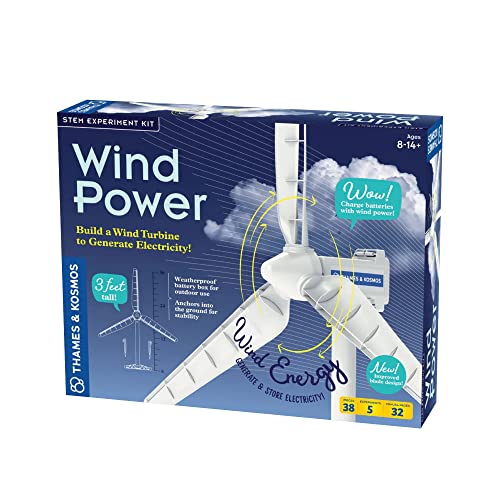
- 3-foot working turbine with adjustable blades
- Charges a rechargeable battery and powers a model car
- Weatherproof battery box for outdoor experiments
Best For: Students and hobbyists who want a realistic, outdoor-friendly wind power demo.
Best Hybrid Solar-Wind Kit
12V 400W Wind Turbine + 30A Controller
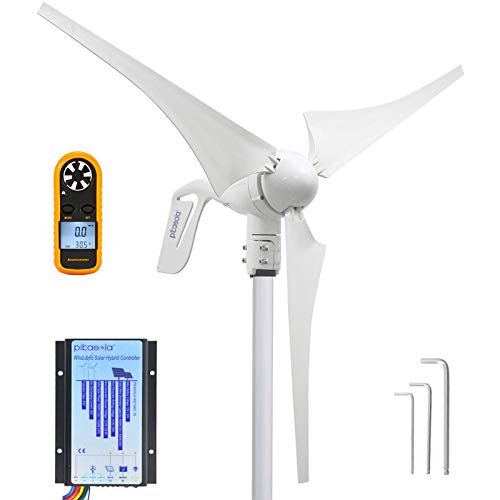
- Hybrid controller supports wind plus up to 500W solar
- Low-start turbine design suits lighter wind conditions
- Good fit for 12V battery charging systems
Best For: Homeowners or cabin users building a small hybrid off-grid charging setup.
Best Low-Noise Pick
3000W Vertical Wind Turbine Kit
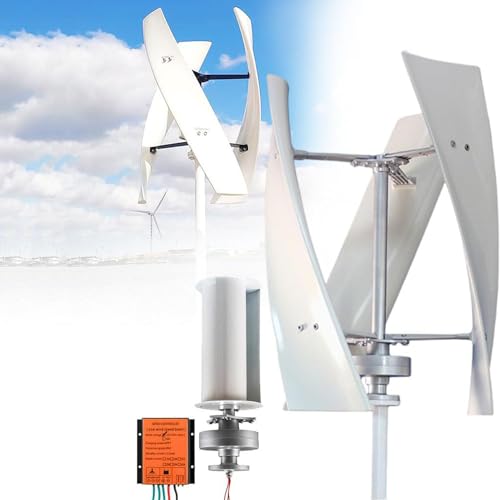
- Vertical-axis blades capture wind from any direction
- Quieter than many traditional horizontal turbines
- Useful for battery charging, backup power, and lighting
Best For: Homeowners and small off-grid setups that want a quieter turbine for battery charging.
Best Controller for Hybrid Setups
1400W Hybrid Wind Solar Controller

- Supports 800W wind and 600W solar inputs
- Compatible with 12V/24V and lithium batteries
- Booster MPPT and protection features improve control
Best For: Off-grid users combining a small wind turbine with solar for battery charging.
Best for Quiet Off-Grid Charging
12V/24V/48V Vertical Wind Turbine Kit

- Quiet vertical-axis design for residential settings
- Supports 12V, 24V, and 48V battery charging
- Includes MPPT controller for off-grid use
Best For: Quiet, compact wind charging setups for homes, cabins, rooftops, and marine applications.
Best MPPT Controller
Wind Turbine Charge Controller 16A 300W-1000W

- MPPT tracking improves charging efficiency in low wind.
- Works with 12V and 24V battery systems.
- Multiple protections help guard the battery and controller.
Best For: Homeowners and off-grid buyers who need efficient, protected wind battery charging.
Best for 48V Off-Grid Charging

- 48V setup with MPPT controller
- Low starting wind speed for better charging potential
- Durable aluminum alloy housing and nylon fiber blades
Best For: Off-grid cabins, mobile homes, and supplemental battery charging setups.
Best for Versatile Off-Grid Charging

- Captures wind from any direction
- Low-noise design for residential use
- Supports battery charging and backup power
Best For: Homeowners and off-grid users who want flexible battery charging support from a quieter wind turbine.
Best for Low-Wind Battery Charging – 400W 12V Wind Turbine Kit
If you’re comparing a residential wind turbine for battery charging, this 400W 12V kit is worth a look for off-grid cabins, RVs, boats, and home backup systems. It’s designed to start in relatively low wind, includes a charge controller, and uses a compact 5-blade setup aimed at steady small-system charging rather than large-scale power production.
Best For: Buyers who want a compact wind turbine kit for 12V battery charging in small off-grid or hybrid solar-wind setups.
Pros:
- Low start-up wind speed helps it begin generating in lighter breezes.
- Includes a charge controller, making it more ready for battery charging setups.
- 5-blade design and yaw system are built to capture wind efficiently.
- Weather-resistant blades and aluminum alloy body suit marine and outdoor use.
Cons:
- 400W output is modest and best for small battery banks, not whole-home loads.
- Wind performance will vary a lot based on tower height and local conditions.
- Installation and wiring may still require some DIY know-how.
As a residential wind turbine for battery charging, this kit makes the most sense for users who want a compact, practical entry into wind power and already understand that real-world output depends heavily on wind quality and setup.
Best for MPPT Battery Charging – Wind Turbine MPPT Charge Controller 800W
If you’re comparing options for a residential wind turbine for battery charging, this MPPT wind turbine controller stands out for helping small systems start charging in lighter wind and manage power more efficiently than basic PWM units. It also adds overcharge, reverse-polarity, short-circuit, and high-temperature protection, which is important for home setups that need stable, low-maintenance operation.
Best For: Home wind turbine owners who want an MPPT controller for 12V/24V battery charging with built-in protection.
Pros:
- MPPT boost charging can help capture power sooner in light wind and low-voltage conditions.
- IP67 housing is sealed for better durability in outdoor installations.
- Supports 12V and 24V systems with automatic voltage matching.
- Includes multiple safety protections for everyday residential use.
Cons:
- Rated for 500W/800W systems, so it is not suited to larger turbines.
- Requires correct wiring order and compatible turbine/battery voltage to avoid damage.
For a residential wind turbine for battery charging, this controller makes sense if you want a practical upgrade over a basic charge controller and need help getting usable charging performance in lower wind conditions. It is more about reliable system control and protection than advanced tuning features.
Best Educational Wind Kit – Thames & Kosmos Wind Power V4.0 STEM Kit
If you want a hands-on way to explore a residential wind turbine for battery charging, this STEM kit is a strong teaching tool rather than a full-scale home power system. It builds a 3-foot working turbine with adjustable blades, a generator, and a weatherproof battery box, so you can test how wind speed and blade angle affect output in real-world conditions.
Best For: Students, hobbyists, and DIY-minded buyers who want a realistic, outdoor-capable demo of wind generation and battery charging.
Pros:
- Real working 3-foot turbine makes wind power easy to understand
- Can charge a rechargeable battery and power a small model car
- Weatherproof battery box and ground stakes support outdoor use
- Adjustable blades let you experiment with performance
Cons:
- Not designed to charge household batteries or run home loads
- Performance depends heavily on wind conditions
- More of an educational project than a plug-and-play power solution
For buyers comparing a residential wind turbine for battery charging, this kit is best seen as a learning-first option that demonstrates the basics of wind-to-electricity conversion. It is useful for testing concepts, but it won’t replace a true home energy system.
Best Hybrid Solar-Wind Kit – 12V 400W Wind Turbine + 30A Controller
If you want a residential wind turbine for battery charging that can also accept solar input, this 12V 400W kit is built for hybrid off-grid setups. The included 30A controller simplifies charging and helps protect the battery, while the low-start wind design is aimed at getting useful output in lighter breezes.
Best For: Homeowners or cabin users who want a compact wind-and-solar battery charging setup with an integrated controller.
Pros:
- 30A hybrid controller supports both wind and up to 500W of solar on a 12V system
- Low-start, low-vibration turbine design helps it produce power in lighter wind conditions
- Three-phase permanent magnet generator offers efficient charging in a compact package
- Yaw system and aerodynamic tail help the rotor track wind direction automatically
Cons:
- 400W output is modest for larger homes or high-demand battery banks
- Performance will depend heavily on actual wind conditions and tower placement
- Installation and system sizing still require some DIY electrical know-how
As a residential wind turbine for battery charging, this model stands out more for flexibility than raw power: it’s a practical hybrid starter kit for users who want wind and solar working together on a 12V battery system.
Best Low-Noise Pick – 3000W Vertical Wind Turbine Kit
If you want a residential wind turbine for battery charging that prioritizes quieter operation and omni-directional wind capture, this 3-blade vertical-axis kit is built for practical off-grid use. The permanent magnet generator and low-speed design make it a sensible option for homeowners, cabins, and small backup systems where steady charging matters more than flashy peak claims.
Best For: Homeowners, cabins, and small off-grid setups that want a quieter vertical turbine for battery charging and general renewable power experiments.
Pros:
- Vertical-axis design can catch wind from any direction without yaw adjustment
- Quieter operation than many horizontal turbines, which helps in residential settings
- Permanent magnet generator is designed to reduce resistance and improve efficiency
- Broad use cases for home backup, surveillance, and outdoor lighting systems
Cons:
- Power output depends heavily on tower height and local wind quality
- May require additional components for a complete battery-charging setup
- Large 3000W claims should be viewed in context of real-world wind conditions
As a residential wind turbine for battery charging, this model makes the most sense if you value quieter operation and simpler wind alignment over maximum efficiency in ideal, high-speed winds. It’s a flexible choice for modest off-grid projects, but installation quality and site exposure will determine how useful it really is.
Best Controller for Hybrid Setups – 1400W Hybrid Wind Solar Controller
If you need a residential wind turbine for battery charging, this hybrid controller is built to manage both wind and solar input in one off-grid system. It supports 12/24V batteries, including lithium, and is rated for up to 800W wind plus 600W solar, making it a practical fit for small home, cabin, boat, or street-light installations.
Best For: Off-grid buyers who want one controller to handle a wind turbine and solar panels for battery charging.
Pros:
- Hybrid design supports both wind and solar charging in one unit
- Booster MPPT wind charging helps improve low-wind performance
- Works with 12V/24V batteries, including lithium
- Large LCD and configurable load output modes add flexibility
Cons:
- It is a controller, not the turbine or solar panels themselves
- Setup may be more involved than a basic plug-and-play charger
- Best suited to users who can match it with the right system sizes
This is a good pick if your residential wind turbine for battery charging needs a smarter control hub rather than a simple charger. Its hybrid architecture and protection features make it more appealing for users building a compact off-grid power system than for anyone wanting a standalone wind-only solution.
Best for Quiet Off-Grid Charging – 12V/24V/48V Vertical Wind Turbine Kit
If you want a residential wind turbine for battery charging without the bulk and noise of a traditional horizontal setup, this vertical-axis kit is built for small-scale renewable power projects. It is aimed at homes, rooftops, cabins, marine use, and other spots where low-start wind and compact installation matter more than raw peak output claims.
Best For: Homeowners or DIY buyers who want a quiet vertical wind turbine for charging 12V, 24V, or 48V battery banks in off-grid or backup-power setups.
Pros:
- Vertical-axis design can run without a yaw system and is easier to place in tight spaces.
- Low starting speed and quiet operation make it more suitable for residential use.
- MPPT controller and multi-voltage support add flexibility for battery charging projects.
- Reinforced nylon-fiber blades are built for durability in varying weather conditions.
Cons:
- Large wattage claims may be optimistic compared with real-world small-wind output.
- May require careful installation and matching components for safe battery charging.
- Best performance depends heavily on consistent wind, which many homes do not have.
As a residential wind turbine for battery charging, this kit makes the most sense for buyers who value quiet operation, vertical mounting flexibility, and broad voltage compatibility over maximum power output. It is a practical fit for off-grid experimentation, backup systems, and marine or rooftop setups where a compact turbine is easier to live with.
Best MPPT Controller – Wind Turbine Charge Controller 16A 300W-1000W
If you need a residential wind turbine for battery charging, this 12V/24V controller is built to improve charging efficiency while keeping the system protected. Its MPPT tracking, 16A rating, and IP67-rated design make it a practical fit for small off-grid setups where stable battery charging matters more than raw turbine size.
Best For: Homeowners and off-grid users who want a wind turbine charge controller with MPPT efficiency, broad battery support, and strong protection features.
Pros:
- MPPT control helps capture more energy, especially in low-wind conditions.
- Supports 12V and 24V battery systems with automatic matching.
- Built-in protections cover overcharge, overload, reverse connection, and braking.
- IP67 construction and heat-dissipation channels support safer operation.
Cons:
- Best suited to users who already have a compatible wind turbine setup.
- 16A output may be limiting for larger residential charging systems.
Overall, this controller is a solid pick if you want a residential wind turbine for battery charging and care most about efficient power tracking and battery safety. It looks especially useful for smaller off-grid homes, cabins, or backup systems that need dependable charging control rather than a full turbine kit.
Best for 48V Off-Grid Charging – 3000W 48V Wind Turbine Kit
If you’re shopping for a practical residential wind turbine for battery charging, this 3000W kit is aimed at off-grid homes, cabins, boats, and backup power setups that can use a 48V system. It starts at relatively low wind speeds, includes an MPPT controller, and uses a permanent magnet generator design to improve charging efficiency.
Best For: Off-grid buyers who want a 48V wind turbine kit for battery charging, especially for cabins, mobile homes, and supplemental home power.
Pros:
- 48V configuration with MPPT controller for battery charging setups
- Low start-up wind speed and five-blade design for better energy capture
- Aluminum alloy body and nylon fiber blades for durability
- Works well as a supplemental power source for small off-grid systems
Cons:
- Mast is not included, so installation needs extra hardware
- 3000W claims may be optimistic in real-world residential wind conditions
- Best results depend heavily on consistent wind exposure
Overall, this is a solid residential wind turbine for battery charging if you specifically need a 48V kit and already have a suitable tower or mount. It makes the most sense as a supplemental off-grid charger rather than a full-home standalone power solution.
Best for Versatile Off-Grid Charging – Vertical Wind Turbine Kit
If you want a residential wind turbine for battery charging that can handle changing wind directions, this vertical turbine kit is worth a look. It’s designed to capture wind without tracking, and the low-noise, multi-voltage setup makes it a practical option for homes, cabins, and emergency backup systems.
Best For: Homeowners and off-grid users who need a flexible wind turbine setup for charging batteries and supporting small backup power needs.
Pros:
- Vertical design can capture wind from any direction without tracking.
- Low-noise operation is better suited to residential and mixed-use settings.
- Useful for battery charging and emergency power applications.
Cons:
- Performance will depend heavily on tower height and local wind conditions.
- Product details are broad, so buyers should verify the exact voltage and controller specs before ordering.
This is a flexible pick if you’re comparing a residential wind turbine for battery charging with quieter, easier-to-place alternatives. It looks most appealing for buyers who want a simple off-grid or backup energy source rather than a highly specialized turbine system.
How We Picked the Best Residential Wind Turbine for Battery Charging
We focused on products that can realistically support battery charging, not just display high wattage numbers. That means looking at usable voltage options, included charge controllers, protection features, and whether a kit is better suited to a small off-grid setup or a larger hybrid system.
For a Residential Wind Turbine for Battery Charging, the most important factor is compatibility with your battery bank and your site’s wind resource. A well-matched 400W system can outperform a much larger turbine installed in the wrong location.
Quick Comparison: What Matters Most
Think of the options in three groups: complete turbine kits, charge controllers, and hybrid wind-solar systems. Complete kits are easiest for beginners. Controllers are best when you already have a turbine or want to upgrade protection and charging performance. Hybrid systems are the smartest choice when wind is inconsistent and solar can fill the gaps.
Also compare rated voltage, controller amperage, and whether the kit is intended for 12V, 24V, or 48V batteries. If your setup includes lithium or lead-acid batteries, the charging profile matters just as much as the turbine output.
Key Buying Factors for Residential Wind Turbine for Battery Charging
Battery Voltage and System Match
Choose a turbine and controller that match your bank voltage first. A mismatch can reduce charging efficiency or create extra setup complexity. Many residential systems start at 12V, but 24V and 48V setups often make more sense for larger homes or better cable efficiency.
Controller Quality and Protection
Look for MPPT control, overcharge protection, dump-load or unloader functions, and clear status display. These features help protect batteries during gusty conditions and improve charging stability. For a Residential Wind Turbine for Battery Charging, the controller is not optional—it is a core safety component.
Wind Conditions and Mounting Height
Even a strong turbine needs usable wind. Rooftop turbulence, trees, and nearby structures can cut output sharply. Mounting height and exposure often matter more than peak wattage claims.
Hybrid Capability
If your location has seasonal wind or variable weather, a wind-solar hybrid controller can improve overall battery charging consistency. This is especially useful for cabins, remote homes, and backup power systems.
Who Should Buy Which Residential Wind Turbine for Battery Charging?
Buy a smaller all-in-one kit if you want an easier entry into off-grid charging for lights, monitoring, or light residential loads. Choose a higher-capacity 24V or 48V setup if you are building a more serious home backup system and already have strong mounting options.
If you already own a turbine, upgrading to a better MPPT controller may deliver more value than replacing the generator. And if your site has variable wind, a hybrid wind-solar package is often the most practical long-term investment.