A solar-powered heater sounds like a simple way to protect a greenhouse through winter, but small portable panels rarely supply enough energy to heat an entire structure overnight. The right choice depends on your greenhouse size, available sunlight, and whether you need to warm the air or protect a small area.
These seven picks include compact heater kits and portable panel options. Use the guide below to compare their power setups and understand what they can realistically do before you buy.
Best 7 Solar Greenhouse Heaters for Winter Picks for 2026
Compact Shelter Pick
Portable Solar Heater with USB Charging
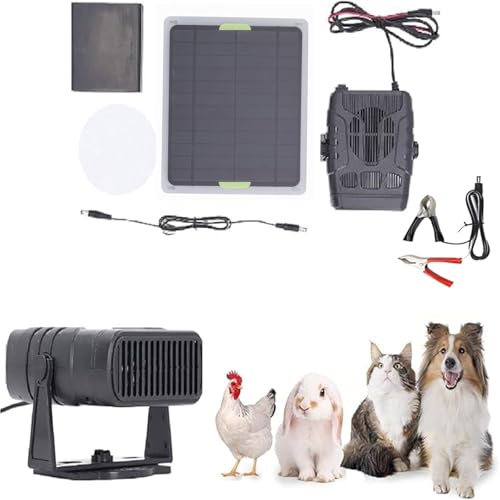
- Localized warmth for small shelters
- Two USB outputs for 5V devices
- Monocrystalline silicon PET panel
Best For: Small coops and pet shelters
Specified-Wattage Pick

- Listed 30W rating
- Overheat protection
- Battery box with USB/DC ports
Best For: Small enclosures needing a portable 30W kit
Accessory-Rich Pick
Solar Fan Heater with Mounting Kit

- Panel and mounting accessories included
- Overheat-prevention temperature control
- Batteries sold separately
Best For: Portable small-space setups needing mounting parts
Coop-Focused Pick
Radiant Solar Heater for Localized Warmth
- Radiant heat for localized use
- Panel, heater and cable included
- Needs three separate 18650 batteries
Best For: Targeted coop or pet-shelter warmth
Lightweight Kit
20W Solar Panel Heater with Battery Box

- 20W solar panel and heater
- Battery box included
- Lightweight with alligator-clip hookup
Best For: Portable, localized warmth in small greenhouse spots
Localized Radiant Heat
Solar Heater with USB Battery Compartment

- Radiant heat for a small zone
- Dual USB outputs for 5V devices
- Three 18650 batteries required separately
Best For: Small enclosures needing localized heat
Higher-Rated Panel
30W Solar Heater with USB and DC Ports

- 30W maximum power rating
- USB and 12V DC connectivity
- Stated overheating shut-off
Best For: Small greenhouse areas needing flexible connections
Compact Shelter Pick – Portable Solar Heater with USB Charging
Among solar greenhouse heaters for winter, this portable model is geared toward localized warmth in a small shelter rather than heating an entire greenhouse. Its monocrystalline silicon PET panel and compact, floor-mounted heater also suit chicken coops and pet houses.
Best For: Focused warming in a small coop or pet shelter where portable solar power is useful.
Pros:
- Compact heater is easy to position for localized warmth.
- Battery compartment and two USB outputs add 5V device-charging capability.
- Monocrystalline silicon PET construction is intended for outdoor use.
Cons:
- Not presented as a whole-greenhouse heating solution.
- Heating output and battery capacity are not specified in the supplied details.
Consider it for a specific cold spot, not as a substitute for a greenhouse-wide heating plan; check your space and power needs before buying.
Specified-Wattage Pick – 30W Portable Solar Heater Kit
If you are comparing solar greenhouse heaters for winter and want a listed power rating, this kit specifies 30W. Its compact design is pitched for small spaces, pet enclosures and vehicle defrosting rather than broad greenhouse coverage.
Best For: Buyers seeking a portable, rated 30W solar heater kit for a small enclosure.
Pros:
- Lists a 30W rating and a monocrystalline solar panel.
- Includes overheat protection for temperature control.
- Battery box and USB/DC ports add power-management options.
Cons:
- No greenhouse coverage area or temperature-rise figures are supplied.
- Battery specifications are not detailed in the supplied notes.
The stated wattage makes this easier to compare with other compact kits, but size its heating role conservatively and verify the battery setup before purchase.
Accessory-Rich Pick – Solar Fan Heater with Mounting Kit
For shoppers looking at solar greenhouse heaters for winter, this portable fan heater stands out for its included setup accessories. The listing describes a 10.24-by-9.45-inch solar panel, a compact heater and a rechargeable battery-box setup for use around greenhouses, pet houses or vehicles.
Best For: A small-space solar fan-heater setup where included mounting parts matter.
Pros:
- Package lists a panel, heater, battery box, cord, bracket, cover plate and sticker.
- Built-in temperature control is intended to prevent overheating.
- Compact, lightweight heater is designed for portable use.
Cons:
- Batteries are not included.
- No measured greenhouse heating coverage or runtime is provided.
The accessory bundle may simplify placement, but budget for batteries and confirm that its localized heat suits your space before relying on it during cold weather.
Coop-Focused Pick – Radiant Solar Heater for Localized Warmth
Among solar greenhouse heaters for winter, this radiant model is described most clearly as a localized heater for a chicken coop or pet house. The kit pairs a monocrystalline silicon PET solar panel with a heater, battery compartment and connecting cable.
Best For: Targeted warmth in a small coop or animal shelter, not a large greenhouse.
Pros:
- Kit includes the panel, heater, battery compartment and connecting cable.
- Dual USB outputs can charge compatible 5V devices.
- Listing explicitly recommends localized use rather than heating a large coop.
Cons:
- Requires three 18650 batteries, which are not included.
- Supplied details do not specify a heating coverage area or runtime.
This is a more sensible candidate for a defined warming spot than for maintaining an entire greenhouse temperature. Factor the required batteries into the total cost.
Lightweight Kit – 20W Solar Panel Heater with Battery Box
Among solar greenhouse heaters for winter, this 20W kit is a portable option for localized warmth. It includes a solar panel, heater, battery box, wire, and accessories, with alligator clips for straightforward hookup.
Best For: Small greenhouse spots or pet enclosures where portability matters more than whole-space heating.
Pros:
- Includes a battery box for storing power when sunlight is scarce.
- Lightweight design is easy to move and position.
- Alligator clips simplify connections.
Cons:
- The 20W panel is better suited to localized warmth than heating an entire greenhouse.
- The notes do not specify battery capacity or operating time.
This is a practical kit to consider for a small, movable heating setup, but plan around its modest panel rating and unspecified runtime.
Localized Radiant Heat – Solar Heater with USB Battery Compartment
For shoppers comparing solar greenhouse heaters for winter, this radiant heater is aimed at a small heating zone rather than a large enclosure. Its kit includes a solar panel, heater, connecting cable, and battery compartment with two USB outputs.
Best For: Localized warmth in a small enclosure when you can supply the required batteries.
Pros:
- Battery compartment has dual USB outputs for compatible 5V devices.
- Kit includes the panel, heater, cable, and battery compartment.
- Seller describes the monocrystalline-silicon PET panel as suitable for outdoor use.
Cons:
- Requires three 18650 batteries, which are not included.
- The seller says it may not heat a large enclosure adequately.
Its explicit localized-heating guidance makes the intended scale clear. Budget for the batteries and avoid treating its stated 70°C maximum setting as a greenhouse air-temperature rating.
Higher-Rated Panel – 30W Solar Heater with USB and DC Ports
Among solar greenhouse heaters for winter, this portable model stands out for its 30W panel rating, USB and DC ports, and stated overheating shut-off. It is marketed for small areas, including greenhouses and pet houses.
Best For: Small greenhouse areas where port options and an overheating shut-off are priorities.
Pros:
- 30W maximum power rating and 12V DC output are specified.
- USB and DC ports offer connection options.
- Seller states that an automatic shut-off prevents overheating.
- Includes a 100cm cable for positioning.
Cons:
- The notes do not specify battery storage for heating without sunlight.
- A 100cm cable may limit where the panel and heater can be placed relative to each other.
The port selection and stated shut-off distinguish this model, but its small-area positioning and unspecified after-dark runtime make it a supplemental option rather than a proven whole-greenhouse heater.
How We Picked the Best Solar Greenhouse Heaters for Winter
We compared the seven listed options by their stated panel wattage, power connections, portability, battery support, and advertised temperature or overheat controls. We also considered how clearly each listing explains what is included. Product names alone cannot establish heating output, runtime, weather resistance, or safe operating conditions, so confirm those details on the current product page before ordering.
Quick Comparison: What Kind of Setup Do You Need?
The listed options fall into a few practical groups. The 20W panel kit is worth considering if you want a lightweight setup and can verify what its included battery box actually does. The two 30W options advertise more panel wattage; one lists USB and DC ports, which may offer flexibility for compatible low-power equipment. Other picks emphasize portability, rechargeable-battery support, or overheating protection. Two entries have the same chicken-coop-heater title, so compare their specifications and sellers rather than assuming they are different models.
Panel wattage is not heater output: it describes a panel’s rated generation under test conditions, not the heat delivered on a cloudy winter day. Check the heater’s actual power draw and whether the panel, battery, and connectors can supply it.
Key Buying Factors for Solar Greenhouse Heaters for Winter
Heating Needs and Winter Sun
Start with the job. Protecting one seed tray or a small enclosed zone takes less energy than keeping an entire greenhouse above freezing. Winter days are short, clouds reduce generation, and a panel produces no power after dark. For overnight frost protection, look for a battery with a stated usable capacity or plan on a separate, reliable backup heat source.
Power and Runtime
Compare battery capacity in watt-hours (Wh) with the heater’s draw in watts (W). Dividing usable Wh by W gives a rough maximum runtime before accounting for conversion losses and cold-weather battery performance. If those figures are missing, do not rely on claims such as “fast heating” or “winter warmer” to predict overnight operation. Confirm whether a battery, charge controller, cables, and heater are included or sold separately.
Safety and Placement
Greenhouses are damp, so check the listed indoor/outdoor rating and keep electrical connections protected from water. Verify any overheat shutoff or thermostat claims, follow clearance instructions around plants and plastic sheeting, and mount the panel where it receives unobstructed winter sun.
Who Should Buy Which Solar Greenhouse Heaters for Winter?
Choose a compact panel kit if you want to experiment with localized daytime warming and understand its power limits. Consider a battery-supported option if you need heat after sunset, but only when its published capacity and runtime fit your needs. Pick a model with documented temperature controls for an enclosed growing area, while still using an independent thermometer to monitor conditions. If you must hold a full greenhouse above freezing through long, dark nights, prioritize insulation and a properly sized primary heater; treat these small solar kits as supplemental equipment, not guaranteed frost protection.