A solar fence charger can keep a remote garden or pasture protected without a nearby outlet. The right choice depends less on the biggest advertised mileage and more on your fence length, vegetation, animal type, and available sunlight.
These 10 options span compact portable energizers and higher-output chargers. Use the comparison and buying guide below to narrow down the setup that fits your fence.
Best 10 Solar Powered Electric Fences Picks for 2026
Higher-Output Pick

- 1.2J stored energy
- 8W panel plus AC backup
- Claimed 45-mile coverage
Best For: Longer livestock fences needing backup charging
Portable Pasture Pick

- All-in-one portable design
- Claimed 20-mile coverage
- Conflicting joule ratings
Best For: Movable fences and rotational grazing
Shorter-Range Pick
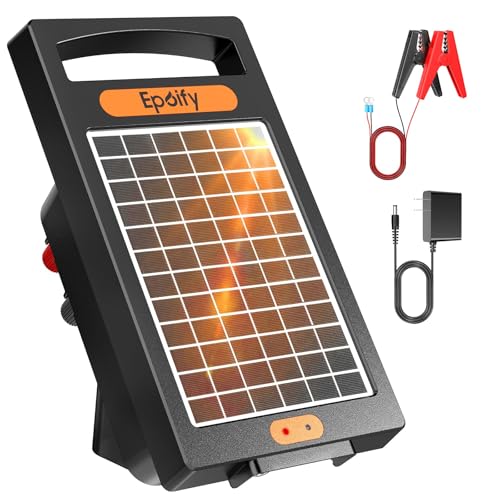
- 0.18J listed output
- Claimed 10-mile coverage
- Initial charge required
Best For: Smaller livestock or garden fences
Post-Mount Pick
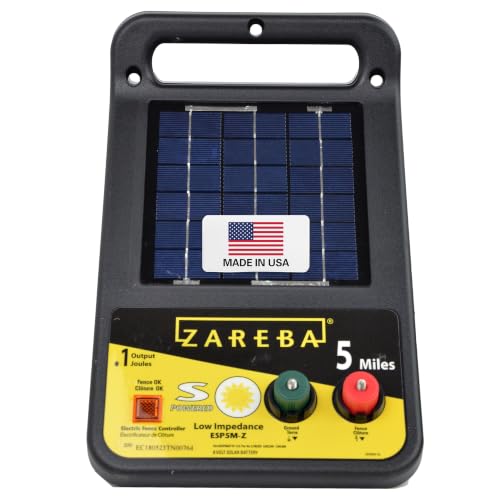
- 0.15 output joules
- Rotating multi-post mount
- Up to two weeks without sun
Best For: Short livestock fences without AC access
Best for Strip Grazing
Andmon MINI250 Portable Solar Charger
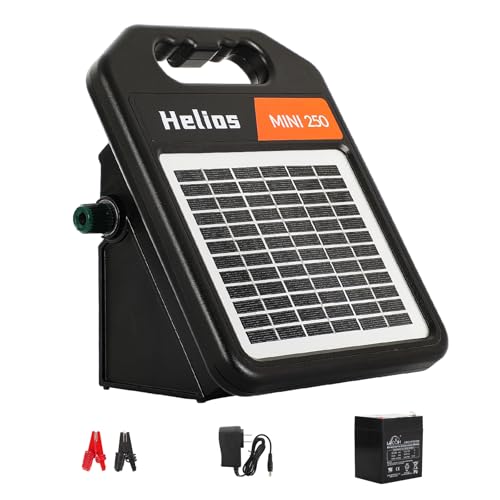
- 0.25-joule output; rated up to 12 miles
- Rotates on a T-post to face sunlight
- Battery connection required before use
Best For: Movable strip-grazing fences
Best for Flexible Mounting
Zareba 10-Mile Solar Fence Charger

- Up to 10 miles ideal; 5 miles in light weeds
- Fits T-posts, Y-posts, and round-wood posts
- Up to two weeks without sunlight
Best For: Livestock fences with varied post types
Best with Short-Circuit Alert

- Audible short-circuit alarm
- 0.32-joule output; advertised for 20 miles
- Up to 14 days without sunlight when fully charged
Best For: Portable fences where fault alerts matter
Best for Small Pastures
Gallagher S12 Solar Fence Charger
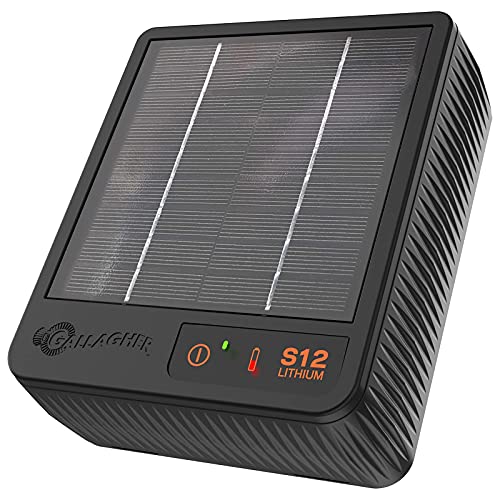
- 0.12J output for small fencing setups
- Up to 4 miles single-wire in ideal conditions
- 3-year manufacturer warranty
Best For: Homesteads, paddock splits, and small livestock areas
Portable Garden and Livestock Pick

- Built-in battery and larger solar panel
- Claimed 7-day runtime without sun
- Range and joule figures conflict
Best For: Movable garden or temporary livestock fencing
Best for T-Post Setup

- 0.18J output with a 5W panel
- Tool-free T-post mounting claimed
- Includes AC charger; weight figures conflict
Best For: Repositionable small-to-medium fence lines
Higher-Output Pick – LD02 1.2J Solar Fence Charger
Among solar powered electric fences, the LD02 is worth considering when a longer livestock fence calls for more energizer capacity. Its listed 1.2J stored energy, 8W solar panel, and solar-plus-AC charging make it a flexible option for cattle, horses, and goats.
Best For: Longer livestock fence lines where AC backup is useful.
Pros:
- Listed 1.2J stored energy and 7–11kV pulse output.
- 8W solar panel with AC backup.
- 10,000mAh battery and claimed 45-mile coverage.
Cons:
- The 45-mile figure is a claimed coverage rating, not a guarantee for every fence installation.
- At 5.5 pounds, it is heavier than the two 1.44kg models listed here.
Choose this model for its stronger listed energy and backup charging, but size your fence around actual wire conditions rather than the maximum mileage claim.
Portable Pasture Pick – Epoify LD01P Solar Charger
For movable solar powered electric fences, the Epoify LD01P combines an all-in-one design with a built-in battery that charges during the day and powers the fence overnight. It is pitched for gardens, temporary fencing, and small-to-medium grazing areas.
Best For: Rotational grazing or remote fence lines where portability matters.
Pros:
- Lightweight, all-in-one design is suited to moving between setups.
- Listed 5,700–10,200V pulse range and up to 20-mile coverage.
- Includes a charging indicator and a 12-month manufacturer warranty.
Cons:
- The title lists 0.32J, while the product bullets describe a 0.18J pulse; confirm the energy rating before buying.
- Coverage depends on sunlight, grounding, and vegetation control.
This is a practical portable choice if its energy specification meets your needs; the conflicting joule figures deserve a check before purchase.
Shorter-Range Pick – Epoify 0.18J Solar Charger
For smaller solar powered electric fences, this Epoify charger lists 0.18J output and up to 10-mile coverage. Its built-in battery supports nighttime operation after daytime solar charging, while the listing also describes AC charging for the initial battery charge.
Best For: Smaller livestock or garden fence setups with room for careful grounding.
Pros:
- Portable, all-in-one design for temporary or remote installations.
- Listed 5,700–10,200V pulses and up to 10-mile coverage.
- Battery can be initially charged by AC adapter or direct sunlight.
Cons:
- Initial charging instructions call for 24 hours by AC adapter or three full days of direct sunlight.
- Performance depends on grounding, sunlight, and keeping vegetation off the fence.
Its lower listed energy and shorter claimed range make it a more measured choice for modest installations; follow the supplied grounding and initial-charge instructions closely.
Post-Mount Pick – Zareba ESP5M-Z 5-Mile Charger
The Zareba ESP5M-Z is a straightforward option for solar powered electric fences in remote spots without AC access. Its low-impedance design delivers a listed 0.15 output joules and is rated for up to five miles of fencing in ideal conditions.
Best For: Shorter livestock perimeters that need flexible post mounting.
Pros:
- Mounting bracket fits T-posts, Y-posts, and round-wood posts, with 360-degree rotation for sun exposure.
- Claims up to two weeks of operation without sunlight.
- Low-impedance design resists power loss from fence-line weeds; units undergo full-load testing in the USA.
Cons:
- Five-mile rating applies under ideal conditions.
- The listing says the item is non-returnable and directs warranty issues to the manufacturer.
This model stands out for mounting flexibility and its stated cloudy-weather runtime, provided its modest output and return terms fit your plans.
Best for Strip Grazing – Andmon MINI250 Portable Solar Charger
For movable solar powered electric fences, the Andmon MINI250 pairs a built-in solar panel and GEL battery with a compact design. Its 0.25-joule output is rated to energize up to 12 miles of fencing.
Best For: Strip grazing setups where you need to move the charger and adjust its position toward the sun.
Pros:
- Mounts on a suitable steel rod and rotates 360 degrees on a T-post to face sunlight.
- Offers day or night mode and a stated run time of up to 21 days.
- Built-in panel and battery keep the setup portable.
Cons:
- The internal battery arrives disconnected and must be connected before use.
- The 12-mile rating may not reflect performance under every fence condition.
The MINI250 is a practical pick when easy relocation matters. Plan for the initial battery connection, and size your fence with real-world conditions in mind.
Best for Flexible Mounting – Zareba 10-Mile Solar Fence Charger
Among solar powered electric fences for livestock, the Zareba charger stands out for its mounting options and clearly stated coverage: up to 10 miles in ideal conditions or 5 miles in light weeds. It delivers 0.15 joules through a low-impedance design.
Best For: Livestock fences that need a solar charger mountable on a T-post, Y-post, or round-wood post.
Pros:
- Internal rechargeable battery can operate for up to two weeks without sunlight.
- Built-in bracket fits three common post types.
- Made in the USA and full-load tested.
Cons:
- Rated coverage drops from 10 miles in ideal conditions to 5 miles in light weeds.
- Its 0.15-joule output is lower than the other chargers in this roundup.
Choose this model if mounting flexibility and a specified light-weed rating help you plan your fence. Use the shorter coverage figure when weeds are likely.
Best with Short-Circuit Alert – Gorhope 20-Mile Solar Charger
If you are comparing solar powered electric fences and want an audible fault warning, this Gorhope charger has a built-in short-circuit buzzer. It is advertised for 20 miles of fencing, with 0.32-joule output and a lithium-ion battery.
Best For: Fence owners who want a portable solar charger that alerts them to short circuits.
Pros:
- Built-in buzzer signals short-circuit issues.
- Battery is rated for up to 14 days of operation without sunlight after a full charge.
- Compact design supports quick installation and removal.
- Tempered-glass surface is described as waterproof and dustproof.
Cons:
- The 20-mile rating is not accompanied by a separate rating for weedy conditions.
- The stated 14-day backup depends on starting with a full charge.
The alarm is this charger’s most useful distinguishing feature. Check the needs of your particular fence before relying on the advertised mileage.
Best for Small Pastures – Gallagher S12 Solar Fence Charger
For small pastures and paddock splits, the Gallagher S12 is a practical choice among solar powered electric fences. Its 0.12J output is rated for up to 4 miles of single-wire fence in ideal conditions, but the stated range drops to 0.6 miles for multi-wire fencing or lines with some vegetation.
Best For: Homesteads and hobby farms fencing chickens, goats, gardens, or small livestock areas.
Pros:
- Mounts directly to an unpainted grounding rod up to 0.5 inch in diameter.
- Compact, weather-ready design with a long-life lithium battery.
- Backed by a 3-year manufacturer warranty and U.S.-based support.
Cons:
- Grounding rod is not included.
- Needs 2–3 days in direct sun before first use for best performance.
- Not the strongest fit for stubborn animals or long multi-wire runs.
Choose this model when dependable small-area coverage matters more than maximum range. Good grounding, clean connections, and limited vegetation contact will help it perform as intended.
Portable Garden and Livestock Pick – 20 Miles Solar Fence Charger
This portable charger offers an all-in-one option for solar powered electric fences around gardens, poultry areas, and livestock enclosures. The listing describes a built-in battery, a larger solar panel, and output of 5,700–10,200V, though its range and joule figures conflict: the title states 20 miles and 0.32J, while the bullets state up to 10 miles and 0.18J.
Best For: Buyers who want a movable solar energizer for temporary fencing or remote areas without mains power.
Pros:
- Built-in lithium polymer battery removes the need for an external battery.
- Claimed runtime of up to 7 days without sunlight when fully charged.
- Portable design suits moves between garden and grazing-area fences.
Cons:
- Conflicting range and output specifications make fence sizing uncertain.
- Weather and runtime claims are supplied by the seller, with no test conditions given.
Its portability is appealing, but verify the actual joule rating and supported fence length before relying on it for a long or demanding run.
Best for T-Post Setup – 10 Mile Solar Fence Charger
For rotational grazing or a garden boundary, this all-in-one unit makes solar powered electric fences easier to reposition: it mounts on a T-post and includes an AC charger. Its stated setup pairs a 5W solar panel with a 12V 5Ah sealed GEL battery and 0.18J output.
Best For: Small-to-medium fences where quick T-post mounting and occasional repositioning are priorities.
Pros:
- T-post mounting is described as tool-free.
- IPX4-rated housing, ABS casing, and tempered-glass panel are specified.
- Includes an AC charger and two terminals.
Cons:
- Seller states a full solar charge takes about 6 days.
- Supplied weight figures conflict: the bullets state 5.94 lb, while the details state 1.5 lb.
- Battery ships disconnected and must be connected during setup.
The T-post format is the main draw if you move fence lines regularly. Confirm the unit’s weight and assess the claimed 10-mile range against your actual fence conditions before buying.
How We Picked These Solar Powered Electric Fences
This selection covers solar fence energizers with different advertised outputs, ranges, and operating features. We compared the listed joule ratings, claimed fence mileage, day/night modes, portability, and short-circuit alarms. These are charger specifications, not verified real-world fence performance; an energizer still needs compatible wire, grounding, and a suitable fence layout.
Quick Comparison
For a short temporary enclosure, the Gallagher S12 (0.12 J, claimed 4-mile range) and Andmon MINI250 (0.25 J, portable design) are starting points. The 0.18 J, 10-mile models offer another option where 24-hour operation or selectable day/night modes matter. Several 0.32 J models advertise 20-mile coverage and may suit longer garden or livestock runs, while the LD02 lists the highest output here at 1.2 J and includes a short-circuit alarm. Zareba’s listed 5-mile and 10-mile low-impedance models offer two range choices within the same brand. Treat every mileage figure as a best-case claim, not a guaranteed fence length.
Key Buying Factors for Solar Powered Electric Fences
Output and Fence Load
Compare joule ratings, but check whether a listing specifies stored or delivered output joules; they are not interchangeable. A longer fence, multiple strands, poor connections, or grass touching the wire can increase the load. Choose with some margin rather than matching a claimed mileage exactly to your planned run.
Animals and Fence Design
Keeping livestock in and deterring deer are different jobs. Wire height, strand spacing, visibility, and consistent voltage all matter. Check the charger’s stated animal applications and use a fence design suited to your target species; a higher joule number alone will not fix an unsuitable layout.
Sunlight, Battery, and Operating Mode
Place the panel where it receives direct sun and confirm the charger’s battery type, replacement options, and instructions for initial charging. If protection is needed around the clock, verify that the unit runs overnight. A day/night setting may help match operation to the time animals are active, but it is not a substitute for adequate battery capacity.
Grounding and Troubleshooting
Follow the manufacturer’s grounding instructions and use a fence tester to check voltage at multiple points. Dry soil, weak ground connections, damaged insulators, and vegetation contact can reduce effectiveness. An alarm can flag a possible fault, but you will still need to locate and repair it.
Who Should Buy Which Solar Powered Electric Fences?
Choose a compact, lower-output model for a short, maintained fence when portability is the priority. Look at the 0.18 J or 0.32 J options for garden perimeters and moderate livestock runs, matching the charger to the actual fence load rather than its headline range. Consider the 1.2 J LD02 if you need more listed output or value a short-circuit alarm. For any installation, confirm local fencing rules, keep warning signs where required, and follow the energizer maker’s safety instructions.