Looking for a vertical wind turbine for roof mounting? The right choice depends on whether you want clean power output, attic ventilation, or both. This roundup separates serious generators from non-powered roof turbines so you can buy with confidence.
Below, you’ll find the best options for different roof sizes, budgets, and use cases, plus a practical guide to help you compare materials, bearing design, airflow, and installation fit.
Best 10 Vertical Wind Turbine for Roof Mounting Picks for 2026
Best for Low-Wind Startups
12000W Vertical Axis Wind Turbine Kit

- Low cut-in speed for breezier starts
- MPPT controller included for hybrid setups
- 360° wind capture with no yaw system
Best For: DIY buyers adding wind support to a roof, cabin, or hybrid solar system.
Best for Small Roof Openings
Stainless Steel Roof Ventilator 110mm

- Rust-resistant stainless steel 201 body
- Compact 110mm size for smaller roof vents
- Passive turbine design for non-powered airflow
Best For: Compact roof ventilation for small openings, attics, garages, and workshops.
Best for Quiet Roof/Hybrid Use
500W Vertical Axis Wind Turbine Kit

- Helical vertical-axis design for low-wind operation
- Quiet, under-62 dB performance for residential areas
- Includes controller for home and hybrid solar systems
Best For: Homeowners and off-grid users who want a quieter vertical wind turbine for roof mounting or compact installs.
Best for Durable Roof Venting
GAF Master Flow 12 in. Wind Turbine

- Galvanized steel build for rust resistance
- Dual steel ball bearings for smoother spinning
- Extra-large flashing base helps protect against leaks
Best For: Homeowners who want a rugged, low-maintenance roof turbine vent with strong weather protection.
Best for Passive Ventilation
Stainless Steel Turbine Roof Ventilator

- Stainless steel build for outdoor durability
- Silent, power-free ventilation
- Works for roofs, garages, warehouses, and farms
Best For: Buildings that need low-maintenance, non-electric roof ventilation.
Best for Value Roof Vent
Tandefio 4-Inch Stainless Steel Turbine Vent
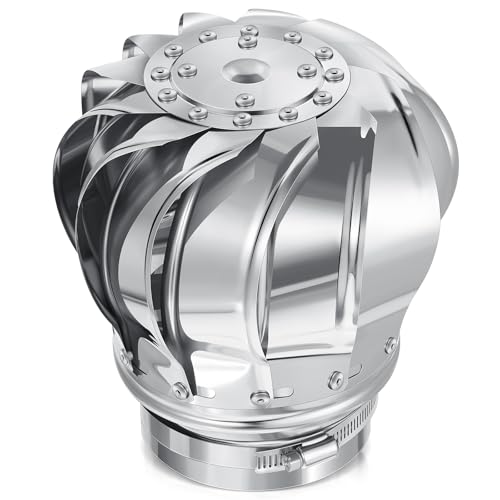
- 201 stainless steel for corrosion resistance
- Non-powered, quiet roof ventilation
- Good for attics, workshops, and light commercial spaces
Best For: Homeowners and light commercial buyers who want a simple passive roof vent.
Best for Low-Maintenance Roof Venting
Stainless Steel Turbine Roof Ventilator

- Stainless steel body for weather resistance
- Zero-energy, no-motor ventilation
- Quiet operation with simple roof mounting
Best For: Buyers who want a durable, passive roof vent for continuous attic or building ventilation.
Best for Quiet Passive Venting
304 Stainless Steel Roof Turbine Ventilator

- 304 stainless steel for better outdoor durability
- Quiet, unpowered turbine uses natural airflow
- Helps block rain, debris, and backflow
Best For: Roof or chimney openings that need quiet passive ventilation and weather protection.
Best Value 2-Pack
Tandefio 4-Inch Stainless Steel Turbine Vent

- Includes two non-powered roof vents
- 201 stainless steel for corrosion resistance
- Quiet passive ventilation for roofs and attics
Best For: Budget-minded buyers needing a simple two-pack for attic, roof, or workshop ventilation.
Best for Heavy-Duty Roof Venting
8in 304 Stainless Roof Turbine Vent
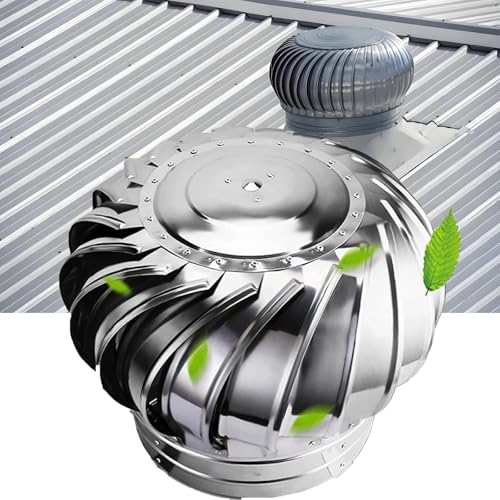
- 304 stainless steel resists rust and weather
- Wind-powered ventilation for hot-air exhaust
- Pre-assembled design simplifies installation
Best For: Rugged roof-mounted ventilation in exposed, high-wear environments.
Best for Low-Wind Startups – 12000W Vertical Axis Wind Turbine Kit
If you’re comparing a vertical wind turbine for roof mounting, this 12000W vertical-axis kit stands out for its low cut-in speed, 360° wind capture, and included MPPT controller. It’s aimed at off-grid or hybrid wind-solar setups where steady low-speed performance matters more than a compact plug-and-play install.
Best For: Homeowners or DIY buyers who want a vertical turbine for roof, pole, cabin, or mobile-home energy support, and don’t mind doing the mounting and wiring themselves.
Pros:
- Starts in light breeze conditions and doesn’t need a yaw system
- MPPT controller and 12V/24V/48V options support hybrid systems
- Maglev generator design is built for lower torque and longer service life
- Vertical format can be easier to fit in rooftop or space-limited installs
Cons:
- Requires a separate 60mm mounting pole and DIY installation work
- Large 12000W claims may not reflect real-world rooftop output
- Best results depend heavily on a safe, wind-exposed mounting location
Overall, this is a practical choice if you want a vertical wind turbine for roof mounting and value low-start performance, included control electronics, and flexible system voltage over simplicity.
Best for Small Roof Openings – Stainless Steel Roof Ventilator 110mm
If you need a practical vertical wind turbine for roof mounting without taking up much space, this 110mm stainless steel roof ventilator is built for compact attic, garage, and workshop ventilation. It focuses on passive air movement, helping reduce heat buildup and improve airflow in small roof openings.
Best For: Homeowners and facility owners who need a compact, rust-resistant roof vent for modest ventilation needs.
Pros:
- Stainless steel 201 construction offers solid rust resistance for outdoor use.
- Compact 110mm size fits smaller roof openings and common vent setups.
- Passive turbine design can help improve airflow without electricity.
- Useful for attics, garages, warehouses, factories, and workshops.
Cons:
- Smaller diameter may be limited for larger ventilation demands.
- Performance depends on wind conditions since it is non-powered.
For buyers prioritizing a simple, weather-resistant vertical wind turbine for roof mounting, this model makes sense when you want basic ventilation in a compact format rather than high-output air extraction. It is a straightforward fit for smaller roofs and light-duty ventilation jobs.
Best for Quiet Roof/Hybrid Use – 500W Vertical Axis Wind Turbine Kit
If you want a vertical wind turbine for roof mounting that prioritizes quiet operation and simpler upkeep, this 500W vertical-axis kit is worth a look. Its helical blade design is aimed at low-wind performance, while the included controller helps regulate output for home or hybrid solar setups.
Best For: Homeowners, cabin owners, and off-grid users who want a low-noise vertical wind turbine for roof mounting or other compact outdoor installs.
Pros:
- Helical vertical-axis design is built for lower wind speeds and smoother operation.
- Quiet performance, with claimed noise below 62 dB, helps it blend into residential settings.
- 500W output and included intelligent controller make it a practical match for hybrid systems.
- White finish and compact form factor suit roofs, boats, gazebos, and cabins.
Cons:
- Only two blades, so output may be more limited than larger multi-blade systems.
- Roof mounting still depends heavily on proper site exposure and installation quality.
- Not ideal if you need a high-capacity turbine for larger energy demands.
For buyers comparing a vertical wind turbine for roof mounting, this model stands out more for its low-noise, residential-friendly design than for raw power. It makes the most sense where moderate wind, compact placement, and hybrid solar compatibility matter more than maximum generation.
Best for Durable Roof Venting – GAF Master Flow 12 in. Wind Turbine
If you want a vertical wind turbine for roof mounting that prioritizes longevity and steady airflow, this Master Flow model is built around galvanized steel, internal bracing, and dual bearings for reliable attic ventilation. Its adjustable base and extra-large flashing base also make it a practical choice for homeowners focused on weather resistance and easier installation.
Best For: Homeowners who want a rugged, low-maintenance roof turbine vent with strong weather protection and smooth spinning performance.
Pros:
- Galvanized steel construction helps resist rust and wear over time.
- Dual-bearing design with encased bearings supports smoother, maintenance-free operation.
- Internally braced body adds wind resistance and structural stability.
- Large flashing base improves leak protection in harsh weather.
Cons:
- Metal build may be more than you need for a basic ventilation upgrade.
- Installation still requires proper roof fitting and sealing.
For buyers comparing a vertical wind turbine for roof mounting, this GAF Master Flow unit stands out more for durability and weather handling than for flashy extras. It is a solid pick if you want a tough, dependable vent that is designed to hold up on the roof and keep attic air moving.
Best for Passive Ventilation – Stainless Steel Turbine Roof Ventilator
If you want a vertical wind turbine for roof mounting that focuses on passive airflow rather than powered generation, this stainless steel turbine roof ventilator is built for continuous, no-electricity attic and exhaust ventilation. It’s a practical fit for buildings that need steady air exchange, basic weather resistance, and simple roof installation without adding motors, wiring, or ongoing energy costs.
Best For: Warehouses, garages, farms, and residential roofs that need low-maintenance passive venting.
Pros:
- Stainless steel body helps resist rain, deformation, and harsh outdoor conditions.
- Non-electric operation means silent, maintenance-free ventilation with no power use.
- Designed to improve airflow while reducing rainwater intrusion through tight-fitting blades.
- Suitable for a wide range of roof types and building sizes.
Cons:
- Not a true battery-charging wind generator despite the product title.
- Ventilation performance depends on wind and temperature differences.
- Best suited to exhaust use, not high-output energy generation.
As a vertical wind turbine for roof mounting, this model makes the most sense for buyers who care more about dependable passive ventilation than electrical output. If your goal is to move hot, stale air out of a roof space with minimal upkeep, it offers a straightforward, weather-ready solution.
Best for Value Roof Vent – Tandefio 4-Inch Stainless Steel Turbine Vent
If you need a practical vertical wind turbine for roof mounting without paying for a powered unit, this Tandefio roof ventilator is a straightforward option. Its stainless steel build, compact 4-inch class sizing, and no-electric design make it a sensible pick for basic attic, workshop, or light commercial ventilation.
Best For: Homeowners or light commercial buyers who want a simple, non-powered roof vent for steady passive airflow.
Pros:
- 201 stainless steel construction for better durability and corrosion resistance
- Non-powered design means no wiring, motors, or electricity use
- Compact size works well for attics, roofs, kitchens, farms, and workshops
- Quiet operation is a plus for spaces where noise matters
Cons:
- Only one vent is included in the package
- Passive airflow depends on wind and roof conditions
- May be too small for larger ventilation demands
For buyers comparing a vertical wind turbine for roof mounting, this model stands out as a simple, low-maintenance pick rather than a high-output solution. It fits best when you want reliable passive ventilation and a durable metal build over advanced performance features.
Best for Low-Maintenance Roof Venting – Stainless Steel Turbine Roof Ventilator
If you want a vertical wind turbine for roof mounting that focuses on passive airflow rather than power generation, this stainless steel turbine ventilator is a practical pick. It uses wind and indoor-outdoor pressure differences to keep air moving without electricity, making it useful for garages, sheds, workshops, and other buildings that need steady roof exhaust.
Best For: Buyers who want a durable, no-power roof ventilator for continuous attic or building ventilation.
Pros:
- Stainless steel construction helps resist weather, rain, and deformation.
- Zero-energy operation keeps ventilation running without electricity or motors.
- Quiet, free-spinning design is suitable for noise-sensitive spaces.
- Simple roof mounting and low ongoing maintenance.
Cons:
- It ventilates air, but it is not an electric generator kit for charging batteries.
- Performance depends on wind and temperature differences.
- Best suited to venting applications rather than true power production.
For buyers comparing a vertical wind turbine for roof mounting, this model stands out for its rugged build and hands-off ventilation. It makes the most sense when the goal is reliable passive exhaust instead of electrical output.
Best for Quiet Passive Venting – 304 Stainless Steel Roof Turbine Ventilator
If you need a vertical wind turbine for roof mounting that works without electricity, this stainless steel turbine roof ventilator is built for simple, passive airflow. The 304 stainless construction, low-resistance blades, and rain-shedding cap make it a practical pick for roofs, chimneys, attics, and utility buildings where steady exhaust and weather protection matter more than high-tech features.
Best For: Roofs, chimneys, and outbuildings that need quiet, non-powered ventilation with weather resistance.
Pros:
- 304 stainless steel body for stronger outdoor durability and corrosion resistance
- Unpowered turbine design runs quietly and uses natural airflow only
- Helps block rain, debris, and exhaust backflow with its wind-resistant cap
- Tool-free style installation with a removable mounting frame
Cons:
- Performance depends on available wind and temperature difference
- May require careful sizing to match your roof opening
- Not suitable if you need active, always-on mechanical airflow
For buyers comparing a vertical wind turbine for roof mounting, this model stands out for its passive operation and weather-tough stainless build rather than raw airflow power. It is a sensible choice if you want a low-maintenance vent cap that quietly helps move hot air out while staying simple to install and use.
Best Value 2-Pack – Tandefio 4-Inch Stainless Steel Turbine Vent
If you want a practical vertical wind turbine for roof mounting without paying for a powered attic fan, this Tandefio 2-pack is a straightforward option. The 4-inch stainless steel build is aimed at basic roof ventilation for houses, workshops, and light commercial spaces where passive airflow is enough.
Best For: Buyers who want an affordable two-pack of non-powered roof vents for general attic, shed, or workshop ventilation.
Pros:
- Comes as a 2-pack, which adds value for larger roofs or multiple installs.
- 201 stainless steel construction improves durability and corrosion resistance.
- Passive turbine design runs quietly with no electricity required.
- Suitable for houses, factories, farms, kitchens, and workshops.
Cons:
- Smaller 4-inch size may be limiting for higher-demand ventilation needs.
- Performance depends on wind and roof conditions, since it is non-powered.
- Installation may be more involved than a simple interior vent.
For basic roof airflow on a budget, this vertical wind turbine for roof mounting makes sense as a simple passive solution. It is not the strongest pick for heavy-duty ventilation, but it covers the essentials well for everyday attic and utility-space use.
Best for Heavy-Duty Roof Venting – 8in 304 Stainless Roof Turbine Vent
If you want a vertical wind turbine for roof mounting that prioritizes durability over bells and whistles, this 8-inch 304 stainless steel turbine vent is built for tough, all-weather use. It’s designed to help pull hot, stale air out of attics, workshops, warehouses, and other enclosed spaces while standing up to rain, heat, and corrosion.
Best For: Buyers who need a rugged roof-mounted turbine vent for larger ventilation jobs, especially in harsh or exposed conditions.
Pros:
- 304 stainless steel construction resists rust and harsh weather
- Wind-driven design helps exhaust hot air and improve airflow
- Quiet rotation with small blade gaps to help block rain intrusion
- Pre-assembled for simpler installation on roof slopes up to 22.5°
Cons:
- Best suited to ventilation support, not active powered exhaust
- May be larger than needed for small homes or light-duty spaces
For buyers comparing a vertical wind turbine for roof mounting, this model stands out for its stainless build and no-nonsense installation approach. It’s a practical pick when you need passive ventilation that can handle demanding outdoor exposure.
How We Picked the Best Vertical Wind Turbine for Roof Mounting
For this roundup, we focused on roof-mounted models that solve real buyer needs: electricity generation, attic heat relief, or passive ventilation. We prioritized build quality, intended use, mounting compatibility, material durability, and how clearly each product is positioned for residential or light commercial roofs.
We also separated powered turbine systems from non-powered roof ventilators. That distinction matters, because a Vertical Wind Turbine for Roof Mounting is not always the same thing as a turbine vent. Some products are designed to generate electricity, while others move air through the attic without producing power.
Quick Comparison
In simple terms, generator-style turbines are best if your goal is hybrid energy support, battery charging, or off-grid use. Non-powered roof turbines are better if you want a lower-complexity way to reduce attic heat and improve airflow. Stainless steel and galvanized steel options generally offer better weather resistance, while larger diameters tend to move more air when wind conditions are favorable.
Key Buying Factors for Vertical Wind Turbine for Roof Mounting
Use Case
Start by deciding whether you want power generation or ventilation. Electric turbine kits typically need controllers, wiring, and proper electrical integration. Roof ventilators are simpler and usually rely on wind to pull hot air out of the attic.
Material and Corrosion Resistance
Roof hardware lives outdoors year-round, so stainless steel and galvanized steel are strong choices. If you live in a coastal, humid, or high-rain environment, prioritize corrosion-resistant construction and sealed bearings.
Size and Roof Fit
Check diameter, base dimensions, and vent opening requirements before buying. A Vertical Wind Turbine for Roof Mounting should match your roof structure, attic vent opening, and local installation requirements. Bigger is not always better if the unit is oversized for the roof or structurally difficult to mount.
Bearing and Blade Design
Dual-bearing designs and balanced rotors can improve smooth operation and reduce wear. For powered units, controller quality and rated voltage range matter. For passive vents, low-friction rotation and stable airflow are more important than electrical specs.
Who Should Buy What
If you want actual electricity production, choose a turbine generator kit with a controller and the correct voltage match for your system. If your goal is attic cooling or roof ventilation, choose a non-powered turbine vent in the correct size and material for your roof. Buyers in windy locations or off-grid setups may benefit most from generator-style models, while homeowners focused on comfort and moisture control should lean toward passive ventilators.
In short, the best pick depends on whether you need energy, airflow, or a mix of both. Match the product to your roof, climate, and installation plan for the most reliable long-term result.