If you need faster, safer electrical diagnostics, the right tester can save time and reduce guesswork. This roundup focuses on practical tools for homeowners, DIYers, and electricians.
From pocket-friendly pens to full kits, these picks cover the most useful voltage testers for electrical troubleshooting in everyday and professional use.
Best 10 Voltage Testers for Electrical Troubleshooting Picks for 2026
Precision Live-Wire Checker

- Dual-range AC detection for 12-1000V and 70-1000V
- LCD screen shows signal strength, plus red/green alerts
- Flashlight, buzzer alarm, and auto shut-off included
Best For: Users who want a more visual NCV tool for mixed-voltage troubleshooting
Trusted Pocket Tester

- Pocket-sized NCV tester with audible and visual alerts
- Continuous self-test for added confidence
- AC detection from 90V to 1000V
Best For: Anyone wanting a simple, trusted pocket tester for quick voltage checks
Outlet and Live-Wire Kit
KAIWEETS 2-Piece Electrical Test Set

- Includes a non-contact tester and a GFCI outlet tester
- LCD display shows voltage level and wiring status
- Built-in flashlight, auto shut-off, and GFCI test function
Best For: Buyers who want both a live-wire tester and an outlet checker in one kit
Everyday Safety Pen
Neoteck Non-Contact Voltage Tester
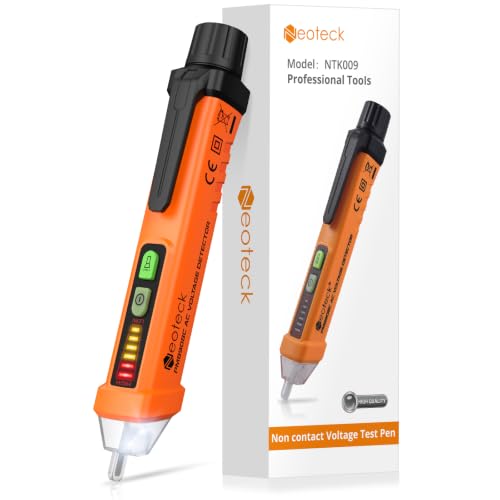
- 12-1000V AC non-contact detection
- Sound and LED alerts for live or null wire checks
- Built-in flashlight for dark work areas
Best For: Homeowners and DIY users needing a basic safety check tool
Comprehensive Test Kit
Klein Tools 69149P Electrical Test Kit
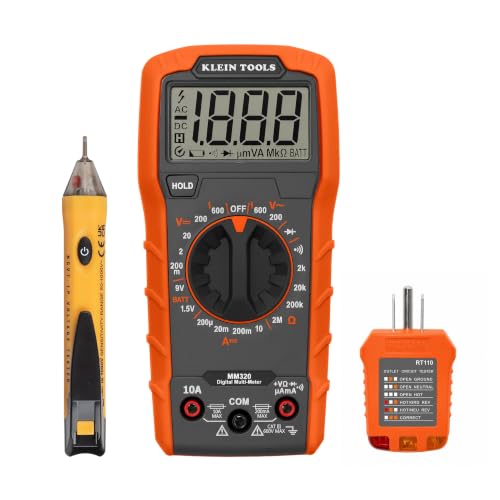
- Includes multimeter, NCV tester, and outlet tester
- Measures up to 600V AC/DC plus continuity and resistance
- Detects common receptacle faults like open ground and reversed hot/ground
Best For: DIYers and techs who want one kit for basic electrical troubleshooting
Dual-Range Sniffer
VENLAB Voltage Tester with LCD

- Dual sensitivity modes for 12V-1000V and 48V-1000V
- Non-contact testing with visible and audible alarms
- Includes flashlight and LCD display for easier use
Best For: People who want a simple non-contact tester with adjustable sensitivity
Pocket NCV Pen
Klein Tools NCVT1P Voltage Tester

- Detects AC voltage from 50V to 1000V
- Flashing LED and beeping alert signal voltage
- Pocket clip, auto shutoff, and drop protection
Best For: Users who want a compact non-contact AC voltage pen for quick checks
Budget-Friendly NCV Pen

- 3 sensitivity modes for different ranges
- Buzzer and indicator lights for live detection
- Pocket-sized with flashlight and pen clip
Best For: DIY homeowners needing quick non-contact checks
Pro-Grade Dual-Range Tester

- Dual-range 12-1000V or 70-1000V AC
- Flashlight plus audible and flashing alerts
- CAT IV 1000V rating in a compact pen
Best For: Electricians needing a trusted, easy-to-carry NCV tester
LCD Signal-Read NCV Tester

- LCD shows percentage and bar graph
- Dual-range 12-1000V and 70-1000V AC
- CAT IV 1000V with flashlight and buzzer
Best For: Troubleshooters wanting detailed signal feedback from an NCV pen
Precision Live-Wire Checker – KAIWEETS Non-Contact Tester
If you want voltage testers for electrical troubleshooting that give you more context than a basic beep, this KAIWEETS model adds a percentage signal display, dual-range sensitivity, and clear red/green alerts. It is designed for quickly checking outlets, terminal strips, supply cords, and low-voltage circuits where a more adjustable NCV tool can be helpful.
Best For: Electricians, homeowners, and DIY users who need a non-contact tester for both standard and low-voltage troubleshooting.
Pros:
- Dual-range detection covers 12-1000V AC and 70-1000V AC for more flexible use.
- Signal percentage, bar graph, and color screen help show voltage intensity more clearly.
- Multiple alarms with sound, light, and buzzer make detection easy to notice.
- Built-in flashlight, auto shut-off, and low-battery indicator add convenience.
Cons:
- It is a non-contact tester, so it does not replace a meter for detailed readings.
- Best suited to AC troubleshooting within its rated ranges.
For users who want a compact tester with more visual feedback than a simple voltage pen, this KAIWEETS option is a practical troubleshooting tool. The added sensitivity control and live/null wire indication make it especially useful for quick checks in varied home and light professional tasks.
Trusted Pocket Tester – Fluke 1AC II VoltAlert
For straightforward voltage testers for electrical troubleshooting, the Fluke 1AC II focuses on the essentials: a pocket-sized body, red tip light, and audible alert when voltage is detected. Its continuous self-test and CAT IV rating make it a reassuring pick for quick checks in everyday electrical work.
Best For: Users who want a simple, trusted non-contact voltage tester for fast safety checks.
Pros:
- Detects AC voltage from 90V to 1000V, with an alternate 200V to 1000V range.
- Continuous self-test helps confirm the tester is working.
- Tip glows red and the beeper sounds when voltage is present.
- Pocket-sized design makes it easy to keep on hand.
Cons:
- Does not include the extra display features found on some multi-function testers.
- Higher minimum operating voltage may limit low-voltage use.
This is a no-fuss tester for anyone who values quick, dependable indication over extra features. If you mainly need a compact safety check tool that is easy to carry and simple to understand, the Fluke 1AC II fits that role well.
Outlet and Live-Wire Kit – KAIWEETS 2-Piece Electrical Test Set
This KAIWEETS kit is a strong choice if you want voltage testers for electrical troubleshooting plus a fast way to verify outlet wiring. It combines a non-contact voltage tester with a GFCI outlet tester, giving you two common diagnostic tools in one set for home, DIY, and electrician use.
Best For: Buyers who want both a live-wire tester and an outlet checker in one compact kit.
Pros:
- Includes two tools: a non-contact voltage tester and a GFCI outlet tester.
- Voltage tester offers dual ranges, adjustable sensitivity, and LCD voltage display.
- Outlet tester shows wiring status icons and includes a built-in GFCI test function.
- Both tools are compact and include safety-focused features like auto shut-off and low-battery indication.
Cons:
- The kit is focused on quick checks rather than advanced measurement functions.
- The outlet tester is rated for CAT II 135V, so it is more specialized than the voltage tester.
If you need one kit to cover both live-wire detection and outlet safety checks, this set makes the job easier. It is especially practical for users who want a simple, organized way to handle common troubleshooting tasks around the home or jobsite.
Everyday Safety Pen – Neoteck Non-Contact Voltage Tester
When you need voltage testers for electrical troubleshooting that are simple to grab and easy to understand, the Neoteck non-contact tester keeps things focused. It detects AC voltage in the 12-1000V range, uses sound and LED indicators, and adds a flashlight for working in darker spaces.
Best For: Homeowners, DIY users, and maintenance tasks that call for a basic non-contact safety check.
Pros:
- Detects AC voltage from 12V to 1000V without direct contact.
- Uses both alarm sound and LED indication to signal live or null wire status.
- Includes an emergency flashlight for outlets, switches, fixtures, and dark work areas.
- Compact, easy-to-use design suited to everyday electrical checks.
Cons:
- Not suitable for Christmas light testing, according to the notes.
- Does not offer the display detail or extra features of more advanced testers.
This Neoteck pen is a practical pick if you mainly want a basic non-contact check before touching wiring or devices. It covers common home troubleshooting tasks well and stays simple enough for beginners to use confidently.
Comprehensive Test Kit – Klein Tools 69149P Electrical Test Kit
For voltage testers for electrical troubleshooting, this Klein Tools kit gives you three useful checks in one box: non-contact voltage detection, a digital multimeter, and an outlet tester. It is a practical option when you want to verify live voltage, continuity, and common receptacle wiring faults without piecing together separate tools.
Best For: DIYers and technicians who want an all-in-one troubleshooting kit for outlets, switches, and basic circuit checks.
Pros:
- Includes a digital multimeter, non-contact voltage tester, and receptacle tester.
- Multimeter measures up to 600V AC/DC, 10A DC current, and resistance.
- NCVT1P gives bright LED and audible alerts when voltage is detected.
- Outlet tester identifies open ground, open hot, open neutral, and hot/ground reversed.
Cons:
- Receptacle tester does not identify more complex wiring issues.
- More than a simple pen tester if you only need quick voltage checks.
This kit stands out if you need a broader troubleshooting setup rather than a single-purpose tester. It is especially useful for checking voltage, continuity, and outlet wiring with one purchase.
Dual-Range Sniffer – VENLAB Voltage Tester with LCD
If you want a straightforward tool among voltage testers for electrical troubleshooting, this VENLAB non-contact detector focuses on quick live-wire checks with adjustable sensitivity. The dual-range design helps you switch between low- and high-sensitivity modes depending on the job, and the LCD display, alarm, and flashlight add convenience in darker work areas.
Best For: Users who want an easy non-contact tester for checking outlets, switches, and wires at different sensitivity levels.
Pros:
- Non-contact design is suited for checking wires, outlets, switches, and lamps.
- Dual sensitivity modes cover 12V-1000V and 48V-1000V ranges.
- Visible and audible alerts help confirm detected voltage.
- Built-in flashlight adds usefulness during outages or dim spaces.
Cons:
- Does not include multimeter-style measurements for continuity or resistance.
- Focused on detection rather than broader circuit diagnosis.
This is a solid pick if you mainly need a fast, simple voltage sniffer with extra visibility features. It is less of a full troubleshooting kit, but it does the core non-contact job well.
Pocket NCV Pen – Klein Tools NCVT1P Voltage Tester
For voltage testers for electrical troubleshooting, this Klein Tools pen is built for fast non-contact AC voltage detection in a compact form. It is designed for cables, cords, breakers, fixtures, switches, and non-tamper-resistant outlets, making it a handy pocket tool when you need a quick live-voltage check without setting up a meter.
Best For: Anyone who wants a compact, easy-to-carry non-contact tester for quick AC voltage checks.
Pros:
- Detects AC voltage from 50V to 1000V in a wide range of applications.
- Flashing red LED and beeping alert give clear detection feedback.
- Auto power-off helps conserve batteries.
- Compact body with pocket clip and 6.6-foot drop protection.
Cons:
- Recommended for non-tamper-resistant outlets only.
- Single-purpose tester without multimeter functions.
This is a strong grab-and-go option if your main task is confirming whether AC voltage is present. It offers the simplicity many troubleshooting jobs call for, with a durable pocket-friendly design.
Budget-Friendly NCV Pen – MXCOIRTP Voltage Tester
If you want voltage testers for electrical troubleshooting that are simple to carry and quick to read, this MXCOIRTP pen gives you a straightforward non-contact check for outlets, switches, cords, and breakers. Its 3 sensitivity modes help you adjust for different jobs, while the buzzer and indicator lights provide fast feedback when voltage is present.
Best For: DIY users and homeowners who want a compact non-contact tester with adjustable sensitivity and a built-in light.
Pros:
- 3 sensitivity modes cover 12V, 48V, and 70V-1000V detection ranges.
- Non-contact sensing helps check wires, outlets, and switches more safely.
- Built-in detection light and tail flashlight help in dark work areas.
- Compact pocket design with pen clip makes it easy to carry.
Cons:
- Battery must be replaced when low-voltage warning appears.
- Tail flashlight only turns on when the tester is off.
This is a practical pick if you want a lightweight tester for quick live-wire checks and basic troubleshooting. It focuses on convenience, clear alerts, and everyday electrical inspection rather than advanced measurement features.
Pro-Grade Dual-Range Tester – Klein Tools NCVT3P
Among voltage testers for electrical troubleshooting, the Klein Tools NCVT3P stands out for its dual-range detection and clear audible/visual alerts. It is designed for non-contact checks on low-voltage and standard AC circuits, with a bright flashlight and a compact body that’s easy to keep in a pocket.
Best For: Electricians and technicians who want a compact, safety-rated tester with dual-range detection and dependable alerts.
Pros:
- Dual-range detection lets you choose 12-1000V or 70-1000V AC.
- Audible beeps and flashing red LED make voltage presence obvious.
- Built-in flashlight can be used separately from voltage detection.
- CAT IV 1000V rating adds confidence for demanding electrical work.
Cons:
- Does not include an LCD readout for signal detail.
- Focuses on detection rather than broader test functions.
This is a strong choice if you value a familiar pen-style tester from a well-known tool brand. It keeps the workflow simple while still offering useful range selection and solid safety credentials.
LCD Signal-Read NCV Tester – KAIWEETS NCV Tester
If your electrical troubleshooting calls for more detail than simple beep-and-light pens, this KAIWEETS model adds an LCD display with real-time signal strength. It uses non-contact AC detection, dual sensitivity ranges, and clear visual and audible alerts to help identify live wires, open circuits, short circuits, and leakage.
Best For: Users who want a feature-rich NCV tester with an LCD display and dual-range sensitivity for more informed troubleshooting.
Pros:
- LCD shows signal strength with a percentage and bar graph.
- Dual-range sensitivity supports 12-1000V AC and 70-1000V AC.
- Bright flashlight helps in breaker panels, basements, and ducts.
- CAT IV 1000V rating and double insulation support safer use.
Cons:
- More advanced display may be more than needed for basic checks.
- Requires battery management, including low-battery awareness.
This tester is a good fit when you want a clearer read on what the sensor is seeing instead of relying on a simple indicator alone. The LCD, buzzer behavior, and range switching make it especially useful for home and professional troubleshooting.
How We Picked These Voltage Testers for Electrical Troubleshooting
We prioritized models that are easy to use, clearly labeled, and suited to common troubleshooting tasks such as finding live conductors, checking outlets, and confirming circuit presence. We also favored tools with strong safety ratings, readable alerts, and useful extras like flashlights, LCD readouts, and dual-range sensing.
Quick Comparison
For simple live-wire checks, a compact non-contact pen is usually enough. For broader diagnostics, combo kits that include outlet testers or a multimeter offer more value. If you want the most confidence at the outlet or panel, look for higher safety categories, clear visual/audio alerts, and a detection range that matches the jobs you actually do.
Key Buying Factors for Voltage Testers for Electrical Troubleshooting
Detection Range
Choose a tester that matches the voltage you expect to encounter. Lower-voltage modes can help with sensitive systems, while a wider AC range is better for general household work.
Contact Type
Non-contact testers are the fastest way to check for energized wires without direct metal contact. They are ideal for quick verification, but they do not replace a multimeter when you need precise readings.
Alerts and Visibility
Audible beeps, flashing LEDs, and LCD screens improve confidence in dim spaces or noisy job sites. A built-in flashlight is also a practical bonus for panel work and attic or crawlspace troubleshooting.
Safety Rating and Build
Look for CAT ratings and sturdy casing if you plan to use the tool frequently. Better insulation, pocket clips, and ergonomic grips make everyday use easier and safer.
Kit Versus Single Tool
If you only need to check whether a wire is live, a standalone pen tester is usually sufficient. If you also want to diagnose receptacles or verify wiring faults, a kit is the smarter buy.
Who Should Buy Which Voltage Testers for Electrical Troubleshooting?
Homeowners and occasional DIY users should start with a reliable non-contact tester for quick checks around outlets, switches, and fixtures. Renters and appliance troubleshooters may benefit from an outlet tester kit. More advanced users, especially anyone working on multiple circuit types, should consider a kit that includes a multimeter for broader diagnostic capability. For routine electrical troubleshooting, the best choice is the one that is simple enough to use correctly every time and robust enough to trust on the job.