Choosing the right tester can make electrical checks faster, safer, and easier to document during a home inspection. The best tools should be simple to use, easy to carry, and dependable across common residential tasks.
In this roundup, we focus on voltage testers for home inspectors that help identify live circuits, verify outlets, and support confident fieldwork without adding unnecessary complexity.
Best 10 Voltage Testers for Home Inspectors Picks for 2026
Home Inspector Starter Kit
Klein Tools 3-Piece Inspector Set

- Includes NCVT1P, GFCI tester, and moisture meter
- NCVT detects 50 to 1000V non-contact
- CAT IV 1000V rating with inspection-focused tools
Best For: inspectors who want a compact all-in-one testing kit
Dual-Range Voltage Pen

- Dual AC ranges: 12-1000V and 48-1000V
- LCD, buzzer, and flashlight improve usability
- CAT III 1000V / CAT IV 600V safety rating
Best For: users who want adjustable sensitivity and clear alerts
Electrical Test Trio
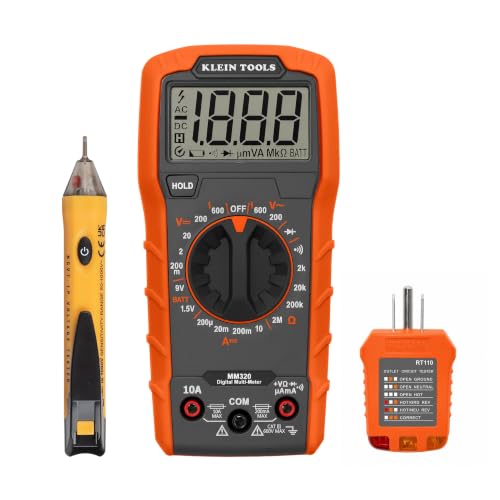
- Includes NCVT1P, MM320 multimeter, and RT110 tester
- Voltage detection from 50 to 1000 VAC
- Adds continuity and receptacle wiring checks
Best For: inspectors needing a broader electrical diagnostic kit
Basic Voltage Pen
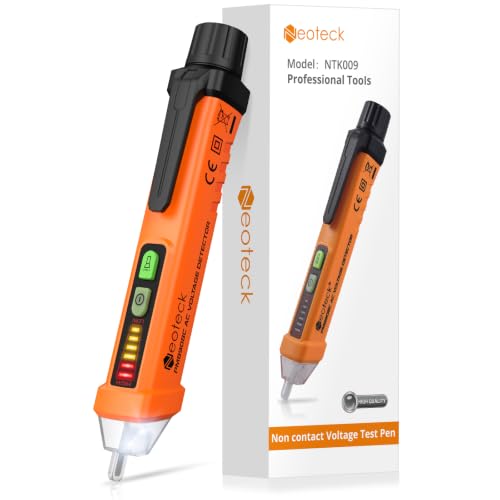
- Non-contact AC detection from 12 to 1000V
- LED and audible alerts for live/null checks
- Includes flashlight for dark work areas
Best For: basic quick-check voltage testing in homes
Complete Outlet Testing Kit

- Includes GFCI tester and non-contact voltage pen
- Detects common wiring issues in standard and GFCI outlets
- LED indicators and warning tone support quick checks
Best For: Inspectors who want one basic kit for outlet and voltage testing
Pocket-Sized Non-Contact Tester

- Pocket-size non-contact voltage tester
- Glowing tip and beeper indicate detected voltage
- Continuous self-test and audible/silent mode
Best For: Inspectors who want a compact live-voltage detector
LCD Test Kit with Flashlight
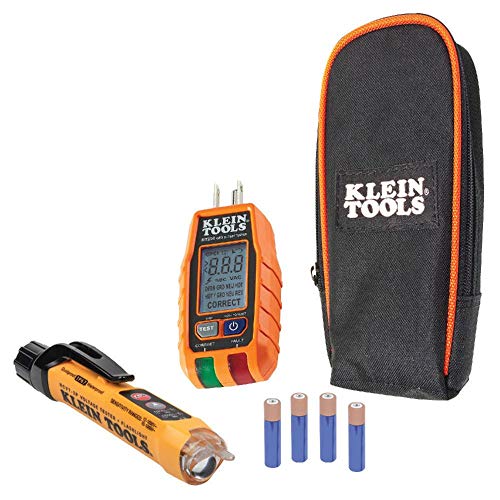
- Backlit LCD shows voltage and wiring conditions
- Displays GFCI trip time and detects open neutral/ground
- Includes dual-range NCVT and flashlight
Best For: Inspectors who want detailed outlet diagnostics and clearer readings
Quick-Check Pen
Klein Tools NCVT1P Non-Contact Voltage Tester

- 50V to 1000V AC detection range
- Audible and flashing LED alerts
- Pocket clip with 6.6-foot drop protection
Best For: Routine inspection checks on common household circuits
Multi-Sensitivity Finder
MXCOIRTP Non-Contact Voltage Detector

- Three selectable sensitivity modes
- NCV alarms with light and buzzer
- Built-in detection light and tail flashlight
Best For: Flexible voltage checks across outlets, switches, and cords
Dual-Range Pro Pick
Klein Tools NCVT3P Dual Range Voltage Tester

- 12-1000V or 70-1000V AC detection
- Flashlight works independently
- CAT IV 1000V rating with pocket clip
Best For: Broader inspection work across standard and low-voltage systems
Home Inspector Starter Kit – Klein Tools 3-Piece Inspector Set
If you want voltage testers for home inspectors that cover more than just live-wire checks, this Klein Tools kit gives you a practical 3-piece setup for day-to-day inspection work. It combines a non-contact voltage tester, a GFCI outlet tester, and a digital moisture meter, so you can handle common electrical checks and basic building-material moisture checks with one kit.
Best For: Home inspectors who want an all-in-one starter kit with electrical and moisture-testing tools.
Pros:
- Includes a non-contact voltage tester rated for 50 to 1000V detection.
- GFCI tester helps confirm outlet operation and detect common wiring problems.
- Digital moisture meter can detect moisture up to 3/4-inch deep in drywall.
- CAT IV 1000V safety rating adds confidence for expanded operation and protection.
Cons:
- It is a 3-piece kit, so it may be more than needed if you only want a voltage tester.
- Battery-powered tools mean you need to keep spare batteries on hand.
This is the most inspection-focused option in the group if you want voltage testing plus two other common checks in one package. It is especially useful when you need a practical kit rather than a single-purpose pen tester.
Dual-Range Voltage Pen – WGGE AC Tester with LCD
Among voltage testers for home inspectors, this WGGE model stands out for its dual-range sensitivity and clear visual feedback. It is built for non-contact AC voltage checks from 12 to 1000V or 48 to 1000V, and the LCD, buzzer, and flashlight make it easier to work in outlets, panels, and other dim spaces.
Best For: Inspectors and DIY users who want a non-contact tester with adjustable sensitivity and visual alerts.
Pros:
- Dual-range detection covers both 12-1000V and 48-1000V AC.
- LCD display and buzzer provide easy-to-read status feedback.
- Built-in LED flashlight helps in dark or hard-to-reach areas.
- Safety-rated CAT III 1000V / CAT IV 600V with double insulation.
Cons:
- It is limited to AC voltage detection, not a full multi-function tester.
- Battery life management matters because it auto shut-offs after inactivity.
This is a strong pick if you value a simple pen-style tester with more feedback than a basic indicator light. The adjustable ranges and LCD make it appealing for quick residential inspection checks.
Electrical Test Trio – Klein Tools 69149P Test Kit
If you need voltage testers for home inspectors plus a few extra electrical checks, this Klein Tools test kit gives you a well-rounded trio. It pairs a non-contact voltage tester with a multimeter and receptacle tester, so you can confirm voltage presence, check continuity, and verify outlet wiring in a straightforward field kit.
Best For: Inspectors who want a voltage tester bundled with a multimeter and receptacle tester.
Pros:
- NCVT1P detects 50 to 1000 VAC with LED and audible alerts.
- MM320 multimeter measures up to 600V AC/DC, current, and resistance.
- RT110 receptacle tester helps identify correct wiring and common faults.
- Good choice when you need continuity testing in addition to voltage checks.
Cons:
- Bulkier than a single pen tester because it is a 3-piece kit.
- May be more tool than needed for buyers only looking for quick non-contact voltage checks.
This kit is best when your inspection workflow calls for more than one type of electrical test. It is a practical step up from a basic voltage pen if you want broader diagnostic capability.
Basic Voltage Pen – Neoteck 12-1000V Detector
For a straightforward pick among voltage testers for home inspectors, this Neoteck pen keeps things simple with non-contact AC detection from 12 to 1000V. It is designed for quick safety checks at outlets, switches, fixtures, and wires, and the LED and alarm sounds help you confirm live or null wire conditions without adding complexity.
Best For: Homeowners, DIY users, and inspectors who want a compact, easy-to-use non-contact voltage tester.
Pros:
- Non-contact testing covers 12 to 1000V AC.
- LED indicator and alarm sounds provide clear detection feedback.
- Built-in flashlight helps illuminate the work area.
- Compact design is practical for everyday electrical safety checks.
Cons:
- It is not intended for Christmas light testing, per the supplied notes.
- More basic than multi-function kits with outlet testers or multimeters.
This is the simplest option in the group, which makes it appealing if you want a no-frills test pen for routine inspection work. It is best viewed as a quick first check tool rather than a full electrical testing solution.
Complete Outlet Testing Kit – Klein Tools 80025
For home inspectors who need a practical, all-in-one option, this voltage tester for home inspectors combines a receptacle tester and a non-contact voltage pen in one kit. It’s built to quickly identify common wiring problems in standard and GFCI outlets while also checking for live voltage in cables, breakers, switches, and lighting fixtures.
Best For: Inspectors who want a simple two-tool kit for outlet checks and quick non-contact voltage verification.
Pros:
- Includes both a GFCI outlet tester and a non-contact voltage tester pen.
- Helps identify common wiring issues in standard and GFCI receptacles.
- Voltage pen uses bright LED indicators plus an audible warning tone.
- Digitally controlled ON/OFF button adds easy operation.
Cons:
- Only covers up to 125V AC on the outlet tester side.
- Not as feature-rich as kits with LCD readouts.
Overall, the Klein Tools 80025 is a straightforward value pick if you want a compact, inspection-friendly kit for routine outlet and voltage checks. It focuses on convenience and core diagnostic tasks without adding unnecessary complexity.
Pocket-Sized Non-Contact Tester – Fluke 1AC II VoltAlert
If you want a simple voltage tester for home inspectors that is easy to keep in a pocket, the Fluke 1AC II focuses on quick non-contact detection. It signals voltage with a glowing tip and beeper, and it also includes a continuous self-test so you can confirm the tool is working before use.
Best For: Inspectors who need a compact, no-fuss non-contact tester for fast voltage checks.
Pros:
- Detects AC voltage from 90V to 1000V.
- Tip glows red and the beeper sounds when voltage is detected.
- Continuous self-test helps confirm the tester is functioning.
- Audible/silent mode adds flexibility on site.
Cons:
- Non-contact only, so it does not test receptacle wiring directly.
- Detection range starts at 90V, so it is not aimed at low-voltage checks.
The Fluke 1AC II is a strong pick when portability and simplicity matter most. It keeps the focus on fast live-voltage detection with a trusted feature set that suits routine inspection work.
LCD Test Kit with Flashlight – Klein Tools RT250KIT
For inspectors who want clearer feedback during electrical checks, this voltage tester for home inspectors pairs a backlit LCD receptacle tester with a dual-range non-contact voltage tester. It is designed to identify common wiring faults, show GFCI trip time, and add an integrated flashlight for dim spaces.
Best For: Inspectors who value an LCD readout and more detailed GFCI and wiring diagnostics.
Pros:
- Large backlit LCD shows voltage reading and wiring conditions.
- Displays GFCI trip time for quicker troubleshooting.
- Detects open neutral and open ground faults.
- Includes a dual-range NCVT and independent flashlight.
Cons:
- More complex than a basic plug-in tester.
- Requires carrying multiple components and batteries.
The RT250KIT stands out when you want more diagnostic detail than a standard outlet tester can provide. It is a practical choice for inspection work where readable results and broader fault detection are useful.
Quick-Check Pen – Klein Tools NCVT1P Non-Contact Voltage Tester
For home inspectors who need a fast, no-contact way to check energized circuits, this Klein Tools pen covers the basics well. It detects AC voltage from 50V to 1000V, gives a bright visual cue with audible alerts, and stays easy to keep in a pocket during walkthroughs.
Best For: Inspectors who want a simple, durable voltage tester for quick checks on common household electrical points.
Pros:
- Non-contact AC detection for cables, cords, breakers, fixtures, switches, and wires
- Green power-on light plus red flashing LED and beeping alarm when voltage is present
- Compact body with pocket clip and 6.6-foot drop protection
- Auto power-off helps conserve batteries
Cons:
- Recommended for non-tamper-resistant outlets only
- No dual-range mode for finer low-voltage selection
This is a straightforward option if you want dependable voltage testers for home inspectors without extra complexity. Its CAT IV 1000V rating and clear alerts make it a practical field tool for routine inspections.
Multi-Sensitivity Finder – MXCOIRTP Non-Contact Voltage Detector
This MXCOIRTP model is a flexible pick for voltage testers for home inspectors who want more than a basic pen. It offers NCV detection with three sensitivity modes, a flashlight, and a compact body that can fit in a shirt pocket.
Best For: Inspectors and homeowners who want a budget-friendly detector with adjustable sensitivity for different voltage checks.
Pros:
- Three sensitivity modes for low, medium, and high detection ranges
- Non-contact NCV sensing with sound and light alerts
- Built-in detection light plus tail flashlight for dark spaces
- Automatic shutoff and low-battery warning support easier day-to-day use
Cons:
- Less established brand than some premium inspection tools
- Minimum operating voltage starts at 12V, so it is aimed at a broader electrical range rather than a specialized low-voltage-only tool
For inspectors who want an adaptable tester with handy lighting features, this is a useful all-around option. The adjustable sensitivity makes it easier to match the detection mode to the job.
Dual-Range Pro Pick – Klein Tools NCVT3P Dual Range Voltage Tester
For home inspectors who need a more versatile tool, this Klein Tools tester adds dual-range detection to a familiar non-contact pen design. It can check 12V to 1000V AC or narrow to 70V to 1000V AC, while also giving you a flashlight for dim work areas.
Best For: Inspectors who want dual-range detection for broader low-voltage and standard AC testing.
Pros:
- Dual-range detection options: 12-1000V or 70-1000V AC
- Bright flashlight can be used independently of voltage detection
- Audible and flashing LED alarms clearly signal voltage presence
- Lightweight design with pocket clip and CAT IV 1000V rating
Cons:
- More specialized than a basic single-range pen
- Flashlight and dual-range features may be more than needed for simple quick checks
If you regularly inspect a mix of standard electrical and lower-voltage systems, this is the most versatile of the three. It keeps the compact feel of a pocket tester while offering more targeting options for field work.
How We Picked These Voltage Testers for Home Inspectors
We focused on tools that fit real inspection work: non-contact detection, outlet and GFCI testing, clear alerts, and practical extras like flashlights or LCD readouts. We also looked at build quality, brand reputation, portability, and whether the tester supports quick checks in tight spaces and busy service panels.
Quick Comparison
For most home inspectors, the best choice is usually a non-contact voltage pen paired with a receptacle/GFCI tester. That combination covers the most common field checks without slowing you down. Dual-range models and digital displays can add confidence when you need more detail, while pocket-sized pens are ideal for fast, repeated use.
Key Buying Factors for Voltage Testers for Home Inspectors
Voltage Range and Sensitivity
Look for a tester that covers standard residential AC voltage and can detect both lower and higher ranges if you work around mixed systems. Adjustable or dual-range sensitivity helps reduce false alerts and improves usability near bundled wiring.
Safety Rating
A strong safety rating matters, especially when working in panels, outlets, and utility areas. Prefer tools with clear CAT ratings and a design intended for electrical inspection work.
Non-Contact Vs. Receptacle Testing
Non-contact testers are best for quick live-wire checks, while outlet testers and GFCI testers help confirm receptacle wiring and trip function. If you only buy one type, non-contact is the broadest everyday tool; if you want better inspection coverage, choose a kit.
Visibility, Alerts, and Ease of Use
Flashlights, audible beeps, and bright LED indicators are not gimmicks in the field—they make readings easier to confirm in dark panels, basements, and crawlspaces. Pocket clips and compact bodies also matter because inspectors use these tools constantly.
Who Should Buy Which Voltage Testers for Home Inspectors?
If you want a simple, dependable tool for routine checks, choose a basic non-contact pen. If you handle many outlets and need to verify GFCI protection, a kit with a receptacle tester is the smarter buy. Inspectors who want extra confidence from digital feedback should consider dual-range or LCD-equipped options. For those who prioritize brand trust and rugged safety ratings, premium testers are worth the added cost.
In short, the best Voltage Testers for Home Inspectors are the ones that combine speed, clarity, and enough testing capability to match your inspection workflow without overcomplicating it.