If you’re building an off-grid power system, the right controller can make a big difference in charging efficiency, battery protection, and overall reliability.
This roundup covers the best wind turbine charge controller for hybrid solar setups in 2026, with options sized for small cabins, DIY backups, and larger battery banks.
Best 10 Wind Turbine Charge Controller for Hybrid Solar Picks for 2026
Best for High-Capacity Hybrid Systems
1400W Hybrid Wind Solar Controller

- Handles up to 800W wind + 600W solar
- Auto 12/24V support, including lithium batteries
- Booster MPPT wind charging with LCD controls
Best For: Off-grid buyers building a larger hybrid wind and solar battery system.
Best for Hybrid Wind-Solar Monitoring
1000W Wind Solar Hybrid Controller

- Integrated wind and solar charge control
- LCD display for battery voltage/status
- Simple PWM design with protection features
Best For: DIY off-grid users needing a compact hybrid controller with easy monitoring.
Best for Large Hybrid Systems
Wind Solar Hybrid Controller 12000W

- Supports 12V, 24V, and 48V batteries
- Handles large wind and solar input ratings
- Includes dump load control and LCD monitoring
Best For: Large off-grid hybrid setups that need broad battery compatibility and higher output capacity.
Best for Hybrid Systems
20000W Wind & Solar Hybrid Charge Controller

- Hybrid controller for wind and solar inputs
- Supports 12V/24V/48V batteries, including lithium
- MPPT wind charging plus LCD monitoring
Best For: Off-grid buyers who want one controller for combined wind and solar charging.
Best for High-Capacity Hybrid Kits
Focket 48V 600W IP67 MPPT Controller
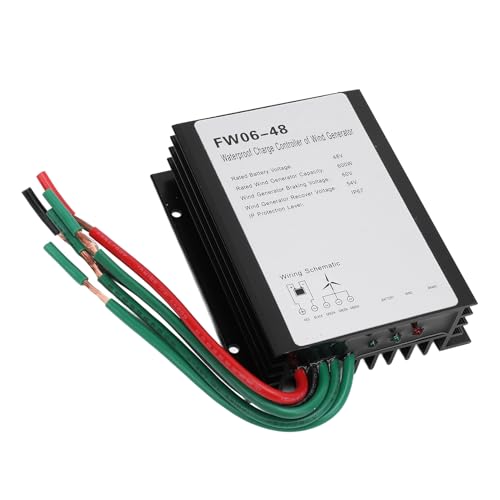
- Supports 48V, 600W hybrid wind/solar systems
- MPPT auto-match for more efficient charging
- IP67-rated housing for outdoor use
Best For: DIY buyers assembling a 48V hybrid wind-and-solar system with moderate output needs.
Best for Small Off-Grid Hybrids
Hybrid Wind & Solar Controller 30A

- 12V/24V auto-matching for simple battery compatibility
- Supports up to 800W wind and 1000W solar input
- IP67 waterproof housing with multiple protection features
Best For: Off-grid users building a compact wind-and-solar battery charging system.
Best for Comfort
15000W Wind Solar Hybrid Controller

- 24V/48V auto support for hybrid battery banks
- MPPT boost charging for low-wind performance
- LCD display plus multiple protection features
Best For: Large off-grid or hybrid wind-and-solar setups that need a high-capacity controller.
Best with Extra Features
6000W-12000W Wind/Solar Hybrid Controller

- Handles both wind and solar charging
- Built for larger 48V off-grid systems
- MPPT boost charging for hybrid setups
Best For: Larger 48V off-grid users who want one controller for both wind turbine and solar input.
Best All-in-One Hybrid Controller
Wind Solar Hybrid Charge Controller

- Combines wind and solar charging in one controller
- Auto-detects 12V/24V battery systems
- Good fit for small off-grid hybrid builds
Best For: DIY off-grid users combining a small wind turbine and solar panels on one battery bank.
Best for Hybrid Off-Grid Systems
2000W Wind Solar Hybrid Controller
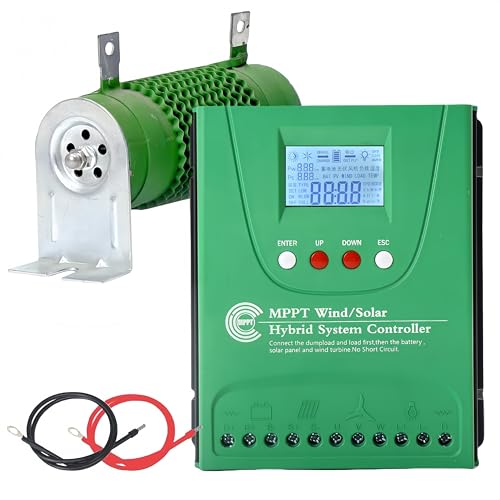
- Handles both wind and solar input in one controller
- MPPT boost charging improves low-wind performance
- LCD readout and load modes simplify monitoring
Best For: Off-grid builders who want one controller for mixed wind-solar battery charging.
Best for High-Capacity Hybrid Systems – 1400W Hybrid Wind Solar Controller
If you need a practical wind turbine charge controller for hybrid solar, this unit is built for mixed wind-and-solar setups with automatic 12/24V battery support, including lithium batteries. It’s a solid fit for off-grid homes, boats, and street-light systems where you want one controller to manage both inputs and keep charging stable.
Best For: Off-grid users who want a single controller for a larger hybrid wind and solar battery bank.
Pros:
- Supports up to 800W wind and 600W solar for hybrid charging setups
- Booster MPPT wind charging helps maintain output in low wind conditions
- Auto battery-type setup with LCD controls and adjustable parameters
- Includes DC load modes plus multiple protection features
Cons:
- Best suited to users who are comfortable tuning system settings
- External dump-load resistor may be needed for proper unloading
- Not ideal for small, plug-and-play systems
This is a capable wind turbine charge controller for hybrid solar if you need more than basic regulation and want better control over a mid-sized off-grid array. The feature set is strong for the price, but it makes the most sense for users who can match it with the right wind turbine, solar capacity, and battery bank.
Best for Hybrid Wind-Solar Monitoring – 1000W Wind Solar Hybrid Controller
If you want a practical wind turbine charge controller for hybrid solar, this 1000W PWM unit is built for small wind-plus-solar systems that need simple battery management and clear status readouts. It combines wind and solar control in one regulator, making it a straightforward option for off-grid setups where space, cost, and basic protection matter.
Best For: DIY off-grid users who want a budget-friendly hybrid controller with LCD monitoring for a small wind and solar array.
Pros:
- Combines wind and solar charging in a single controller
- LCD display makes battery voltage and charge status easy to check
- PWM charging keeps the design simple and power consumption low
- Includes protection features for excess wind output and battery charging
Cons:
- PWM is less efficient than MPPT for solar-heavy systems
- Best suited to smaller 1000W-class hybrid setups
This is a solid pick if you need a no-frills wind turbine charge controller for hybrid solar rather than a high-end optimization unit. It focuses on basic control, readable monitoring, and system protection, which makes it a sensible fit for modest off-grid builds.
Best for Large Hybrid Systems – Wind Solar Hybrid Controller 12000W
If you need a wind turbine charge controller for hybrid solar that can handle bigger off-grid setups, this model is built for high-capacity wind-solar combinations. It supports 12V, 24V, and 48V batteries, includes dump load control, and adds a large LCD plus multiple load modes for more flexible system management.
Best For: Home, boat, and street-light systems that need a high-capacity hybrid controller with wind and solar support.
Pros:
- Supports 12V/24V/48V batteries, including lithium
- High max ratings for both wind generator and solar input
- Dump load and multiple output modes add system flexibility
- LCD display makes setup and monitoring easier
Cons:
- Oversized for small DIY systems
- Feature set may be more than casual users need
This wind turbine charge controller for hybrid solar is a strong fit when you want more headroom, more output options, and broader battery compatibility in one unit. Its main appeal is capacity and control rather than simplicity, so it makes the most sense for larger hybrid builds.
Best for Hybrid Systems – 20000W Wind & Solar Hybrid Charge Controller
If you need a wind turbine charge controller for hybrid solar setups that can manage both wind and PV input, this 20000W controller is built for bigger off-grid systems. It supports 12V, 24V, and 48V battery banks, includes lithium compatibility, and adds MPPT boost charging for wind plus PWM solar charging for a more flexible all-in-one setup.
Best For: Home, boat, or street-light systems that need a single controller to handle wind and solar charging together.
Pros:
- Hybrid design supports both wind turbine and solar panel charging in one unit
- Boost MPPT wind charging helps improve performance at lower wind speeds
- Works with 12V, 24V, and 48V batteries, including lithium options
- Large LCD and multiple DC load modes make monitoring and setup easier
Cons:
- Large-capacity specs may be more than casual DIY users need
- Advanced settings can take some time to configure correctly
This is a practical pick if you want a wind turbine charge controller for hybrid solar use and need broader battery compatibility plus built-in protection features. It makes the most sense for larger off-grid installations where combining wind and solar into one regulated system matters more than keeping the setup simple.
Best for High-Capacity Hybrid Kits – Focket 48V 600W IP67 MPPT Controller
If you need a wind turbine charge controller for hybrid solar that can handle a 48V, 600W setup, the Focket unit is built for practical small-system integration. Its MPPT auto-match design and hybrid wind/solar support make it a sensible pick for users wiring a turbine generator into a mixed renewable array.
Best For: DIY owners building a 48V hybrid wind-and-solar system who want an IP67-rated controller with automatic matching and an easy-to-read LED display.
Pros:
- MPPT auto-match helps optimize charging in hybrid setups
- IP67 rating adds better protection for outdoor installs
- 48V, 600W capacity suits many compact turbine systems
- LED display makes status checks straightforward
Cons:
- May be more controller than very small systems need
- Hybrid wiring can still require careful setup and compatibility checks
Overall, this is a strong choice if you want a wind turbine charge controller for hybrid solar with a higher-capacity spec sheet and weather-resistant design. It looks especially useful for hands-on buyers who want a controller that can slot into a 48V mixed-energy system without adding unnecessary complexity.
Best for Small Off-Grid Hybrids – Hybrid Wind & Solar Controller 30A
If you need a practical wind turbine charge controller for hybrid solar setups, this 30A Pikasola unit is built for 12V/24V battery banks and smaller off-grid systems. It supports up to 800W wind and 1000W solar input, adds MCT charging for solar tracking, and includes a waterproof housing for outdoor use.
Best For: Off-grid DIY users who want a compact controller for a combined wind-and-solar battery setup.
Pros:
- Auto-detects 12V/24V battery systems for easier matching.
- Handles hybrid input with up to 800W wind and 1000W solar.
- IP67 waterproof design and aluminum shell improve outdoor durability.
- Built-in protection features help guard against common wiring and load issues.
Cons:
- 30A capacity limits it to smaller hybrid systems.
- PWM design is less advanced than higher-end MPPT controllers.
- Specs fit off-grid use, but setup may still require careful wiring knowledge.
This wind turbine charge controller for hybrid solar is a strong fit if you want a straightforward, weather-resistant controller for a modest renewable setup. It stands out more for hybrid compatibility and outdoor toughness than for premium charging efficiency.
Best for Comfort – 15000W Wind Solar Hybrid Controller
If you need a wind turbine charge controller for hybrid solar setups with lots of headroom, this 15,000W model is built for larger 24V/48V systems. It combines wind and solar charging, adds MPPT boost behavior for low-wind conditions, and includes a dump load output to help manage excess power more safely.
Best For: Homeowners, off-grid cabins, boats, or street-light systems that want a high-capacity controller for mixed wind/solar charging on 24V or 48V battery banks.
Pros:
- Supports 24V and 48V battery systems, including lithium batteries
- MPPT boost charging helps keep energy flowing at lower wind speeds
- LCD display and multiple load/output modes make setup easier
- Built-in protections for overcharge, under-voltage, overload, and reverse charging
Cons:
- More controller than most small DIY systems need
- Setup may be more involved for first-time hybrid users
- Specific solar/wind sizing limits are important to verify before buying
This is a strong fit if you want a wind turbine charge controller for hybrid solar applications that prioritizes capacity, flexibility, and battery protection over simplicity. It makes the most sense for users pairing multiple inputs and wanting a single controller to manage both wind and solar charging.
Best with Extra Features – 6000W-12000W Wind/Solar Hybrid Controller
If you need a wind turbine charge controller for hybrid solar that can handle a larger off-grid setup, this 48V regulator is built around high-wattage wind and solar input. It combines MPPT boost charging with hybrid regulation, making it a practical fit for systems that use both turbine and panel power to keep batteries topped up.
Best For: Larger 48V off-grid or backup power systems that pair wind turbines with solar panels and need a higher-capacity hybrid controller.
Pros:
- Supports both wind and solar charging in one controller
- High-capacity design suits bigger 48V systems
- MPPT boost charging can improve charging efficiency
- Good match for mixed renewable setups with substantial input
Cons:
- Overkill for small or starter systems
- Requires careful sizing to match your battery bank and array
- May be more complex than a simple single-source charge controller
For buyers comparing a wind turbine charge controller for hybrid solar, this model stands out for its higher power ceiling and dual-source focus. It makes the most sense when you already have a serious wind-and-solar setup and want one controller to manage both inputs efficiently.
Best All-in-One Hybrid Controller – Wind Solar Hybrid Charge Controller
If you want a practical wind turbine charge controller for hybrid solar, this unit is aimed at small off-grid systems that need one controller for both wind and solar inputs. Its auto 12V/24V support and stated 1400W capacity make it a straightforward option for basic battery charging setups without a lot of extra configuration.
Best For: DIY off-grid owners who want a single controller for combining a small wind turbine with solar panels on a 12V or 24V battery bank.
Pros:
- Supports both wind and solar charging in one unit
- Auto-detects 12V/24V battery systems
- Useful for compact off-grid hybrid builds
- Simple match for smaller turbine and panel arrays
Cons:
- Not ideal for larger or more advanced systems
- Power ratings may be limiting for high-output setups
- Best suited to users who already understand hybrid wiring
This wind turbine charge controller for hybrid solar is a solid fit if you need a budget-friendly way to coordinate modest wind and solar charging on one battery bank. It makes the most sense for smaller off-grid projects where convenience and basic compatibility matter more than premium controls or expandability.
Best for Hybrid Off-Grid Systems – 2000W Wind Solar Hybrid Controller
If you need a wind turbine charge controller for hybrid solar setups, this 12V/24V unit is built to manage both a 1000W wind turbine and a 1000W solar array with off-grid batteries. It combines MPPT boost charging for the wind side with PWM charging for solar, making it a practical pick for mixed-energy systems that need steady battery support and load control.
Best For: DIY off-grid users running small home, street-light, boat, or remote hybrid wind-solar systems that need a single controller for both inputs.
Pros:
- Supports dual inputs: up to 1000W wind and 1000W solar
- MPPT boost charging helps capture more energy from low-speed wind
- Multiple load modes, including light control and time control
- LCD display makes system monitoring easier
Cons:
- Best suited for users who need to understand hybrid wiring and battery settings
- Not ideal if you only need a simple solar-only charge controller
- Dump-load and protection features add complexity compared with basic regulators
Overall, this is a capable wind turbine charge controller for hybrid solar installations where you want one unit to coordinate generation, battery charging, and load timing. It stands out more for versatility than simplicity, so it fits buyers building a real off-grid hybrid system rather than a plug-and-play setup.
How We Picked the Best Wind Turbine Charge Controller for Hybrid Solar
We focused on controllers that match real hybrid-use needs: compatible input ranges, automatic voltage detection where available, clear battery charging modes, and the ability to manage both wind and solar inputs without wasting generated power. We also favored models with practical safety features such as dump loads, overcharge protection, LCD or LED status displays, and MPPT or boost charging for better energy capture.
Quick Comparison
Before choosing, check three basics: your system voltage, your turbine and panel wattage, and whether you need a dump load or braking/unloader function. Smaller systems usually benefit from simpler 12V/24V controllers, while higher-power installs may need 24V/48V support, stronger dissipation, and more robust monitoring. If your setup is mixed-use or expanding later, choose a controller with extra headroom rather than a model rated exactly at your current load.
Key Buying Factors for Wind Turbine Charge Controller for Hybrid Solar
Voltage and Battery Match
Make sure the controller supports your battery bank voltage and any automatic switching you want. A mismatch can reduce charging performance or prevent the system from operating correctly.
Wattage Capacity
Check the combined wind and solar input ratings, not just the headline maximum. For a Wind Turbine Charge Controller for Hybrid Solar use, the wind side and solar side may have different limits, so verify both before buying.
MPPT Vs PWM
MPPT models generally extract more usable power, especially when conditions change or the turbine/panel output fluctuates. PWM can still work well for simpler, lower-cost systems, but it is usually less efficient.
Dump Load and Protection
Wind systems often need a dump load or diversion feature to safely handle excess energy when batteries are full. Look for overvoltage, overcurrent, short-circuit, and reverse-polarity protection as well.
Display and Monitoring
An LCD or LED display makes setup and troubleshooting easier. It helps you confirm charging status, battery voltage, and fault conditions at a glance.
Who Should Buy Which Wind Turbine Charge Controller for Hybrid Solar?
Choose a compact 12V/24V model if you’re running a small off-grid cabin, shed, or backup battery system. Pick a higher-capacity 24V/48V unit if you have a larger turbine, bigger solar array, or want room to expand. If efficiency matters most, prioritize MPPT and strong battery-management features. If your system is simpler and cost-sensitive, a PWM controller may be enough, provided the wattage and voltage ratings are a clean match.