Choosing a wind turbine charge controller with display can make an off-grid system easier to monitor and safer to run. The right unit helps manage charging, protect batteries, and show real-time status at a glance.
Below, we focus on controllers that balance power handling, display clarity, waterproofing, and hybrid wind-solar compatibility so you can pick a model that fits your setup.
Best 10 Wind Turbine Charge Controller with Display Picks for 2026
Best for Harsh-Weather Off-Grid Systems
Focket 48V 600W Wind Charge Controller
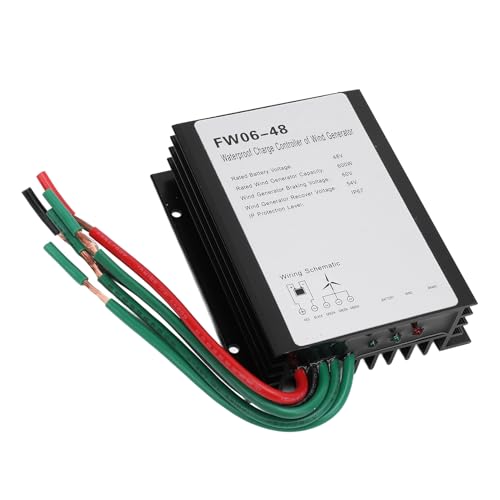
- IP67 aluminum shell for outdoor durability
- Auto braking protects battery and turbine
- LED display simplifies monitoring and setup
Best For: Off-grid 48V wind users who need a rugged controller with display and basic hybrid support.
Best for Low-Wind MPPT Charging
500/800W MPPT Wind Turbine Controller

- MPPT boost charging improves low-wind startup performance
- IP67 build adds better outdoor durability
- Automatic 12V/24V support with multiple safety protections
Best For: DIY wind power users who need efficient charging in light wind conditions.
Best for Off-Grid Reliability
Wind Turbine Controller 12V/24V 300W-1000W

- MPPT charging for better low-wind efficiency
- Auto-matches 12V/24V batteries
- IP67 waterproof with multiple protections
Best For: DIY wind power users who need a rugged, automatic controller for outdoor battery charging.
Best for Hybrid Wind-Solar Systems
1000W Wind Solar Hybrid Charge Controller

- Manages wind and solar charging in one controller
- LCD display shows battery voltage and charge info
- Adjustable settings help match different system needs
Best For: DIY off-grid users who need a single controller for small wind-and-solar setups.
Best for MPPT Efficiency
12V/24V IP67 MPPT Wind Charge Controller

- MPPT tracking boosts charging efficiency in low wind.
- Automatically matches 12V and 24V battery systems.
- Built-in protections help safeguard the battery bank.
Best For: Off-grid buyers who want an efficient, protective controller for smaller wind systems.
Best for High-Capacity Hybrid Systems
15000W Wind Solar Hybrid Controller

- Supports 24V/48V batteries, including lithium
- LCD display improves monitoring and setup
- MPPT boost charging and dump load support
Best For: Home, boat, or light commercial hybrid renewable systems needing a high-capacity controller.
Best for Hybrid Off-Grid Systems
1400W Hybrid Wind Solar Controller

- Combines wind and solar charging in one controller
- LCD display helps with setup and monitoring
- Supports 12V/24V batteries, including lithium
Best For: Off-grid users who want one controller for a hybrid wind-and-solar battery system.
Best Heavy-Duty Pick
Wind Solar Hybrid Charge Controller

- Handles 800W wind and 600W solar inputs
- LCD display helps monitor system status
- Boost MPPT and PWM charging improve efficiency
Best For: Off-grid users who want one controller to manage wind and solar charging with clear on-screen monitoring.
Best Simple Pick
2000W Wind Solar Hybrid Controller
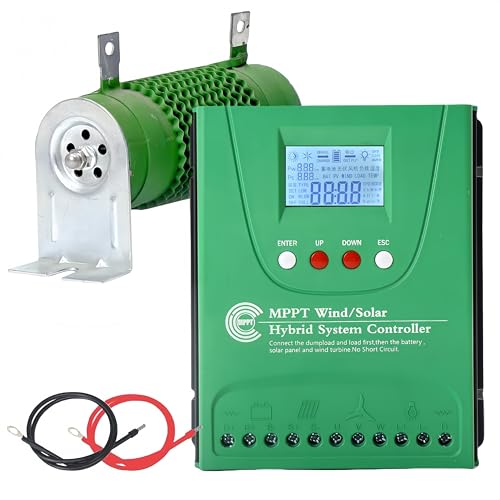
- Supports both 1000W wind and 1000W solar input
- LCD display helps track voltage, load, and temperature
- Built-in protections and dump load support improve reliability
Best For: Off-grid homes, cabins, boats, and street lights that need one controller for wind and solar.
Best for Harsh-Weather Off-Grid Systems – Focket 48V 600W Wind Charge Controller
If you need a wind turbine charge controller with display for a 48V off-grid setup, this Focket model is built around protection, simple monitoring, and hybrid wind-solar compatibility. It automatically manages charging for turbines up to 600W, adds braking at full charge, and uses an LED display to show status at a glance.
Best For: Off-grid users who want a rugged 48V wind turbine controller with built-in display monitoring and basic hybrid system support.
Pros:
- IP67 aluminum shell helps it handle wet, humid, and outdoor installations
- Auto braking and recovery help protect the battery and turbine from overcharge
- LED display makes system status easier to check during setup and use
- Supports 48V wind turbine systems up to 600W with hybrid wind-solar use
Cons:
- Designed specifically for 48V systems, so it is not a universal fit
- 600W rating may be limiting for larger turbine installations
- Feature set is practical, but not as advanced as premium programmable controllers
For buyers comparing a wind turbine charge controller with display, this one stands out for weather resistance and straightforward automatic protection. It is a solid pick if you want a durable controller that keeps the system simple while still offering basic monitoring.
Best for Low-Wind MPPT Charging – 500/800W MPPT Wind Turbine Controller
If you want a wind turbine charge controller with display that can help squeeze more usable power from light wind conditions, this MPPT-based unit is built for that job. It adds automatic 12V/24V support and a practical protection set, making it a solid pick for small off-grid wind setups where safe charging matters.
Best For: DIY wind power users who need a compact MPPT controller for 12V or 24V battery charging.
Pros:
- MPPT boost charging helps start charging in low-wind, low-voltage conditions
- Built-in protections for overcharge, reverse connection, short circuit, and high temperature
- IP67-rated housing is designed to handle tougher outdoor conditions
- Automatically supports 12V and 24V systems for broader compatibility
Cons:
- Only rated for small-to-mid setups, not larger wind systems
- Product details are somewhat inconsistent in the listing
- Display and interface information is limited in the specs provided
Overall, this is a practical wind turbine charge controller with display for buyers who care more about efficient charging and protection than advanced controls. It stands out most in simple off-grid builds where low-wind performance and basic system safety are the priorities.
Best for Off-Grid Reliability – Wind Turbine Controller 12V/24V 300W-1000W
Wind Turbine Generator Controller - 12V/24V 300W-1000W MPPT/PWM, 16A IP67 , Auto Match Voltage
Check Price On AmazonIf you want a wind turbine charge controller with display for a small off-grid system, this 12V/24V unit is built around automatic matching, MPPT charging, and weather-resistant construction. It’s aimed at improving charging efficiency at low wind speeds while adding the protection features that matter for everyday use.
Best For: DIY wind power setups, battery charging systems, and outdoor installs that need automatic voltage matching and waterproof protection.
Pros:
- MPPT control helps capture more usable power, especially in lighter wind conditions.
- Auto-matches 12V/24V batteries for easier setup.
- IP67 waterproof aluminum-alloy build suits outdoor installations.
- Includes multiple protections, plus automatic or manual braking support.
Cons:
- 16A output and 300W-1000W range may be limiting for larger turbines.
- Feature set is practical, but not as advanced as higher-end monitoring controllers.
This is a solid pick if you need a rugged, automatic controller that prioritizes dependable charging over extra bells and whistles. It fits the role of a wind turbine charge controller with display for users who care most about durability, safety, and efficient charging in real-world conditions.
Best for Hybrid Wind-Solar Systems – 1000W Wind Solar Hybrid Charge Controller
If you want a practical wind turbine charge controller with display for a mixed renewable setup, this 1000W hybrid unit is built to manage both wind and solar input in one controller. Its LCD readout and adjustable settings make it a straightforward option for small off-grid systems that need basic monitoring and protection.
Best For: DIY users, cabin setups, and small off-grid systems that combine wind and solar charging in a single controller.
Pros:
- Combines wind and solar charging in one unit for simpler system wiring
- LCD display shows battery voltage and charge status at a glance
- PWM charging and protection features help keep the system stable
- Adjustable parameters suit different battery and installation needs
Cons:
- PWM design is less efficient than MPPT options
- Best suited to smaller systems rather than larger high-output arrays
- Setup may take some tuning for users new to hybrid controllers
This wind turbine charge controller with display makes the most sense if you need a simple hybrid regulator with basic monitoring rather than advanced power optimization. It is a solid fit for compact renewable setups where ease of control and system protection matter more than premium efficiency.
Best for MPPT Efficiency – 12V/24V IP67 MPPT Wind Charge Controller
If you want a wind turbine charge controller with display for a small off-grid setup, this 12V/24V MPPT model is built to squeeze more usable power from low wind speeds while protecting your battery bank. It’s a practical pick for buyers who want automatic voltage matching, IP67 protection, and a controller that can handle everyday wind charging tasks without much fuss.
Best For: Off-grid users who need a compact MPPT wind controller for 12V/24V battery charging and reliable protection features.
Pros:
- MPPT control helps improve charging efficiency, especially in lighter wind conditions.
- Automatic 12V/24V battery matching simplifies setup.
- Multiple protections cover overcharge, reverse connection, overload, and braking.
- IP67-rated design and heat dissipation channels support tougher outdoor use.
Cons:
- 16A output limits it to smaller wind turbine systems.
- Feature set is more utilitarian than premium.
- Display details are not as prominent as on some dedicated monitor-style controllers.
Overall, this wind turbine charge controller with display-focused buyers should view it as a solid efficiency-first option rather than a flashy one. It makes the most sense if you care more about MPPT performance, protection, and straightforward charging than advanced monitoring extras.
Best for High-Capacity Hybrid Systems – 15000W Wind Solar Hybrid Controller
If you need a wind turbine charge controller with display for a larger off-grid setup, this 15,000W hybrid unit is built for 24V and 48V battery banks and supports both wind and solar input. It adds MPPT boost charging, dump load handling, and a large LCD, making it a practical fit for users who want more visibility and control in a mixed renewable system.
Best For: Home, boat, or light commercial buyers running a 24V/48V wind-solar hybrid battery system who want adjustable charging and clear LCD monitoring.
Pros:
- Supports 24V/48V batteries, including lithium packs
- Large LCD makes status checks and setup easier
- MPPT boost charging helps capture power at lower wind speeds
- Built-in protection features cover overcharge, overload, and reverse issues
Cons:
- Overkill for small residential or single-turbine setups
- Advanced settings may take time to configure
- Requires proper system matching for best performance
Overall, this is a strong fit if you want a wind turbine charge controller with display that can manage a larger hybrid array rather than a simple standalone turbine. The combination of LCD monitoring, dump load support, and flexible battery compatibility makes it more useful for serious off-grid installs than basic controllers.
Best for Hybrid Off-Grid Systems – 1400W Hybrid Wind Solar Controller
If you want a wind turbine charge controller with display for a mixed renewable setup, this PIKASOLA unit is built for 12V/24V battery banks and combines wind and solar input in one controller. It supports up to 800W of wind generation and 600W of solar, while the LCD screen makes it easier to monitor settings and charging behavior at a glance.
Best For: Off-grid homes, boats, and street-light systems that need one controller for both wind and solar charging.
Pros:
- Hybrid design supports wind and solar in a single controller.
- LCD display makes setup and status checks more convenient.
- Works with 12V/24V batteries, including lithium battery setups.
- Wind side uses MPPT boost charging for better low-wind performance.
Cons:
- Not a fit for larger systems beyond its stated input limits.
- Advanced features may take some time to configure correctly.
- External dump-load setup adds wiring complexity.
This is a practical pick if you need a wind turbine charge controller with display that can manage a small-to-mid-size hybrid system without splitting charging duties across separate devices. It is especially useful when you want simple monitoring, battery compatibility, and built-in protection in one off-grid controller.
Best for Hybrid Monitoring – 15000W Wind Solar Hybrid Charge Controller
If you want a wind turbine charge controller with display for a mixed wind-and-solar setup, this hybrid regulator stands out for its LCD readout, dump load support, and 12V/24V compatibility. It’s aimed at users who want a single controller to manage charging, protect the battery bank, and handle both wind and solar inputs without a lot of guesswork.
Best For: Off-grid homeowners, boat owners, and small renewable setups that need a display-equipped hybrid controller for 12V/24V systems.
Pros:
- LCD display makes system status and settings easier to monitor.
- Supports both wind and solar charging in one controller.
- Works with 12V/24V batteries, including lithium.
- Includes dump load and multiple protection features for safer operation.
Cons:
- Large 15000W rating may be more than many small installations need.
- Setup may take some tuning if you want custom charge behavior.
Overall, this is a practical pick if you want a wind turbine charge controller with display that can monitor a hybrid system and manage charging more intelligently than basic regulators. It’s especially useful when you need one unit to coordinate battery protection, load control, and low-speed charging efficiency.
Best Heavy-Duty Pick – Wind Solar Hybrid Charge Controller
If you want a wind turbine charge controller with display that can handle both wind and solar inputs, this hybrid unit is built for practical off-grid setups. It supports 12V/24V batteries, uses boost MPPT for wind and PWM charging for solar, and adds an LCD readout so you can keep track of system status at a glance.
Best For: Off-grid users who want one controller to manage wind and solar charging with clear on-screen monitoring.
Pros:
- Supports up to 800W wind and 600W solar input for flexible hybrid systems
- LCD display makes it easier to monitor charging status and settings
- Boost MPPT for wind and PWM for solar help improve charging efficiency
- Multiple built-in protections add peace of mind for everyday use
Cons:
- Hybrid features may be more than needed for simple single-source setups
- Manual setup and mode selection may take some learning for beginners
Overall, this is a practical wind turbine charge controller with display for buyers who want visible system feedback and true dual-input charging in one unit. It looks especially useful for cabins, boats, and small off-grid installations where monitoring and protection matter.
Best Simple Pick – 2000W Wind Solar Hybrid Controller
If you need a wind turbine charge controller with display for a mixed renewable setup, this 12V/24V unit is built to manage both wind and solar input in one box. It supports up to 1000W from a wind turbine and 1000W from solar panels, while the LCD makes it easier to monitor voltage, battery status, load mode, current, and temperature at a glance.
Best For: Off-grid users who want one controller for small wind-solar hybrid systems on homes, cabins, boats, or street lights.
Pros:
- Handles both wind and solar charging for flexible off-grid installs
- LCD display shows key system data for easier monitoring
- Includes multiple protection features and dump load support
- Works with 12V and 24V battery banks
Cons:
- May be more controller than you need for a simple single-source setup
- Specifications and operating modes can require careful setup
For buyers comparing a wind turbine charge controller with display, this model stands out for combining hybrid input support, visible system readouts, and practical load control in one package. It’s a sensible pick when you want centralized management instead of separate controllers for wind and solar.
How We Picked the Best Wind Turbine Charge Controller with Display
We focused on practical features that matter in real off-grid use: voltage compatibility, supported turbine wattage, MPPT or PWM charging behavior, display readability, protection features, and weather resistance. For a Wind Turbine Charge Controller with Display, we also prioritized units that make system status easy to check without extra meters.
Quick Comparison
The main differences usually come down to input range, battery voltage support, and whether the controller is designed for wind only or wind-solar hybrid setups. Lower-watt models are better for small cabins, sheds, or backup systems, while higher-watt controllers suit larger turbines and mixed renewable arrays.
Key Buying Factors for a Wind Turbine Charge Controller with Display
Battery Voltage and System Match
Confirm that the controller supports your battery bank voltage, such as 12V, 24V, 48V, or auto-switching. A mismatch can reduce performance or prevent proper charging.
Power Rating and Headroom
Choose a controller with some margin above your turbine’s expected output. That helps account for wind spikes and reduces stress on the regulator.
MPPT Vs. PWM
MPPT controllers are generally better at extracting usable power from variable wind conditions, while PWM options can be simpler and more budget-friendly. If efficiency matters, MPPT is usually the stronger choice.
Display and Monitoring
A clear display should show battery voltage, charging status, load or dump-load behavior, and fault alerts if available. This is especially useful when the controller is installed in a remote location.
Protection and Build Quality
Look for overcharge protection, overcurrent protection, temperature handling, and waterproof ratings such as IP67 where exposure is likely. These features improve reliability in outdoor installations.
Who Should Buy Which Wind Turbine Charge Controller with Display?
If you want a simple controller for a small turbine, choose a lower-watt, auto-matching model with a basic display. If you run a hybrid off-grid system, pick a wind-solar controller with MPPT and dump-load support. For larger battery banks or higher-output turbines, go with a higher-capacity unit that offers stronger protection and a more informative display.
In short, the best choice depends on your turbine size, battery voltage, and whether you need wind-only control or a hybrid setup. A well-matched controller with a display makes setup easier and ongoing monitoring much more practical.