A portable solar generator can keep chargers, lights, laptops, and some corded tools running when a jobsite has no convenient outlet. But a large battery alone does not guarantee it can start a saw or last through a full shift.
These 10 kits pair power stations with solar panels. Compare their AC output, battery capacity, panel wattage, and portability to find the right fit for your work.
Best 10 Portable Solar Generator for Jobsite Picks for 2026
Best for High-Draw Equipment

- 3,600W AC output; 3,584Wh capacity
- Two 200W solar panels included
- 77.2-pound station has wheels and a telescopic handle
Best For: Higher-draw loads at sites where the station can be rolled into place
Best for Extended Runtime

- 3,840Wh battery; 2,600W AC output
- Two 200W solar panels included
- 86-pound station has a trolley system
Best For: Capacity-focused jobs with space for a wheeled station
Best Compact 3kWh Option
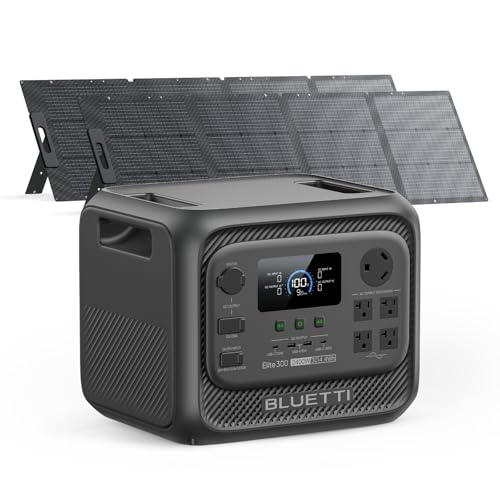
- 3,014.4Wh battery; 2,400W output
- Compact 14.4 × 12 × 11.7-inch station
- Two 200W solar panels included
Best For: Space-conscious buyers seeking about 3kWh of capacity
Best for Carrying Between Sites

- Station listed at 39.5 pounds
- 2,042Wh battery; 2,200W AC output
- Two 200W solar panels included
Best For: Moving between sites with moderate power needs
Best for Higher-Draw Tools

- 2,000W continuous; 3,000W peak
- 1,024Wh LiFePO4 battery
- Includes 200W solar panel
Best For: Higher-output loads and multiple devices
Best for Longer Runtime

- 2,010Wh LiFePO4 battery
- 1,500W continuous; 3,000W peak
- Includes 400W solar panel
Best For: Longer sessions with loads under 1,500W
Best for Fast AC Top-Ups

- 1,800W output; 3,600W surge
- 1,024Wh LiFePO4 battery
- 0–80% AC charge in 45 minutes
Best For: Quick recharges when AC power is available
Best Lightweight Pick
DJI Power 1000 V2 with 200W Solar Panel

- 1,024Wh LFP battery; 2,600W output
- 200W panel and MPPT adapter included
- 14.14 kg; claimed 80% AC charge in 37 minutes
Best For: Mobile DIY work and shorter tool-running sessions
Best High-Output Pick
BLUETTI Apex 300 with 500W Solar Panel

- 2,764.8Wh LFP battery; 3,840W output
- Six AC outlets; simultaneous 120V/240V
- 500W panel included; 38 kg station
Best For: Multiple AC loads and mixed-voltage power needs
Best for High-Draw Equipment – Jackery HomePower 3600 Plus
If your portable solar generator for jobsite use needs to support demanding equipment, the Jackery HomePower 3600 Plus pairs 3,600W of AC output with a 3,584Wh battery. This kit includes two 200W solar panels, while wheels and a telescopic handle help move the 77.2-pound station around the site.
Best For: Crews that need substantial battery capacity and higher AC output at a location where the unit can be rolled into place.
Pros:
- 3,600W output and 3,584Wh capacity suit larger electrical loads.
- Includes two 200W solar panels and supports AC, solar, hybrid, and generator charging.
- Wheels and a telescopic handle make the large station easier to reposition.
Cons:
- At 77.2 pounds, it is better suited to rolling than frequent lifting.
- Its stated 240V capability requires a parallel configuration; a single unit is listed at 120V.
This is the strongest-output option here for a jobsite with significant power demands. Check each tool’s running and startup requirements before relying on any battery station to power it.
Best for Extended Runtime – BLUETTI Elite 400
The BLUETTI Elite 400 offers a large 3,840Wh battery for buyers considering a portable solar generator for jobsite use. Its 2,600W AC output and nine ports provide room for multiple devices, and the included two 200W panels give you a way to recharge away from an outlet.
Best For: Jobs that prioritize battery capacity and can accommodate an 86-pound, trolley-style power station.
Pros:
- 3,840Wh is the largest stated battery capacity among these four kits.
- 2,600W rated output and nine ports support a range of electrical loads.
- Built-in trolley system helps move the station without carrying it.
Cons:
- At 86 pounds, it is the heaviest station listed here.
- The stated full solar recharge time with the included panels is about 9.5–19 hours.
Choose the Elite 400 when stored energy matters more than quick solar turnaround. Its output is lower than the Jackery HomePower 3600 Plus, so confirm the wattage required by your tools before buying.
Best Compact 3kWh Option – BLUETTI Elite 300
For a portable solar generator for jobsite use where storage space is limited, the BLUETTI Elite 300 puts 3,014.4Wh of capacity and 2,400W AC output in a 14.4-by-12-by-11.7-inch station. The kit includes two 200W solar panels for charging when grid power is unavailable.
Best For: Buyers who want roughly 3kWh of stored energy without the larger footprint of a trolley-style unit.
Pros:
- 3,014.4Wh battery and 2,400W rated output offer substantial power in a compact enclosure.
- Weighs 58 pounds, less than the two larger-capacity stations in this roundup.
- Includes two 200W solar panels.
Cons:
- At 58 pounds, it still takes effort to lift and carry.
- Its stated solar recharge time with the included panels is about 7–15 hours.
The Elite 300 is a practical middle ground if you need more stored energy than a 2kWh unit but have limited room for transport or storage. Verify your equipment stays within its 2,400W rated output.
Best for Carrying Between Sites – Jackery Explorer 2000 v2
If you need a portable solar generator for jobsite tasks that regularly moves between locations, the Jackery Explorer 2000 v2 station is listed at 39.5 pounds. It provides 2,042Wh of battery capacity and 2,200W AC output, and this kit includes two 200W solar panels.
Best For: Buyers who value easier carrying for moderate power needs over maximum battery capacity.
Pros:
- The station’s stated 39.5-pound weight makes it lighter than the other stations listed here.
- 2,200W output and three AC ports accommodate multiple compatible devices.
- Includes two 200W panels; the stated full solar charging time is six hours under the specified 400W panel setup.
Cons:
- Its 2,042Wh capacity is the smallest in this group.
- Its 2,200W rated output is also the lowest of the four.
The Explorer 2000 v2 makes sense when carrying the station is part of the workday. For higher-draw tools or longer periods between charges, one of the larger units may be a better fit.
Best for Higher-Draw Tools – Anker SOLIX C1000 Gen 2
If you need a portable solar generator for jobsite use, the Anker SOLIX C1000 Gen 2 pairs a 1,024Wh battery with 2,000W continuous output and an included 200W panel. Its nine ports give you room to charge multiple devices, though tool runtime will depend on the load.
Best For: Jobsites that need 2,000W of continuous output in a compact station and can recharge between work sessions.
Pros:
- 2,000W continuous output and 3,000W peak output.
- Includes a 200W bifacial panel; accepts up to 600W solar input.
- 1,024Wh LiFePO4 battery rated to retain at least 80% capacity after 4,000 cycles.
Cons:
- The included 200W panel is below the station’s 600W maximum solar input.
- The station and panel ship separately.
The C1000 Gen 2 is the output-focused choice here: it offers more continuous wattage than the other two stations, but less battery capacity than the S2000. Check each tool’s running and startup requirements before relying on it at the jobsite.
Best for Longer Runtime – Anker SOLIX S2000
For a portable solar generator for jobsite use where battery capacity matters more than maximum continuous output, the Anker SOLIX S2000 offers 2,010Wh, 1,500W continuous output, and an included 400W solar panel. At 35.7 pounds, it is portable but still a substantial item to carry.
Best For: Jobsites powering compatible devices over longer stretches between recharges.
Pros:
- 2,010Wh LiFePO4 battery with a stated 10,000-cycle rating.
- Includes a 400W bifacial solar panel and supports up to 400W solar input.
- Eight outlets across the front and rear.
Cons:
- 1,500W continuous output is lower than the other two stations’ ratings.
- No 12V DC port.
- The station and panel ship separately.
Choose the S2000 if its larger battery better suits your workday and your equipment stays within its 1,500W continuous limit. Its 3,000W peak rating does not replace checking a tool’s sustained power draw.
Best for Fast AC Top-Ups – EcoFlow DELTA 3 Classic
If your portable solar generator for jobsite use will return to a wall outlet between shifts, the EcoFlow DELTA 3 Classic offers a stated 0–80% AC recharge time of 45 minutes. It pairs a 1,024Wh LiFePO4 battery and 1,800W output with an included 220W bifacial solar panel.
Best For: Jobsites that need 1,800W output and have access to AC power for quick recharges.
Pros:
- 1,800W output with a stated 3,600W surge rating.
- Recharges from 0–80% in 45 minutes via AC, according to EcoFlow.
- Includes a 220W bifacial solar panel.
Cons:
- Listed solar recharge time is 5.8 hours with the included panel.
- The station and panel arrive separately.
The DELTA 3 Classic sits between the two Anker models in continuous output, while matching the C1000 Gen 2’s roughly 1kWh battery size. Its fast AC top-up is useful when outlets are available; solar replenishment calls for a longer window.
Best Lightweight Pick – DJI Power 1000 V2 with 200W Solar Panel
If you need a portable solar generator for jobsite tasks without hauling a large power station, the DJI Power 1000 V2 pairs a 1,024Wh LFP battery with 2,600W output. The bundle includes a 200W foldable panel and MPPT adapter, making it a practical fit for outdoor DIY work and charging between tasks.
Best For: Mobile DIY work where manageable weight and fast AC recharging matter more than maximum battery capacity.
Pros:
- 2,600W output is specified for tools including saws and drills.
- Recharges to 80% in a claimed 37 minutes via AC.
- Includes a 200W foldable solar panel and MPPT adapter.
Cons:
- 1,024Wh capacity offers less stored energy than the larger stations in this roundup.
- The included 200W panel limits how quickly you can replenish power from sunlight alone.
At 14.14 kg, this is the easiest of the three stations to move around a work area. Check your tool’s running and startup demands, and plan for AC charging when you need the quickest turnaround.
Best High-Output Pick – BLUETTI Apex 300 with 500W Solar Panel
For buyers prioritizing output in a portable solar generator for jobsite use, the BLUETTI Apex 300 provides 3,840W continuous power, a 2,764.8Wh LFP battery, and six AC outlets. Its bundle includes a 500W solar panel, although the panel ships separately.
Best For: Work areas with multiple AC loads or equipment that benefits from the unit’s simultaneous 120V/240V output.
Pros:
- 3,840W continuous output and a stated 7,680W surge rating.
- Six AC outlets and simultaneous 120V/240V output support varied power needs.
- Accepts up to 2,400W solar input with dual MPPT when paired with sufficient panels.
Cons:
- At 38 kg, it takes more effort to move than a smaller power station.
- The included 500W panel alone cannot deliver the unit’s maximum 2,400W solar input.
The Apex 300 makes sense when outlet count, output, and voltage flexibility outweigh portability. Its advertised 80% charge in 40 minutes depends on achieving full solar input, so do not expect that rate from the bundled panel by itself.
Best Large-Capacity Pick – SolarPlay Q3600 with 400W Solar Panel
The SolarPlay Q3600 is a portable solar generator for jobsite setups that need a large energy reserve: it combines 3,840Wh of LiFePO4 storage with 3,600W continuous output. The included 400W panel adds an off-grid charging option, while built-in wheels and a telescopic handle help move the 93.7-pound station.
Best For: Longer work sessions with substantial power needs, especially where the station can be rolled into position.
Pros:
- 3,840Wh capacity, 3,600W continuous output, and a stated 5,500W surge rating.
- Includes a 400W solar panel; the station supports up to 2,000W solar input with additional compatible panels.
- Wheels and a telescopic handle help with transport.
Cons:
- At 93.7 pounds, it is cumbersome to lift or carry over uneven ground.
- The bundled 400W panel is well below the station’s maximum solar input.
Choose the Q3600 if stored energy is the priority and you can accommodate its size. The notes give conflicting warranty information—five years in the bullets but 1.5 years in the product details—so confirm coverage before buying.
How We Picked the Best Portable Solar Generator for Jobsite
We focused on the 10 selected power-station-and-panel kits, comparing their stated battery capacity, AC output where specified, included solar wattage, and likely fit for common jobsite tasks. We also considered the practical trade-offs between carrying a smaller unit and bringing enough stored energy for longer workdays. Published specifications are a starting point, not a guarantee of runtime or tool compatibility; check current manufacturer details before buying.
Quick Comparison: Which Size Fits the Work?
For charging cordless-tool batteries, running task lights, and powering site electronics, start with the roughly 1,000Wh kits: the Anker SOLIX C1000 Gen 2, EcoFlow DELTA 3 Classic, and DJI Power 1000 V2. The Jackery Explorer 2000 v2 and Anker SOLIX S2000 offer a step up in stored energy; the Jackery kit specifies 2,042Wh and 2,200W AC output. Larger-capacity choices include the BLUETTI Apex 300 at 2,764.8Wh, Elite 300 at 3,014.4Wh, Jackery HomePower 3600 Plus at 3,584Wh, and BLUETTI Elite 400 and SolarPlay Q3600 at 3,840Wh. Compare each model’s continuous output separately before connecting demanding tools.
Key Buying Factors for a Portable Solar Generator for Jobsite Use
Continuous Power and Startup Surge
Match the station’s continuous AC rating to everything you might run at once. Saws, compressors, and other motor-driven equipment may draw substantially more power at startup than during operation. Check the tool’s requirements and the station’s surge specification; a high watt-hour rating does not make an undersized inverter suitable for a heavy tool.
Battery Capacity and Real Runtime
Watt-hours indicate stored energy, while watts describe how quickly a load uses it. As a rough planning example, a 1,000Wh battery running a steady 500W load will last less than two hours after conversion losses. Intermittent tools are harder to predict, so leave a margin rather than sizing the station to an ideal calculation.
Solar Input and Site Conditions
Included panels range from 200W to 500W across these kits, with several bundling two 200W panels. Panel nameplate wattage is not all-day charging power: shade, clouds, angle, and short winter days reduce output. Confirm the station’s supported solar input, connector requirements, and whether panels can be placed in sun without crossing active work areas.
Mobility, Charging, and Durability
Check the weight of both station and panels, plus how you will move and protect them on site. Fast wall charging helps when you can top up between shifts; solar alone may not replace a full day’s use. Keep the station within its stated temperature and weather limits, and use appropriate outdoor-rated connections.
Who Should Buy Which Portable Solar Generator for Jobsite?
Choose a roughly 1,000Wh kit for lighter loads and easier transport. Look at the 2,000Wh-class kits when you need more charging cycles or moderate AC loads without moving to the largest batteries. Consider the 2,700–3,840Wh group for longer off-grid days or multiple smaller loads—but verify inverter output, startup capability, and total carry weight first. If your main task is running high-draw equipment continuously, calculate its actual demand before buying any Portable Solar Generator for Jobsite use; a conventional generator or site power connection may be the more practical choice.