A DC-to-DC charger with solar input can charge a house battery from your vehicle while driving and use rooftop or portable panels when parked. The right choice depends on your battery, alternator, solar array, and wiring—not just the amp rating on the box.
These 10 picks span compact 25A chargers, higher-output 40A and 50A units, and a high-power option for compatible power stations. Here’s how to narrow them down for your setup.
Best 10 Dc to Dc Charger with Solar Input Picks for 2026
Best for Portable Power Stations

- Up to 1,200W total charging power
- Alternator and MC4 solar inputs
- Starter-battery protection and reverse charging
Best For: Vehicle charging for compatible portable power stations
Best Compact 30A Option
Renogy Smart 30A DC-DC MPPT Charger
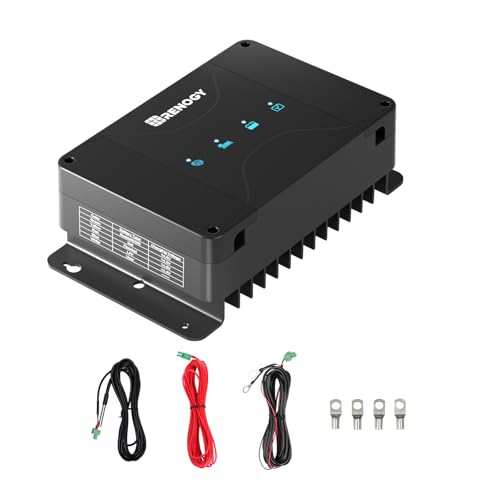
- 30A output for 12V systems
- 30V/400W stated solar input
- Bluetooth module sold separately
Best For: Compact RV or van house-battery setups
Best for Anderson Connections

- 40A charging with built-in MPPT
- Built-in Anderson connectors
- LiFePO4 BMS activation support
Best For: Compact RV and camper installations using Anderson connections
Best Higher-Output House-Battery Pick
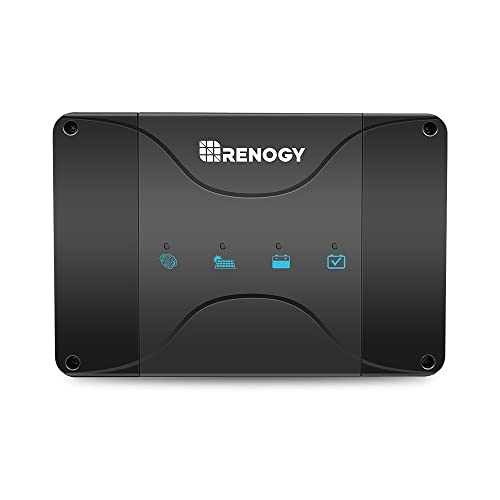
- 50A charging for 12V house batteries
- 50V/660W stated solar input
- Supports smart and traditional alternators
Best For: Higher-output RV house-battery systems
Best for DC-Priority Charging

- Automatically prioritizes DC input
- Reverse-charge button for starter battery
- Anderson-style plug connections
Best For: 4WD and camper setups favoring alternator input
Best for Exposed Installations

- IP68-rated waterproof housing
- Solar and engine charging inputs
- Selectable solar priority
Best For: Exposed 12V trailer, camping, or marine setups
Most Versatile Voltage Options

- Four 12V/24V charging combinations
- 40A output with built-in solar MPPT
- Auxiliary-to-starter reverse charging
Best For: Mixed-voltage RV and backup battery setups
Compact Waterproof Pick

- IP68 waterproof designation
- 25A solar and alternator input
- LED status and mode indicators
Best For: Compact 12V vehicle and camper installs
Rugged Off-Road Choice
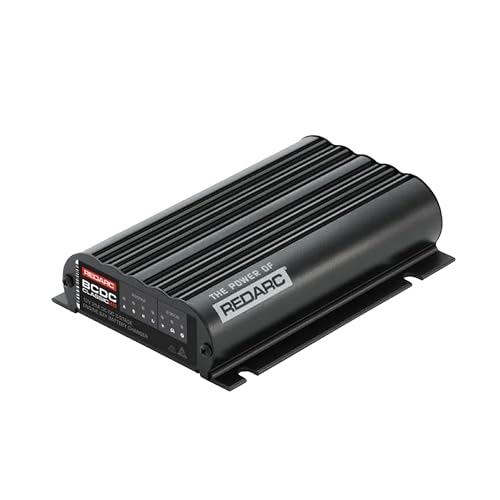
- Sealed for harsh off-road conditions
- MPPT with solar-first priority
- Two-year limited warranty
Best For: Off-road 12V auxiliary battery systems
Best for Portable Power Stations – BLUETTI Charger 2
If you want a dc to dc charger with solar input for a portable power station, the BLUETTI Charger 2 combines alternator and solar charging in one unit. Its stated 1,200W maximum total output makes it a different choice from chargers built primarily for a fixed RV house battery.
Best For: Drivers charging a BLUETTI or compatible third-party portable power station from their vehicle and solar panels.
Pros:
- Up to 1,200W total charging power, with up to 800W alternator input and 600W solar input.
- Works with all BLUETTI and most third-party portable power stations, according to the supplied specifications.
- Monitors starter-battery voltage and stops drawing power when the engine is off; supports a D+ signal for smart alternators.
- Supports starter-battery reverse charging, trickle charging, and pulse maintenance.
Cons:
- The DC Hub for continuous in-vehicle DC loads is optional.
- Its power-station focus makes it less directly suited to shoppers seeking a conventional house-battery charger.
Choose this model when fast charging for a portable power station is the priority. Check your station’s charging connection before buying, particularly if it is not a BLUETTI model.
Best Compact 30A Option – Renogy Smart 30A DC-DC MPPT Charger
This Renogy dc to dc charger with solar input pairs a 30A, 12V battery charger with built-in MPPT for RV, van, and marine dual-battery setups. It prioritizes solar when both sources are available, making it a practical fit for modest charging needs.
Best For: Space-conscious 12V house-battery installations that need both alternator and solar charging.
Pros:
- 30A charging with a stated solar input rating of 30V/400W.
- Supports lithium, AGM, gel, and flooded batteries, plus traditional and smart alternators.
- Built-in MPPT and three-stage charging; solar is prioritized when both inputs are active.
- Compact 9.6-by-3-by-5.7-inch body and RS485 monitoring compatibility.
Cons:
- The BT-2 module needed for Bluetooth monitoring is sold separately.
- Its 30A output is lower than the 40A and 50A house-battery chargers in this roundup.
This is the measured choice for a smaller 12V system rather than a high-output build. Budget separately for the monitoring accessories if app access matters to you.
Best for Anderson Connections – Redodo 12V 40A DC-DC Charger
The Redodo is a 40A dc to dc charger with solar input for charging a service battery from either the starter battery or solar panels. Built-in MPPT, status indicators, and Anderson connectors make it worth considering for a compact vehicle installation.
Best For: RV and camper owners who want 40A charging and prefer built-in Anderson connections.
Pros:
- 40A charging with built-in MPPT for the solar input.
- Anderson connectors and LED indicators simplify connection and status checks.
- Supports several battery profiles, including lithium, gel, sealed lead-acid, and flooded.
- Can activate a LiFePO4 battery after its BMS shuts off and supports reverse charging of the starter battery.
Cons:
- The supplied notes do not state a solar-input wattage or voltage limit; confirm panel compatibility before installation.
- Confirm its listed battery profiles match your specific service battery before buying.
Redodo offers a useful middle ground between the 30A and 50A options here. Its connector layout is a particular draw, but solar-array sizing requires a closer check of the specifications.
Best Higher-Output House-Battery Pick – Renogy 12V 50A Smart Charger
For a 12V house-battery setup needing more charging current, this Renogy dc to dc charger with solar input delivers a stated 50A output and accepts alternator and solar power. Its listed 50V/660W solar input also gives shoppers a concrete panel-sizing figure to check against their array.
Best For: RV owners seeking a 50A dual-input charger with smart-alternator support and remote-monitoring options.
Pros:
- 50A charging and a stated 50V/660W solar input.
- Built-in MPPT with stated tracking efficiency up to 99%.
- IGN connection supports smart-alternator triggering; a built-in voltage-sensitive relay supports traditional alternators.
- Fanless heat sink avoids cooling-fan noise, and the charger supports battery activation at 0V.
Cons:
- Phone monitoring requires a BT-2 Bluetooth module.
- Confirm your panels stay within the stated 50V/660W solar-input rating.
This is the stronger-output conventional house-battery option in the group. Its alternator support and stated solar limits make it easier to assess for a planned 12V installation, provided you account for any monitoring accessories.
Best for Hybrid Charging – LiTime 12V 40A DC-DC Charger
The LiTime is a dc to dc charger with solar input for RV and off-grid setups that may charge from an alternator, solar panels, or both. Its built-in MPPT controller and 40A output keep the charging setup compact.
Best For: Land-based 12V systems that need flexible solar and alternator charging.
Pros:
- Supports DC, solar, and hybrid charging.
- Can reverse-charge a flat starter battery from the auxiliary battery.
- Works with LiFePO4 and several lead-acid battery types.
Cons:
- Not waterproof or suitable for marine environments.
Choose this model if hybrid charging and starter-battery recovery matter more than weather-resistant installation.
Best for DC-Priority Charging – ATEM POWER 40A DC-DC Charger
The ATEM POWER is a dc to dc charger with solar input for vehicle-based battery systems. Its built-in MPPT controller accepts solar, but the charger prioritizes DC input when both sources meet charging conditions.
Best For: 4WD and camper setups that favor alternator charging and want a starter-battery recovery option.
Pros:
- Reverse-charge button can use the auxiliary battery to revive a flat starter battery.
- Supports AGM, Gel, Calcium, lead-acid, and LiFePO4 batteries.
- Anderson-style plugs and a battery-selection button simplify operation.
Cons:
- DC priority may not suit buyers who want solar to take precedence.
- Supplied specifications list 24V output and 12V input; confirm voltage compatibility before purchase.
It is a practical fit when predictable DC priority is the goal, provided its listed electrical specifications match your system.
Best for Exposed Installations – POWO Carlife IP68 40A Charger
The POWO Carlife is a dc to dc charger with solar input aimed at installations where water exposure is a concern. Its IP68-rated housing, built-in MPPT, and 40A rating distinguish it from chargers intended only for sheltered locations.
Best For: Trailer, camping, or marine setups that need an IP68-rated charger and solar-priority capability.
Pros:
- IP68 waterproof rating for exposed environments.
- Accepts solar-panel and engine-connected charging inputs.
- Can be set to prioritize solar charging.
Cons:
- Battery type must be selected using the onboard controls.
- Supplied warranty information specifies a 30-day free-return period, not a longer warranty term.
This is the most relevant choice of the three for exposed mounting when solar priority matters; check that its 12V input and output suit your system.
Most Versatile Voltage Options – VEVOR 40A Dual-Input Charger
If your setup mixes 12V and 24V equipment, this dc to dc charger with solar input offers four input-to-output voltage combinations. Its 40A, 520W rating and built-in MPPT make it a flexible choice for RV or backup battery systems.
Best For: RV and backup setups that need 12V/24V charging flexibility and higher current.
Pros:
- Supports 12V-to-12V, 12V-to-24V, 24V-to-12V, and 24V-to-24V charging.
- Built-in MPPT can prioritize solar input to reduce alternator load.
- Supports reverse charging from the auxiliary battery to a low starter battery.
- Compatible with LiFePO4, lead-acid, GEL, AGM, and calcium batteries.
Cons:
- The built-in cooling fan may not suit installations that require a fanless charger.
- Battery-type selection uses DIP switches rather than a display-based interface.
The broad voltage support is its main advantage. Check your battery configuration and installation space before choosing it over a simpler 12V-only unit.
Compact Waterproof Pick – venveal 12V 25A MPPT Charger
For a compact 12V installation, this dc to dc charger with solar input combines a 25A rating, built-in MPPT, and an Anderson plug. Its IP68 waterproof designation makes it worth considering where the mounting location may be exposed.
Best For: 12V vehicle or camper installations needing a compact, water-resistant charger.
Pros:
- Accepts alternator and solar input, with a solar-priority setting.
- IP68 waterproof designation and compact housing allow a range of mounting locations.
- LED indicators show charging status and selected mode.
- Supports AGM, Gel, calcium, standard lead-acid, and LiFePO4 batteries.
Cons:
- Specified for 12V input and output, not 24V battery systems.
- 25A current rating is lower than the 40A VEVOR model in this roundup.
This is the straightforward pick when mounting flexibility matters more than higher output or 24V support. Confirm that its Anderson-plug connection suits your wiring plan.
Rugged Off-Road Choice – REDARC BCDC1225D 25A Charger
For rough travel, this dc to dc charger with solar input emphasizes a sealed design built for water crossings, dust, vibration, and heat. The REDARC BCDC1225D combines 25A charging with an MPPT solar regulator and Green Power Priority.
Best For: Off-road and overlanding setups with a 12V auxiliary battery.
Pros:
- Can draw from alternator and solar inputs, prioritizing solar power.
- Sealed electronics are designed to withstand water, dust, vibration, and temperatures up to 176°F.
- Supports lithium, AGM, gel, lead-acid, and calcium batteries.
- Backed by a two-year limited warranty.
Cons:
- Its 25A rating is lower than the 40A VEVOR option.
- Despite 12V/24V compatibility in the title, the supplied specifications list a 12V output; verify suitability before planning a 24V auxiliary bank.
Choose this model for its documented environmental durability and solar-first charging approach. For a typical installation, REDARC specifies battery banks of 75–200Ah.
How We Picked the Best Dc to Dc Charger with Solar Input
We focused on chargers that list both alternator and solar inputs, then compared stated output, battery compatibility, solar-charge features, installation requirements, and weather protection. The lineup covers 25A, 30A, 40A, and 50A 12V battery chargers, plus a higher-power BLUETTI option. Product names and listed specifications are a starting point, not a substitute for checking the current manual: input limits, charge profiles, and included accessories can vary by model or revision.
Quick Comparison: Which Type Fits Your Setup?
For a modest house battery or a vehicle with limited spare alternator capacity, start with a 25A model, such as the REDARC or the listed waterproof 25A charger. Renogy’s 30A model sits between compact and higher-output options. The 40A choices from Redodo, LiTime, ATEM POWER, VEVOR, and the listed waterproof in-vehicle model suit buyers seeking more charging current, provided the battery and vehicle electrical system can support it. Renogy’s 50A model is worth considering when faster charging is a priority. BLUETTI Charger 2 serves a different use case: compare it against the requirements of your compatible power station rather than assuming it replaces a conventional 12V house-battery charger.
Key Buying Factors for a DC-To-DC Charger with Solar Input
Battery Chemistry and Charge Profile
Confirm explicit support for your battery type—LiFePO4, AGM, gel, or flooded lead-acid—and the voltage required by its manufacturer. A “lithium” label alone does not guarantee the right settings for every battery. Check whether the charger offers a suitable low-temperature charging safeguard or relies on the battery’s BMS.
Alternator and Solar Limits
Match charger current to the battery’s allowed charge rate and your vehicle’s available electrical capacity. Check the solar input’s maximum voltage and power against your panels, including open-circuit voltage in cold weather. Also confirm how the charger prioritizes or combines sources; “dual input” does not necessarily mean both deliver their full rated output at once.
Installation and Durability
Review cable gauge, fuse or breaker requirements, ignition-signal wiring, grounding, and mounting clearances before buying. An IP68-rated unit may be useful in an exposed location, but its connectors and wiring still need appropriate protection. Anderson plugs can simplify a compatible installation; verify what is actually included.
Who Should Buy Which Dc to Dc Charger with Solar Input?
Choose a 25A or 30A charger if your charging needs are moderate or you want to limit alternator draw. Consider a 40A or 50A unit for a larger battery bank when the battery, alternator, and cabling are sized accordingly. Prioritize a clearly supported charge profile for mixed or lead-acid battery setups, and weather protection for exposed mounting. If you charge a compatible power station instead of a conventional house battery, investigate the BLUETTI option first. Whichever route you take, verify the exact model’s manual against your vehicle and solar-panel specifications before ordering.