A battery that can run a refrigerator is not automatically a whole-house backup system. The right choice depends on which circuits you need, how much power they draw, and whether your solar setup can recharge the battery during an outage.
These nine options range from portable power stations and panel bundles to larger systems designed for home integration. Use the guide below to narrow the field before comparing individual models.
Best 9 Whole House Battery Backup with Solar Input Picks for 2026
Solar Kit Pick
Jackery Solar Generator 5000 Plus with Two 200W Panels

- 5,040Wh battery; expandable to 60kWh
- 7,200W rated 120V/240V output
- Two 200W panels included
Best For: High-output backup with panels included
Panel-Optional Pick
Jackery Explorer 5000 Plus Power Station
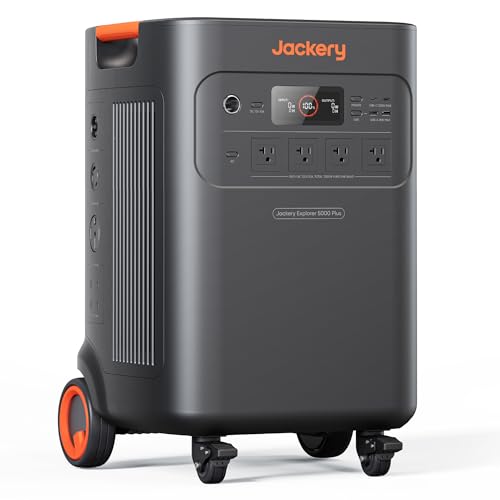
- 5,040Wh battery; expandable to 60kWh
- 7,200W rated 120V/240V output
- Up to 4,000W solar input; panels optional
Best For: Choosing panels separately for a high-output backup setup
Inlet Box Pick
Anker SOLIX E10 with 6kWh Battery

- 6kWh battery; expandable to 30kWh
- Up to 9kW solar input per unit
- Smart Inlet Box included for manual control
Best For: Homeowners wanting included backup-connection hardware
Complete Solar Kit
ECO-WORTHY 10kW Home Backup System

- Six 590W panels included
- Two 48V 314Ah LiFePO4 batteries
- 10kW inverter with 120V/240V output
Best For: Dedicated, high-capacity home solar storage
Expandable Power Station
Anker SOLIX F3800 Plus Dual-Unit Bundle

- 7,680Wh included storage
- Up to 12,000W combined AC output
- Up to 3,200W solar input
Best For: Expandable backup with separately purchased solar panels
Panels-Included Portable Backup
OSCAL PowerMax 6000 Solar Generator
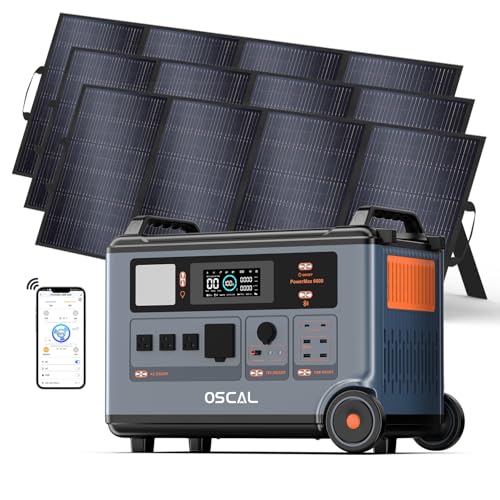
- Three 400W solar panels included
- 3,600Wh LiFePO4 storage
- 6,000W AC output with 120V/240V support
Best For: Solar-ready backup for selected household loads
Best Expandable Base

- 3,840Wh starting capacity
- 6,000W dual-voltage AC output
- Up to 2,400W solar input
Best For: Building an expandable backup system
Best Solar-and-Generator Flexibility
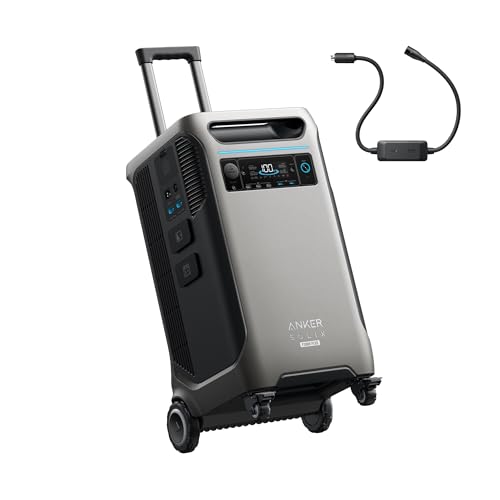
- 3,200W solar input
- 240V generator adapter included
- 6,000W dual-voltage AC output
Best For: Backup plans using both solar and a generator
Best Panel-Included Bundle
Anker SOLIX F3800 with 400W Panel

- 3,840Wh battery included
- 400W bifacial panel included
- 6,000W dual-voltage AC output
Best For: Starting solar recharging with a bundled panel
Solar Kit Pick – Jackery Solar Generator 5000 Plus with Two 200W Panels
For shoppers seeking a whole house battery backup with solar input, this Jackery bundle includes a 5,040Wh power station and two 200W panels. Its 7,200W rated AC output supports 120V and 240V loads, making it a strong option for larger appliances.
Best For: Buyers who want a high-output backup system with solar panels included.
Pros:
- Includes two 200W solar panels.
- Provides 7,200W rated output and 14,400W surge capacity.
- Battery capacity can expand from 5,040Wh to 60kWh.
Cons:
- The included panels total 400W, well below the system’s stated 4,000W maximum solar input.
- Backing up household circuits requires a separately paired Jackery 60A Smart Transfer Switch.
This is the ready-to-start solar choice of the two Jackery configurations here, but plan for additional panels or batteries if your outage needs exceed the included kit.
Panel-Optional Pick – Jackery Explorer 5000 Plus Power Station
The Jackery Explorer 5000 Plus is a whole house battery backup with solar input for buyers who prefer to choose their panels separately. It offers 5,040Wh of starting capacity, 7,200W rated AC output, and support for both 120V and 240V loads.
Best For: Buyers planning a high-output backup setup who do not need solar panels bundled with the power station.
Pros:
- Supports up to 4,000W of solar input with compatible panels.
- Expands to 60kWh with additional battery capacity.
- LiFePO4 cells and a five-year manufacturer warranty.
Cons:
- Solar panels are optional rather than included.
- The Jackery 60A Smart Transfer Switch is needed for the described essential-circuit setup.
Choose this configuration if you want the Explorer 5000 Plus’s output and expansion options without buying the two-panel bundle; budget separately for solar and circuit integration.
Inlet Box Pick – Anker SOLIX E10 with 6kWh Battery
The Anker SOLIX E10 is a whole house battery backup with solar input that bundles a 6kWh battery with a Smart Inlet Box for manual backup control. Its stated 7.6kW continuous output and up to 9kW solar input per unit suit buyers planning a larger home-energy setup.
Best For: Homeowners who want an included inlet box and room to expand battery storage.
Pros:
- Includes the E10 power module, B6000 battery module, and Smart Inlet Box.
- 6kWh starting capacity expands to 30kWh.
- E10 is rated NEMA 4 for outdoor use; the inlet box is rated NEMA 3R.
Cons:
- The listed box contents do not include solar panels.
- The Smart Inlet Box provides manual, not automatic, whole-home backup control.
This package stands out for its included home-connection hardware and substantial solar-input rating. Confirm your installation plan and panel selection before purchase.
Complete Solar Kit – ECO-WORTHY 10kW Home Backup System
For shoppers seeking a whole house battery backup with solar input, this ECO-WORTHY kit combines six 590W panels, a 10kW hybrid inverter, and two 48V 314Ah LiFePO4 batteries. It is the most comprehensive solar-and-storage package of these three options, though installation is a substantial project.
Best For: Homes planning a dedicated solar-backed system with 120V/240V output and more than 30kWh of stated usable storage.
Pros:
- Includes 3,540W of solar panels, batteries, inverter, and cables.
- Hybrid inverter supports 120V single-phase and 240V split-phase output.
- Battery app monitoring and active-balancing BMS with multiple protective features.
Cons:
- Large panels and batteries ship by pallet truck; plan for delivery and installation.
- Inverter exterior version may vary by inventory.
This is the strongest fit here for a permanent solar-storage build, provided its size and installation requirements suit your home.
Expandable Power Station – Anker SOLIX F3800 Plus Dual-Unit Bundle
If you want a modular whole house battery backup with solar input rather than an included panel array, this bundle pairs two Anker SOLIX F3800 Plus stations with a Double Power Hub. It starts with 7,680Wh of stated storage and supports up to 12,000W combined AC output.
Best For: Households wanting portable, expandable backup with 120V/240V output and the option to add solar panels.
Pros:
- Two stations and a Double Power Hub provide up to 12,000W AC output.
- Supports 120V/240V appliances and up to 3,200W solar input as specified.
- Expandable battery ecosystem and a stated five-year warranty.
Cons:
- Solar panels are not listed among the included components.
- Stations and hub may arrive in separate shipments.
Its appeal is scalable output and flexible recharging; budget separately for panels and any additional batteries your desired runtime requires.
Panels-Included Portable Backup – OSCAL PowerMax 6000 Solar Generator
The OSCAL PowerMax 6000 is a practical entry point for a whole house battery backup with solar input search if your priority is powering selected household loads during an outage. It bundles a 3,600Wh power station with three 400W panels and offers 6,000W AC output with 120V/240V support.
Best For: Buyers who want a portable, panels-included backup for selected home appliances and emergency essentials.
Pros:
- Includes three 400W solar panels and charging cables.
- 6,000W AC output, 9,000W stated surge, and 120V/240V dual-voltage support.
- Stated 5–8 ms EPS switchover and app-based monitoring.
Cons:
- 3,600Wh capacity limits runtime for sustained whole-home loads.
- Warranty length conflicts within the supplied listing details; verify before buying.
This package makes solar charging accessible out of the box, but its storage capacity is better suited to prioritized circuits or devices than extended whole-home operation.
Best Expandable Base – Anker SOLIX F3800
If you’re planning a whole house battery backup with solar input and want to build capacity over time, the Anker SOLIX F3800 starts with a 3,840Wh battery. It supports up to 2,400W of solar charging; panels are not listed among the included components.
Best For: Buyers who want a high-output backup station they can expand with additional batteries.
Pros:
- 6,000W AC output with 120V/240V support.
- Expands to 26.9kWh with six additional battery packs.
- Includes solar charging cables and an MC4 connector.
Cons:
- Weighs 132.3 pounds, so moving it takes planning.
- Expansion batteries and solar panels are additional purchases.
The F3800 offers a strong starting point for backup planning, but its 3.84kWh base capacity is only part of the picture. Size the battery and solar setup to the loads you actually need to run.
Best Solar-and-Generator Flexibility – Anker SOLIX F3800 Plus
For a whole house battery backup with solar input that can also accept a generator, the Anker SOLIX F3800 Plus offers 3,840Wh of starting capacity, up to 3,200W solar input, and an included 240V generator adapter. Its 6,000W AC output supports both 120V and 240V loads.
Best For: Households that want solar charging plus a generator-recharging option during extended outages.
Pros:
- Supports up to 3,200W solar input.
- Included adapter enables the stated 240V generator connection.
- Can expand to 26.9kWh with six additional batteries.
Cons:
- Solar panels and expansion batteries are not listed in the box.
- The station and adapter may arrive separately.
The Plus is the more flexible charging choice here if generator support matters. The advertised 63-minute recharge uses solar and generator together, so don’t treat it as the expected result from either source alone.
Best Panel-Included Bundle – Anker SOLIX F3800 with 400W Panel
If you want a whole house battery backup with solar input and a panel in the same purchase, this bundle pairs the 3,840Wh Anker SOLIX F3800 with a 400W bifacial solar panel. The station supplies 6,000W AC output at 120V/240V, while the panel gives you a way to start solar recharging.
Best For: Buyers who want an F3800 and a compatible solar panel bundled together.
Pros:
- Includes a 400W bifacial panel and solar connection cables.
- Panel kickstand adjusts to 40°, 50°, or 60°.
- Station supports expansion to 26.9kWh with six additional battery packs.
Cons:
- One 400W panel provides far less charging power than a larger solar array.
- The station and panel may ship separately.
This bundle removes the need to select a first panel separately. For longer outages, consider how much energy your loads use each day: solar production varies with conditions, and added battery capacity requires extra packs.
How We Picked the Best Whole House Battery Backup with Solar Input
We focused on the specifications that matter during an outage: stated battery capacity, AC output, solar compatibility, 120V/240V support where specified, and the equipment included in each bundle. We also considered whether a listing is a standalone power station, a package with panels, or a system intended for home integration. A product name alone does not establish how long it will run your house, so check the full specifications and installation requirements before buying.
Quick Comparison: Which Type Fits Your Plan?
For portable backup, compare the Jackery Explorer 5000 Plus and Anker SOLIX F3800 or F3800 Plus configurations by capacity, output, and included accessories. If you need panels in the box, look at the Jackery 5000 Plus solar-generator bundle, the OSCAL PowerMax 6000 panel bundle, or the F3800 package with a 400W bifacial panel. The Anker SOLIX E10 with Smart Inlet Box and the ECO-WORTHY kit are worth considering if you are planning a more integrated home setup. The F3800 Plus Double Power Hub package lists 7,680Wh; confirm how its components connect to your intended loads.
Key Buying Factors for a Whole House Battery Backup with Solar Input
Separate Power from Runtime
AC output, measured in watts, determines what can run at once; battery capacity, measured in watt-hours, affects how long it can run. Start with your essential circuits and their startup surges, especially pumps, refrigerators, and HVAC equipment. Divide usable watt-hours by your expected average load for a rough runtime, then allow for inverter losses and reserve capacity. A 3,840Wh or 5,040Wh unit may suit selected essentials but should not be assumed to power every circuit continuously.
Check Solar Charging and Electrical Connections
Compare maximum solar input, accepted voltage range, connector requirements, and whether panels are included. Panel wattage is a rated maximum, not a promise of daily energy production; weather, season, and placement change the result. For household wiring, verify 120V/240V requirements, transfer-switch or inlet-box compatibility, and whether extra hubs or adapters are needed. Use a qualified electrician for connections to home circuits; never backfeed a receptacle.
Budget for the Complete System
Account for additional batteries, panels, mounting, cabling, electrical hardware, and installation. Confirm whether a bundle can expand later and whether the quoted capacity describes one battery or the complete package.
Who Should Buy Which Whole House Battery Backup with Solar Input?
Choose a portable station if you want flexible backup for selected appliances and the option to move it. Choose a panel bundle if you need a starting point for off-grid recharging and have suitable sun exposure. Prioritize a home-integration package if you want preselected circuits to switch over through properly installed equipment. If your goal is truly whole-house coverage, have an electrician assess your peak loads and wiring first: the right Whole House Battery Backup with Solar Input may require more capacity, output, and installation hardware than a single power station provides.