If you need both 120V and 240V power from one system, a split phase inverter charger system can simplify your setup and support demanding household loads.
This roundup focuses on practical choices for solar, off-grid, and backup applications, with an eye on charging features, surge capacity, and installation flexibility.
Best 10 Split Phase Inverter Charger System Picks for 2026
Best for Whole-Home Backup
12000W Hybrid Solar Inverter 48V

- 120V/240V split-phase output for larger loads
- Dual MPPT with up to 500V PV input
- Parallel up to 6 units for expansion
Best For: Homes, cabins, and workshops needing a scalable split-phase backup and solar charging system.
Best Split-Phase Output
Ampinvt 6000W 48V Split Phase Inverter Charger

- 120/240V split-phase output for larger loads
- Built-in charger with adjustable current up to 35A
- Pure sine wave power with broad battery compatibility
Best For: Off-grid and backup power users who need a 48V split-phase inverter with charging support.
Best for High-Capacity Homes
SUNGOLDPOWER 10KW 48V Split-Phase Inverter

- 10,000W split-phase 120V/240V output
- Dual MPPTs with up to 11kW PV input
- 200A battery charging with WiFi/BMS support
Best For: Larger homes and hybrid backup systems needing high charging capacity and split-phase output.
Best High-Current Split-Phase Charger
4000W 12V Split Phase Inverter Charger

- 4000W continuous output with 12000W surge
- 120A charger with split-phase 120V/240V output
- Works with AGM, lithium, LiFePO4, and lead acid batteries
Best For: RVs, cabins, and off-grid systems that need strong charging and split-phase output.
Best for Parallel Expansion
SUNGOLDPOWER 5000W 48V Solar Inverter Charger

- Parallel support for up to 6 units
- 100A MPPT plus 40A AC charging
- Pure sine wave with 48V battery support
Best For: Off-grid buyers who want room to scale into a split-phase setup.
Best for High-Surge Loads
ZLPOWER 6000W 24V Split Phase Inverter
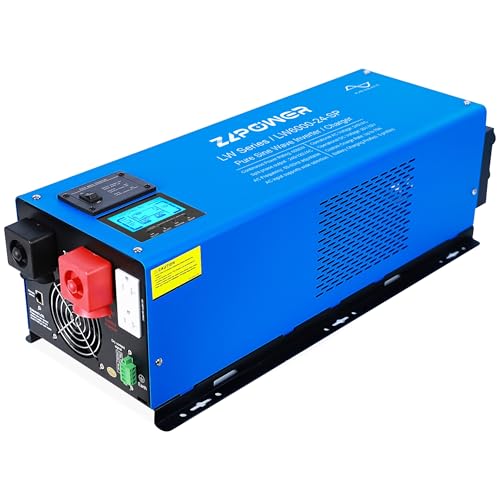
- 18000W surge for demanding appliance startup
- 120V/240V split-phase output for home backup
- 90A charger, LCD, and remote included
Best For: Off-grid homes, RVs, and backup power systems that need a 24V split-phase inverter charger.
Best for Split-Phase Expansion
AuraSolar 8000W Split Phase Hybrid Inverter

- Native 120/240V split-phase output
- 120A MPPT with high-voltage PV input
- Parallel up to 6 units for expansion
Best For: Home backup and off-grid systems that need scalable split-phase power.
Best for Split-Phase Solar Homes
AMPINVT 5000W Split-Phase Inverter

- 120V/240V split-phase output for whole-home loads
- Pure sine wave low-frequency design with AVR support
- Wide battery compatibility and adjustable charging current
Best For: Off-grid solar homeowners who need a split-phase inverter charger with charging support.
Best for High-Input Hybrid Systems
6500W 48V Hybrid Inverter, Dual MPPT

- Dual MPPT solar charging for larger PV arrays
- Works with lead-acid and lithium batteries
- Flexible modes for grid, solar, and battery use
Best For: Home backup and solar users who need a configurable hybrid inverter with broad charging options.
Best Split-Phase Power Hub
Ampinvt 5000W 48V Split-Phase Inverter Charger
- 5000W continuous output with 15000W surge
- 120/240V split-phase support for home loads
- Adjustable charging and five operating modes
Best For: Home backup and off-grid users who need 120/240V split-phase output with integrated charging and transfer switching.
Best for Whole-Home Backup – 12000W Hybrid Solar Inverter 48V
If you want a high-capacity split phase inverter charger system that can handle real household loads, this 12,000W hybrid model is built for serious off-grid and backup setups. With 120V/240V split-phase output, dual MPPT solar charging, and support for battery communication, it fits homes, cabins, workshops, and small commercial systems that need dependable power.
Best For: Homeowners and off-grid users who need a powerful 48V split-phase inverter for whole-home backup, solar charging, and future expansion.
Pros:
- 12,000W split-phase output supports heavy household and workshop loads
- Dual MPPT inputs and 500V PV support improve solar harvesting flexibility
- Works with lithium and lead-acid batteries, including BMS communication
- Parallel-capable up to 6 units for larger systems
Cons:
- More inverter than casual RV or small-cabin users usually need
- Installation and wiring may require an experienced solar installer
- Advanced features can be overkill if you only need basic backup power
Overall, this is a strong choice if you need a scalable split phase inverter charger system with true whole-home capability and modern monitoring features. It stands out most for users who want high output, solar flexibility, and room to expand later.
Best Split-Phase Output – Ampinvt 6000W 48V Split Phase Inverter Charger
If you need a split phase inverter charger system for off-grid power, this Ampinvt unit stands out for its 120/240V split-phase output, pure sine wave performance, and built-in battery charging. It combines inverter, charger, and automatic transfer switching in one cabinet, making it a practical fit for cabins, backup setups, and solar arrays that need stable AC power and flexible battery support.
Best For: Off-grid users and backup power buyers who want a 48V split-phase inverter with charger support for mixed 120/240V loads.
Pros:
- 120/240V split-phase output works well for larger home-style loads
- Integrated charger with adjustable current up to 35A
- Pure sine wave output and built-in protection features for sensitive equipment
- Supports multiple battery types, including AGM, GEL, flooded, and lithium
Cons:
- Bulky, high-capacity design is overkill for small systems
- Setup and configuration may be more involved than simpler inverters
- Best results depend on proper battery bank sizing and wiring
This is a strong option if you want a split phase inverter charger system that can handle both charging and power conversion in one unit. Its flexible charging settings and split-phase support make it especially useful for serious off-grid or backup applications where reliable 120/240V output matters.
Best for High-Capacity Homes – SUNGOLDPOWER 10KW 48V Split-Phase Inverter
If you need a split phase inverter charger system that can handle serious household loads, this SUNGOLDPOWER 10KW all-in-one unit is built around 120V/240V flexibility, dual MPPT solar input, and a high 200A battery charging limit. It’s a practical fit for larger off-grid, backup, or hybrid setups where you want solar, utility, and battery charging in one box.
Best For: Larger homes, whole-home backup projects, and buyers who want a feature-rich split phase inverter charger system with strong charging capacity.
Pros:
- 10,000W output with split-phase 120V/240V support
- Built-in dual MPPTs and up to 11kW of PV handling
- 200A max battery charging for faster recovery
- WiFi, BMS communication, and multiple charging modes
Cons:
- More than many small cabins or light-duty backup systems need
- Installation and setup may be overkill for first-time DIY users
- Best value depends on matching it to a large battery bank and load profile
This is a strong option if you want a split phase inverter charger system with modern monitoring and enough charging headroom for demanding use. The feature set is broad, but the real appeal is how well it combines solar input, battery charging, and AC output for bigger systems.
Best High-Current Split-Phase Charger – 4000W 12V Split Phase Inverter Charger
If you need a split phase inverter charger system that can handle heavier loads and still double as a battery charger, this SUNGOLDPOWER unit is built for that job. It combines a pure sine wave inverter, 120A charger, and transfer switch in one low-frequency package, making it a practical fit for off-grid and backup setups.
Best For: RVs, cabins, trailers, and off-grid systems that need 120V/240V split-phase output with strong charging capability.
Pros:
- 4000W continuous output with 12000W surge for demanding startup loads
- Supports split-phase 120V/240V output and pure sine wave power for sensitive electronics
- Built-in 120A charger, LCD remote, and battery temperature sensor add convenience
- Works with AGM, gel, lead acid, lithium-ion, and LiFePO4 batteries
Cons:
- Requires a 12V battery bank, which may not suit larger 24V or 48V systems
- Installation and settings may be more complex than simpler inverter-only units
- Bulky low-frequency design is better for performance than compact portability
This is a strong choice if you want a split phase inverter charger system that can charge fast, survive surge loads, and serve as a reliable backup power hub. It offers a lot of functionality in one unit, though it is best suited to users comfortable with a more involved install.
Best for Parallel Expansion – SUNGOLDPOWER 5000W 48V Solar Inverter Charger
If you want an all-in-one option for a split phase inverter charger system, this SUNGOLDPOWER unit gives you a 48V inverter, MPPT solar charging, AC battery charging, and parallel support in one package. It’s aimed at off-grid homes, RVs, and backup power setups that may grow over time.
Best For: Buyers who want a 120V inverter charger now, with the option to scale into split-phase or three-phase configurations later.
Pros:
- Supports parallel operation for higher output and future expansion
- Combines 100A MPPT solar charging with 40A AC battery charging
- Pure sine wave output with broad 48V battery compatibility
- Useful charging and output modes for off-grid and backup use
Cons:
- Single unit output is 120V, so split-phase requires multiple units
- Technical setup may be more complex than a basic inverter
- Not the best fit if you only need a simple plug-and-play backup unit
This is a strong pick if flexibility matters more than simplicity. For shoppers building a split phase inverter charger system, the ability to parallel multiple units and add split-phase capability later is the main advantage.
Best for High-Surge Loads – ZLPOWER 6000W 24V Split Phase Inverter
If you need a split phase inverter charger system that can handle heavy startup loads and still deliver clean power, this ZLPOWER unit is built for off-grid homes, RVs, and backup setups. Its 6000W continuous output, 18000W surge rating, and 120V/240V split-phase support make it a strong fit for demanding appliances and mixed-use power needs.
Best For: Off-grid owners, RV users, and homeowners who need a 24V split-phase inverter charger with high surge capacity and battery charging built in.
Pros:
- 18000W surge capacity helps start motor-driven appliances and other heavy loads
- Split-phase 120V/240V output works well for home backup and larger off-grid systems
- Includes a 90A charger, LCD display, remote, and battery temperature sensor
- Pure sine wave output and copper transformer are better for sensitive electronics
Cons:
- 24V system design may not suit smaller or simpler battery banks
- Large-capacity setup can be more complex to install than basic inverters
- Best results depend on correctly sized batteries and wiring
This is a practical choice if your split phase inverter charger system needs both strong surge handling and flexible charging options. It is especially appealing for buyers who want a hybrid-style off-grid unit with real home-backup capability rather than a lightweight portable inverter.
Best for Split-Phase Expansion – AuraSolar 8000W Split Phase Hybrid Inverter
If you need a split phase inverter charger system for a serious off-grid or backup build, the AuraSolar 8000W stands out for its native 120/240V output, high PV input capability, and expandable architecture. It combines inverter, charger, and MPPT control in one unit, making it a strong fit for homes, workshops, and larger battery banks.
Best For: Home backup, off-grid cabins, and workshop power systems that need native split-phase output and room to scale.
Pros:
- Native 120/240V split-phase output without external transformers
- Built-in 120A MPPT controller with high-voltage PV input support
- Parallel expansion up to 6 units for larger power systems
- WiFi, Bluetooth, and touchscreen monitoring for easier setup
Cons:
- More inverter than most casual users need
- Installation is best suited to experienced DIYers or professionals
- Designed around 48V battery systems only
This is a compelling choice if you want a split phase inverter charger system that can start as a single 8kW unit and grow into a much larger setup later. Its mix of native split-phase output, fast solar charging, and parallel expansion makes it especially practical for buyers planning a durable long-term power solution.
Best for Split-Phase Solar Homes – AMPINVT 5000W Split-Phase Inverter
If you need a split phase inverter charger system for a 48V off-grid setup, this AMPINVT unit is built to handle whole-home style loads with 120V/240V output, a built-in battery charger, and automatic transfer support. It’s a practical fit for solar homes that want pure sine wave power, flexible battery compatibility, and protection features that help keep the system stable under real-world use.
Best For: Off-grid homeowners and solar setups that need split-phase 120V/240V output with charging support.
Pros:
- Split-phase 120V/240V output suits larger residential and backup loads
- Pure sine wave, low-frequency design with AVR and strong surge handling
- Works with many battery types, including LiFePO4, AGM, GEL, and flooded
- Adjustable charging current and multiple operating modes add flexibility
Cons:
- More complex than a basic inverter for small or simple installs
- May be more capacity than light-duty cabin or RV users need
As a split phase inverter charger system, this AMPINVT model stands out for homeowners who want one device to invert, charge, and transfer power without sacrificing output quality. It’s especially appealing if you want a rugged off-grid unit with configurable battery support and backup-oriented features.
Best for High-Input Hybrid Systems – 6500W 48V Hybrid Inverter, Dual MPPT
This 6500W model is a strong fit if you want a split phase inverter charger system-style setup with flexible charging, dual MPPT inputs, and support for both off-grid and on-grid use. It can run 48V battery banks, accept solar and AC charging, and even operate without batteries in certain setups, making it practical for mixed home backup and solar power builds.
Best For: Homeowners and DIY installers who want a feature-rich inverter for hybrid solar backup, battery charging, and multi-source power management.
Pros:
- Dual MPPT channels with up to 9000W of solar input potential
- Supports lead-acid and lithium batteries, plus BMS communication
- Works with multiple output and charging priority modes
- Can run loads with or without a battery in the system
Cons:
- Single AC output may not suit every true split-phase application
- Advanced settings may take time to configure correctly
- Best results depend on proper solar string and battery matching
For buyers comparing a split phase inverter charger system, this unit stands out for its hybrid flexibility, dual MPPT architecture, and broad battery compatibility. It is more of a high-capability system component than a plug-and-play basic inverter, so it makes the most sense when you need configurable power management rather than the simplest install.
Best Split-Phase Power Hub – Ampinvt 5000W 48V Split-Phase Inverter Charger
For buyers comparing a split phase inverter charger system, this Ampinvt unit stands out because it combines a 5000W pure sine wave inverter, battery charger, and auto-transfer switch in one low-frequency package. It’s built for 48V battery banks and can deliver 120/240V split-phase output, making it a practical fit for home backup, solar, or generator-assisted off-grid setups that need stable power and flexible charging control.
Best For: Home backup and off-grid users who need 120/240V split-phase output with integrated charging and transfer switching.
Pros:
- 5000W continuous output with 15000W surge for heavy startup loads
- Supports split-phase 120/240V output, ideal for many whole-home applications
- Adjustable charging current and multiple battery types, including lithium and AGM
- Five operating modes give you more control over AC, battery, generator, and ECO use
Cons:
- Installation is more involved than a basic plug-and-play inverter
- 35A max charging current may be limiting for larger battery banks
- Best suited to users who already understand 48V system design
This is a strong pick if you want a split phase inverter charger system that can handle home-style loads while giving you flexible charging and protection features. It’s especially appealing for off-grid or backup power buyers who want one unit to manage inversion, charging, and transfer duties without extra components.
How We Picked the Best Split Phase Inverter Charger System
We prioritized real-world usefulness for homeowners, cabins, workshops, and RV-adjacent power systems. The best Split Phase Inverter Charger System options in this roundup offer dependable 120/240V output, strong surge handling, and charger features that match common battery banks and solar arrays. We also favored units with clear specifications, useful monitoring, and enough flexibility for off-grid or hybrid use.
Quick Comparison
At a high level, the main differences come down to input voltage, inverter size, charger capability, and solar charging architecture. Smaller units can be a better fit for essential loads, while larger 48V models are generally better for whole-home backup, heavier appliances, and larger battery banks. Hybrid models with dual MPPT controllers are especially attractive if you want to integrate more solar without adding extra charge hardware.
Key Buying Factors for a Split Phase Inverter Charger System
Battery Voltage
Most higher-power systems use 48V because it keeps current lower and supports better efficiency. Some 12V and 24V models exist, but they are usually better suited to smaller systems or shorter cable runs.
Continuous Power and Surge Rating
Look at both the continuous wattage and the surge rating. Motors, pumps, compressors, and well equipment can briefly demand far more power at startup, so the surge figure matters as much as the headline wattage.
Charger and Solar Input
If you plan to charge from solar, check MPPT capacity, maximum PV input voltage, and total charge current. For a Split Phase Inverter Charger System, a stronger built-in charger can also reduce generator run time and improve recovery during outages.
Output and System Compatibility
Confirm that the unit can provide true 120/240V split phase output if your appliances need it. Also check whether the inverter is pure sine wave, whether parallel operation is supported, and whether the system works with your battery chemistry and BMS requirements.
Who Should Buy Which Split Phase Inverter Charger System?
Choose a higher-wattage 48V hybrid model if you want to support multiple large appliances, add solar now or later, and keep expansion options open. Pick a midrange Split Phase Inverter Charger System if your priority is dependable backup power for a home with mixed 120V and 240V loads. Smaller or lower-voltage units make more sense for lighter-duty installations, budget-conscious builds, or systems that only need to cover essential circuits.
If you are planning a long-term off-grid setup, focus on efficiency, charging flexibility, and upgrade headroom rather than wattage alone. The right choice is the one that matches your battery bank, your solar array, and the appliances you actually run.