Rigid solar panels remain a dependable choice for RVs, cabins, sheds, boats, and permanent off-grid systems. Their framed construction offers strong weather resistance, consistent mounting, and a broad range of wattages for building a scalable array.
This roundup compares 10 high-output and compact options, including N-type and bifacial modules, so you can match panel size, efficiency, voltage, and installation needs to your system.
Best 10 Rigid Solar Panels Picks for 2026
High-Efficiency Pick
Callsun 400W Bifacial Solar Panels

- Up to 25.6% efficiency with N-type 16BB cells
- Bifacial design can capture reflected rear-side light
- Compact panels with shade-tolerant TwinCell construction
Best For: Class B vans, compact rooftops, and partially shaded installations
Shade-Handling Pick

- ShadowFlux technology targets partial-shade losses
- N-type 16BB cells offer up to 25% efficiency
- Compact dimensions suit space-limited installations
Best For: RVs, boats, rooftops, and shaded mounting locations
DIY System Pick
ECO-WORTHY 400W N-Type Panel Set

- Four 100W panels provide 400W of rated output
- N-type 16BB cells reach up to 25% efficiency
- Pre-drilled holes and plug-and-play connectors aid installation
Best For: DIY 12V/24V off-grid systems for RVs, boats, sheds, and farms
High-Output Pick
JJN 850W Bifacial Rigid Solar Panels

- Two 425W panels deliver 850W of rated output
- UL61730-certified N-type 16BB bifacial design
- Drainage clips and stated 30-year lifespan support permanent installs
Best For: Large rooftops, farms, carports, yachts, and high-capacity systems
Compact Van Power
Renogy 200W N-Type 16BB Solar Panel

- 200W output with 25% efficiency
- Smaller, lighter design for Class B vans
- Works with 12V and 24V battery systems
Best For: Space-limited RV and van installations
Maximum Roof Output
STAR 990W Bifacial Solar Panel Set

- 990W total output from two 495W panels
- Bifacial N-Type design for added energy yield
- Frameless construction helps reduce buildup
Best For: Large RV, roof, marine, and DIY systems
Flexible Off-Grid Sizing
Renogy 100W N-Type 16BB Solar Panel

- 25% efficiency in a compact 100W format
- 12V output for RV and marine systems
- IP67-rated outdoor construction
Best For: Small off-grid systems and expandable arrays
Best with Extra Features
EPOCH 860W Bifacial Solar Panels
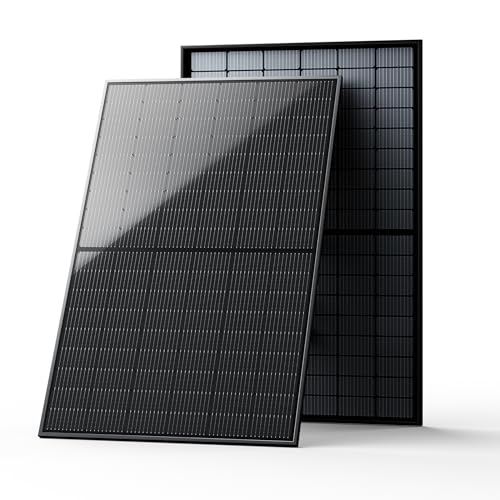
- 860W total output from two 430W panels
- N-type 16BB bifacial design with up to 25% efficiency
- Outdoor-rated construction with long warranties
Best For: High-output RV, marine, rooftop, and off-grid installations
Durable Value
JJN 850W Bifacial Solar Panel Set

- 850W combined output from two rigid panels
- 16BB N-type bifacial cells with up to 25% efficiency
- 5400 Pa snow and 2400 Pa wind-load ratings
Best For: Durable rooftop, RV, boat, farm, and off-grid systems
Compact Van Pick
Renogy 175W N-Type Solar Panel

- Space-saving 175W rigid panel for compact roofs
- 25% efficiency with 16BB N-type cells
- Designed for hot climates and long-term outdoor use
Best For: Class B vans, RVs, trailers, boats, and compact off-grid systems
High-Efficiency Pick – Callsun 400W Bifacial Solar Panels
If you need rigid solar panels for an RV, van, rooftop, or off-grid system, this two-panel Callsun kit emphasizes efficiency, shade tolerance, and durable construction. Its N-type 16BB cells reach up to 25.6% conversion efficiency, while the bifacial design can capture reflected light from the rear.
Best For: Class B vans, compact rooftops, and installations where partial shade or high heat may affect production.
Pros:
- N-type 16BB cells provide up to 25.6% efficiency and help reduce hot spots and micro-cracks.
- Bifacial construction may increase output by up to 30% over reflective surfaces.
- TwinCell design improves shading tolerance, while the aluminum frame and IP68 junction box support outdoor use.
- Pre-drilled mounting holes and compatibility with standard Z-brackets simplify installation.
Cons:
- The two-panel package requires suitable roof or ground-mount space.
- Bifacial gains depend on reflected light and the installation surface.
With a stated 25-year performance warranty and 84.5% minimum output, this is a strong rigid-panel option for buyers prioritizing efficiency and long-term weather resistance in a relatively compact format.
Shade-Handling Pick – Renogy ShadowFlux 200W Panel
For rigid solar panels installed near trees, buildings, or other obstructions, the Renogy ShadowFlux 200W model focuses on maintaining output in partial shade. It combines ShadowFlux anti-shading technology with N-type 16BB cells and a 25% efficiency rating in a relatively compact panel.
Best For: RV, marine, rooftop, and space-constrained systems exposed to intermittent shade.
Pros:
- ShadowFlux technology is designed to improve generation in shaded conditions and reduce hot-spot risks.
- N-type 16BB cells provide up to 25% efficiency while helping limit micro-cracks.
- The panel is listed as 7% smaller and 10% more compact than PERC panels.
- An IP67 rating and water-vapor-resistant encapsulation support outdoor durability.
Cons:
- The listed output warranty is five years, shorter than the 25-year performance warranty.
- It is a single 200W panel, so larger systems require additional panels.
This Renogy panel is a practical choice when available mounting space is limited or shade is unavoidable. Its main appeal is the combination of compact dimensions and dedicated anti-shading technology.
DIY System Pick – ECO-WORTHY 400W N-Type Panel Set
This four-panel ECO-WORTHY kit is a flexible entry point for rigid solar panels in 12V or 24V battery systems. Each 100W N-type bifacial panel uses 16BB technology, includes 35-inch cables, and has pre-drilled mounting holes for roof, bracket, or ground installation.
Best For: DIY off-grid builds for homes, sheds, boats, farms, camping setups, and RVs.
Pros:
- Four 100W panels provide a combined 400W rated output for modular system planning.
- N-type 16BB cells offer up to 25% efficiency and help reduce hot spots and micro-cracks.
- Pre-installed bypass diodes, IP68 junction boxes, and plug-and-play connectors support straightforward installation.
- Designed for 12V/24V battery charging and suitable for on-grid, off-grid, or hybrid setups.
Cons:
- The complete set ships in two boxes, so deliveries may arrive separately.
- Four smaller panels require more mounting connections than one high-wattage panel.
- The notes do not specify a long-term performance warranty.
For beginners and DIY builders, the kit’s modular format makes it easier to configure a system around available roof or rack space. Confirm controller, battery, and wiring compatibility before installation.
High-Output Pick – JJN 850W Bifacial Rigid Solar Panels
For larger rooftops, farms, carports, and off-grid systems, these JJN rigid solar panels deliver 850W from two 425W bifacial modules. UL61730 certification, N-type 16BB cells, and a dual-glass design make this a high-output option for buyers with enough space for the full-size panels.
Best For: High-capacity residential, farm, carport, yacht, EV-charging, and 12V/24V/48V systems.
Pros:
- Two 425W panels provide 850W of rated output with up to 25% efficiency.
- Bifacial dual-glass construction can capture front- and rear-side sunlight for up to 30% more energy yield.
- UL61730 certification and A+ grade EL-tested cells support quality-focused installations.
- Drainage clips help reduce water and dust buildup, while the design is rated for a stated 30-year lifespan.
Cons:
- Each panel is large and heavy at approximately 67.8 by 44.6 inches and 103.2 pounds for the two-panel unit.
- The full-size format demands substantial mounting space and appropriate handling equipment.
- Bifacial output gains depend on rear-side light and the installation environment.
This is the strongest fit for buyers seeking high power density rather than portability. Its size and weight favor permanent installations, where the bifacial design and heat performance can contribute to long-term energy production.
Compact Van Power – Renogy 200W N-Type 16BB Solar Panel
For shoppers comparing rigid solar panels for a compact RV or Class B van, this Renogy 200-watt model prioritizes high output in a smaller, lighter package. Its 25% efficiency, 16BB N-Type cells, and low temperature coefficient make it a practical option for space-limited off-grid systems.
Best For: Class B vans, RVs, boats, trailers, and other 12V or 24V battery systems where roof space is limited.
Pros:
- Compact design is 7.5% smaller and 11.7% lighter than previous models while maintaining 200W output.
- 25% cell efficiency and 16BB technology support strong energy conversion and reduced microcrack risk.
- Low temperature coefficient helps maintain performance in hot climates.
- Supports lithium, AGM, and deep-cycle battery systems at 12V or 24V.
Cons:
- At 23.4 pounds and nearly 50 inches long, it still requires a substantial mounting area.
- It is a single panel, so larger power systems may require multiple units.
This is a well-balanced rigid solar panel for buyers who need 200 watts without giving up as much roof space. Its stated degradation rates and long-term output coverage also make it suited to installations intended for extended use.
Maximum Roof Output – STAR 990W Bifacial Solar Panel Set
This STAR two-panel set is aimed at buyers who want high-capacity rigid solar panels for a larger roof or DIY solar setup. It combines 990 watts of bifacial N-Type generation with a frameless design intended to reduce dust and water buildup.
Best For: Larger RV, marine, roof, and DIY solar installations with room for two 495W panels.
Pros:
- Two panels provide 990W total output, with claimed bifacial energy yield of up to 25.6% extra compared with conventional monofacial panels.
- Frameless construction helps limit dust and water accumulation and may reduce cleaning needs.
- 25.6% high-efficiency cells and 16BB technology support strong output in partial shade or low light.
- UL61730 certification and resistance to wind, snow, and hail support outdoor use.
Cons:
- The two-panel set is large, measuring 77.2 by 44.6 inches, and weighs 58.2 pounds.
- Bifacial gains depend on suitable light reaching the rear side of the panels.
- Its high output may be excessive for small 12V setups.
Choose this set when maximum generation per installation matters more than compactness. The frameless format can simplify upkeep, but buyers should confirm roof dimensions, mounting compatibility, and system voltage before ordering.
Flexible Off-Grid Sizing – Renogy 100W N-Type 16BB Solar Panel
For smaller off-grid projects, this Renogy 100-watt panel offers the efficiency and durability expected from rigid solar panels without requiring as much mounting space as higher-wattage modules. Its 25% efficiency and 12V output make it a straightforward building block for RV and marine systems.
Best For: RVs, boats, trailers, small off-grid systems, and buyers who want to scale capacity one 100W panel at a time.
Pros:
- 25% efficiency and Grade A+ 16BB N-Type cells provide strong output for a 100W panel.
- Low temperature coefficient helps reduce performance loss in hot conditions.
- IP67 protection, tempered glass, and corrosion-resistant aluminum framing support outdoor durability.
- Designed for 12V systems and measures 34.1 by 22.8 inches for relatively easy placement.
Cons:
- At 100 watts, one panel may not meet the needs of higher-consumption systems.
- Its 12V output is less suited to installations built around 24V or higher system voltages without appropriate configuration.
This panel is a sensible starting point for modest power needs or expandable arrays. Its stated wind and snow-load testing, IP67 protection, and long-term performance coverage add confidence for permanent outdoor mounting.
Best with Extra Features – EPOCH 860W Bifacial Solar Panels
The EPOCH 860W two-panel set is a strong option if you need rigid solar panels for an RV, boat, cabin, rooftop, or other off-grid setup. Its bifacial N-type design, 16BB cells, and claimed efficiency of up to 25% are geared toward maximizing production in varied light conditions.
Best For: Off-grid users seeking a high-output bifacial panel pair for RVs, marine applications, cabins, and rooftops.
Pros:
- Two 430W panels provide a combined rated output of 860W.
- Bifacial construction can capture light from both sides, while 16BB cells support efficient operation.
- 5400 Pa snow and 2400 Pa wind-load ratings, plus IP68 junction boxes and IP67 MC4 connectors, suit outdoor use.
- Includes pre-drilled mounting holes and offers a 12-year quality warranty with a 25-year linear power-output warranty.
Cons:
- The two-panel set is large and heavy, so installation and transport may require extra planning.
- The listing describes the package as panels with connectors and a junction box, not a complete mounting or power system.
Choose this EPOCH set when maximum panel capacity and bifacial performance matter more than compact dimensions. Confirm your available mounting space, system voltage, and supporting hardware before ordering.
Durable Value – JJN 850W Bifacial Solar Panel Set
For buyers comparing rigid solar panels for residential or off-grid use, the JJN two-panel set combines 850W of rated capacity with bifacial N-type technology. Its aluminum frame, tempered glass, and weather-resistant connectors are designed for outdoor installations ranging from rooftops to RVs and boats.
Best For: Home, farm, RV, boat, and off-grid users who want a durable two-panel bifacial setup with a long power-output warranty.
Pros:
- Two panels deliver 850W total rated power and claim up to 25% efficiency.
- Transparent backsheets allow front- and rear-side generation, with up to 25% increased efficiency compared with conventional panels under suitable conditions.
- 16BB N-type cells are designed to reduce shading impact, while the frame supports 2400 Pa wind and 5400 Pa snow loads.
- Includes pre-drilled mounting holes and a transferable 30-year power-output warranty.
Cons:
- The package includes PV panels only, so mounting hardware and other system components must be purchased separately.
- At approximately 94.6 pounds for the set, handling may be difficult during installation.
The JJN set is a practical choice when you want substantial output and robust outdoor construction in a rigid format. Its bifacial gains depend on rear-side light and installation conditions, so plan the mounting location accordingly.
Compact Van Pick – Renogy 175W N-Type Solar Panel
The Renogy 175W panel is a space-conscious choice among rigid solar panels, particularly for Class B vans and other compact off-grid builds. It uses 16BB N-type cells with a claimed 25% efficiency, while its reduced size and weight help simplify roof layout and installation planning.
Best For: Class B vans, RVs, trailers, boats, and other installations where roof space and panel weight are limited.
Pros:
- The compact design is described as 3.9% smaller and 4% lighter than its predecessor while retaining 175W output.
- 25% cell efficiency and 16BB technology support energy conversion and reduced microcrack risk.
- A low temperature coefficient is intended to support performance in hot climates.
- Tempered glass, a corrosion-resistant aluminum frame, and a 25-year 80% output specification support long-term use.
Cons:
- At 175W, one panel provides substantially less capacity than the two-panel 850W and 860W options.
- The listing provides the panel but does not indicate that mounting hardware or a complete charging system is included.
This Renogy panel makes sense when fitting more wattage into a constrained roof area is the priority. It is best evaluated alongside your available mounting space, controller requirements, and total power demand.
How We Picked These Rigid Solar Panels
We selected panels that cover the most common residential, RV, and off-grid use cases, from compact 100W and 175W modules to large 400W-plus bifacial panels. Our comparison emphasizes stated wattage, cell technology, efficiency claims, construction, safety certifications, and practical system compatibility. N-type panels receive particular attention because they typically offer strong efficiency and better resistance to some common forms of degradation than older cell designs.
Product specifications can vary by seller and production batch, so confirm the current datasheet, dimensions, connector type, operating voltage, and warranty before purchasing. A panel’s advertised output is measured under ideal test conditions and will be lower in real-world weather, temperature, shading, and installation conditions.
Quick Comparison
- For compact systems: 100W, 175W, and 200W panels are easier to handle and combine in smaller arrays.
- For higher daily production: 400W to 495W panels reduce the number of modules and mounting points required.
- For bifacial installations: 400W, 425W, and 495W models may produce additional energy when the rear side receives useful reflected light.
- For RVs and mobile setups: Check panel dimensions and roof space before choosing a high-wattage module.
- For permanent installations: Prioritize frame strength, certified construction, mounting hardware, and compatibility with your inverter or charge controller.
Key Buying Factors for Rigid Solar Panels
Wattage and Available Space
Choose the highest wattage that fits your mounting area without making installation or maintenance impractical. Multiple smaller panels can be easier to position around roof vents, while larger modules may provide better use of open ground or roof space.
Efficiency and Cell Type
Higher efficiency can produce more power from a smaller footprint. N-type monocrystalline panels are a strong option when space is limited. Bifacial models can be worthwhile on elevated racks, light-colored surfaces, or ground mounts, but their rear-side gain depends heavily on the installation environment.
Voltage, Current, and System Compatibility
Match the panel’s operating and open-circuit voltage with your charge controller, inverter, battery bank, and array wiring. Series connections increase voltage, while parallel connections increase current. Stay within every device’s input limits and account for cold-weather voltage increases.
Durability and Installation Details
Look for weather-resistant frames, tempered glass, reputable junction boxes, and relevant safety certifications. Verify dimensions, weight, mounting-hole placement, connectors, and included hardware. Leave adequate airflow beneath roof-mounted panels and use appropriately rated cables and fuses.
Who Should Buy Which Rigid Solar Panels?
Choose a 100W or 175W panel for small battery systems, trickle charging, compact RVs, or a modular starter array. Choose a 200W panel when you want a manageable size with more useful daily production for medium portable or mobile setups.
Choose a 400W to 495W bifacial panel for larger RVs, cabins, ground mounts, and fixed arrays where lifting, transport, and available space are not major concerns. These models can simplify installation by delivering more rated power per module. For any purchase, confirm the electrical specifications and physical dimensions against your existing equipment before ordering.