The best occupancy sensors for offices help reduce lighting waste without making employees hunt for switches. The right model depends on room size, ceiling height, wiring, coverage, and whether you need simple motion detection or more advanced sensing.
We compare ten commercial and light-duty options, including ceiling- and wall-mounted sensors, PIR and multi-technology designs, low-voltage models, and direct line-voltage switches.
Best 10 Occupancy Sensors for Offices Picks for 2026
Best Wall-Switch Pick
Leviton App-Configurable Occupancy Sensor

- No neutral wire required
- Manual push-button override
- Adjustable detection and light settings
Best For: Commercial offices needing a no-neutral wall-mounted sensor
Best Ceiling Coverage
SensorSwitch PIR Ceiling Occupancy Sensor

- 360-degree PIR sensing
- Extended-range office coverage
- 30-second to 20-minute delay
Best For: Private offices and small rooms needing ceiling-mounted PIR coverage
Best for Detection Reliability
Leviton Multi-Technology Ceiling Sensor
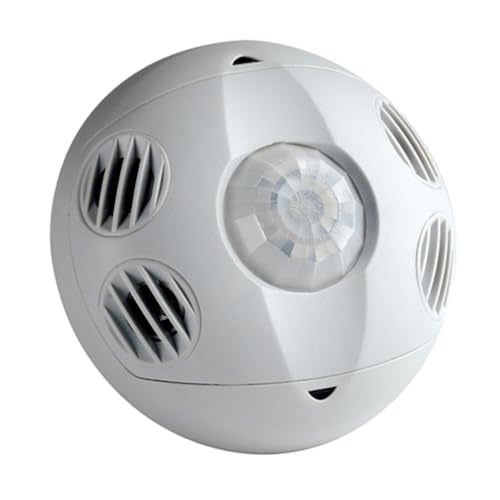
- Combines PIR and ultrasonic sensing
- Self-adjusting sensitivity and delay
- Approximately 1,000 square feet of coverage
Best For: Offices with compatible 24VDC low-voltage wiring
Best Budget-Adjustable Option
RAYZEEK 360-Degree Ceiling Sensor

- 360-degree ceiling detection
- 15-second to 30-minute delay
- Light-sensing and occupancy-only modes
Best For: 120V spaces needing flexible automatic lighting control
Wide-Area Wall Coverage

- 2,500-square-foot stated coverage
- 50-foot maximum range
- 24VDC wall-mount design
Best For: Large office areas needing wall-mounted coverage
Adjustable Ceiling Switching

- 360-degree ceiling detection
- 15-second to 30-minute delay
- Works with multiple lighting types
Best For: Adjustable automatic lighting control in office spaces
Reliable Dual-Technology Detection
Leviton Multi-Technology Sensor

- Combines PIR and ultrasonic sensing
- Approximately 1,000-square-foot coverage
- Self-adjusting sensitivity and delay
Best For: Medium office rooms needing consistent detection
Flexible Commercial Coverage
Maxxima 360° PIR Ceiling Sensor

- 360° PIR coverage for ceilings up to 15 feet
- Supports 120–277V and multiple lighting types
- Adjustable delay, sensitivity, and light sensing
Best For: Commercial offices needing flexible hardwired lighting control
Easy Commercial Installation

- 360° detection with about 530 sq. ft. coverage at 8 feet
- Combines the sensor and switching relay
- Adjustable timeout and light-level sensing
Best For: Small office rooms and commercial utility areas
Low-Voltage Office Control

- 360° PIR coverage for up to 450 sq. ft.
- 24VDC low-voltage, three-wire connection
- Self-adjusting circuitry with a daylight photocell
Best For: Office systems designed for compatible 24VDC controls
Best Wall-Switch Pick – Leviton App-Configurable Occupancy Sensor
For offices that need a straightforward wall-switch replacement, this Leviton sensor combines automatic motion-based lighting with manual push-button control. It is a practical option among occupancy sensors for offices, especially where no neutral wire is available and lighting settings need app-based configuration.
Best For: Commercial offices needing a no-neutral wall-mounted sensor with manual override.
Pros:
- No neutral wire required for installation.
- Automatically turns lights on when motion is detected.
- Adjustable blinders help limit unwanted peripheral signals.
- Ambient-light override can prevent activation when daylight is sufficient.
Cons:
- Wall-mount design may be less suitable than a ceiling sensor for broad room coverage.
- Its listed operating voltage is 120VAC, limiting compatibility with some commercial circuits.
The Leviton ODS15-GHW is a strong fit when an office needs familiar wall-switch operation plus automatic control. Its 180-degree detection field, manual override, and ambient-light setting add useful flexibility, though installation should be matched to the circuit and lighting load.
Best Ceiling Coverage – SensorSwitch PIR Ceiling Occupancy Sensor
This SensorSwitch CMR Series unit is designed for ceiling installation in private offices and small rooms. Its 360-degree PIR coverage and extended detection range make it a useful choice among occupancy sensors for offices where a discreet, line-voltage ceiling sensor can control lighting without a separate power pack.
Best For: Private offices and small rooms needing broad ceiling-mounted PIR coverage.
Pros:
- 360-degree conical PIR coverage.
- Designed to cover an entire private office or small room.
- Adjustable time delay from 30 seconds to 20 minutes.
- Supports several ceiling and electrical-box mounting options.
Cons:
- PIR detection is optimized for larger motion such as walking.
- Installation height is specified for 7- to 15-foot ceilings.
- Some supplied specifications differ between the product bullets and details, so coverage should be verified for the installation.
With included mounting hardware, a self-contained relay, and a discreet white housing, this sensor is convenient for standard office retrofits. Its PIR technology is best suited to rooms where occupants move regularly rather than remain nearly stationary.
Best for Detection Reliability – Leviton Multi-Technology Ceiling Sensor
Leviton’s OSC20-M0W combines passive infrared and ultrasonic sensing to help maintain reliable occupancy detection in office spaces. It is a low-voltage ceiling sensor with a stated field of view of approximately 1,000 square feet, making it a capable option among occupancy sensors for offices when a compatible 24VDC control system is already available.
Best For: Offices prioritizing combined PIR and ultrasonic detection with low-voltage ceiling wiring.
Pros:
- Combines PIR and ultrasonic sensing.
- Self-adjusting circuitry continually evaluates sensitivity and time delay.
- Quick ceiling installation with a three-wire connection and twist-lock attachment.
- Approximately 1,000 square feet of stated coverage.
Cons:
- Requires a 24VDC low-voltage connection rather than direct line-voltage installation.
- The supplied description lists a 180-degree field of view, so it may not provide the full-room coverage of a 360-degree sensor.
- Compatibility with an existing control system should be confirmed before purchase.
This model is well suited to office projects where dependable detection matters and low-voltage infrastructure is in place. Its dual-technology design and self-adjusting operation offer added flexibility, but the 24VDC requirement makes it less convenient for simple line-voltage replacements.
Best Budget-Adjustable Option – RAYZEEK 360-Degree Ceiling Sensor
The RAYZEEK ceiling sensor offers simple controls for detection range, light sensitivity, and shutoff delay in a hardwired 120V package. For offices considering occupancy sensors for offices, its 360-degree ceiling design and selectable light-plus-occupancy or occupancy-only modes provide useful flexibility for rooms, hallways, and service areas.
Best For: 120V commercial or industrial spaces needing adjustable ceiling-mounted automatic lighting control.
Pros:
- 360-degree ceiling-mounted motion detection.
- Adjustable time delay from 15 seconds to 30 minutes.
- Offers light-sensing plus occupancy and occupancy-only modes.
- Compatible with several lighting types, ceiling fans, and exhaust fans.
Cons:
- Requires a working neutral wire.
- Maximum load is 10A at 120V, with lower stated wattage limits for some loads.
- Surface or ceiling mounting may require more visible hardware than a recessed sensor.
This RAYZEEK model is appealing when quick setup and adjustable behavior are more important than advanced networking. Before installation, verify the neutral wire, load type, and wattage because the sensor is limited to 120V and a 10A maximum current rating.
Wide-Area Wall Coverage – Leviton PIR Wall-Mount Sensor
Leviton Occupancy Sensor, Low Voltage, PIR, Wall Mount, Wideview, 2500SF, OSWWV-I0W, Off-white
Check Price On AmazonFor offices that need wall-mounted occupancy sensors for offices, the Leviton OSWWV-I0W uses passive infrared detection and is designed for wide-area coverage. Its 24VDC low-voltage design and stated 2,500-square-foot coverage make it worth considering for larger spaces, provided compatible wiring is available.
Best For: Large office areas needing a wall-mounted, wide-view occupancy sensor.
Pros:
- Designed for wide-view coverage up to 2,500 square feet.
- Wall-mount configuration with a stated maximum range of 50 feet.
- Compatible with lighting and security systems.
Cons:
- Requires corded 24VDC power rather than batteries.
- Installation may require compatible low-voltage wiring and equipment.
This Leviton model is a practical fit when wall placement and broad coverage matter more than a simple plug-in installation. Confirm the available low-voltage power and mounting location before purchasing.
Adjustable Ceiling Switching – ECOELER 360° PIR Sensor
The ECOELER YM2511 is a ceiling-mounted choice for occupancy sensors for offices, using passive infrared detection to switch compatible lights automatically. Adjustable time delay, sensitivity, and light-level sensing give facility managers more control over how it responds in office areas and shared spaces.
Best For: Offices, hallways, storage areas, and other spaces requiring adjustable automatic lighting control.
Pros:
- Provides 360-degree detection with a stated 24-foot detection range when installed at 20 feet.
- Adjustable time delay from 15 seconds to 30 minutes.
- Adjustable sensitivity from 20% to 100% and light-level sensing.
- Compatible with LED, incandescent, fluorescent, CFL, and selected low-voltage loads.
Cons:
- Requires a neutral wire and 120/277VAC power.
- Maximum listed range is 20 feet, so placement affects coverage.
With broad compatibility and multiple adjustable settings, this sensor offers useful flexibility for office lighting projects. Verify neutral-wire availability and ceiling height before installation.
Reliable Dual-Technology Detection – Leviton Multi-Technology Sensor
The Leviton OSC10-M0W combines passive infrared and ultrasonic control for occupancy sensors for offices where consistent detection is important. Its ceiling-mount, low-voltage design covers approximately 1,000 square feet and includes self-adjusting circuitry intended to refine sensitivity and time-delay performance.
Best For: Medium-sized office rooms needing ceiling-mounted multi-technology occupancy detection.
Pros:
- Combines PIR and ultrasonic sensing for increased detection reliability.
- Approximately 1,000 square feet of coverage with a 180-degree field of view.
- Self-adjusting microprocessor analyzes and adjusts sensitivity and time delay.
- Twist-lock attachment supports 360-degree rotation after installation.
Cons:
- Uses a 24VDC, 35mA low-voltage connection.
- Its approximately 1,000-square-foot coverage may not suit larger open offices.
This model is a strong option when reducing missed detections is a priority. Its low-voltage, three-wire installation makes it better suited to planned lighting-control systems than casual retrofit use.
Flexible Commercial Coverage – Maxxima 360° PIR Ceiling Sensor
The Maxxima ceiling sensor is a practical option when comparing occupancy sensors for offices with varied lighting loads and mounting needs. Its 360° PIR detection, adjustable sensitivity, and ceiling-mount design support indoor spaces with ceilings up to 15 feet high.
Best For: Offices and commercial spaces needing broad coverage, adjustable controls, and compatibility with 120–277V lighting.
Pros:
- 360° PIR detection with mounting up to 15 feet high
- Works with 120–277V systems and multiple lighting types, including LED and fluorescent
- Adjustable 15-second to 30-minute time delay, sensitivity, and light-level sensing
- UL listed and supports loads up to 800W at 120V or 1,200W at 277V
Cons:
- Requires a neutral wire and hardwired installation
- Designed for indoor use only
Choose this Maxxima model if voltage flexibility and customizable detection settings matter more than a wireless installation. Its broad compatibility makes it suitable for many office lighting configurations.
Easy Commercial Installation – Leviton ODC0S-I1W PIR Sensor
Leviton PIR Ceiling Mount Occupancy Sensor, 120-277V, 1000W, 570SF Field-of-View, ODC0S-I1W, White
Check Price On AmazonThe Leviton ODC0S-I1W combines a PIR sensor and switching relay in one unit, making it a straightforward choice among occupancy sensors for offices. Its adjustable light sensor can help prevent lights from activating when natural light is sufficient.
Best For: Small office areas, copy rooms, storage spaces, and other commercial or institutional installations where simplified installation is useful.
Pros:
- 360° field of view with approximately 530 square feet of coverage when mounted at 8 feet
- Built-in sensor and switching relay can reduce installation materials and labor
- Adjustable delayed-off time from 20 seconds to 15 minutes
- Adjustable light sensing from 2 to 500+ foot-candles
Cons:
- Indoor use only
- Coverage is approximately 530 square feet at the stated 8-foot mounting height
This Leviton is a sensible pick for smaller office zones where automatic switching and daylight-sensitive operation are priorities. Verify the room size and mounting conditions before installation.
Low-Voltage Office Control – Leviton OSC04-I0W Sensor
The Leviton OSC04-I0W is a low-voltage ceiling-mount option for buyers comparing occupancy sensors for offices. It provides 360° PIR coverage up to 450 square feet and uses internal digital processing to continually adjust its settings.
Best For: Office lighting systems already equipped for 24VDC, especially walkways and spaces requiring low-voltage ceiling installation.
Pros:
- 360° PIR detection with up to 450 square feet of coverage
- Uses a three-wire low-voltage connection and twist-lock sensor attachment
- Internal microprocessor continually analyzes and adjusts settings
- Photocell helps prevent lights from turning on when natural light is adequate
Cons:
- Requires a 24VDC input rather than direct 120–277V line-voltage operation
- Requires a compatible low-voltage lighting control system
This model is best suited to installations with the appropriate low-voltage infrastructure already in place. Its self-adjusting circuitry and photocell add useful automation for appropriately sized office areas.
How We Picked the Best Occupancy Sensors for Offices
We focused on the factors that affect real office installations: sensing technology, coverage area, voltage requirements, mounting style, adjustment options, and compatibility with existing lighting controls. The selection includes commercial-grade Leviton and Sensor Switch models, as well as simpler hardwired options for smaller rooms, utility areas, and retrofit projects.
Because office layouts vary, no single sensor is best for every space. A private office, conference room, open-plan workspace, restroom, hallway, and high-bay area can each require a different coverage pattern or installation method.
Quick Comparison
| Best For | Recommended Type | What to Prioritize |
|---|---|---|
| Private offices | Ceiling or wall-mounted PIR | Reliable coverage and easy adjustment |
| Conference rooms | Multi-technology sensor | Fewer false shutoffs during still periods |
| Open offices | Extended-range or multiple sensors | Coverage planning and zoning |
| High ceilings | High-bay fixture-mount sensor | Mounting height and detection range |
| Retrofit projects | Line-voltage sensor | Existing circuit and neutral requirements |
Key Buying Factors for Occupancy Sensors for Offices
Detection Technology
PIR sensors detect changes in infrared heat and work well when occupants move through a field of view. They are generally economical, but partitions and furniture can block detection. Multi-technology sensors combine PIR with another detection method and can be a better choice for conference rooms or spaces where people remain seated for long periods.
Coverage and Placement
Match the advertised coverage to the room’s actual shape, ceiling height, partitions, and likely movement paths. A larger field of view does not automatically guarantee reliable detection in a divided office. Ceiling mounting usually provides broad coverage, while wall mounting can suit corridors or rooms with unusual layouts.
Voltage and Wiring
Check whether the sensor is line voltage, low voltage, or designed to work with a separate power pack or control system. Confirm voltage range, neutral-wire requirements, load ratings, and compatibility with LED fixtures, dimmers, and existing switches before ordering.
Timeouts and Configuration
Adjustable time delays, vacancy mode, sensitivity settings, and app-based configuration can improve comfort and reduce nuisance shutoffs. For offices, a sensor that can be tuned after installation is often more useful than one with a fixed setting.
Who Should Buy Which Occupancy Sensors for Offices?
Choose a basic PIR ceiling sensor for small private offices, storage rooms, and straightforward lighting retrofits. Select a multi-technology model for conference rooms, training spaces, or offices where occupants may sit nearly motionless. Extended-range sensors are better suited to larger rooms, while wall-mounted wide-view models can help with corridors or spaces where ceiling installation is impractical. For high ceilings or fixture-level installation, use a sensor specifically rated for that mounting environment. Finally, verify electrical requirements with a qualified installer whenever the project involves commercial line-voltage wiring.