The best occupancy sensors for bedrooms can automate lights, reduce wasted energy, and improve nighttime convenience without requiring constant switch use. The right choice depends on whether you want motion-triggered lighting, continuous presence detection, temperature monitoring, or smart-home integration.
This roundup compares 10 bedroom-friendly options across wireless sensors, smart presence monitors, wall switches, and ceiling-mounted units, with attention to installation, compatibility, detection range, and everyday usability.
Best 10 Occupancy Sensors for Bedrooms Picks for 2026
Best Smart-Home Pick
Lutron Caseta Occupancy Motion Sensor
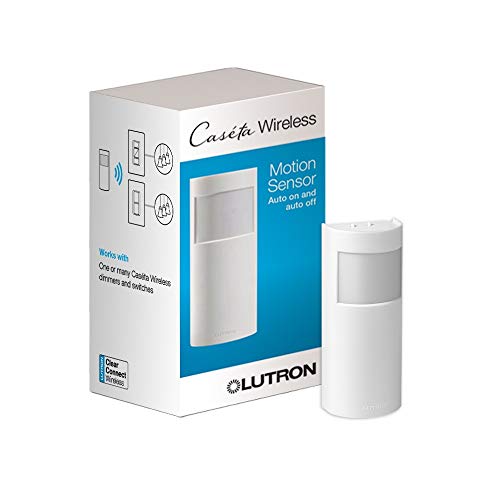
- Wireless placement with 180-degree motion detection
- Controls multiple compatible Caseta devices
- Up to 10 years of typical battery life
Best For: Caseta users automating bedroom lighting
Best for Stillness Detection
eMylo WiFi mmWave Presence Sensor

- Detects people who are sitting still or sleeping
- No hub or subscription required
- Includes adjustable range and lux sensing
Best For: Bedrooms needing reliable presence detection
Best for Bedroom Comfort

- Combines occupancy and temperature sensing
- Helps prioritize bedroom comfort overnight
- Includes two sensors with flexible placement
Best For: Ecobee users managing room-by-room HVAC comfort
Best Hardwired Value
Lutron Maestro Motion Sensor Switch

- Offers Occupancy and Vacancy modes
- Adjustable 1–30 minute shutoff delay
- Supports multiple common bulb types
Best For: Hardwired single-pole bedroom light control
Commercial-Grade Control
Leviton App-Configurable Occupancy Sensor

- No neutral wire required
- Adjustable detection blinders
- Ambient-light override
Best For: Bedrooms needing configurable wall-switch control
Everyday Bedroom Convenience
Lutron Maestro Motion Sensor Switch

- Occupancy and vacancy modes
- Detects minor motion
- Selectable 1–30 minute timeout
Best For: Bedrooms needing flexible automatic shutoff
Wide-Area Ceiling Coverage
Leviton Multi-Technology Sensor
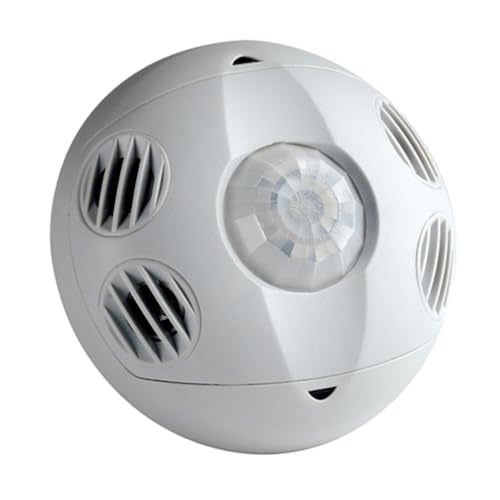
- PIR and ultrasonic sensing
- Approximately 1,000 sq. ft. coverage
- Self-adjusting sensitivity
Best For: Larger bedrooms with low-voltage ceiling wiring
Easy Retrofit Pick
TOPGREENER No-Neutral Occupancy Switch

- No neutral or ground wire required
- Occupancy and vacancy modes
- Two-pack with adjustable shutoff timing
Best For: Single-pole bedrooms needing a wall-switch retrofit
Maximum Coverage Choice

- 360-degree microwave Doppler detection
- Adjustable delay, sensitivity, and light sensing
- Supports energy-saving and occupancy-only modes
Best For: Large rooms needing broad ceiling coverage
Commercial-Grade Option

- Dual light-sensing and occupancy modes
- 10A support for lights and compatible fans
- Adjustable delay, sensitivity, and detection range
Best For: Hardwired bedrooms and utility spaces with ceiling mounting
Best Smart-Home Pick – Lutron Caseta Occupancy Motion Sensor
For bedrooms using Caseta lighting, this wireless sensor is a flexible choice among occupancy sensors for bedrooms. It can detect motion, trigger compatible Caseta devices, and use active-hour and light-level settings for more tailored automation. A Caseta Smart Hub is required.
Best For: Caseta users who want wireless bedroom lighting control with customizable schedules and settings.
Pros:
- Detects fine motion with a 180-degree field of view.
- Can control multiple Caseta switches, dimmers, fan controls, and Serena shades within 60 feet.
- Offers wall, corner, or freestanding placement without wiring.
- Uses a CR123A battery rated for up to 10 years of typical life.
Cons:
- Requires a Lutron Caseta Smart Hub.
- Designed for the Caseta ecosystem rather than general-purpose smart-home use.
This is a strong fit when you already use Caseta and want dependable, customizable occupancy-based control without running wires. Its hub requirement makes it less suitable for a standalone installation.
Best for Stillness Detection – eMylo WiFi mmWave Presence Sensor
The eMylo stands out among occupancy sensors for bedrooms because its 24GHz mmWave radar can detect a person who is sitting still or sleeping. It connects directly to 2.4GHz Wi-Fi through the Smart Life or Tuya Smart app and includes a lux sensor for low-light automation.
Best For: Bedrooms where lights should remain on while someone is resting, reading, or otherwise nearly motionless.
Pros:
- Detects human presence, including still occupants.
- Needs no hub or subscription and uses continuous USB power.
- Offers adjustable detection range up to 6 meters and customizable sensitivity.
- Uses a 0–3000 lux sensor to help limit daytime activations.
Cons:
- Requires a nearby USB power source.
- Connects to 2.4GHz Wi-Fi rather than operating wirelessly on batteries.
- App-based setup is required for automation and notifications.
With true presence detection and adjustable settings, this sensor is particularly useful for bedrooms where conventional motion sensors may turn lights off during quiet activities. Its corded design should be planned during installation.
Best for Bedroom Comfort – ecobee SmartSensor 2-Pack
Rather than switching bedroom lights, the ecobee SmartSensor uses occupancy and temperature readings to help an ecobee thermostat prioritize the room you actually use. It can communicate from up to 60 feet, including through walls and floors, and includes two sensors for broader coverage.
Best For: Ecobee households that want bedroom temperature prioritized overnight and more balanced room-by-room comfort.
Pros:
- Combines occupancy detection with temperature sensing.
- Can prioritize a bedroom’s temperature through the ecobee thermostat.
- Includes two sensors with stands, adhesive, and batteries.
- Offers flexible placement without wiring or professional installation.
Cons:
- Requires an ecobee Smart Thermostat.
- Some security-alert features require an active ecobee Smart Security subscription.
- It is designed for HVAC comfort rather than direct light switching.
This two-pack is a practical alternative to traditional occupancy sensors for bedrooms when the main goal is overnight temperature comfort. It is best considered an ecobee accessory, not a standalone lighting sensor.
Best Hardwired Value – Lutron Maestro Motion Sensor Switch
This hardwired Lutron Maestro switch is a straightforward option for occupancy sensors for bedrooms when you want automatic control at the wall. It supports both Occupancy and Vacancy modes, detects daylight, and offers adjustable shutoff delays from 1 to 30 minutes.
Best For: Bedrooms or adjacent spaces where a wired wall switch should automatically turn compatible lights on and off.
Pros:
- Provides both automatic-on/automatic-off and manual-on/automatic-off modes.
- Supports 1-, 5-, 15-, or 30-minute shutoff delays.
- Works with several bulb and load types, including LED, CFL, incandescent, and halogen.
- Can be installed without a neutral wire when a ground wire is available.
Cons:
- Requires hardwired installation at 120 volts.
- Designed for single-pole circuits only.
- The coordinating wallplate is sold separately.
This is a solid choice for a conventional wall-switch installation, especially if you prefer not to manage batteries, hubs, or apps. Verify wiring, circuit type, and load compatibility before installation.
Commercial-Grade Control – Leviton App-Configurable Occupancy Sensor
For bedrooms where you want automatic lighting without adding a neutral wire, this Leviton sensor offers occupancy and vacancy operation in a wall-switch format. Its adjustable detection blinders and configurable ambient-light override help tailor behavior to the room.
Best For: Bedrooms needing a commercial-grade, no-neutral occupancy sensor with manual push-button control.
Pros:
- Automatically turns lights on when motion is detected.
- No neutral wire is required, and it supports 120–277VAC applications.
- Adjustable blinders help limit unwanted peripheral motion signals.
- Ambient-light override can prevent activation when enough light is present.
Cons:
- Its 20-amp commercial-grade design may be more capability than a typical bedroom requires.
- Installation uses screw terminals and wall mounting, so wiring work is required.
This is a strong choice when installation flexibility and configurable sensing matter more than a simple plug-and-play setup. The included nightlight and manual control add practical bedroom convenience.
Everyday Bedroom Convenience – Lutron Maestro Motion Sensor Switch
The Lutron Maestro is a practical option for bedrooms and nearby spaces where lights should turn on as you enter and off after you leave. It supports both occupancy and vacancy modes, with selectable 1-, 5-, 15-, or 30-minute shutoff delays.
Best For: Bedrooms, closets, and adjoining spaces where reliable automatic shutoff and flexible timing are priorities.
Pros:
- Offers Occupancy Mode for automatic on/off and Vacancy Mode for manual on/automatic off operation.
- Patented XCT sensing is designed to detect minor motion, including reading or typing.
- Daylight detection can keep lights off when sufficient ambient light is available.
- Can be installed without a neutral wire using the ground wire.
Cons:
- It is single-pole only.
- The coordinating wallplate is sold separately.
- Its 2-amp rating limits it to compatible lighting loads.
With bedroom-friendly motion detection and adjustable timeout settings, this switch balances convenience with control. It is especially useful where lights might otherwise remain on after someone leaves.
Wide-Area Ceiling Coverage – Leviton Multi-Technology Sensor
For larger bedrooms or rooms where a wall switch is not ideal, this Leviton ceiling-mounted sensor combines PIR and ultrasonic technologies. Its low-voltage design, ceiling installation, and broad coverage make it suited to centrally sensing occupancy across a room.
Best For: Larger bedrooms or ceiling-mounted installations needing multi-technology occupancy detection.
Pros:
- Combines PIR and ultrasonic sensing for increased sensitivity.
- Provides approximately 1,000 square feet of coverage.
- Self-adjusting circuitry continually evaluates sensitivity and time delay.
- Twist-lock attachment allows 360-degree sensor rotation.
Cons:
- It requires a 24VDC, three-wire low-voltage connection rather than direct line-voltage installation.
- Ceiling mounting may require more involved installation than a wall-switch sensor.
- The supplied details describe a 180-degree field of view despite the adjustable 360-degree attachment.
This model is best considered for planned installations with compatible low-voltage control equipment. Its multi-technology sensing and large coverage area can help reduce missed occupancy detection in spacious bedrooms.
Easy Retrofit Pick – TOPGREENER No-Neutral Occupancy Switch
For bedrooms without a ground or neutral wire, the TOPGREENER PIR switch is a practical option among occupancy sensors for bedrooms. Its single-pole design offers occupancy and vacancy modes, adjustable shutoff timing, and a wall plate for a straightforward replacement of a compatible switch.
Best For: Bedrooms and other single-pole rooms where a no-neutral, wall-mounted sensor switch is needed.
Pros:
- Works without a neutral or ground wire.
- Offers occupancy mode with automatic on/off and vacancy mode with manual-on operation.
- Adjustable time delay includes 15 seconds, 10 minutes, 20 minutes, and 30 minutes.
- Includes a wall plate and covers up to 1,200 square feet with a 180-degree field of view.
Cons:
- Designed for single-pole installations only, not three-way wiring.
- Requires installation with 120V wiring and compatible load limits.
This two-pack is especially useful when updating more than one bedroom or keeping a spare on hand. Choose it when no-neutral compatibility and flexible occupancy or vacancy operation matter more than ceiling-mounted, all-around detection.
Maximum Coverage Choice – RAYZEEK 360° Microwave Sensor
The RAYZEEK ceiling sensor uses microwave Doppler radar to provide 360-degree detection, making it a strong option among occupancy sensors for bedrooms with broad or unobstructed ceiling coverage needs. It requires a neutral wire and provides adjustable timing, sensitivity, and light-sensor settings.
Best For: Larger bedrooms, connected spaces, garages, and other areas where ceiling-mounted, wide-angle detection is preferred.
Pros:
- 360-degree microwave detection is designed to reduce blind spots.
- Can detect subtle movement and operates in daylight, darkness, and changing temperatures.
- Offers 15-second to 30-minute time delay, adjustable sensitivity, and light-sensor settings.
- Supports energy-saving and occupancy-only modes.
Cons:
- Requires a working neutral wire.
- Ceiling mounting may require more involved installation than a wall-switch replacement.
- Its maximum listed range is 20 feet, so room layout still matters.
With a 10A capacity and compatibility with incandescent, halogen, fluorescent, ballast, and LED loads, this sensor suits demanding installations. It is a better fit for broad ceiling coverage than for a simple bedroom wall-switch upgrade.
Commercial-Grade Option – RAYZEEK 10A Ceiling Sensor
This RAYZEEK ceiling-mounted sensor is a commercial- and industrial-oriented choice among occupancy sensors for bedrooms. It requires a neutral wire and combines adjustable time delay, light sensitivity, and detection range with automatic control for lights, ceiling fans, and exhaust fans.
Best For: Bedrooms, basements, entryways, and utility spaces where a hardwired ceiling sensor should control lights or compatible fans.
Pros:
- Provides light-plus-occupancy and occupancy-only operating modes.
- Adjustable 15-second to 30-minute delay, light sensitivity, and detection range.
- Supports up to 10A, including listed loads up to 1,000W incandescent or halogen and 500W fluorescent, ballast, or LED.
- Uses flame-retardant V0 fire-resistant materials and supports lights, ceiling fans, and exhaust fans.
Cons:
- Requires a working neutral wire.
- Ceiling installation and screw-terminal wiring may be less convenient than replacing a wall switch.
- Its commercial-grade feature set may be more than needed for a small bedroom.
The one-touch setup and dual modes make this a flexible choice when you want automatic lighting without relying solely on a wall switch. Consider it for rooms where fan control, higher load capacity, or repeated daily use are priorities.
How We Picked the Best Occupancy Sensors for Bedrooms
We organized this selection around the features that matter most in a bedroom: dependable detection, suitable coverage, installation requirements, lighting control, and compatibility with existing wiring or smart-home platforms. The list includes both simple PIR motion sensors and more advanced mmWave presence sensors, since they solve different problems.
We also considered whether each product is designed for a wall box, ceiling installation, or wireless placement. Electrical ratings, neutral-wire requirements, app support, sensing range, and the ability to distinguish vacancy from ongoing occupancy are important factors when comparing products in this category.
Quick Comparison
| Type | Best for | Installation | Main strength |
|---|---|---|---|
| Wireless motion sensor | Flexible smart lighting control | Battery-powered | Easy placement and automation |
| mmWave presence sensor | Detecting still occupants | Plug-in or mounted | More continuous presence detection |
| Smart temperature and occupancy sensor | Room comfort and HVAC zoning | Wireless | Occupancy plus temperature data |
| Wall-switch sensor | Replacing a conventional light switch | In-wall wiring | Direct lighting control |
| Ceiling-mount sensor | Broad room coverage | Hardwired or low-voltage | Wide detection area |
Key Buying Factors for Occupancy Sensors for Bedrooms
Motion Detection Vs. True Presence Detection
PIR sensors detect movement and are usually affordable and responsive, but they may turn lights off when someone is reading or sleeping. mmWave radar sensors can detect very small movements and are generally better for continuous presence, though they may require more setup and careful positioning.
Installation and Wiring
Check whether the sensor is wireless, plug-in, low-voltage, or designed to replace a wall switch. No-neutral models can simplify installation in older homes, but electrical compatibility still matters. Hardwired products should be installed according to local electrical codes, and professional installation may be appropriate.
Coverage, Placement, and Sensitivity
Review the stated detection angle and range before choosing a sensor. A ceiling-mounted unit can provide broad coverage, while a wall-mounted switch may be better for a small bedroom entrance. Keep furniture, doors, vents, and reflective surfaces in mind when selecting the mounting location.
Smart-Home Compatibility and Controls
If you already use a connected lighting or HVAC system, choose a sensor that works with that ecosystem. App configuration, schedules, lux thresholds, sensitivity controls, and adjustable timeout settings can help prevent unwanted activations at night.
Lighting Behavior and Nighttime Comfort
Look for adjustable shutoff delays and light-level sensing if you want lights to activate only when the room is dark. For bedrooms, gradual or low-level lighting may be more comfortable than full-brightness activation, especially during nighttime trips.
Who Should Buy Which Occupancy Sensors for Bedrooms?
- Choose a wireless smart sensor if you want flexible placement and automation without rewiring.
- Choose a mmWave presence sensor if detecting someone who is sitting or lying still is the top priority.
- Choose a temperature and occupancy sensor if bedroom comfort and smart HVAC control matter as much as lighting.
- Choose a wall-switch sensor if you want an integrated replacement for a standard light switch.
- Choose a ceiling-mounted unit for larger rooms, central coverage, or commercial-style installation.
- Choose a no-neutral model when your existing electrical box lacks a neutral wire, while confirming bulb and load compatibility first.
For most bedrooms, the best choice is the simplest sensor that matches your wiring and automation needs. Prioritize reliable detection and controllable timeout settings over extra features you are unlikely to use.