The best daylight sensors for homes automate lighting when natural light fades, helping improve safety, convenience, and energy efficiency without constant switch flipping.
This roundup compares plug-in night-lights, sensor-equipped bulbs, retrofit sockets, and outdoor photocells so you can match the technology to each fixture and space.
Best 10 Daylight Sensors for Homes Picks for 2026
Easy Plug-In Pick
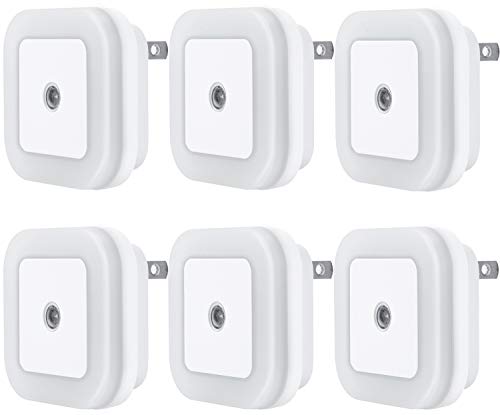
- Built-in sensor turns lights on at dusk and off at dawn
- Soft LED illumination for indoor pathways
- Six-pack with low stated annual energy use
Best For: Indoor hallways, bathrooms, bedrooms, and nurseries
Smart Switch Upgrade
Lutron Motion Sensor Light Switch

- Optional daylight mode avoids turning lights on in bright rooms
- Motion sensing supports automatic on and off control
- Offers occupancy and vacancy modes with adjustable delays
Best For: Bathrooms, garages, closets, and other frequently used rooms
Outdoor Bulb Solution
TORCHSTAR Dusk-to-Dawn LED Bulbs
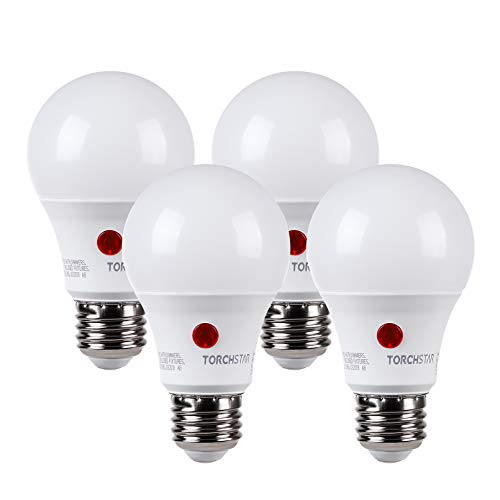
- Sunlight-sensing photocell controls outdoor operation
- 800 lumens and 5000K daylight color per bulb
- Works with compatible E26/E27 fixtures
Best For: Porches, garages, gardens, and outdoor lamps
Retrofit Socket Choice
SURAIELEC 360° Light Sensor Socket

- Adds dusk-to-dawn control to existing E26/E27 fixtures
- Rotatable sensor helps face incoming daylight
- Two-pack supports multiple outdoor lights
Best For: Porch, wall, post, and garage light retrofits
Bright Bulb Upgrade

- Built-in photocell needs no separate sensor
- 1,100-lumen, 5000K daylight output
- Standard E26 base; non-dimmable
Best For: Simple automatic lighting for porches, garages, driveways, and yards
Fixture-Friendly Adapter
DEWENWILS Automatic Sensor Socket

- Adds dusk-to-dawn control to existing fixtures
- Supports E26/E27 bulbs across several bulb types
- Requires unobstructed natural light for sensing
Best For: Existing porch, wall, or garage fixtures where you want to retain the bulb
Outdoor Wiring Solution
Weatherproof Photocell Light Switch

- IP65 housing for outdoor weather exposure
- Supports 120–277V compatible lighting
- Includes gaskets, wire caps, and mounting hardware
Best For: Permanent control of compatible porch, post, and flood lights
Bright Motion Security
Sylvania A19 Dusk-to-Dawn Motion LED Bulb

- 800 lumens of 5000K daylight with 90 CRI
- Motion detection up to 13 feet wide and 10 feet high
- 8.5W replacement for a 60W incandescent bulb
Best For: Covered porches, garages, entryways, and high-traffic areas
Sunlight-Responsive Outdoor Pick
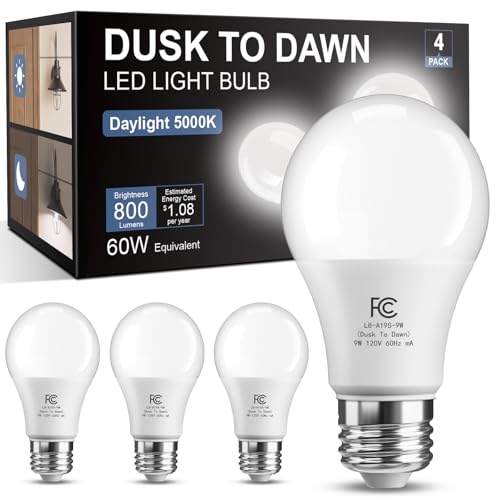
- Photocell automatically turns the bulb on at dusk and off at dawn
- 800 lumens of non-flickering 5000K daylight
- Four-bulb pack with standard E26 base
Best For: Outdoor porches, garages, paths, and wall fixtures
Dual-Sensor Entryway Choice
Motion-Activated 5000K A19 Bulb

- Photocell enables motion activation only in dark conditions
- 800 lumens of 5000K daylight at 9 watts
- Turns off about 30 seconds after motion stops
Best For: Front doors, porches, basements, and forgotten-light areas
Easy Plug-In Pick – Uigos LED Night Light 6-Pack
For indoor daylight sensors for homes, the Uigos night lights offer a simple plug-in solution for hallways, bathrooms, bedrooms, and other spaces that need low-level nighttime visibility. Their built-in light sensors turn the LEDs on at dusk and off at dawn without manual switching.
Best For: Indoor pathways, nurseries, bedrooms, and bathrooms needing gentle automatic lighting.
Pros:
- Automatic dusk-to-dawn operation through a built-in light sensor
- Soft brightness designed to help you navigate without being too bright
- Six-pack provides coverage for multiple rooms
- Low stated energy use of about 2.2 kWh per year at eight hours of daily use
Cons:
- Designed for indoor use rather than outdoor lighting
- Plug-in placement requires an available wall outlet
- Provides accent and pathway lighting, not full-room illumination
This is a practical, low-maintenance choice if you want several indoor lights that respond automatically to changing daylight. Choose it for convenience and gentle guidance rather than high-output illumination.
Smart Switch Upgrade – Lutron Motion Sensor Light Switch
Among daylight sensors for homes, the Lutron Maestro combines motion detection with optional daylight sensing. It can automatically turn compatible lights on when someone enters and keep them off when the room already has sufficient natural light, helping reduce unnecessary operation.
Best For: Bathrooms, garages, laundry rooms, and closets where hands-free control and daylight detection are useful.
Pros:
- Optional light-detection mode prevents activation when daylight is sufficient
- Patented XCT sensing is designed to detect minor movement such as reading or typing
- Occupancy and vacancy modes provide flexible automatic control
- Adjustable shutoff delays of 1, 5, 15, or 30 minutes
Cons:
- Requires wall-switch installation rather than simple plug-in setup
- Single-pole use only
- Coordinating wallplate is sold separately
This switch is a stronger fit than a basic photocell when you want both occupancy automation and daylight awareness. Verify wiring, load compatibility, and installation requirements before purchasing.
Outdoor Bulb Solution – TORCHSTAR Dusk-to-Dawn LED Bulbs
The TORCHSTAR bulbs are outdoor-focused daylight sensors for homes, using built-in photocells to detect sunlight rather than nearby artificial light. They switch on at night and off during the day while delivering 5000K daylight-colored illumination from a standard E26 base.
Best For: Porches, garages, gardens, and outdoor fixtures that need bright automatic lighting.
Pros:
- Sensitive dusk-to-dawn sensor is designed to detect sunlight
- 800 lumens of 5000K daylight illumination per 9W A19 bulb
- Common E26 base fits compatible E26/E27 outdoor fixtures
- UL Listed, DOE Listed, and FCC Compliant with a stated three-year guarantee
Cons:
- Specified for outdoor use only
- Red photo sensor must remain uncovered
- Requires a compatible fixture and socket rather than operating as a standalone light
These bulbs are a convenient replacement when you want automatic exterior lighting without rewiring a fixture. Their bright daylight output suits security and visibility, while correct sensor placement is important for reliable operation.
Retrofit Socket Choice – SURAIELEC 360° Light Sensor Socket
The SURAIELEC socket is a straightforward option for adding daylight sensing to existing outdoor fixtures. It screws into an E26 or E27 socket, then accepts a compatible bulb and automatically turns the light on at dusk and off at dawn.
Best For: Existing porch, wall, post, or garage lights that need automatic dusk-to-dawn control without complicated wiring.
Pros:
- Installs by screwing into an existing light socket
- 360-degree sensor rotation helps aim the photo eye toward incoming daylight
- Compatible with LED, CFL, incandescent, and halogen E26/E27 bulbs up to 150W
- UL listed and supplied as a two-pack
Cons:
- Does not include a replacement bulb
- Not recommended for opaque or frosted glass fixtures
- Adds about 1.61 inches of height to the fixture
This retrofit socket makes sense when you like your current outdoor fixtures and want to add automatic daylight control. Check the fixture’s clearance and glass design, then position the rotatable sensor so it can receive daylight.
Bright Bulb Upgrade – 4-Pack Dusk-to-Dawn LED Bulbs
For shoppers comparing daylight sensors for homes, these bulbs provide an especially simple approach: the built-in photocell handles dusk-to-dawn operation without separate sensor installation. Each 10W A19 bulb produces 1,100 lumens of 5000K daylight illumination and uses a standard E26 base.
Best For: Homeowners who want automatic porch, garage, driveway, or yard lighting with a straightforward screw-in installation.
Pros:
- Built-in photocell automatically turns the bulb on at dusk and off at dawn.
- Bright 5000K daylight output reaches up to 1,100 lumens.
- Standard E26 base and broad indoor/outdoor application range simplify installation.
- Four-bulb pack supports multiple fixtures or replacements.
Cons:
- These bulbs are non-dimmable.
- The photocell is integrated into the bulb, so sensor placement depends on the fixture.
This is a convenient all-in-one choice when you are replacing compatible bulbs rather than modifying existing fixtures. Its bright, cool daylight color suits security and utility areas, while the E26 base keeps setup simple.
Fixture-Friendly Adapter – DEWENWILS Automatic Sensor Socket
This DEWENWILS socket is a flexible option for daylight sensors for homes because it adds dusk-to-dawn control to an existing fixture and bulb. Simply screw the adapter into a compatible fixture, then install an E26 or E27 bulb—without wiring or programming.
Best For: Homeowners who want to keep their preferred compatible bulb while adding automatic porch, entryway, or garage-light control.
Pros:
- Works with incandescent, CFL, LED, and halogen bulbs within the stated wattage limits.
- Installs by screwing into the fixture, with no wiring or programming required.
- 60-second-or-longer off-delay helps reduce flickering from sudden light changes.
- ETL listed and supplied as a two-pack.
Cons:
- The sensor must have access to natural light and cannot be obstructed.
- Opaque or frosted-glass fixtures are not recommended.
- Bulb capacity is limited to 100W incandescent or 30W CFL/LED.
Choose this adapter when replacing the entire bulb is less appealing than upgrading the fixture. Before buying, check that the socket will see ambient light and that your fixture cover is clear enough for the sensor to operate.
Outdoor Wiring Solution – Weatherproof Photocell Light Switch
For a more permanent outdoor installation, this two-pack photocell switch is designed for daylight sensors for homes that control compatible exterior fixtures directly. It automatically switches lights at dusk and dawn, supports 120–277V systems, and includes basic installation hardware.
Best For: Outdoor post lamps, porch lights, and floodlights where a weather-resistant, wired photocell is preferred over a sensor bulb or socket adapter.
Pros:
- Automatic operation responds to ambient light for dusk-on and dawn-off control.
- IP65-rated housing is designed to withstand rain, wind, and snow.
- 120–277V operating range supports various residential and compatible outdoor lighting setups.
- Includes wire caps, gaskets, lock nuts, and lens covers for assembly.
Cons:
- Installation involves wiring and is less plug-and-play than a sensor bulb or socket.
- Its outdoor fixture compatibility should be confirmed before installation.
- Ambient obstructions or poor placement may affect light sensing.
This is the strongest fit of the three for a dedicated exterior-lighting installation. Its weatherproof design and broad voltage range add flexibility, but the included hardware does not eliminate the need for careful electrical installation.
Bright Motion Security – Sylvania A19 Dusk-to-Dawn Motion LED Bulb
For shoppers comparing daylight sensors for homes, the Sylvania A19 combines motion activation with bright 5000K illumination. It produces 800 lumens at 8.5 watts and fits standard E26 fixtures, making it a practical choice for areas where hands-free lighting and visibility matter.
Best For: Porches, garages, entryways, hallways, foyers, and other damp or covered areas that need motion-activated lighting.
Pros:
- Motion detection reaches up to 13 feet wide and 10 feet high.
- Produces bright 5000K daylight with a high 90 CRI for accurate color rendering.
- Uses 8.5 watts while replacing a 60-watt incandescent bulb.
- Damp-rated, frosted, flicker-free construction with instant-on operation.
Cons:
- The supplied specifications list indoor use, so outdoor installation is best limited to protected, damp locations.
- Its motion sensor is designed for activity detection rather than sunlight-only dusk-to-dawn operation.
This two-pack is a strong fit when you want bright, energy-conscious lighting that responds to movement. The 90 CRI output and damp-rated design add versatility, while the motion-only focus may be less suitable if you want a bulb that stays on automatically throughout the night.
Sunlight-Responsive Outdoor Pick – TJOY 5000K Dusk-to-Dawn Bulb
If you want daylight sensors for homes that handle routine outdoor lighting automatically, the TJOY A19 uses a photocell to turn on at dusk and off at dawn. Its 5000K, 800-lumen output, standard E26 base, and four-bulb pack make it convenient for multiple exterior fixtures.
Best For: Porches, garages, garden paths, outdoor wall fixtures, and other locations that need sunlight-based automatic on/off control.
Pros:
- Photocell sensor detects sunlight and provides automatic dusk-to-dawn operation.
- Uses 9 watts while providing the brightness of a 60-watt incandescent bulb.
- Delivers 800 lumens of non-flickering, non-glaring 5000K daylight.
- Four-bulb pack, UL listing, and a stated 15,000-hour operating life.
Cons:
- Non-dimmable design limits compatibility with dimming setups.
- The sensor needs to be illuminated by surrounding light for proper operation.
- Its listed CRI of 80 is lower than some high-CRI daylight bulbs.
The TJOY is the most straightforward choice here for true dusk-to-dawn automation because its photocell responds to natural light rather than motion. It is especially useful when you want several outdoor fixtures to manage themselves without timers or daily manual switching.
Dual-Sensor Entryway Choice – Motion-Activated 5000K A19 Bulb
Among daylight sensors for homes, this A19 bulb stands out by combining a photocell with PIR motion detection. It stays off in daylight, activates when movement is detected in dark areas, and switches off after about 30 seconds without motion—useful for spaces where lights are often left on.
Best For: Front doors, porches, basements, and indoor or outdoor locations where automatic nighttime motion lighting can improve convenience and reduce wasted electricity.
Pros:
- Photocell prevents activation in daylight, while PIR detection responds to movement at night.
- Provides 800 lumens of 5000K daylight from a 9-watt LED.
- Automatically turns off about 30 seconds after motion stops.
- Rated for up to 25,000 hours of LED life and includes a one-year warranty.
Cons:
- Installation is position-sensitive: the bulb should point downward or horizontally and remain within the stated detection height.
- The sensor must not be blocked, and the bulb should not be installed in glass or metal covers.
- It only activates in darkness, so it cannot be tested as a continuously lit daytime bulb.
This model is a practical compromise for security and convenience because it uses natural-light sensing to enable motion activation only when needed. Its installation restrictions are important, but a correctly positioned bulb can help illuminate approaches and frequently forgotten indoor areas without staying on all night.
How We Picked the Best Daylight Sensors for Homes
We evaluated these options by sensor type, installation method, lighting output, coverage, compatibility, and intended location. The list includes products for bedrooms, hallways, entryways, porches, garages, and other indoor or outdoor areas. We also considered practical specifications such as color temperature, brightness, bulb base, voltage range, damp-rating claims, and whether the sensor supports dusk-to-dawn operation, motion detection, or both.
Because “daylight sensor” can describe several technologies, this selection covers automatic bulbs, rotating sensor sockets, wall-switch sensors, plug-in night-lights, and wired photocells. Always verify electrical requirements and fixture compatibility before installation.
Quick Comparison
| Type | Best for | Installation | Typical strength |
|---|---|---|---|
| Plug-in night-light | Hallways, bedrooms, bathrooms | Plug in | Simple, low-wattage automation |
| Dusk-to-dawn bulb | Lamps, porch fixtures, outdoor sockets | Replace bulb | Fastest retrofit |
| Sensor socket | Existing compatible bulbs | Install between socket and bulb | Reusable fixture upgrade |
| Wall switch or photocell | Permanent lighting circuits | Electrical installation | Broader or hardwired control |
| Motion and light sensor bulb | Security and occasional-use lighting | Replace bulb | Light only when needed |
Key Buying Factors for Daylight Sensors for Homes
Choose the Right Sensor Behavior
Dusk-to-dawn sensors respond to ambient light and are ideal when you want dependable evening-to-morning illumination. Motion sensors are better for driveways, closets, garages, and entry areas where lighting should activate only when someone is present. Some bulbs combine both functions.
Check Brightness and Color Temperature
For general visibility, compare lumens rather than watt-equivalent labels alone. Daylight-rated products around 5000K look crisp and bright, while warmer options may feel more comfortable in living spaces. A high-CRI bulb can render colors more accurately, which is useful near entrances and work areas.
Confirm Compatibility and Safety Ratings
Check the base type, fixture shape, wattage, voltage, and whether the product is rated for damp or outdoor use. A19 and E26 products fit many household fixtures, but enclosed fixtures, shaded housings, and wet locations may have additional restrictions. Hardwired switches and 120–277V photocells should be installed only when their electrical requirements match the circuit, preferably by a qualified electrician.
Consider Sensor Placement
Nearby porch lights, windows, reflective surfaces, and shade can affect readings. Avoid positioning a sensor where the fixture’s own light shines directly on it, as that can cause cycling or premature shutoff. Adjustable sockets can help aim the sensor toward open sky rather than toward walls or the fixture.
Who Should Buy Which Daylight Sensors for Homes?
- For the easiest upgrade: Choose a dusk-to-dawn LED bulb that matches your existing socket.
- For bedrooms and hallways: A low-wattage plug-in night-light is compact and simple to relocate.
- For keeping existing bulbs: Use a sensor socket, provided the socket, bulb, and fixture are compatible.
- For security lighting: Consider a daylight-and-motion bulb or a motion-sensing wall switch.
- For larger outdoor circuits: A wired photocell can control compatible lighting, but installation requires careful voltage and wiring checks.
In most homes, the best choice is the least complicated product that provides the required coverage. Use bulbs for quick fixture-level control, sockets for flexible retrofits, and switches or photocells when one sensor needs to manage a permanent lighting circuit.