Reliable battery testing helps maintenance teams identify weak batteries before they cause equipment downtime. The right tester should match your battery systems, expected load, and working environment.
We compared 10 options ranging from compact 6V/12V testers to high-capacity carbon-pile models and electronic 24V analyzers. Use the guide below to narrow the list by application and testing priorities.
Best 10 Battery Load Testers for Industrial Maintenance Picks for 2026
Heavy-Duty Carbon Pile Pick
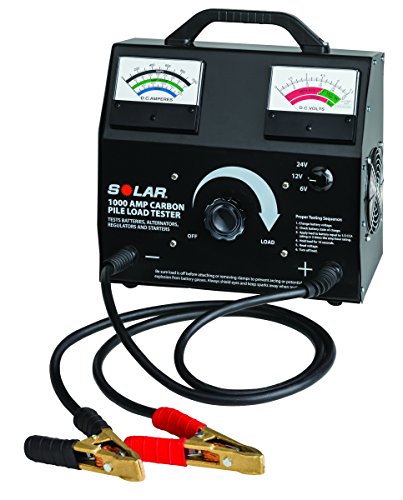
- Adjustable load up to 1,000 amps
- Tests 6/12/24V batteries up to 2,000 CCA
- Large gauges and heavy-duty clamps
Best For: High-current shop and industrial battery testing
Compact Pulse-Test Option

- Pulse-load battery testing format
- Measures voltage, current, resistance, and more
- Minimum operating voltage of 2 volts
Best For: Low-voltage, multifunction battery diagnostics
Industrial Analog Workhorse

- 1,000-amp carbon-pile load
- Tests 6/12/24V batteries up to 2,000 CCA
- Separate voltage and amperage meters
Best For: Heavy-duty repair bays and service shops
Digital Fleet Analyzer
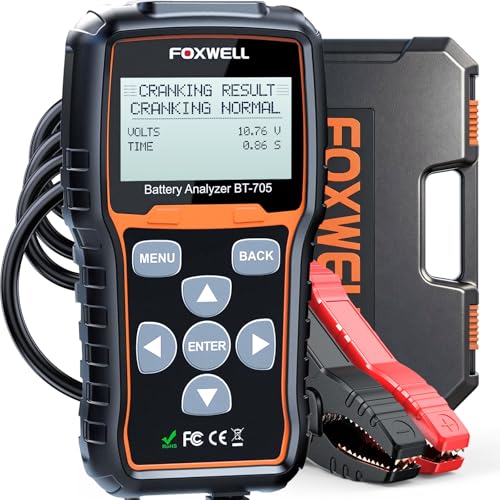
- Tests 12/24V systems from 100–2,000 CCA
- Checks health, cranking, and charging output
- Includes long cable and hard carrying case
Best For: Fleet and commercial-vehicle maintenance
Heavy-Duty Variable Load
Auto Meter SB-5/2 800 Amp Tester

- 800-amp variable load with 0–1600 CCA range
- Works with 6V and 12V batteries
- Fan cooling and automatic safety unloading
Best For: Industrial maintenance teams needing high-capacity 6V/12V battery testing
Digital System Diagnostics

- Tests 12V/24V batteries from 100–2000 CCA
- Checks battery, cranking, and charging systems
- Compact color display with memory function
Best For: Portable fleet and equipment diagnostics across common 12V/24V battery types
Carbon-Pile Load Testing
Clore Solar 1874 500 Amp Tester

- 500-amp variable carbon-pile load
- Tests batteries up to 1000 CCA
- Assesses batteries, starters, and alternators
Best For: 12V shop and maintenance work requiring direct carbon-pile load testing
Versatile Shop Tester

- Tests batteries, charging systems, and starter draw
- Supports 6V and 12V batteries up to 1,000 CA
- Analog meter with color-coded clamps
Best For: Mixed 6V/12V vehicle and equipment maintenance
Heavy-Duty Quick Tester

- Delivers results in approximately 10 seconds
- 130-amp load testing for 6V and 12V batteries
- Large 0–16V display with zero adjustment
Best For: Fast workshop battery checks with varied post types
Portable 100A Checker

- 100A 12V and 50A 6V load testing
- Supports batteries up to 1,000 CCA
- Protected analog meter with ±0.2V accuracy
Best For: Portable 6V/12V battery checks in garages and field service
Heavy-Duty Carbon Pile Pick – Solar 1876 1000 Amp Tester
Clore Automotive Solar 1876 1000 Amp Carbon Pile Battery Load Tester, One Size, Factory
Check Price On AmazonFor industrial maintenance teams that need high-current verification, the Solar 1876 is a substantial choice among battery load testers for industrial maintenance. Its variable carbon-pile load reaches 1,000 amps, while the 6/12/24-volt coverage supports a broad range of battery systems.
Best For: Shops and maintenance departments testing batteries up to 2,000 CCA, plus starter and alternator checks.
Pros:
- Variable load capability up to 1,000 amps
- Tests batteries rated up to 2,000 CCA
- Supports 6, 12, and 24-volt batteries
- Large gauges and corrosion-penetrating heavy-duty clamps
Cons:
- Hand-powered carbon-pile design requires manual operation
- At 8.8 pounds, it is less convenient to carry than a compact tester
The Solar 1876 is well suited to demanding bench or shop work where adjustable loading and broad voltage compatibility matter more than portability.
Compact Pulse-Test Option – SDI CELL03 Pulse Load Tester
The SDI CELL03 offers a different approach to battery load testers for industrial maintenance, using a pulse-load format for battery checks. Its listed measurement capabilities include ohmmeter, voltmeter, multimeter, and ammeter functions, with a minimum operating voltage of 2 volts.
Best For: Maintenance users who need a versatile pulse-load tester for low-voltage battery diagnostics.
Pros:
- Pulse-load battery testing design
- Supports measurements as an ohmmeter, voltmeter, multimeter, or ammeter
- Operates from a minimum of 2 volts
- UL/ULC specification listed
Cons:
- The supplied specifications do not state a maximum load or CCA range
- The notes provide limited information about included accessories and controls
Choose the CELL03 when low-voltage capability and multifunction measurement are priorities, but confirm that its pulse-load capacity matches your maintenance requirements.
Industrial Analog Workhorse – FJC 45118 1000 Amp Tester
The FJC 45118 is a high-capacity carbon-pile unit for battery load testers for industrial maintenance applications. It handles 6, 12, and 24-volt batteries, applies up to a 1,000-amp load, and includes separate voltage and amperage meters for evaluating batteries and charging-system components.
Best For: Repair shops and industrial service bays testing batteries up to 2,000 CCA, alternators, regulators, and starters.
Pros:
- 1,000-amp carbon-pile load testing
- Supports 6/12/24-volt batteries up to 2,000 CCA
- Separate volt and amp meters
- 56-inch solid-copper cables with heavy-duty clamps
Cons:
- At 20 pounds, it is a notably heavy shop tool
- The supplied notes do not specify a standard warranty period
With its high current capacity, long cables, and dedicated meters, the FJC 45118 is built for stationary maintenance work where robust manual testing is more important than light weight.
Digital Fleet Analyzer – FOXWELL BT705 12/24V Tester
For teams that prefer guided digital diagnostics, the FOXWELL BT705 is a practical entry in battery load testers for industrial maintenance. It checks 12- and 24-volt systems across 100–2,000 CCA and reports battery health, cranking performance, and charging output on a 2.8-inch screen.
Best For: Fleet and commercial-vehicle maintenance involving cars, trucks, RVs, boats, and multiple lead-acid battery types.
Pros:
- Tests 12V and 24V systems from 100–2,000 CCA
- Checks battery health, cranking performance, and charging output
- Compatible with Flooded, AGM, GEL, and EFB lead-acid batteries
- Includes a 5.9-foot cable and hard carrying case
Cons:
- It is designed for 12- and 24-volt systems rather than 6-volt batteries
- Its listed minimum operating voltage is 12 volts
The BT705 favors portability, guided operation, and repeatable digital readouts over the very high-current loading of a carbon-pile tester, making it a useful fit for distributed fleet checks.
Heavy-Duty Variable Load – Auto Meter SB-5/2 800 Amp Tester
For industrial maintenance teams that need a traditional, high-capacity tool, the Auto Meter SB-5/2 is a strong choice among battery load testers for industrial maintenance. Its variable load reaches 800 amps, supports 6V and 12V batteries, and covers a stated 0–1600 CCA range.
Best For: Facilities and service operations testing 6V or 12V batteries across a broad CCA range.
Pros:
- 800-amp variable load for demanding battery checks.
- Compatible with both 6V and 12V batteries.
- Automatic safety un-loader knob helps release the test load.
- Fan cooling, a 15-second timer, and fan override support cooldown.
Cons:
- At 20 pounds, it is less portable than compact digital testers.
- Its listed measurement type is an ammeter rather than a multifunction digital display.
- Cables have a shorter 90-day warranty than the tester’s 12-month warranty.
The SB-5/2 emphasizes high-current load testing and built-in thermal protection. It is best suited to maintenance settings where capacity and compatibility matter more than minimal size or weight.
Digital System Diagnostics – TOPDON BT200 12V/24V Tester
The TOPDON BT200 combines battery, cranking, and charging checks in a compact digital unit, making it a versatile option among battery load testers for industrial maintenance. It supports 12V and 24V batteries from 100–2000 CCA and is compatible with flooded, AGM, GEL, and deep-cycle types.
Best For: Maintenance personnel and fleet operators who want portable battery and charging-system diagnostics with digital readouts.
Pros:
- Supports 12V and 24V batteries across a 100–2000 CCA range.
- Performs battery, cranking, and charging-system tests.
- Sunlight-readable 2.4-inch color display provides Good/Replace prompts.
- Rugged housing, copper clamps, memory function, and operation from -4°F to 140°F.
Cons:
- It is designed for 12V and 24V systems, not the 6V systems supported by some heavy-duty testers.
- The supplied notes describe system diagnostics rather than an adjustable high-current carbon-pile load.
With its broad battery-type compatibility and three-part diagnostic approach, the BT200 is a practical choice when technicians need more than a basic battery reading. Its compact 15.52-ounce design also suits mobile inspections.
Carbon-Pile Load Testing – Clore Solar 1874 500 Amp Tester
The Clore Automotive Solar 1874 offers variable carbon-pile loading up to 500 amps, making it a straightforward option among battery load testers for industrial maintenance. It tests batteries up to 1000 CCA and also supports starter and alternator assessment on 12V equipment.
Best For: Technicians needing a conventional 12V tester for battery, starter, and alternator checks.
Pros:
- Variable load capability reaches 500 amps.
- Tests batteries rated up to 1000 CCA.
- Can assess starters and alternators as well as batteries.
- Large gauges and heavy-duty clamps support practical shop use.
Cons:
- It is limited to 12V applications according to the supplied specifications.
- Its ammeter-based design lacks the digital display and memory features listed for the TOPDON.
- The supplied notes identify corded electric power, which may be less convenient for remote inspections.
The Solar 1874 is a focused, analog-style carbon-pile tester for 12V maintenance work. Its 500-amp variable load and large gauges make it suitable for technicians who prioritize direct load testing and starter/alternator assessment.
Versatile Shop Tester – Schumacher BT-100
For battery load testers for industrial maintenance, the Schumacher BT-100 is a practical choice when a single handheld unit needs to check battery condition, charging-system performance, and starter-motor draw. It supports 6V and 12V batteries and uses a clear analog meter for quick field readings.
Best For: Maintenance teams testing mixed 6V and 12V batteries in vehicles, equipment, and shop applications.
Pros:
- Performs battery, charging-system, and starter-draw tests.
- Handles up to 1,000 CA, with 50-amp 6V and 100-amp 12V load tests.
- Color-coded clamps and a highly visible analog meter simplify operation.
- Works with automotive, marine, powersport, RV, and light-truck batteries.
Cons:
- Its analog display may offer less precision than a digital tester.
- Designed for 6V and 12V systems rather than higher-voltage industrial batteries.
The BT-100 stands out as a flexible bench or service-vehicle tester for common low-voltage maintenance work. Its three testing functions reduce the need to carry separate diagnostic tools.
Heavy-Duty Quick Tester – OTC 3181 130A Load Tester
Among battery load testers for industrial maintenance, the OTC 3181 emphasizes fast, repeatable checks. Its 130-amp load capacity, large 0–16V display, and clamps for top- and side-post batteries make it suited to routine service work on 6V and 12V systems.
Best For: Workshops and maintenance stations that prioritize quick readings and secure connections across different battery-post designs.
Pros:
- Provides load-test results in about 10 seconds.
- 130-amp heavy-duty load tester supports both 6V and 12V batteries.
- Large display includes a 0–16V range and zero adjustment.
- Clamps grip top- and side-post batteries, while storage tabs keep the tool organized.
Cons:
- The supplied notes do not specify compatibility with systems above 12V.
- As an analog-style tester, it may not provide digital data logging.
The OTC 3181 is a focused option for technicians who want a robust load test without a complicated interface. Its fast test cycle and storage features are useful for repeated shop-floor checks.
Portable 100A Checker – NEIKO 40510A Load Tester
NEIKO 40510A Car Battery Tester | 100 AMP 6 and 12 Volt Automotive Load Checker | CCA Analyzer
Check Price On AmazonThe NEIKO 40510A is one of the more portable battery load testers for industrial maintenance, with a fixed 100-amp load for 12V batteries and a 50-amp load for 6V units. Its protected analog meter, carrying handle, and anti-sparking internal switchgear support straightforward service checks.
Best For: Mobile mechanics, garages, and maintenance crews checking common 6V and 12V automotive-style batteries in the field.
Pros:
- Tests 6V and 12V batteries up to 1,000 CCA.
- Uses a 100-amp 12V load and 50-amp 6V load to simulate starter demand.
- Protected analog meter has stated voltage accuracy of ±0.2V.
- Portable handle, rubber-grip clamps, and anti-sparking internal switchgear aid field use.
Cons:
- The load should be held for a maximum of 10 seconds, requiring timed testing.
- Its supplied applications focus on automotive-style batteries rather than higher-voltage industrial systems.
The 40510A offers a simple, transportable way to apply a controlled load and read battery voltage. It is a good fit when portability and basic CCA-oriented checks matter more than advanced analysis features.
How We Picked the Best Battery Load Testers for Industrial Maintenance
We evaluated these Battery Load Testers for Industrial Maintenance based on voltage compatibility, maximum test current, supported battery ratings, construction, control layout, portability, and diagnostic usefulness. Carbon-pile testers are useful when technicians need an adjustable physical load, while electronic testers can provide faster readings with less heat and lower power draw. We also considered whether a model can support alternator or charging-system checks, since that can reduce the number of tools required during routine service.
Before buying, verify the manufacturer’s specifications for battery chemistry, CCA range, duty cycle, and recommended test duration. A tester intended for automotive starting batteries may not be suitable for stationary, deep-cycle, AGM, or industrial battery banks.
Quick Comparison
| Priority | Look for | Best fit |
|---|---|---|
| High-current testing | 500A to 1,000A carbon-pile capacity | Large starting batteries and service bays |
| Portable diagnostics | Compact electronic tester with digital readings | Mobile maintenance rounds |
| Multiple system voltages | 6V, 12V, and/or 24V compatibility | Mixed industrial fleets |
| Charging-system checks | Alternator or electrical-system testing | Vehicles and powered equipment |
Key Buying Factors for Battery Load Testers
Voltage and Battery Compatibility
Choose a tester that covers every system your team services. Six- and 12-volt support suits many individual batteries, while 24-volt capability is important for heavy equipment, commercial vehicles, and industrial systems. Check whether the tester supports AGM, gel, flooded lead-acid, or other battery types before applying a load.
Load Capacity and Test Control
Higher amperage is not automatically better. A 1,000A carbon-pile tester can be valuable for demanding applications, but smaller testers may be easier to transport and adequate for lower-rated batteries. Variable-load controls help technicians follow the battery manufacturer’s recommended test procedure more precisely.
Readability, Safety, and Durability
Prioritize clear meters or displays, insulated leads, secure clamps, ventilation, and overheat protection. Carbon-pile units produce substantial heat, so allow cooling time and follow the specified duty cycle. For frequent field use, sturdy housing and manageable cable storage can matter as much as peak amperage.
Testing Workflow
Consider whether you need only a pass/fail load check or additional information such as CCA estimates, battery health, voltage recovery, and alternator output. Electronic analyzers are often faster for screening, while adjustable load testers provide a more direct stress test.
Who Should Buy Which Battery Load Testers for Industrial Maintenance?
Choose a high-capacity carbon-pile model if your shop tests large starting batteries and needs adjustable, traditional load testing. Choose a compact electronic analyzer for maintenance routes where speed, portability, and repeatable digital readings are most important. Choose a 24V-capable tester if your equipment includes trucks, buses, material-handling machines, or other higher-voltage systems. Choose a 6V/12V heavy-duty tester for general fleet and workshop service where simplicity and ruggedness take priority.
Whichever model you select, pair it with documented testing procedures, charged batteries, clean terminal connections, and appropriate personal protective equipment. A load tester is a diagnostic tool—not a substitute for inspecting cables, terminals, charging systems, and battery condition as a complete system.