Choosing the right battery tester for field work means balancing portability, test capacity, readability, and the battery types you service most often. The best tool should provide dependable results without requiring a shop setup or complicated procedures.
This roundup compares 10 options for automotive, RV, marine, fleet, and equipment use, including compact analog testers, digital meters, and higher-capacity carbon-pile designs.
Best 10 Battery Load Testers for Field Work Picks for 2026
Versatile Garage Tester

- Tests 6V and 12V batteries
- Checks battery, charging, and starter systems
- Analog meter with color-coded clamps
Best For: Mobile vehicle and powersport testing
Heavy-Duty Basic Tester

- Supports 6V and 12V systems
- Heavy-duty style
- Simple battery-powered design
Best For: Basic general-purpose load testing
Digital Diagnostic Analyzer
ANCEL BA101 12V Battery Tester

- Tests 100–2,000 CCA batteries
- Reports SOH, SOC, cranking, and charging data
- Protection features and backlit display
Best For: Detailed 12V field diagnostics
Fast Dual-Voltage Tester

- Tests 6V and 12V batteries
- Stated 10-second test time
- Copper-plated clamps
Best For: Quick portable battery checks
Portable 6/12V Choice
Battery Tender 100A Load Tester

- Tests 6V and 12V batteries
- Color-coded display and clamps
- Checks starter draw and charging systems
Best For: Mobile automotive, marine, RV, and powersport testing
High-Capacity Field Tester
Clore Solar 1876 1000A Load Tester
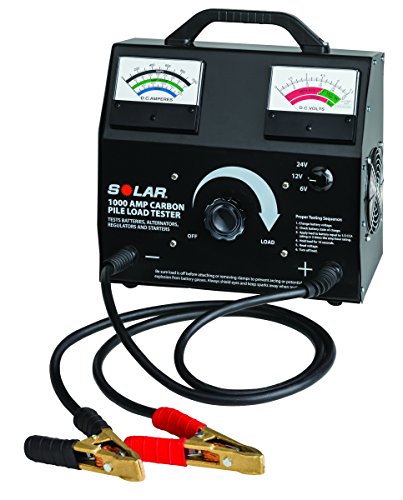
- Variable load up to 1,000 amps
- Tests batteries up to 2,000 CCA
- Works with 6V, 12V, and 24V systems
Best For: Professional battery, starter, and alternator assessment
Quick Heavy-Duty Option
OTC 3181 130A Battery Load Tester

- Tests 6V and 12V batteries
- Delivers results in about 10 seconds
- Clamps fit top- and side-post batteries
Best For: Fast general automotive field testing
Versatile Field Tester
QWORK 12V 100A Battery Load Tester

- Tests 6V and 12V batteries up to 1,000 CCA
- Adds voltage and alternator testing
- Rugged case, clamps, and carry handle
Best For: Mixed vehicle fleets, RVs, golf carts, and ATVs
Digital Everyday Choice
OTC 3182 130 Amp Battery Load Tester

- Tests 6V and 12V batteries
- Large digital display for easy reading
- Compact design with ergonomic handle
Best For: Routine automotive battery checks and service vehicles
Secure Connection Pick
3181 Pro 130 Amp Battery Tester
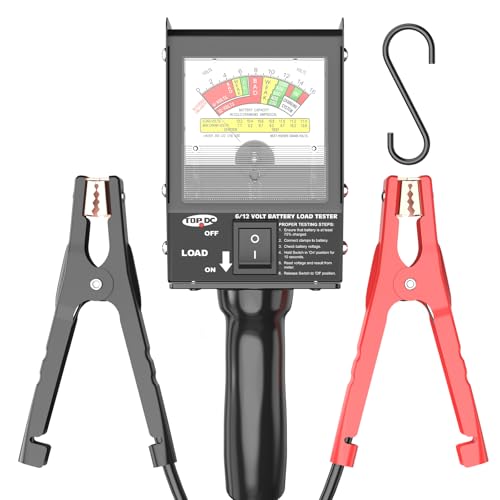
- Anti-slip clamps fit top- and side-post terminals
- Large LCD with 0–16V display range
- Supports flooded, AGM, and gel batteries
Best For: Mobile technicians needing secure connections and portability
Versatile Garage Tester – Schumacher BT-100
For battery load testers for field work, the Schumacher BT-100 is a practical choice when you need one tool for common 6V and 12V automotive batteries. It combines battery, charging-system, and starter-draw checks with a visible analog meter and color-coded clamps.
Best For: Field technicians and vehicle owners testing cars, motorcycles, ATVs, boats, RVs, and other compatible 6V or 12V equipment.
Pros:
- Tests batteries, charging systems, and starter motor draw.
- Handles 6V batteries up to 1,000 CA and offers a 100-amp 12V load test.
- Works with a broad range of gas and diesel vehicles and powersport equipment.
- Top-mounted switch and highly visible analog meter support quick readings.
Cons:
- Analog readings may be less detailed than a digital diagnostic display.
- Its listed upper temperature rating is 65 °C, which may limit use in hotter conditions.
The BT-100 suits users who value broad compatibility and straightforward testing over advanced digital reporting. Its multi-test design can reduce the number of tools needed in a mobile kit.
Heavy-Duty Basic Tester – 6/12 Volt Load Tester
Among battery load testers for field work, this Heavy Duty 6/12 Volt Load Tester is a straightforward option for users who want a basic tester compatible with both 6-volt and 12-volt systems. The supplied specifications emphasize its heavy-duty style and simple, battery-powered operation.
Best For: Users seeking a basic 6V/12V load-testing tool for general automotive work.
Pros:
- Supports a minimum operating voltage of 6 volts.
- Designed in a heavy-duty style.
- Compact listed dimensions make it practical to include in a service kit.
Cons:
- The supplied notes do not specify load amperage, vehicle coverage, meter type, or testing features.
- There is limited information for comparing its diagnostic capabilities with more feature-rich testers.
This model is best considered when simple 6V/12V testing is the priority and detailed digital diagnostics are not required. Verify the available load specifications before choosing it for specialized field service.
Digital Diagnostic Analyzer – ANCEL BA101 12V Battery Tester
The ANCEL BA101 brings digital diagnostics to battery load testers for field work. It tests 12V batteries from 100 to 2,000 CCA and reports state of health, state of charge, voltage, current, CCA, cranking, and charging-system results.
Best For: Field diagnostics on compatible 12V cars, trucks, boats, RVs, ATVs, lawnmowers, golf carts, and motorbikes with batteries over 30Ah.
Pros:
- Supports 100–2,000 CCA testing and multiple battery standards.
- Works with Flooded, AGM, GEL, and EFB 12V batteries.
- Backlit, contrast-adjustable display supports bright or low-light conditions.
- Includes protection against reverse polarity, short circuits, overcurrent, and overvoltage.
Cons:
- It is limited to 12V batteries and is not for lithium, 6V, 8V, or 24V systems.
- Correct battery type, rating, and temperature entries are needed for the most accurate results.
The BA101 is a strong fit when field work calls for more than a pass/fail load result. Its compact housing, vehicle-powered operation, and system readings make it useful for portable 12V troubleshooting.
Fast Dual-Voltage Tester – EZ RED B1100
For battery load testers for field work, the EZ RED B1100 stands out for quick testing across 6-volt and 12-volt batteries. Its supplied specifications also identify copper-plated clamps and a test that can be completed in 10 seconds.
Best For: Technicians and vehicle owners who want fast 6V/12V battery checks in a compact load tester.
Pros:
- Tests both 6-volt and 12-volt batteries.
- Completes the stated test in 10 seconds.
- Uses copper-plated clamps for battery connections.
- Listed measurement functions include ohmmeter, voltmeter, multimeter, ammeter, and LCR meter capabilities.
Cons:
- The supplied notes do not provide a load-capacity or CCA rating.
- Vehicle compatibility is described generally as 6V and 12V batteries rather than by application type.
The B1100 is appealing when speed and dual-voltage coverage matter most. Its quick test time and copper-plated clamps make it a convenient addition to a mobile service kit, though users needing detailed capacity specifications should confirm them before purchase.
Portable 6/12V Choice – Battery Tender 100A Load Tester
For battery load testers for field work, the Battery Tender 026-0020 offers a practical handheld format for checking 6V and 12V starter or deep-cycle batteries. Its color-coded display, attached clamps, and single-toggle operation make routine battery and charging-system checks straightforward.
Best For: Automotive, marine, powersport, RV, boat, and ATV users testing batteries up to 1,000 cranking amps.
Pros:
- Performs 100A loads on 12V batteries and 50A loads on 6V batteries.
- Supports battery-health checks, starter-motor draw checks, and charging-system diagnosis.
- Includes a rubber-insulated handle, heavy-duty color-coded clamps, and an easy-to-read display.
Cons:
- Its load capacity is lower than that of larger professional carbon-pile testers.
- Designed for batteries up to 1,000 cranking amps.
Choose this model when portability and simple 6V/12V testing matter more than maximum load capacity. The compact handheld design and broad vehicle compatibility suit mobile maintenance kits.
High-Capacity Field Tester – Clore Solar 1876 1000A Load Tester
Clore Automotive Solar 1876 1000 Amp Carbon Pile Battery Load Tester, One Size, Factory
Check Price On AmazonAmong battery load testers for field work, the Clore Automotive Solar 1876 stands out for its variable load capability and support for 6V, 12V, and 24V systems. Its large gauges and long cable reach are useful when testing higher-capacity batteries in shop or service environments.
Best For: Technicians assessing batteries up to 2,000 CCA and checking 6V, 12V, or 24V starter and alternator systems.
Pros:
- Provides variable loading up to 1,000 amps.
- Tests batteries rated up to 2,000 CCA.
- Supports starter and alternator assessment across 6V, 12V, and 24V systems.
- Features large gauges, 56-inch cables, and heavy-duty clamps designed to penetrate terminal corrosion.
Cons:
- At 8.8 pounds, it is less convenient to carry than lighter handheld testers.
- Its larger dimensions may require more storage space in a mobile kit.
This is the strongest choice in the group for demanding load tests and higher-CCA batteries. Its broad voltage range and 1,000-amp variable load favor professional service work where capacity matters.
Quick Heavy-Duty Option – OTC 3181 130A Battery Load Tester
The OTC 3181 is a straightforward option among battery load testers for field work, delivering test results in about 10 seconds for 6V and 12V batteries. Its large voltage display, secure clamps, and built-in storage features make it convenient for repeated service calls.
Best For: Field technicians and vehicle owners who need quick 6V/12V battery checks on top- or side-post batteries.
Pros:
- Provides a 130-amp load and results in approximately 10 seconds.
- Works with both 6V and 12V batteries.
- Clamps grip top- and side-post batteries.
- Offers a large 0–16V display, zero adjustment, clamp storage tabs, and wall/toolbox brackets.
Cons:
- Does not support 24V systems.
- Its 130-amp capacity is lower than the Solar 1876’s maximum load.
Pick the OTC 3181 when fast, repeatable 6V/12V checks and convenient tool storage are priorities. It is a practical middle ground for general automotive field service without the bulk of a high-capacity carbon-pile tester.
Versatile Field Tester – QWORK 12V 100A Battery Load Tester
For battery load testers for field work, the QWORK 12V 100A combines battery and voltage testing in a compact, portable design. It supports 6V and 12V batteries, handles up to 1,000 CCA, and adds an alternator-testing function for broader roadside or shop diagnostics.
Best For: Automotive professionals, RV and golf-cart owners, and ATV users who need versatile testing across multiple vehicle types.
Pros:
- Tests 6V and 12V batteries with up to 1,000 CCA capacity.
- Includes battery, voltage, and alternator testing functions.
- Shock-resistant steel case and heavy-duty copper-plated clamps support demanding use.
- Compact body and handle make storage and transport easier.
Cons:
- Warranty details are not specified in the supplied information.
- The notes do not specify a digital display or detailed measurement resolution.
The QWORK is a practical choice when field work calls for more than a basic battery check. Its broad compatibility, alternator function, and durable housing make it especially useful for mixed vehicle fleets and mobile diagnostics.
Digital Everyday Choice – OTC 3182 130 Amp Battery Load Tester
The OTC 3182 is a straightforward option among battery load testers for field work, with 130-amp testing for 6V and 12V batteries. Its large display, ergonomic handle, and compact lightweight construction are geared toward routine checks in garages, service vehicles, and general automotive work.
Best For: Technicians and vehicle owners who want a simple digital tester for regular 6V and 12V battery testing.
Pros:
- Supports both 6V and 12V batteries.
- Large, easy-to-read digital display improves readability.
- Compact, lightweight design is built for everyday testing.
- Ergonomic handle provides a comfortable grip.
Cons:
- Its 130-amp capacity is lower than the QWORK model’s stated 1,000 CCA rating.
- The supplied notes do not mention alternator testing.
- The product details contain an inconsistent item-weight entry, so actual weight should be verified.
Choose the OTC 3182 if clear digital readouts and uncomplicated operation matter most. Its stated one-year limited warranty is also useful for buyers seeking defined coverage, though its feature set is focused on battery load testing.
Secure Connection Pick – 3181 Pro 130 Amp Battery Tester
For battery load testers for field work, the 3181 Pro emphasizes fast readings and secure connections. Its anti-slip clamps fit top-post and side-post terminals, while the large LCD shows voltage across a 0–16V range for supported 6V and 12V lead-acid batteries.
Best For: Mobile automotive technicians and boat or vehicle owners who value stable terminal connections and a readable voltage display.
Pros:
- Designed for quick diagnosis with a large LCD readout.
- Anti-slip clamps accommodate top-post and side-post terminals.
- Supports flooded, AGM, and gel-cell 6V and 12V lead-acid batteries.
- Includes a tool-belt slot and rear hanging hook for storage or carry.
Cons:
- The supplied details list a 12V minimum and maximum operating voltage, despite describing 6V compatibility; verify the intended operating range before purchase.
- The notes do not specify alternator testing.
- No warranty information is provided in the supplied notes.
The 3181 Pro stands out for field situations where clamp stability and portability can save time. Its terminal versatility and storage features are useful, but buyers should confirm the voltage specifications because the supplied details are inconsistent.
How We Picked the Best Battery Load Testers for Field Work
We focused on testers suited to mobile troubleshooting rather than bench-only diagnostics. Our evaluation criteria included supported battery voltages, load capacity, test versatility, clamp quality, display readability, portability, and practical value. We also considered whether each tool is better suited to occasional vehicle checks, repeated fleet service, or demanding professional diagnostics.
Product specifications can vary by model and seller, so confirm the stated voltage range, maximum load, and included features before purchase. A load tester should be used according to the manufacturer’s instructions, with appropriate ventilation and eye protection.
Quick Comparison
- Simple analog testing: Schumacher BT-100, the Heavy Duty 6/12 Volt Load Tester, Battery Tender, QWORK, and the 3181-style testers offer straightforward voltage and load checks.
- Digital diagnostics: ANCEL BA101 and OTC 3182 make readings easier to interpret and may add charging, cranking, or health information.
- Higher-capacity professional testing: Clore Automotive Solar 1876 is designed for demanding battery and starting-system evaluation.
- Multiple-battery service: EZ RED B1100 is useful when your workflow involves testing battery groups or several batteries in succession.
Key Buying Factors for Battery Load Testers for Field Work
Voltage and Battery Compatibility
Confirm that the tester supports the batteries you actually encounter. Many automotive tools cover 6V and 12V systems, while some equipment, commercial, or specialty applications may require broader compatibility. Check whether the rating applies to the battery’s nominal voltage and chemistry.
Load Capacity and Test Method
A tester’s maximum amperage determines the kinds of batteries it can evaluate effectively. Smaller 100-amp tools are convenient for common automotive batteries, while 130-amp and carbon-pile testers provide more headroom for larger batteries and professional work. Digital conductance testers can provide useful results with less heat, but they do not replace every high-load test.
Portability, Clamps, and Durability
For field work, choose a tool that is easy to carry and has insulated, secure clamps with sufficiently long leads. Ventilation, heat management, rugged housing, and an easy-to-read scale or screen matter when testing outdoors or in poorly lit service areas.
Extra Diagnostic Functions
Some models test alternator output, cranking voltage, or battery condition in addition to applying a load. These features can reduce the number of tools you carry, but avoid paying for functions your workflow will not use.
Who Should Buy Which Battery Load Testers for Field Work?
Home mechanics and occasional users should favor a compact 6V/12V analog tester with simple controls and clear results. Technicians who need faster interpretation may prefer a digital model such as the ANCEL BA101 or OTC 3182. Fleet, shop, and roadside professionals should consider a durable 130-amp or carbon-pile tester with robust clamps and a higher duty cycle. Users servicing varied equipment should prioritize broad voltage compatibility, generous load capacity, and a design that remains comfortable during repeated tests.