The right outlet tester can help electricians identify wiring faults, verify receptacle status, and trace circuits without wasting time. This roundup compares 10 practical options, from simple plug-in GFCI testers to multipurpose kits with breaker-finding and voltage-testing functions.
Use the buying guide below to match tester capabilities with your workload, safety requirements, and preferred troubleshooting method.
Best 10 Electrical Outlet Testers for Electricians Picks for 2026
Best LCD GFCI Tester

- Backlit LCD shows voltage and wiring status
- Displays GFCI trip time
- Detects open neutral and open ground faults
Best For: Detailed 120V outlet and GFCI troubleshooting
Best Circuit Finder Kit

- Identifies breakers with visual and audible signals
- Includes a built-in GFCI tester
- Adds light-socket and bare-wire adapters
Best For: Multi-purpose 90–120V circuit troubleshooting
Best Two-Piece Test Kit
KAIWEETS LCD Outlet Tester Set

- Pairs non-contact voltage and GFCI testers
- Provides LCD readings and wiring indicators
- Includes live-voltage alerts and a flashlight
Best For: Combined live-wire screening and outlet testing
Best Basic Circuit Finder
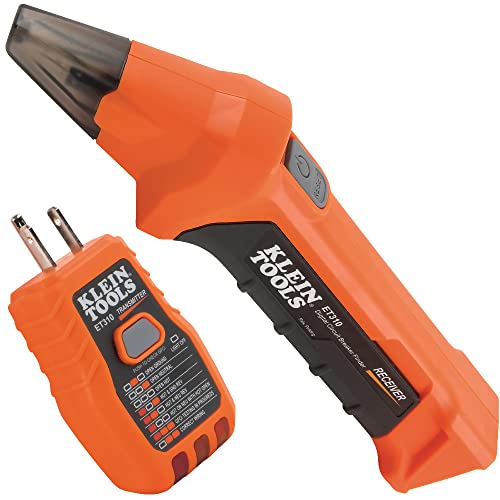
- Locates breakers with transmitter and receiver
- Provides visual and audible confirmation
- Includes an integrated GFCI tester
Best For: Focused 90–120V breaker and outlet troubleshooting
Complete Diagnostic Kit
KAIWEETS 3-Piece Electrical Test Kit

- Includes multimeter, NCV pen, and GFCI tester
- Tests voltage, current, resistance, continuity, and outlets
- Comes with batteries, leads, case, and 3-year warranty
Best For: Electricians needing a versatile all-in-one testing kit
Dedicated Receptacle Checker
Klein Tools RT210 GFCI Outlet Tester
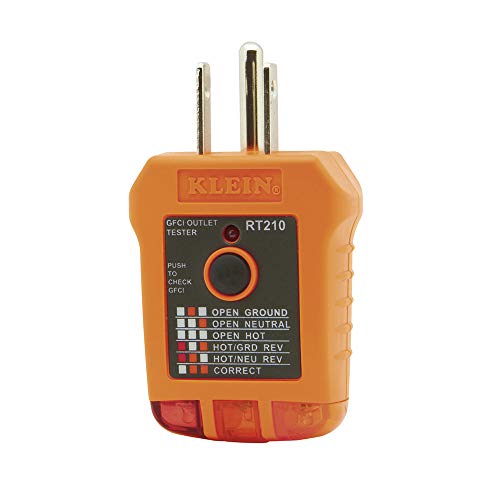
- Tests standard and GFCI receptacles
- Detects common wiring problems
- Compact, drop-resistant, and easy to carry
Best For: Routine North American outlet and GFCI checks
Professional 3-Piece Tester Set
Klein Tools 69149P Electrical Test Kit
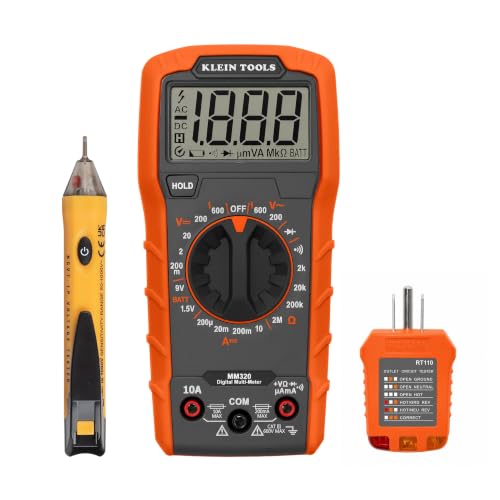
- Combines multimeter, NCV tester, and receptacle tester
- Measures up to 600V AC/DC and 10A DC
- NCV tester detects 50–1000VAC with light and sound
Best For: Everyday electrical troubleshooting with three essential tools
Top All-in-One Pick
Digital Circuit Breaker Finder & GFCI Tester

- Combines breaker finding, outlet testing, and GFCI testing
- LCD shows voltage and signal strength
- Includes batteries, accessories, and carrying case
Best For: Electricians troubleshooting 90–135V residential or commercial circuits
Best Simple Kit

- Includes GFCI tester and non-contact voltage pen
- Checks standard and GFCI receptacles
- Bright LEDs and warning tone support quick testing
Best For: Routine outlet inspections and non-contact voltage checks
Most Versatile Tracer
KAIWEETS KT301P Circuit Breaker Finder

- Adds NCV detection and backlit LCD diagnostics
- Tests GFCI outlets and identifies seven wiring faults
- Includes adapters and a protective carrying case
Best For: Versatile North American 120V residential or commercial troubleshooting
Best LCD GFCI Tester – Klein RT250 Receptacle Tester
For electricians comparing electrical outlet testers for electricians, the Klein Tools RT250 stands out for its backlit LCD readout and dedicated GFCI testing features. It displays voltage, identifies common wiring faults, and shows GFCI trip time for more informative troubleshooting.
Best For: Electricians who want detailed outlet and GFCI diagnostics in a compact corded tester.
Pros:
- Backlit LCD displays voltage and wiring-condition information.
- Shows the time required to trip a GFCI device.
- Detects open neutral, open ground, and other common wiring faults.
- Auto-Hold preserves readings at hard-to-reach outlets.
Cons:
- Designed for standard 3-wire 120V receptacles.
- Its feature set is focused on outlet testing rather than broader electrical measurements.
The RT250 is a strong choice when readable results and GFCI trip-time information matter more than a basic pass/fail indication. It includes two AAA batteries and a manual.
Best Circuit Finder Kit – Klein ET310KIT Breaker Finder
The Klein Tools ET310KIT combines a circuit breaker finder with a built-in GFCI outlet tester, making it a versatile option among electrical outlet testers for electricians. Its transmitter and receiver help identify the correct breaker, while the included adapters extend testing to light sockets and bare wires.
Best For: Electricians troubleshooting 90–120V circuits who need breaker identification plus adaptable connection options.
Pros:
- Uses visual and audible cues to identify the matching breaker.
- Built-in GFCI tester checks wiring conditions and GFCI devices.
- Includes light-socket, grounding, and alligator-clip adapters.
- Supports testing on bare wires with the alligator clip adapter.
Cons:
- More equipment to carry than a standalone receptacle tester.
- Specified for 90–120V AC circuits.
This kit is a practical choice when outlet testing is only part of the job. The transmitter, receiver, and adapters provide more ways to connect and locate circuits than a basic plug-in tester.
Best Two-Piece Test Kit – KAIWEETS LCD Outlet Tester Set
The KAIWEETS kit pairs a non-contact voltage tester with an LCD GFCI outlet tester, giving electricians two complementary tools in one package. It can indicate live voltage, display outlet readings and wiring status, and test GFCI protection.
Best For: Electricians and DIY users who want both non-contact voltage screening and detailed receptacle testing.
Pros:
- Includes a non-contact tester with 12–1000V AC and 70–1000V AC ranges.
- LCD screens provide voltage or wiring-status information.
- Visual and audible alerts help identify live voltage.
- Outlet tester includes GFCI testing and Auto Hold.
Cons:
- The outlet tester is specified for CAT II 135V use.
- It is a two-tool kit rather than a single dedicated receptacle tester.
For jobs that move between live-wire screening and receptacle checks, this set offers useful coverage in a compact format. The built-in flashlight, low-battery indicator, and auto shut-off add convenience, while the included warranty is three years.
Best Basic Circuit Finder – Klein ET310 AC Breaker Finder
The Klein Tools ET310 is a straightforward circuit breaker finder for electricians who need to trace a 90–120V AC outlet or fixture back to the correct breaker. Its transmitter includes a GFCI tester, while the receiver uses visual and audible signals during panel scanning.
Best For: Electricians seeking a focused breaker-finding tool with integrated GFCI outlet testing.
Pros:
- Two-part transmitter-and-receiver design simplifies breaker identification.
- Visual and audible cues indicate the matching breaker.
- Works with 90–120V AC circuits.
- Transmitter includes a GFCI outlet tester.
Cons:
- Does not include the extra adapters supplied with the ET310KIT version.
- Its circuit range is limited to 90–120V AC.
The ET310 is a sensible pick when the main task is locating breakers rather than performing extensive electrical measurements. Its integrated GFCI tester adds useful outlet-checking capability without turning the tool into a larger kit.
Complete Diagnostic Kit – KAIWEETS 3-Piece Electrical Test Kit
For electricians who want more than a single receptacle check, this electrical outlet tester kit combines a digital multimeter, non-contact voltage pen, and GFCI outlet tester in one carrying case. It is a practical option for troubleshooting voltage, continuity, resistance, batteries, and common outlet wiring faults without making separate trips for tools.
Best For: Electricians, HVAC professionals, and DIYers who need a portable multi-tool electrical testing setup.
Pros:
- Combines three useful testers in one kit, with leads, batteries, and carrying case included.
- Multimeter measures up to 600V AC/DC, 10A DC current, and 20MΩ resistance, plus continuity and diode functions.
- GFCI tester works with standard and GFCI outlets and displays common wiring faults with LCD codes.
- Non-contact tester provides audible, LED, and LCD percentage/color voltage indications.
Cons:
- The kit includes several functions, so it may be more equipment than needed for simple receptacle checks.
- The GFCI tester is CAT II 125V rated, while the other tools have different safety ratings.
This is the most comprehensive choice of the three for electricians who want outlet testing alongside broader electrical diagnostics. Its included accessories and three-year warranty add convenience for regular field use.
Dedicated Receptacle Checker – Klein Tools RT210 GFCI Outlet Tester
The Klein Tools RT210 is a focused electrical outlet tester for electricians working with North American 110/125V three-wire receptacles. It checks standard and GFCI outlets for common wiring problems and helps verify that a GFCI protective device operates properly.
Best For: Electricians who want a compact, dedicated tester for standard and GFCI receptacle checks.
Pros:
- Detects common wiring issues in both standard and GFCI receptacles.
- Includes a GFCI test function to verify operation of the protective device.
- Compact 1.9-ounce design is easy to carry in a tool pouch.
- Built to withstand a 6.6-foot drop and operates from 32°F to 140°F.
Cons:
- It is an outlet-focused tester and does not provide multimeter or non-contact voltage functions.
- Designed for 110/125V AC, 50/60Hz North American three-wire outlets rather than broader electrical testing.
Choose the RT210 when speed and simplicity matter more than having multiple instruments. It is a sensible dedicated receptacle tester for routine wiring checks and GFCI verification.
Professional 3-Piece Tester Set – Klein Tools 69149P Electrical Test Kit
The Klein Tools 69149P gives electricians three core testing tools: a digital multimeter, non-contact voltage tester, and receptacle tester. It is a practical middle ground for users who need more capability than a standalone electrical outlet tester but do not need the expanded measurement range of a larger kit.
Best For: Electricians and maintenance users who want a straightforward multimeter, NCV tester, and outlet tester combination.
Pros:
- Includes the MM320 multimeter, NCVT1P non-contact voltage tester, and RT110 receptacle tester.
- Multimeter measures up to 600V AC/DC, 10A DC current, and 2MΩ resistance.
- NCVT1P detects 50–1000VAC with a bright red LED and audible tone.
- RT110 indicates correct wiring and identifies common receptacle wiring faults.
Cons:
- The multimeter is manual-ranging, which requires selecting the measurement range.
- Its 2MΩ resistance range is lower than the KAIWEETS kit’s listed 20MΩ range.
- The supplied notes do not specify a carrying case or GFCI-specific testing function for the RT110.
This kit suits electricians who value familiar, separate tools for voltage detection, multimeter work, and receptacle checks. It offers broad everyday coverage while keeping the package focused on essential tests.
Top All-in-One Pick – Digital Circuit Breaker Finder & GFCI Tester
For electricians who want more than basic receptacle checks, this combination circuit breaker finder and GFCI tester adds voltage and signal-strength readings to common outlet diagnostics. It is designed for 90–135V circuits and includes a receiver, batteries, screwdriver, and carrying case.
Best For: Electricians and DIYers troubleshooting residential or commercial 90–135V wiring who want breaker tracing and outlet testing in one kit.
Pros:
- Combines circuit breaker finding, outlet testing, and GFCI testing in one tool.
- LCD displays real-time voltage and signal strength for more informative circuit tracing.
- Automatic GFCI trip testing and indicator lights help identify six common wiring faults.
- Includes batteries, screwdriver, receiver, and carrying case.
Cons:
- Its stated operating range is limited to 90–135V circuits.
- At 0.9 pounds, it is lightweight but less minimal than a basic outlet tester.
This is a practical choice when an electrician needs outlet and GFCI checks alongside breaker tracing and basic voltage information. The included case and accessories also make it convenient for service calls.
Best Simple Kit – Klein Tools Outlet Tester Kit
The Klein Tools 80025 is a straightforward two-piece option for electricians who need standard receptacle and GFCI checks plus non-contact voltage detection. Its kit format keeps the core tools separate and easy to use across outlets, switches, fixtures, cables, and breakers.
Best For: Electricians, inspectors, and maintenance users who prefer a compact outlet tester and non-contact voltage pen combination.
Pros:
- Includes the RT210 GFCI outlet tester and NCVT1P non-contact voltage tester.
- Identifies common wiring problems in standard and GFCI receptacles.
- Non-contact pen detects voltage in cables, breakers, lighting fixtures, and switches.
- Bright LED indicators, warning tone, and digitally controlled power button support quick checks.
Cons:
- Does not include a circuit breaker finder or LCD voltage display.
- The supplied details list the outlet tester’s maximum operating voltage as 125V AC.
This kit is a sensible choice for routine electrical inspections where portability and simplicity matter more than advanced circuit tracing. It covers two common testing tasks without adding the complexity of an all-in-one tracer.
Most Versatile Tracer – KAIWEETS KT301P Circuit Breaker Finder
The KAIWEETS KT301P expands the typical outlet tester with breaker tracing, a backlit LCD, non-contact voltage detection, and multiple adapters. For electricians working in tight or dim spaces, it provides wiring status, voltage, and signal-strength information while keeping accessories organized in a carrying case.
Best For: Professionals who need a versatile tester for North American 120V AC residential or commercial troubleshooting, including hard-to-reach fixtures and outlets.
Pros:
- Combines circuit breaker finding, outlet wiring checks, GFCI testing, and NCV detection.
- Backlit LCD displays 30–150V readings, wiring status, and signal strength.
- Automatic GFCI testing diagnoses seven common wiring faults and holds the latest results.
- Includes 3-prong-to-2-prong, light-socket, and alligator-clip adapters.
Cons:
- The feature-rich kit may be more than needed for simple receptacle testing.
- The supplied details identify CE and FCC compliance but do not list an ETL or CAT safety rating.
With its broader voltage display range, NCV function, adapters, and result-hold feature, the KT301P is well suited to varied service work. It is especially useful when one tester needs to cover outlets, fixtures, and breaker panels.
How We Picked the Best Electrical Outlet Testers for Electricians
We focused on testers that support common residential and light-commercial troubleshooting tasks, including checking standard 120V receptacles, identifying common wiring errors, testing GFCI protection, and locating the correct circuit breaker. We also considered display readability, portability, included accessories, operating range, and whether each tool offers useful functions beyond basic outlet testing.
Because no single tester suits every job, this list includes dedicated receptacle testers, circuit breaker finders, non-contact voltage testers, digital multimeters, and bundled kits. Always confirm a tool’s voltage rating and operating limits before use, and follow proper lockout, verification, and personal protective equipment procedures.
Quick Comparison
| Tool Type | Best For | Features to Look For |
|---|---|---|
| GFCI outlet tester | Fast receptacle checks | Clear fault indicators, test button, readable display |
| Circuit breaker finder | Tracing outlets to panels | Reliable transmitter-receiver pairing, sensitivity adjustment |
| Digital multimeter | Detailed electrical measurements | Voltage ranges, continuity, suitable leads, safety rating |
| Combination kit | General service work | Multiple testers, carrying case, useful accessories |
Key Buying Factors for Electrical Outlet Testers for Electricians
Testing Functions
A basic plug-in tester may identify reversed polarity, open grounds, open neutrals, and other common receptacle conditions. Models with GFCI testing add a useful functional check, while LCD-equipped units may provide more specific voltage or fault information. If you need to measure exact voltage, resistance, or continuity, choose a compatible multimeter rather than relying on indicator lights alone.
Circuit Tracing Performance
For service calls involving unlabeled panels, a circuit breaker finder can save considerable time. Look for a transmitter that plugs securely into the receptacle and a receiver with clear visual or audible feedback. Features such as sensitivity adjustment, an LCD, a built-in flashlight, or non-contact voltage detection can improve usability in crowded panels and dim work areas.
Safety and Compatibility
Check the tool’s rated voltage, receptacle compatibility, measurement category, and intended environment. A tester designed for standard 3-wire 120V outlets is not automatically suitable for higher-voltage circuits or industrial applications. Inspect leads, probes, plugs, and housings regularly, and verify that a circuit is de-energized with an appropriate method before handling conductors.
Display, Durability, and Portability
Bright indicators and readable LCDs are valuable in basements, utility rooms, and busy job sites. Compact testers are easy to keep in a tool pouch, while kits provide broader coverage but take up more space. Durable construction, protected controls, a secure battery compartment, and included storage can matter more than extra features for daily professional use.
Who Should Buy Which Electrical Outlet Testers for Electricians?
- Choose a dedicated GFCI outlet tester for quick receptacle inspections, maintenance rounds, and verification of common wiring conditions.
- Choose a circuit breaker finder when your work frequently involves matching outlets, fixtures, or receptacles to unlabeled breakers.
- Choose a multimeter-based kit if you need actual voltage and continuity measurements in addition to plug-in testing.
- Choose a combination kit if you are building a general-purpose service bag or want several complementary tools in one purchase.
- Choose a tester with an LCD or flashlight if you work in low light or prefer more detailed feedback than simple indicator patterns.
For most electricians, the best setup is often a dedicated outlet tester for fast checks paired with a properly rated multimeter for confirmation and deeper diagnosis.