A 48V inverter can be the heart of an off-grid home, cabin, or backup power system—but wattage alone won’t tell you whether it fits your loads, panels, and batteries.
These 10 options span 5kW to 12kW. Use the comparisons below to narrow your choices, then check each model’s specifications against your planned installation.
Best 10 48v Solar Inverters Picks for 2026
Best Expandable 120V Pick

- 5,000W output with 10,000W peak surge
- 100A MPPT and 40A AC charger built in
- Up to six units can run in parallel
Best For: Expandable 120V backup or off-grid systems
Best 10kW Split-Phase Pick
SUNGOLDPOWER Dual-MPPT Inverter

- 10,000W rated split-phase output
- Two built-in MPPT controllers
- Up to 200A battery charging stated
Best For: Larger 120V/240V solar-and-battery systems
Best Touchscreen Control
ECO-WORTHY 6kW Split-Phase Inverter
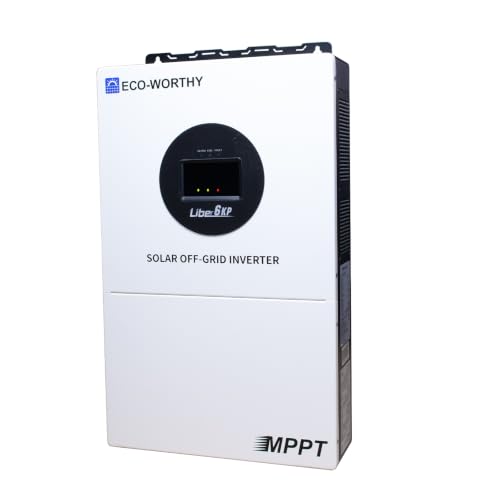
- 6,000W split-phase output
- Touchscreen plus built-in WiFi
- Supports up to 9,000W PV input
Best For: Monitored cabin or home backup systems
Best High-Capacity PV Pick

- 12,000W rated split-phase output
- Two MPPTs support up to 18,000W PV total
- WiFi monitoring and six-unit parallel support
Best For: Large arrays with split-phase loads
Whole-Home Pick
WattCycle 12kW Split-Phase Hybrid Inverter

- 12kW split-phase output; 18,000VA surge
- 200A bypass and dual MPPT solar inputs
- Generator ATS and Wi-Fi monitoring
Best For: High-capacity home solar systems with generator backup
Flexible Off-Grid Pick

- 5kW pure sine wave output
- 100A MPPT; up to 5,500W PV input
- Multiple charging modes; parallel support
Best For: Expandable off-grid systems needing flexible charging
Battery-Optional Pick
POWLAND 12kW Split-Phase Hybrid Inverter

- Battery-free operation described
- 120V/240V split-phase design
- Verify conflicting 12kW and 10kW ratings
Best For: Battery-optional split-phase solar plans
Best for 120V Off-Grid Loads

- 5000W pure sine wave, 110V/120V output
- 80A MPPT charger; up to 5500W PV input
- No parallel operation
Best For: 48V off-grid systems with 120V loads
Best for Split-Phase Power
- 10000W pure sine wave output
- Selectable 120V or split-phase 120V/240V
- Dual MPPT and included Wi-Fi module
Best For: Higher-capacity 48V systems needing 120V/240V output
Best for Battery-Free Flexibility

- 6500W pure sine wave, 120V output
- Dual MPPT with two PV channels
- Can operate without a battery under stated conditions
Best For: Hybrid setups needing flexible 120V operation
Best Expandable 120V Pick – LiTime 5000W Hybrid Inverter
Among 48v solar inverters, this LiTime model is a practical starting point for a 120V backup or off-grid system you may want to expand. It combines a 5,000W pure sine wave inverter, 100A MPPT controller, and 40A AC battery charger in one unit.
Best For: Buyers building a 120V system now who may add inverters later for greater capacity or 120V/240V output.
Pros:
- Supports up to six units in parallel for a stated maximum of 30kW.
- Works with 48V lithium and lead-acid batteries and offers timed grid charging and discharging.
- Provides a 10,000W peak surge rating and multiple charging and output modes.
Cons:
- A single unit outputs 120V; 120V/240V requires at least two units in parallel.
- The built-in AC battery charger is rated at 40A.
The appeal is its clear upgrade path. Check your loads before buying: if you need 240V immediately, the single-unit configuration will not provide it.
Best 10kW Split-Phase Pick – SUNGOLDPOWER Dual-MPPT Inverter
If your shortlist of 48v solar inverters needs substantial split-phase output, this SUNGOLDPOWER model offers a rated 10,000W and selectable 120V/240V or 120V operation. Two built-in MPPT controllers and a stated maximum 200A battery-charging capacity make it suited to a larger solar-and-battery setup.
Best For: Home systems needing 120V/240V output, two solar tracking inputs, and flexible battery charging.
Pros:
- Rated for 10,000W output with a stated 20,000W peak.
- Offers four charging modes, four output modes, and time-slot charging and discharging.
- Supports several 48V battery types and battery-free operation.
Cons:
- At 54 pounds and 26 by 17.9 inches across its face, it needs substantial mounting space.
- Its 200A charging figure is a maximum, so size battery capacity and wiring accordingly.
This is a strong fit when split-phase service is a requirement rather than a future upgrade. Confirm your solar strings and battery settings against the inverter specifications before installation.
Best Touchscreen Control – ECO-WORTHY 6kW Split-Phase Inverter
ECO-WORTHY 6KW Solar Off-Grid Split-Phase AIO Inverter, 48Vdc to 120Vac/240Vac, 9kW@500V PV Input
Check Price On AmazonFor shoppers comparing 48v solar inverters with straightforward on-unit controls, this ECO-WORTHY combines a 6,000W pure sine wave inverter with 120V/240V split-phase output. Its capacitive touchscreen displays operating data and fault codes, while built-in WiFi supports remote monitoring.
Best For: Off-grid cabins or home backup systems that need split-phase power and accessible monitoring.
Pros:
- Supports up to 9,000W of PV input, with a 125–425V MPPT operating range.
- Provides touchscreen configuration, fault-code display, and built-in WiFi monitoring.
- Offers multiple output priorities and solar, grid, or hybrid charging modes.
Cons:
- PV strings must stay within the stated 500V maximum open-circuit voltage.
- Its 6,000W rated output is below the higher-capacity models in this roundup.
The interface is the differentiator here, especially if you expect to adjust priorities or check system status regularly. Size the 6kW output against the appliances you plan to run together.
Best High-Capacity PV Pick – Aninerel 12kW Hybrid Inverter
For larger arrays, this Aninerel stands out among 48v solar inverters with two independent MPPT inputs rated for up to 18,000W of PV combined. It delivers a stated 12,000W in 120V/240V split-phase mode, with built-in WiFi for app-based monitoring.
Best For: Larger 48V or 51.2V battery systems paired with high-capacity solar arrays and split-phase loads.
Pros:
- Two MPPT channels support up to 9,000W of solar input each.
- Supports lithium and lead-acid batteries, with CAN and RS485 communication for compatible lithium BMS protocols.
- Offers scheduled charging and discharging and supports up to six units in parallel.
Cons:
- Rated output drops from 12,000W split-phase to 6,000W single-phase.
- Each PV channel has a stated 27A limit and a 500V maximum open-circuit voltage.
Choose this model for its combination of split-phase capacity and dual-array flexibility, not just its headline wattage. Plan each solar string around the per-channel limits and verify battery communication compatibility.
Whole-Home Pick – WattCycle 12kW Split-Phase Hybrid Inverter
Among 48v solar inverters, this WattCycle model is built for substantial home loads. It supplies 12,000W of 120V/240V split-phase output, with a stated 18,000VA surge rating for starting demanding equipment.
Best For: Homes planning a high-capacity 48V solar and battery system with generator backup.
Pros:
- 200A bypass supports loads up to a stated 48,000W when bypassing the inverter.
- Dual MPPT inputs support up to 24,000W of solar panels; the charger is rated at 250A.
- Built-in generator ATS, touchscreen, Wi-Fi monitoring, and support for up to six parallel units.
Cons:
- The 48,000W bypass figure is not its inverter output; battery-powered output is rated at 12,000W.
- Its high-capacity solar input and whole-home wiring call for careful system planning.
Choose this for its combination of split-phase output, generous solar input, and integrated generator controls—not because the bypass rating replaces its 12kW inverter limit.
For buyers comparing 48v solar inverters for an off-grid setup, this Ampinvt combines a 5,000W pure sine wave inverter, 100A MPPT controller, AC charger, and automatic transfer switch. It offers 120V output as a single unit, with split-phase and three-phase configurations supported through compatible setups.
Best For: Off-grid systems that need flexible charging settings and room to expand.
Pros:
- Supports up to 5,500W of PV input and 48V lead-acid or LiFePO4 batteries.
- Offers three work modes and four charging modes for solar and mains power.
- Supports up to six units in parallel and provides a generator-control dry contact.
Cons:
- Wi-Fi and RS485 monitoring require optional modules.
- At 5,000W per unit, it has less standalone output than the 12kW models here.
This is a practical choice when charging flexibility matters more than maximum output from one inverter. Check the required parallel configuration if your system needs split-phase or three-phase power.
This POWLAND is an option among 48v solar inverters if you want a hybrid design that can operate without batteries. The listing describes 120V/240V split-phase output, solar-and-grid operation, and compatibility with 48V LiFePO4 and lead-acid batteries if you add storage later.
Best For: Buyers planning a battery-optional split-phase solar system.
Pros:
- Battery-free operation provides a way to start without purchasing storage.
- Includes Wi-Fi monitoring and supports up to six parallel units.
- Lists an IP65 enclosure and protection against overload, short circuits, and voltage faults.
Cons:
- The supplied specifications conflict: the title and bullets say 12,000W, while the details list 10,000W output.
- Confirm the exact model, rated output, and grid-export requirements before ordering.
The battery-optional design is its main attraction, but the conflicting power figures make specification verification especially important before sizing loads or planning an installation.
Best for 120V Off-Grid Loads – SUNGOLDPOWER 5000W All-in-One
Among 48v solar inverters, this SUNGOLDPOWER model is a practical fit when your off-grid setup needs 120V power rather than split-phase 240V. It combines a 5000W pure sine wave inverter with an 80A MPPT solar charger and a 40A AC battery charger.
Best For: 48V off-grid systems powering 110V/120V household or office loads.
Pros:
- Supports up to 5500W of PV input with a 500V maximum PV voltage.
- Offers four charging modes and four output modes.
- Supports several 48V battery types, with a user mode for custom settings.
Cons:
- Does not support parallel operation.
- Its 110V/120V output is not a split-phase 120V/240V option.
Choose this unit if a single 120V inverter covers your loads; plan around its no-parallel limitation if you expect to expand later.
Best for Split-Phase Power – SUNGOLDPOWER 10000W Dual-MPPT
If you’re comparing 48v solar inverters for larger loads, this SUNGOLDPOWER model provides 10000W of pure sine wave output with selectable 120V or split-phase 120V/240V operation. Two built-in MPPT controllers and a maximum 200A battery-charging capability make it an all-in-one option for a substantial solar setup.
Best For: 48V systems that need 120V/240V split-phase output and higher inverter capacity.
Pros:
- Rated for 10000W output, with a stated 20000W peak.
- Includes a Wi-Fi module for viewing operating status and settings in an app.
- Offers time-slot charging and discharging settings.
Cons:
- At 53.5 pounds and 26 inches long, it needs more mounting space than a compact inverter.
- Its listed maximum PV open-circuit voltage is 500VDC, which must be considered when planning strings.
This is the stronger match when split-phase output matters; check your mounting space and PV string voltage before committing.
Best for Battery-Free Flexibility – Anjfylque 6500W Hybrid
This Anjfylque unit stands out among 48v solar inverters for its dual MPPT inputs and ability to run loads from PV and/or mains without a connected battery. Its rated 6500W pure sine wave output is 120V AC, so check that voltage against the loads you intend to power.
Best For: 48V hybrid setups that need a single 120V output and the option to operate without a battery.
Pros:
- Two PV channels support up to 4500W of array power each.
- Offers utility, battery, solar, and hybrid output-priority modes.
- LCD, touch controls, status LEDs, and fault codes aid on-site monitoring.
Cons:
- Provides a single 120V AC output, not a stated split-phase 120V/240V output.
- Battery-free PV operation requires at least 80VDC from the array.
Its operating modes offer flexibility, but size the PV array against the stated voltage limits and confirm that single-output 120V power fits your installation.
How We Picked These 48v Solar Inverters
We focused on the specifications that affect system fit: continuous AC output, 120V or 120V/240V split-phase service, MPPT solar charging, PV input limits, battery charging capacity, and features such as parallel operation. The selection includes smaller off-grid units and higher-output hybrid models. Listed features are not a substitute for independent performance testing; confirm the current manual and certifications before purchasing.
Quick Comparison: Match the Inverter to the Job
The 5kW models are a starting point for modest 120V loads where the appliance startup demand stays within the inverter’s surge rating. A 6kW–6.5kW split-phase model may suit a system that needs both 120V circuits and some 240V loads, provided its per-leg capacity is adequate. The 10kW–12kW options offer more room for simultaneous loads, but they also call for appropriately sized batteries, cabling, protection, and solar capacity. Compare the manuals—not just the advertised wattage—before treating two models as interchangeable.
Key Buying Factors for 48v Solar Inverters
AC Output and Surge Capacity
List your running loads and the startup surge of pumps, compressors, and power tools. Check continuous and surge ratings, output frequency, and whether you need 120V only or true 120V/240V split-phase power. For split-phase units, verify how much power each leg can supply; total wattage may not be available on one 120V circuit.
Solar Input and Battery Compatibility
Check the MPPT voltage range, maximum PV open-circuit voltage, input current, and total allowable array power against your panel string design, including cold-weather voltage. Match the inverter’s battery voltage and charging settings to your battery chemistry and battery-management-system limits. A high charging-amp rating is useful only if the battery bank can accept it.
Installation and Operating Modes
Confirm whether the model supports your intended off-grid, backup, or grid-connected configuration. “Hybrid” does not automatically mean utility-approved export or seamless backup. Check transfer behavior, generator compatibility, neutral and grounding requirements, and any required external equipment. For a grid connection, verify the exact model’s listing and local utility requirements with a qualified installer.
Who Should Buy Which 48v Solar Inverters?
Choose a 5kW 120V unit for a smaller, predominantly 120V system if its surge and charging limits fit. Look at a 6kW–6.5kW split-phase option when you need 240V without sizing up solely for headline wattage. Consider a 10kW–12kW model for larger simultaneous loads, after confirming per-leg output and the cost of supporting electrical hardware. If future expansion matters, prioritize documented parallel support and compatible units. The best choice is the one whose manual matches your actual load calculation and installation plan.