A good battery box makes a LiFePO4 setup easier to carry, connect, and protect. But a ready-to-use box for a trolling motor is a different purchase from an empty case for a DIY battery build.
These 10 options span compact portable boxes, Group 24/27/31 enclosures, and larger cell cases. Start with your battery’s dimensions and intended wiring, then compare the ports and protection features you’ll actually use.
Best 10 Lifepo4 Battery Box Picks for 2026
Best for Group 24/27/31 Batteries

- Fits Group 24, 27, and 31 batteries
- External terminals, voltmeter, and charging ports
- 16A automatic-reset circuit breaker
Best For: Full-size RV or marine battery setups
Best Compact Charging Box
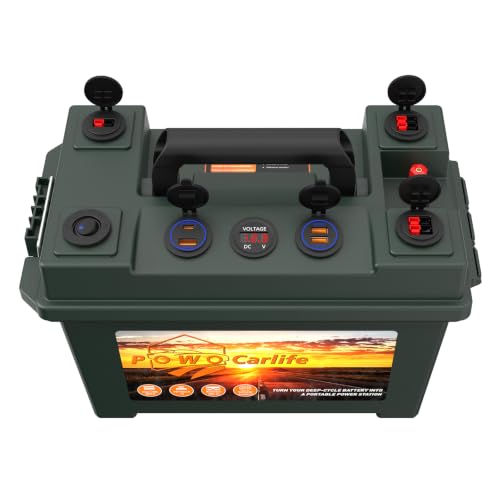
- Designed for select 10Ah–30Ah batteries
- Anderson, 30A terminals, and USB ports
- 30A overload protection
Best For: Portable power with a compatible small battery
Best for Voltage Monitoring

- Digital battery-voltage display
- Anderson, hex terminals, and USB charging
- 30A overload fuse; battery not included
Best For: Small-battery setups needing visible voltage checks
Best for DIY 4S Builds

- Empty case for 4S 12V builds
- Listed for 280Ah, 300Ah, and 314Ah cells
- Cells not included
Best For: Experienced builders planning large-capacity DIY batteries
Best for 12V/24V Versatility
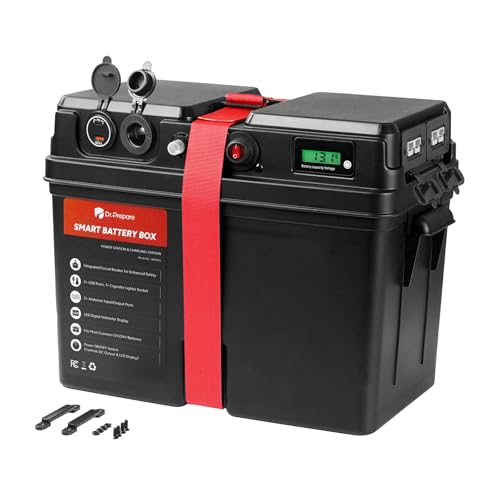
- Fits Group 24, 27, and 31 batteries
- USB, cigarette lighter, and Anderson ports
- Voltage display and circuit protection
Best For: Marine, RV, and camping setups needing varied DC connections
Best for DIY Energy Storage
JKLR015D 16S Battery Enclosure

- Designed for a 51.2V, 16S build
- Fits specified 280–320Ah prismatic cells
- Steel cabinet with casters; cells and BMS sold separately
Best For: DIY solar or home-storage battery builds
Best Lightweight Portable Option

- Fits Group 24, 27, and 31 batteries
- 12V outlet, QC 3.0, and Type-C ports
- About 3 pounds empty, with a voltmeter
Best For: Simple portable 12V power for boats, RVs, and camping
Best for High-Draw Control

- 100A rotary master switch
- Fits listed 10Ah–30Ah batteries
- USB fast charging and 30A Anderson connector
Best For: Compact outdoor 12V setups needing a master switch
Best for DIY Battery Builds
XBERSTAR 12V 100Ah Battery Case

- Case for 12V battery-pack projects
- 320 × 165 × 190 mm internal space
- No LCD display or screws
Best For: DIY solar or energy-storage battery enclosures
Best Multi-Port Pick
POWO Carlife 12V Smart Battery Box

- USB-C, QC3.0 USB-A, and Anderson ports
- 30A overload switch and voltmeter
- Battery sold separately
Best For: Portable 12V use with varied connection needs
Best for Group 24/27/31 Batteries – LiTime Smart Battery Box
If you want a LiFePO4 battery box for a full-size battery, this LiTime case fits Group 24, 27, and 31 batteries within its 14 × 8.11 × 8.66-inch interior limit. It also accepts lead-acid batteries and puts charging ports, external terminals, and a voltmeter on the outside.
Best For: RV, marine, or backup setups using a Group 24, 27, or 31 battery.
Pros:
- Two 15A cigarette ports, QC3.0, and USB-C provide several ways to power devices.
- External terminals and a built-in voltmeter allow access and voltage checks without opening the lid.
- Includes 6AWG cables with M8 ring terminals and a 16A automatic-reset circuit breaker.
Cons:
- Group 24 and 27 batteries may need foam padding to prevent shifting.
- The box supports batteries up to 66 lb, so check your battery’s weight before buying.
This is a convenient choice when you need accessible connections more than a basic storage case. Check your battery’s dimensions as well as its group size.
Best Compact Charging Box – POWO Carlife 12V Battery Box
This compact LiFePO4 battery box is intended for select 10Ah to 30Ah batteries, making it worth a look when a full-size marine box is too large. Its Anderson connector, USB charging options, and 30A terminals suit portable outdoor power projects.
Best For: Camping, fishing, or other portable setups built around a compatible small battery.
Pros:
- Dual QC3.0 ports and a QC3.0/PD charging port offer multiple USB options.
- A 30A Anderson plug can be used for a solar charging connection.
- Includes 30A terminals and overload protection.
Cons:
- Battery dimensions need checking before purchase; stated capacities alone do not establish fit.
- The small enclosure is not intended for full-size Group 24/27/31 batteries.
Choose this one for a compact, connection-ready case rather than a large battery enclosure. Its port selection is useful, but confirm your battery’s measurements against the 5.74 × 9.05 × 7.28-inch listed box dimensions.
Best for Voltage Monitoring – TXL Smart Battery Box
The TXL LiFePO4 battery box pairs a digital voltage display with ports for powering several types of devices. It is designed for 10Ah, 16Ah, 18Ah, 20Ah, and 30Ah batteries, with a carry handle for moving a small outdoor power setup.
Best For: Campers and anglers who want to check battery voltage at a glance.
Pros:
- Digital display makes battery-voltage checks straightforward.
- Offers a 30A Anderson connector, hex terminals, dual QC3.0 USB ports, and a PD USB-C port.
- Includes UL1015-certified internal wiring, a 30A overload fuse, and a dust- and splash-resistant enclosure.
Cons:
- Battery is not included.
- The stated capacity range does not replace checking your battery’s physical fit.
This is the more monitoring-focused small-battery option in the roundup. The sealed enclosure helps with splashes, but it should not be treated as a submersible case.
Best for DIY 4S Builds – VNSZNR Empty Battery Case
Unlike the ready-to-connect options above, this LiFePO4 battery box is an empty case for a DIY 4S 12V build using 280Ah, 300Ah, or 314Ah cells. Its listed dimensions are 13.5 × 7.4 × 10.7 inches, so planning the fit and components is part of the project.
Best For: Experienced DIY builders assembling a large-capacity battery for solar storage or off-grid use.
Pros:
- Designed as an enclosure for 4S builds using the listed cell capacities.
- ABS plastic casing is intended for off-grid and outdoor applications.
- At 6.6 lb, the empty case provides a defined starting point for build planning.
Cons:
- Cells are not included.
- It is an empty enclosure, not a ready-to-use battery or charging box.
Buy this for an enclosure-based build, not plug-and-play power. Verify your cell dimensions and the rest of your planned components before committing to the case.
Best for 12V/24V Versatility – DR.PREPARE Smart Battery Box
If you want a LiFePO4 battery box for portable power, the DR.PREPARE accommodates Group 24, 27, and 31 batteries and supports 12V/24V battery systems. It adds several ways to connect devices without building a separate power panel.
Best For: Boaters, RV owners, and campers who want multiple DC ports and battery-voltage monitoring.
Pros:
- USB-C PD, USB-A QC 3.0, a cigarette lighter socket, and two Anderson ports offer flexible connections.
- LED voltage display, replaceable 30A Anderson-port fuses, and a resettable 10A breaker help with monitoring and protection.
- Side handles, port covers, and included mounting hardware support portable use.
Cons:
- Battery and replacement fuses are not included.
- Solar panels require a charge controller; they cannot connect directly to an Anderson port.
This is the more connection-rich option for a compatible battery, but switch it off when idle to avoid standby drain.
Best for DIY Energy Storage – JKLR015D 16S Battery Enclosure
This LiFePO4 battery box is a cabinet kit for building a 51.2V, 16S pack from sixteen 3.2V prismatic cells. The JKLR015D is intended for custom solar, backup, or home energy-storage projects—not as a ready-to-use battery.
Best For: Experienced DIY builders assembling a high-capacity 48V-class battery.
Pros:
- Accepts compatible 280Ah, 304Ah, 314Ah, and 320Ah prismatic cells within the stated size limit.
- Galvanized-steel, powder-coated enclosure includes internal partitions and insulation sheets.
- Vertical layout, recessed handles, and four leveling casters help with placement and maintenance.
Cons:
- Cells, BMS, and LCD display are not included.
- At 56.7 pounds for the enclosure, it is not a lightweight portable box.
Choose this if you need a structured enclosure for a custom 16S build and are prepared to source and assemble the electrical components separately.
Best Lightweight Portable Option – Redodo Smart Battery Box
The Redodo LiFePO4 battery box offers a straightforward way to add DC outlets and a voltage display to a compatible Group 24, 27, or 31 battery. It weighs about 3 pounds before a battery is installed, making the empty box easy to carry.
Best For: RV, boat, and camping users who need a simple 12V portable power setup.
Pros:
- 15A cigarette lighter socket, QC 3.0 port, and Type-C port support multiple DC devices.
- Built-in voltmeter makes battery voltage easy to check.
- 12V 16A circuit breaker provides overload protection for the outlet system.
Cons:
- Do not immerse it or expose it to water for extended periods.
- Rough travel may require added foam or padding around the battery.
This is a practical pick if you prioritize basic charging ports and easy carrying over the broader connection selection of a multi-port power center.
Best for High-Draw Control – POWO Carlife 12V Battery Box
This LiFePO4 battery box is a practical pick if you want to turn a compatible 10Ah–30Ah battery into portable 12V power. Its 100A master switch lets you disconnect the box’s circuit during storage, while USB charging ports and a voltmeter make everyday use easier.
Best For: Camping, boating, or field setups that need a compact battery enclosure with a master power switch.
Pros:
- 100A rotary master switch makes it easy to cut power to the box.
- Dual QC3.0 and PD USB charging sockets plus a digital voltmeter.
- 30A Anderson connector, 30A binding posts, and internal overload-protection fuses.
- Sealed lid helps protect against water and dust outdoors.
Cons:
- Designed around smaller 10Ah–30Ah batteries, not large-capacity packs.
- Listed warranty is a 30-day free-return period.
Choose this one for its switch and connector mix, but check your battery dimensions and device power requirements before buying.
Best for DIY Battery Builds – XBERSTAR 12V 100Ah Battery Case
This LiFePO4 battery box is a bare case for assembling or housing a 12V battery pack for solar-system or energy-storage use. Its listed internal space is 320 × 165 × 190 mm, so measure your planned pack and components carefully.
Best For: DIY builders who need a case for a compatible 12V battery pack rather than a ready-wired power box.
Pros:
- Listed for 12V 100Ah, 120Ah, and 150Ah battery-case applications.
- Internal and external dimensions are provided for fit planning.
- Suited to solar-system and energy-storage projects.
Cons:
- No LCD display.
- Listing says the case comes without screws.
- Included contents specify one case, not a complete battery pack.
This is the build-it-yourself option in the lineup: useful if the dimensions work for your project, but it does not offer the ready-to-use ports of a wired battery box.
Best Multi-Port Pick – POWO Carlife 12V Smart Battery Box
This LiFePO4 battery box brings USB-C, QC3.0 USB-A, Anderson connections, and a voltmeter together for portable 12V use. It fits listed 10Ah–30Ah battery capacities and also supports several other stated battery chemistries; the battery itself is not included.
Best For: Boat, RV, and camping users who want multiple connection types in a compact battery box.
Pros:
- USB-C, USB-A QC3.0, and 30A Anderson connections serve different devices and charging setups.
- Digital voltmeter makes battery-voltage checks convenient.
- 30A overload switch provides overload and short-circuit protection.
- Weather-resistant construction is described as shielding against water, dust, UV, impact, and corrosion.
Cons:
- Battery must be purchased separately.
- You need to confirm physical battery size before ordering.
- Rated at 30A, so check the demands of higher-current equipment.
Its main appeal is connection flexibility for a small portable setup. Match the box’s fit and 30A rating to your battery and intended loads.
How We Picked These Lifepo4 Battery Boxes
We focused on the differences that determine whether a box will work for a particular setup: stated battery size, voltage, connection options, portability, and whether the product is a finished enclosure or a DIY case. The list includes small boxes for 10–30Ah batteries, enclosures advertised for Group 24/27/31 batteries, and cases intended for larger cell builds. Product names and stated capacities are starting points, not proof of fit; check the current listing and your battery’s specifications before ordering.
Quick Comparison by Use Case
- Compact portable power: The 10–30Ah smart boxes suit smaller batteries where USB charging, a 12V socket, or an Anderson connection is useful.
- Marine and larger drop-in batteries: The LiTime, Redodo, and DR.PREPARE Group 24/27/31-style boxes are aimed at larger batteries and accessible external connections.
- DIY energy storage: The 4S 280–314Ah case, 12V 100Ah-style case, and 16S 51.2V kit call for closer attention to cell dimensions, wiring, and assembly requirements.
Key Buying Factors for a Lifepo4 Battery Box
Fit Comes First
Compare the battery’s exact length, width, and height with the box’s internal dimensions, allowing room for terminals, cables, and any lid-mounted hardware. A Group size or amp-hour rating alone does not guarantee a match. For DIY cases, confirm the supported cell format and arrangement; cells may be sold separately.
Voltage, Ports, and Current
Match the enclosure to your battery system before comparing extras. A 12V box is not interchangeable with a 51.2V DIY kit. Check whether you need an Anderson connector, USB-C PD, USB-A QC, a 12V accessory socket, or direct terminal access. Then verify each port’s stated current limit against the device it will power. A high-capacity battery does not automatically make every built-in outlet suitable for a high-current load.
Protection and Installation
Look for a secure lid, usable cable routing, and a way to restrain the box in transit. For boat use, verify the manufacturer’s water-resistance claim rather than assuming every box is waterproof. Also check how the system is fused and switched: a master switch adds convenience but does not replace appropriately rated overcurrent protection. DIY cases require compatible cells, a suitable BMS, proper wiring, and safe assembly practices.
Who Should Buy Which Lifepo4 Battery Box?
Choose a compact smart box if you already own a compatible 10–30Ah battery and want convenient connections for light portable loads. Choose a Group 24/27/31-style enclosure for a matching larger battery used in a boat, vehicle, or campsite. Choose a bare DIY case only if you intend to build a battery and can verify the cell layout and electrical components. Whichever route you take, confirm fit and electrical ratings first; ports and carrying features come second.