When it comes to maximizing efficiency and savings for your EV charging, choosing the right energy monitor can make all the difference. With so many options available, it’s essential to find a device that fits your needs and integrates seamlessly with your home. From real-time tracking to smart home compatibility, the right monitor can enhance your energy management strategy. Let’s explore the top contenders that could transform how you charge your electric vehicle.
ELECQ Power Monitor for Home EV Charging
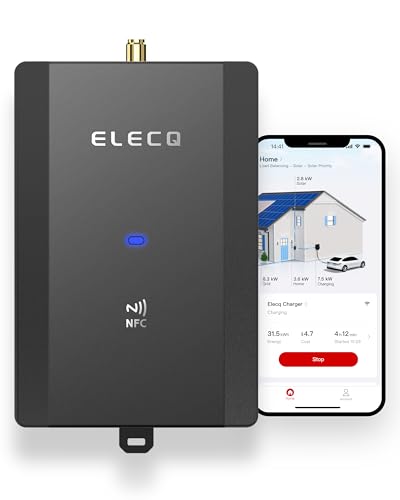
If you’re looking for a smart solution to manage your home EV charging efficiently, the ELECQ Power Monitor is an excellent choice. This device actively monitors your household load to prevent overloads when using multiple appliances along with EV charging. It seamlessly communicates with Elecq EV Chargers, ensuring peak charging speed while keeping safety in check. With solar charging modes, you can harness excess solar energy, reducing your electricity bills. Plus, its Wi-Sun connectivity simplifies installation and enhances communication range. Supported by safety compliance standards, the ELECQ Power Monitor offers peace of mind while maximizing efficiency and savings.
Best For: Homeowners with electric vehicles looking for an efficient and safe solution to manage their EV charging and household energy use.
Pros:
- Active load management prevents electrical overloads, ensuring safe simultaneous appliance use and EV charging.
- Solar charging modes allow users to utilize excess solar energy, leading to reduced electricity bills.
- Wi-Sun connectivity offers reliable communication over long distances, lowering installation costs.
Cons:
- Requires installation by a licensed electrician, which may add to initial setup costs.
- Compatibility is limited to Elecq EV chargers, restricting options for users with other brands.
- The need for CT clamps for monitoring may complicate installation for some users.
Emporia Vue 3 Home Energy Monitor

The Emporia Vue 3 Home Energy Monitor is ideal for homeowners seeking an all-encompassing solution for managing their energy consumption, especially those with electric vehicles (EVs). It’s UL Listed, ensuring safety and preventing hazards like overheating. Installation is straightforward with clamp-on sensors compatible with various electrical systems. You can automate energy management and monitor solar usage through the Emporia Energy App. With real-time data accurate to ±2%, you’ll gain insights into your energy spending. The monitor includes sixteen branch sensors for critical loads, helping you reduce costs and maximize efficiency while charging your EV. Enjoy peace of mind with its one-year warranty!
Best For: Homeowners seeking an all-encompassing solution for managing energy consumption, especially those with electric vehicles (EVs).
Pros:
- UL Listed for safety, preventing hazards like overheating and fire.
- Easy installation with clamp-on sensors compatible with various electrical systems.
- Provides real-time data and insights to help reduce energy costs and maximize efficiency.
Cons:
- Requires 2.4 GHz WiFi and an internet connection for full functionality.
- Additional sensor may be needed for compatibility with certain 3-wire systems.
- Cloud data retention limits may not meet the needs of all users (1-minute data for 7 days, 1-hour data indefinitely).
Poniie PN2500 Wi-Fi Wireless Level 1 EV Charger

Designed for tech-savvy EV owners, the Poniie PN2500 Wi-Fi Wireless Level 1 EV Charger offers an impressive level of monitoring with its built-in high precision current sensor. With a voltage range of 60-240V and a 25Amp capacity, it guarantees reliable performance. You can easily track metrics like watts, kWh, and costs through your iOS or Android device. The detailed data allows you to manage your charging efficiently, forecast usage, and save on electricity bills. Weighing just 7.8 ounces and measuring 5.87 x 3.43 x 2.72 inches, it’s a compact solution for effective energy monitoring.
Best For: Tech-savvy EV owners looking for efficient energy monitoring and cost management solutions.
Pros:
- High precision monitoring with Class 1.0 accuracy and a built-in current sensor for accurate data tracking.
- Wi-Fi connectivity allows for convenient monitoring and management via iOS or Android devices.
- Compact and lightweight design makes it easy to integrate into any home setup without taking up much space.
Cons:
- Limited to Level 1 charging, which may not be suitable for those needing faster charging options.
- Requires Wi-Fi for app control, which could be a limitation for users with unreliable internet connections.
- Best Sellers Rank suggests it may not be as widely recognized or tested compared to other established brands in the market.
Smart Home Energy Monitor with Circuit Sensor and Real-Time Tracking

For homeowners looking to optimize their energy consumption, the Smart Home Energy Monitor (Model: EM16) stands out with its real-time tracking capabilities and extensive data storage. With 16 branch circuit sensors, you can monitor your energy usage precisely, achieving 98% accuracy. The easy installation design supports various systems, making it accessible for most homes. You’ll appreciate the ability to track power consumption via the Refoss app, helping you save 10%-20% on bills. Plus, the 36-month historical data storage allows for in-depth analysis, empowering you to make informed decisions about your energy usage and maximize efficiency.
Best For: Homeowners who want to monitor and optimize their energy consumption for increased savings and efficiency.
Pros:
- Real-time energy tracking allows for immediate insights into electricity usage.
- Supports integration with Home Assistant for centralized control and automation.
- Historical data storage for up to 36 months aids in detailed analysis and decision-making.
Cons:
- Requires a firmware update for seamless integration with Home Assistant.
- No cloud processing or API support may limit remote access and advanced automation options.
- Some users may find the initial setup and installation process complex, depending on their home wiring system.
Upgraded Watt Meter Power Meter Plug Home Energy Monitor

With its multi-function power monitoring capabilities, the upgraded watt meter is perfect for homeowners keen on tracking their energy usage during EV charging. You can monitor power, electricity costs, voltage, and more with its eight display modes. If an appliance exceeds 1800W, the overload protection feature alerts you to prevent hazards. Made from durable, fire-resistant ABS material, it’s compatible with all US standard appliances. The backlit LCD display guarantees readability in any lighting, and you can easily reset data with a simple button press. Plus, it retains power consumption data even when unplugged, making sure you never lose track of your usage.
Best For: Homeowners looking to monitor and manage their energy consumption efficiently, especially during EV charging.
Pros:
- Multi-function monitoring displays various parameters including power usage, costs, and voltage in eight modes.
- Overload protection feature alerts users to potential hazards when appliances exceed 1800W.
- Durable ABS construction ensures longevity, fire resistance, and compatibility with all US standard appliances.
Cons:
- Limited to monitoring devices with a maximum load of 1800W, which may not suit high-power appliances.
- The backlight may turn off after 10 minutes of inactivity, requiring manual reactivation.
- Some users may find the data management features overly simplistic for advanced energy tracking needs.
Govee Smart Plug with Energy Monitoring (1 Pack)

The Govee Smart Plug with Energy Monitoring is an ideal choice for tech-savvy homeowners looking to optimize their energy usage while charging their electric vehicles (EVs). This versatile plug connects via WiFi and Bluetooth, allowing you to control devices remotely through the Govee Home App or with voice commands via Alexa and Google Assistant. With real-time energy monitoring, you can track power, current, and voltage, helping you save money and reduce waste. Plus, its scheduling function lets you automate on/off times, making energy management effortless. Lightweight and easy to install, it’s a smart addition to any home.
Best For: Tech-savvy homeowners who want to optimize energy usage and control appliances remotely.
Pros:
- Real-time energy monitoring helps track power, current, and voltage for better energy management.
- Voice control compatibility with Alexa and Google Assistant enables hands-free operation.
- Scheduling function allows for automatic on/off times, enhancing convenience and energy savings.
Cons:
- Does not support 5G Wi-Fi, which may limit connectivity options for some users.
- Only suitable for high-power appliances up to 15A, restricting use with lower power devices.
- Requires the Govee Home App for full functionality, which may not appeal to all users.
Upgraded Watt Power Meter Plug Home Electrical Usage Monitor
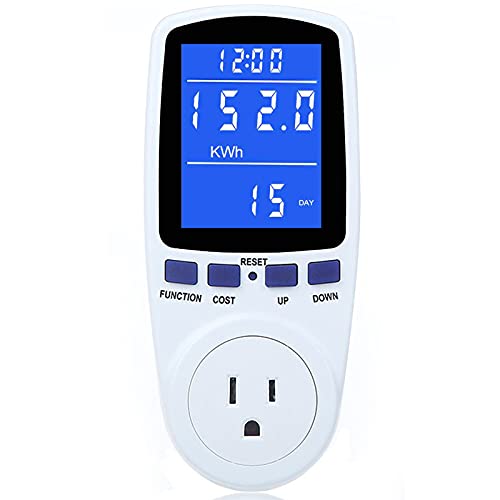
Monitoring your energy consumption is essential, especially for electric vehicle (EV) owners looking to optimize charging costs. The Upgraded Watt Power Meter Plug is a handy tool that tracks your electrical usage, showcasing power, energy, volts, amps, and even costs. With a user-friendly LCD display and 180° viewing angles, you can easily check your data day or night. Plus, its overload protection keeps your appliances safe by disabling functions when limits are exceeded. Retaining data even when unplugged, this reliable device helps you stay informed and maximize your energy efficiency, ensuring you save on your EV charging expenses.
Best For: The Upgraded Watt Power Meter Plug is best for electric vehicle (EV) owners and anyone looking to monitor and optimize their home energy consumption.
Pros:
- User-friendly LCD display with backlight and 180° viewing angles for easy data reading at any time.
- Overload protection ensures safety by disabling functions when appliance power exceeds set limits.
- Retains data even when unplugged, allowing users to view last recorded information upon next use.
Cons:
- Initial overload setting may require adjustment, which could be confusing for some users.
- Limited to 120 volts, which may not accommodate all appliances in higher voltage scenarios.
- Corded electric power source may limit placement options compared to battery-operated alternatives.
SIEMENS Inhab Smart Home Energy Monitor

For homeowners looking to optimize their energy consumption, the SIEMENS Inhab Smart Home Energy Monitor stands out as an essential tool. This compact device (1.1 x 5.71 x 2.76 inches, 4.75 pounds) offers real-time electricity monitoring, tracking both current and historical energy usage. You can measure energy usage at the panel mains and individual circuits, including key appliances like your EV charger. With features like time of use management and personalized notifications, it guarantees you make informed decisions. Certified and compatible with existing panels, this monitor helps you maximize efficiency and save on energy costs.
Best For: Homeowners seeking to optimize their energy consumption and reduce costs through real-time monitoring and management.
Pros:
- Real-time energy monitoring allows users to track current and historical usage for informed decision-making.
- Whole home and circuit level monitoring helps identify energy hogs and optimize appliance usage effectively.
- Personalized notifications provide alerts for energy savings opportunities and unusual behavior, enhancing energy management.
Cons:
- Installation complexity may require professional assistance for those unfamiliar with electrical systems.
- Limited compatibility with older electrical panels may restrict some homeowners from using the device.
- Price point may be higher compared to basic energy monitors, potentially deterring budget-conscious buyers.
EVIQO Level 2 EV Charger (Hardwired, 240V)

If you’re looking for a robust and efficient charging solution for your electric vehicle, the EVIQO Level 2 EV Charger stands out with its impressive 48 Amp output. This hardwired, 240V charging station delivers 11.5 kW, enabling you to gain up to 46 miles of range per hour—nine times faster than portable chargers. With a 25-foot cord and adjustable current from 6A to 48A, it’s versatile for any home setup. Plus, it’s UL, ETL, and Energy Star certified, ensuring safety and reliability. Enjoy smart app integration for easy control and a 3-year warranty for peace of mind.
Best For: Electric vehicle owners looking for a high-performance, home charging solution with fast charging capabilities and smart features.
Pros:
- Fast Charging: Delivers up to 46 miles of range per hour, significantly quicker than standard portable chargers.
- Customizable: Adjustable current settings from 6A to 48A allow for tailored charging based on individual needs.
- Smart Integration: Offers remote control through the EVIQO app, enabling features like scheduling and consumption tracking.
Cons:
- Hardwired Installation: Requires professional installation, which may add to initial setup costs.
- Dedicated Circuit Requirement: Needs a minimum 60 Amp dedicated circuit, which may not be available in all homes.
- Adapter Needed for Tesla: While compatible with Tesla models, an additional adapter is required for use.
Emporia Vue 3 Home Energy Monitor

The Emporia Vue 3 Home Energy Monitor is an ideal choice for tech-savvy homeowners enthusiastic to optimize their electricity usage and save on energy bills. This UL Listed device installs easily in your circuit panel using clamp-on sensors, offering compatibility with various electrical systems. With 24/7 energy management, you can automate power control from anywhere, including solar and net metering support. The Emporia Energy App lets you manage settings for peak demand and time-of-use, while real-time data reporting guarantees you’re always informed. Plus, you can export cloud data anytime, making energy efficiency straightforward and effective.
Best For: Tech-savvy homeowners looking to optimize electricity usage and reduce energy bills.
Pros:
- UL Listed for safety, ensuring compliance with rigorous electrical standards.
- Supports various electrical systems, making it versatile for different homes.
- Provides real-time data and automated energy management through the Emporia Energy App.
Cons:
- Requires installation in the circuit panel, which may not be suitable for all users.
- Additional sensors may be needed for certain electrical systems, increasing overall cost.
- Relies on a 2.4 GHz Wi-Fi connection, which may limit functionality for some users.
Factors to Consider When Choosing an Energy Monitor for EV Charging
When choosing an energy monitor for EV charging, you need to take into account several key factors. Monitoring accuracy levels, connectivity options, and load management features can greatly impact your charging experience. Additionally, think about solar charging compatibility and safety certifications to guarantee you’re making a smart investment.
Monitoring Accuracy Levels
Choosing an energy monitor for EV charging requires careful consideration of monitoring accuracy levels, as even small discrepancies can impact your energy management. Look for devices that offer an accuracy within ±2% for reliable real-time data. Higher accuracy guarantees precise measurements, crucial for effective cost management and energy optimization during charging. Some monitors boast class 1.0 accuracy, allowing you to detect fluctuations as small as 0.001A, which helps identify energy spikes or anomalies that might indicate issues with your EV charger or other appliances. Additionally, consider the calibration and testing standards; devices certified by recognized bodies typically provide more reliable accuracy levels, giving you the confidence to monitor your energy use effectively.
Connectivity Options Available
Selecting the right connectivity option for your energy monitor can greatly enhance your EV charging experience. You’ll find various options like Wi-Fi, Bluetooth, and advanced technologies such as Wi-Sun. Wi-Fi typically requires a 2.4 GHz network, allowing real-time monitoring through mobile apps on your smartphone or tablet. However, Bluetooth offers local monitoring but may have a limited range. On the other hand, Wi-Sun can extend communication ranges up to 200 meters while simplifying installation. Your choice of connectivity not only affects the ease of use but can also impact installation costs; options with better signal penetration may reduce the need for extensive wiring or specialized setups. Make sure to choose the option that best suits your needs.
Load Management Features
After establishing the right connectivity options, considering load management features becomes essential for your energy monitor. Effective load management helps prevent electrical overloads by monitoring your household energy usage while you charge your EV and operate other appliances. These monitors communicate with your EV charger to adjust power levels, ensuring safe charging speeds without straining your home’s energy supply. Advanced features can also help you avoid costly electrical upgrades by managing power distribution efficiently. Real-time data reporting lets you track and optimize your energy consumption, allowing you to adjust appliance usage and minimize costs. With these features, you can enjoy a seamless charging experience while maximizing efficiency and savings.
Solar Charging Compatibility
When considering an energy monitor for EV charging, solar charging compatibility plays an important role in maximizing efficiency and savings. By utilizing excess solar energy, you can greatly reduce your reliance on grid electricity and lower your overall charging costs. Look for energy monitors that offer multiple modes to optimize solar energy use for EV charging. This integration not only automates energy consumption based on solar production but also leads to considerable cost savings. Additionally, monitoring systems that support solar setups provide real-time data on solar generation and usage, empowering you to make informed decisions about your energy consumption. Ensuring compatibility with your solar installation is vital for maximizing the efficiency of your home energy system.
Safety Certifications Required
To guarantee a safe and efficient EV charging experience, it’s important to take into account safety certifications for energy monitors. Look for devices with UL Listing, as this confirms they meet rigorous safety standards, reducing hazards like overheating and short-circuiting. Compliance with standards such as IEEE C57.13 and CAN/CSA-C61869 is also essential for reliability in monitoring electrical systems. Certification from recognized organizations like TÜV Rheinland indicates thorough testing for safety and performance. Additionally, choose monitors with overload protection features that alert you when consumption exceeds safe limits, minimizing fire risks. Confirming adherence to relevant safety regulations helps verify that the energy monitor can handle the electrical loads of EV charging without posing safety risks.
App Functionality and Usability
How can an energy monitor enhance your EV charging experience? Look for monitors with mobile apps that provide real-time data tracking, allowing you to monitor energy consumption and charging status instantly. Detailed reporting features, like daily, weekly, and monthly summaries, help you identify trends and optimize your charging times. Customizable settings in the app let you manage energy during peak demand or integrate solar energy, potentially saving you money. Notifications and alerts for unusual energy usage or when charging completes enhance your convenience and safety. Finally, verify the app’s compatibility with popular mobile platforms like iOS and Android, and check for additional features like voice control or smart home integration for a seamless user experience.
Installation Requirements and Complexity
Choosing the right energy monitor for your EV charging involves understanding the installation requirements and complexity involved. The installation can vary greatly based on your existing electrical system, whether it’s single-phase or three-phase. Many monitors need to be installed in the circuit panel, which often means hiring a licensed electrician to meet safety standards and local codes. However, some models use clamp-on sensors, making installation simpler and more cost-effective. Be sure to check that the energy monitor’s components, like current transformers (CTs), match your electrical panel specifications for accurate readings. Additionally, some units may require extra sensors for three-phase setups, which could complicate installation and increase costs.