When it comes to energy monitoring, finding the right kWh meter with pulse output is essential for accuracy. You want a device that not only tracks your energy consumption but also integrates seamlessly with your systems. With several reliable options available, it’s vital to understand what each offers. Let’s explore some of the top choices and the key factors that could influence your decision.
Universal Electric kWh Meter – EKM Omnimeter Pulse v.4

If you’re looking for a reliable kWh meter that can handle various electrical systems, the Universal Electric kWh Meter – EKM Omnimeter Pulse v.4 is an excellent choice. It operates efficiently with systems up to 480V and can count pulses from up to three pulse-output devices. You’ll appreciate its ability to control two external relays, enhancing your energy management capabilities. This meter returns over 40 pieces of data per read, ensuring you stay informed about your energy usage. Plus, it can function as three separate 120V meters in one, making it a versatile option for your monitoring needs.
Best For: The Universal Electric kWh Meter – EKM Omnimeter Pulse v.4 is best for homeowners and businesses looking for a versatile and reliable energy monitoring solution for various electrical systems.
Pros:
- Can monitor multiple electrical systems with a maximum capacity of up to 480V.
- Offers data collection of over 40 pieces of information per meter read, providing comprehensive energy usage insights.
- Functions as three separate 120V meters in one, maximizing efficiency and versatility.
Cons:
- May require a learning curve for users unfamiliar with energy monitoring systems.
- Initial setup and configuration may be complex for some users.
- Limited to systems that support pulse-output devices, potentially restricting compatibility.
Moncer DDM75S Single Phase LED Din Rail Energy Meter

The Moncer DDM75S Single Phase LED Din Rail Energy Meter is an excellent choice for homeowners and small businesses seeking a reliable power consumption solution, especially with its standard passive pulse output that seamlessly integrates into various Automatic Meter Reading (AMR) systems. You’ll appreciate its compact design, lightweight build, and easy installation on a 35mm DIN rail. With a voltage specification of 220V/230V and a current range of 10-40A, this meter guarantees accurate monitoring. The 5+1 digital display offers precision up to 999,991 kWh, while the double color LED indicators provide clear power status and energy pulse signals.
Best For: Homeowners and small businesses looking for an efficient and accurate power consumption monitoring solution.
Pros:
- Compact and lightweight design makes installation easy and convenient on a standard DIN rail.
- High accuracy with a 5+1 digital display that measures up to 999,991 kWh.
- Standard passive pulse output allows for seamless integration with various Automatic Meter Reading (AMR) systems.
Cons:
- Limited current range of 10-40A may not be suitable for larger commercial applications.
- Single-phase measurement only restricts usage to simpler electrical systems.
- Best Sellers Rank suggests it may not be as widely recognized or trusted compared to other brands.
Single Phase kWh Meter (Pass-Through, 120V to 240V, 100A)

For homeowners or small businesses seeking an efficient solution to monitor energy consumption, the Single Phase kWh Meter (Pass-Through, 120V to 240V, 100A) stands out as an ideal choice. This versatile meter supports both 2 and 3-wire configurations, making it suitable for various setups. It features a clear LCD display for local readings and allows for remote monitoring through pulse output. With a maximum current of 100A and compatibility with wire diameters up to 13.5mm, it’s designed for practicality. By tracking your energy usage accurately, you can make informed decisions to reduce consumption and save on costs.
Best For: Homeowners or small businesses looking for an efficient way to monitor and manage their energy consumption.
Pros:
- Versatile configurations: Supports both 2 and 3-wire setups, making it adaptable to various electrical systems.
- Accurate monitoring: Offers local and remote readings, allowing for detailed tracking of energy usage.
- High current capacity: Maximum current of 100A, suitable for a range of residential and small commercial applications.
Cons:
- Limited to single-phase: Not suitable for three-phase systems, which may limit its use in larger commercial settings.
- Requires installation: May need professional installation for optimal setup and safety.
- Best Sellers Rank: Relatively low ranking in its category, which may indicate lesser-known brand reliability.
Baomain DDS238-4-R DIN Rail Kilowatt Hour Meter

Designed specifically for residential and light commercial use, the Baomain DDS238-4-R DIN Rail Kilowatt Hour Meter offers precise energy consumption measurements with its Class 1.0 accuracy. It operates in 110V/220V split-phase systems, handling currents up to 100A, making it ideal for various applications. The clear LCD display shows readings up to 999,999.9 kWh, while the passive pulse output of 800imp/kWh simplifies monitoring. Built for durability, it features flame-retardant housing and operates in extreme temperatures from -25°C to 70°C. Installation is straightforward on a 35mm DIN rail, ensuring a reliable energy management solution for your needs.
Best For: The Baomain DDS238-4-R is best for residential and light commercial users seeking a reliable and accurate energy measurement solution.
Pros:
- Class 1.0 accuracy ensures precise energy consumption readings.
- Clear LCD display allows easy monitoring of up to 999,999.9 kWh.
- Durable design with flame-retardant housing, suitable for extreme temperatures from -25°C to 70°C.
Cons:
- Requires professional installation for optimal performance.
- Limited to single-phase three-wire configurations, which may not suit all setups.
- Passive pulse output may require additional equipment for advanced monitoring.
RV Digital Electric Meter (240V 2 Wire KWH Meter)

If you’re looking for a reliable solution to monitor electricity consumption in your RV or home, the RV Digital Electric Meter (240V 2 Wire KWH Meter) stands out with its high-definition LCD display and impressive measurement accuracy of 0.5 level. This meter operates at a standard 240V, complying with ANSI C12.1 safety standards. It’s built for durability, featuring triple protection against dust, water, and pressure, which guarantees it thrives in challenging environments. Installation is a breeze, thanks to its C1S structure compatible with 4-jaw meter sockets, making it a practical choice for energy monitoring in various settings.
Best For: Individuals seeking a reliable and accurate electricity monitoring solution for their RVs or homes.
Pros:
- High-definition LCD display provides clear and easy-to-read data.
- Triple protection features ensure durability in challenging conditions.
- Easy installation with C1S structure compatible with 4-jaw meter sockets.
Cons:
- Limited to 240V operation, which may not be suitable for all setups.
- Measurement accuracy may not meet the needs of highly precise applications.
- Potentially higher cost compared to basic electric meters.
Itron Centron SSEM CL200 KWH Meter
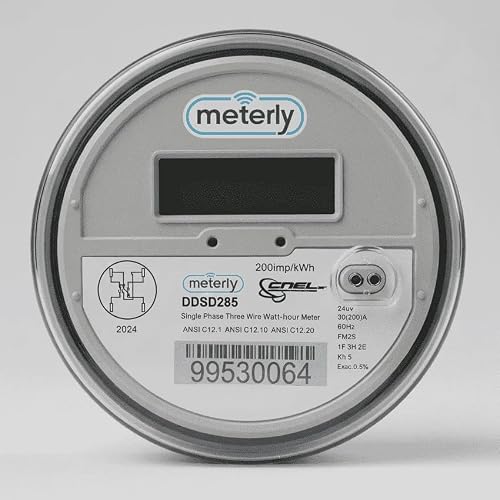
The Itron Centron SSEM CL200 KWH Meter stands out as an ideal solution for residential and RV applications, thanks to its solid-state technology and user-friendly LCD readout. Operating at 240 volts, this 4-terminal meter guarantees accurate monitoring of your energy usage. Its electronic LCD register is protected by a durable polycarbonate cover, making it both reliable and resilient. You’ll appreciate the test LED for quick diagnostics and unattended processing, providing convenience in maintenance. Remanufactured and tested for ANSI C12 compliance, it’s reset to zero for your peace of mind, assuring you get precise readings every time.
Best For: The Itron Centron SSEM CL200 KWH Meter is best for homeowners and RV users seeking reliable and accurate energy monitoring solutions.
Pros:
- Accurate Monitoring: The solid-state technology ensures precise energy usage tracking.
- User-Friendly Display: The LCD readout provides clear and easy-to-read data.
- Durable Design: The polycarbonate cover protects the electronic components, enhancing longevity.
Cons:
- Limited to 240 Volts: Not suitable for applications requiring different voltage levels.
- Remanufactured Product: Some users may prefer brand new meters over remanufactured options.
- 4-Terminal Configuration: May not be compatible with all existing wiring setups.
Digital Electric Meter, 120V 2 Wire KWH Meter

For RV enthusiasts and homeowners seeking reliable energy monitoring, the Digital Electric Meter, 120V 2 Wire KWH Meter stands out with its impressive measurement accuracy of 0.5 level. This meter operates at a standard 120V and supports CL200 kWh monitoring, ensuring you track energy consumption effectively. Its high-definition LCD display makes data reading clear and intuitive. Designed for easy installation with a C1S structure, it also boasts triple protection against dust, water, and pressure, enhancing durability. With a lightweight design and positive customer feedback, you’ll find this meter a dependable choice for your energy management needs.
Best For: RV enthusiasts and homeowners seeking reliable and accurate energy monitoring solutions.
Pros:
- High measurement accuracy of 0.5 level with a tolerance of +/-0.5%, ensuring precise energy tracking.
- High-definition LCD display for clear and intuitive data reading.
- Triple protection against dust, water, and pressure, enhancing durability in various environments.
Cons:
- Limited to a 120V operation, which may not be suitable for all electrical systems.
- Weighs 1.5 pounds, which might be heavier compared to some other portable electric meters.
- Customer ratings indicate a moderate level of popularity, ranked #53,980 in Tools & Home Improvement.
DAE DEM730P Electric kWh Submeter

Engineers and facility managers seeking an efficient way to monitor energy consumption will find the DAE DEM730P Electric kWh Submeter particularly advantageous. This versatile submeter supports RS485 communication and operates on a 1P3W system, handling up to 50A at 120/240V with an internal CT. It seamlessly connects to the DAE CC2030 KIT Gateway, allowing real-time data access on any device. Installation is straightforward—just follow the provided diagrams. Plus, it’s compliant with international standards, ensuring reliability. With features like TOU billing reports and factory calibration, the DAE DEM730P is a robust choice for precise energy monitoring.
Best For: Engineers and facility managers looking for an efficient solution to monitor and report energy consumption in real-time.
Pros:
- Easy installation with clear diagrams and no IT expertise required.
- Real-time data access via PC, cell phone, or tablet enhances monitoring capabilities.
- Compliant with international standards (IEC61036) and certified for reliability.
Cons:
- Indoor use only, limiting deployment options for outdoor applications without additional enclosures.
- Requires additional equipment (CC2030 KIT + WSC500 RF Converters) for wireless connections in existing buildings.
- Limited to 50A, which may not be sufficient for larger energy needs in some facilities.
Universal Single Phase kWh Meter (2 or 3-Wire, 100A)

Offering versatility and ease of installation, the Universal Single Phase kWh Meter (2 or 3-Wire, 100A) is perfect for residential or light commercial applications. With configurations for both 2 and 3-wire setups, it accommodates voltage from 120V to 240V and handles up to 100A. This meter features an LCD display for local readings and a pulse output for remote monitoring. Compact at 4.75 x 4 x 3 inches and weighing just 11.3 ounces, it’s easy to install. Backed by a 2-year warranty and a solid customer rating of 4.4 stars, it’s a reliable choice for energy tracking.
Best For: Homeowners and small business owners looking for a reliable energy monitoring solution that accommodates various wiring configurations.
Pros:
- Versatile configurations: Supports both 2-wire and 3-wire setups for different voltage applications.
- Local and remote monitoring: Features an LCD display for easy local readings and pulse output for remote tracking.
- Compact design: Lightweight and small dimensions make installation convenient in various locations.
Cons:
- Limited to 100A capacity: May not be suitable for larger commercial applications needing higher amperage.
- Not waterproof: May require additional protection if installed outdoors in wet conditions.
- Requires installation knowledge: Users may need some electrical knowledge for proper installation and setup.
Luatoxry Kilowatt Usage Meter (4P DIN Rail)

Ideal for residential or commercial energy monitoring, the Luatoxry Kilowatt Usage Meter (4P DIN Rail) delivers accurate one-way measurement of single-phase energy consumption. With a voltage range of 220V/230V and a current capacity of 10(40)A, it guarantees reliability. The meter features a 5+1 digital display for easy reading and dual-color LED indicators for power and pulse signals. Its compact dimensions (4.33 x 3.15 x 3.15 inches) make installation straightforward on a 35mm DIN rail. The passive pulse output is compatible with various AMR systems, adhering to IEC standards for enhanced functionality.
Best For: The Luatoxry Kilowatt Usage Meter is best for residential and commercial users looking to monitor their single-phase energy consumption accurately.
Pros:
- Easy installation on standard 35mm DIN rail.
- Clear 5+1 digital display and dual-color LED indicators for intuitive monitoring.
- Compatible with various Automatic Meter Reading (AMR) systems and adheres to IEC standards.
Cons:
- Limited to single-phase two-wire active energy measurement.
- Requires separate purchase of DIN rail for installation.
- May not support higher current capacities beyond 40A.
Factors to Consider When Choosing a Kwh Meter With Pulse Output
When you’re choosing a kWh meter with pulse output, several factors can impact your decision. You’ll want to contemplate the measurement accuracy, compatibility with your existing systems, and the wiring options available. Additionally, think about how user-friendly the display is and whether the meter complies with relevant standards.
Measurement Accuracy Importance
While selecting a kWh meter with pulse output, understanding measurement accuracy is essential for effective energy management and billing. A high accuracy class, like Class 1.0 or better, guarantees your meter measures energy consumption with minimal error, usually within ±1% of the actual value. This precision helps you identify energy inefficiencies, allowing you to optimize usage and save on costs while reducing your environmental impact. Look for meters with a measurement tolerance of 0.5% or better for reliable data that meets regulatory compliance and utility reporting standards. Remember, inaccurate measurements can lead to significant financial discrepancies, resulting in overcharging or undercharging that affects both you and your utility provider. Prioritize accuracy to safeguard your interests.
Pulse Output Compatibility
Choosing a kWh meter with pulse output involves several key factors to guarantee seamless integration with your monitoring systems. First, check the pulse output compatibility; it’s essential that the meter can work with your automated meter reading (AMR) systems and external devices that use pulse signals. Different kWh meters have varying pulse output configurations, such as passive or active outputs, affecting how they integrate with your setup. Also, pay attention to the pulse output rate, like 800 imp/kWh, which defines the pulses generated per kilowatt-hour consumed. Verify the meter’s specifications align with your data collection needs for peak performance. This careful selection will lead to accurate energy monitoring and efficient system operation.
Wiring Configuration Options
Integrating a kWh meter with pulse output into your system requires careful consideration of wiring configuration options. You can choose between single-phase setups like the 2-wire configuration, which uses one hot and one neutral wire, ideal for standard residential applications, or the 3-wire configuration, with two hots and one neutral, suited for higher capacity systems. If you’re looking for ease of installation, some kWh meters support pass-through designs that simplify integration into existing electrical systems. Verify the wiring diameter matches your meter’s requirements, accommodating cables from 22 AWG to 1 AWG. By selecting the right wiring configuration, you’ll enhance the accuracy and efficiency of your energy monitoring, especially in mixed-use environments.
Display Features and Usability
When selecting a kWh meter with pulse output, it is crucial to take into account display features and usability to guarantee effective energy monitoring. Look for high-definition LCD displays that provide clear, intuitive readings of your energy consumption. Meters with multiple digit displays, such as 5+1 or 6+1 digits, enable you to track larger amounts of energy consumption accurately. User-friendly designs often include dual color LED indicators to quickly show power status and energy pulse signals. Additionally, consider meters with remote reading capabilities for real-time monitoring, enhancing convenience, especially if you manage multiple units. Finally, opt for compact and lightweight designs to simplify installation in tight spaces, improving your overall user experience.
Compliance With Standards
Ensuring compliance with relevant standards is crucial for selecting a kWh meter with pulse output that delivers accurate and reliable energy measurements. Look for meters that meet IEC 62053-21 and IEC 62053-31 standards, as these guarantee precise energy consumption tracking across various electrical systems. Compliance with DIN EN50022 and DIN 43864 ensures your meter can be easily installed on standard DIN rails, enhancing safety and usability. Additionally, ANSI C12.1 standards are essential for accuracy and performance in both residential and commercial setups. Meters that pass insulation and impulse voltage tests provide added safety and durability in challenging conditions. Finally, adherence to established standards helps integrate kWh meters with Automated Meter Reading (AMR) systems for efficient data monitoring.