When storms hit, power outages can disrupt your daily life. You need a reliable backup power system to keep essential devices running. With various options available, from UPS systems to portable power stations, it’s important to find the right fit for your needs. Each system has unique features that can make all the difference during an outage. Let’s explore the top choices that can help you stay prepared for the next storm.
CyberPower CP1500PFCLCD UPS Battery Backup and Surge Protector

The CyberPower CP1500PFCLCD UPS Battery Backup and Surge Protector is an excellent choice for those who need reliable power during storms or outages, especially if you rely on sensitive equipment like computers and network devices. With a capacity of 1500VA/1000W, it supports both active PFC and conventional power supplies. You’ll appreciate the 12 NEMA outlets—six for battery backup and six for surge protection. Plus, the multifunction color LCD panel provides real-time information on battery status. Its two USB ports let you charge your devices quickly, while Automatic Voltage Regulation extends battery life. Enjoy peace of mind with a 3-year warranty too.
Best For: Those who require reliable battery backup and surge protection for sensitive electronic devices during power outages or fluctuations.
Pros:
- High capacity of 1500VA/1000W supports both active PFC and conventional power supplies.
- Multifunction color LCD panel provides real-time monitoring of battery and power conditions.
- Automatic Voltage Regulation (AVR) helps extend battery life by correcting minor power fluctuations.
Cons:
- The weight and size may make it less portable for some users.
- The price point may be higher compared to non-PFC UPS systems.
- Limited USB charging ports (only two) may not be sufficient for users with multiple devices.
APC Back-UPS Pro 1500VA UPS (BX1500M)

If you’re looking for reliable backup power during storms, the APC Back-UPS Pro 1500VA UPS (BX1500M) is a top choice for home users. With a 900W capacity, this UPS keeps your essential devices running, including computers and Wi-Fi routers, for up to 19 minutes under a 300W load. It features 10 outlets—five with battery backup and five surge-only—along with advanced surge protection and Automatic Voltage Regulation (AVR). Plus, its ENERGY STAR certification guarantees energy efficiency. Weighing 24.3 pounds, it’s easy to manage, and with a 3-year warranty, you can trust your equipment is well-protected.
Best For: Home users seeking reliable backup power for essential devices during outages.
Pros:
- 900W capacity allows for multiple devices to stay powered during an outage.
- Automatic Voltage Regulation (AVR) protects devices from voltage fluctuations without depleting the battery.
- ENERGY STAR certified for high energy efficiency, reducing overall power consumption.
Cons:
- Limited backup runtime of up to 19 minutes at a 300W load may not be sufficient for extended outages.
- Weight of 24.3 pounds might make it less portable compared to lighter models.
- User-replaceable battery must be purchased separately, adding to overall costs.
APC UPS Battery Backup (BE600M1) for Power Outages
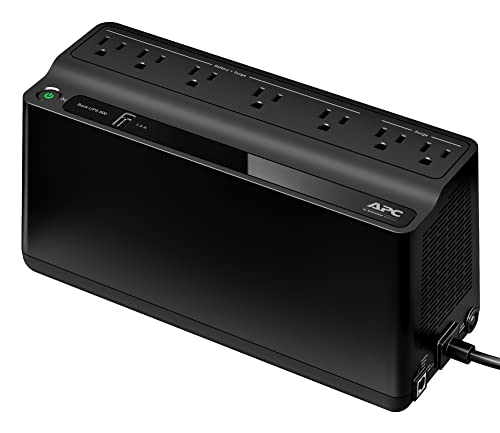
For anyone looking to keep their essential electronics running during unexpected power outages, the APC UPS Battery Backup (BE600M1) is an excellent choice. With a capacity of 600VA and 330W, it can power devices for up to 23 minutes at a 100W load. You’ll appreciate its seven outlets—five with battery backup and two surge-only—as well as a USB port for charging your phone. The unit also includes a solid surge protection rating of 490 Joules and comes with a three-year warranty, offering up to $75,000 in equipment protection. Customers love it, boasting a 4.5-star rating across thousands of reviews.
Best For: Individuals and home office users who require reliable power backup for computers and essential electronics during outages.
Pros:
- Battery Backup: Provides up to 23 minutes of runtime at 100W load, ensuring devices stay powered during outages.
- Multiple Outlets: Features seven outlets, allowing for multiple devices to be connected, including a USB port for charging phones.
- High Customer Satisfaction: Highly rated with a 4.5-star rating from over 28,000 reviews, indicating strong customer approval.
Cons:
- Limited Runtime: May not support longer power outages, as runtime is only 23 minutes at a 100W load.
- Weight: At 7.5 pounds, it may be less portable for some users.
- Additional Battery Purchase: Replacement batteries are sold separately, which may incur additional costs.
BLUETTI Elite 30 V2 Portable Power Station 600W

Designed with versatility in mind, the BLUETTI Elite 30 V2 Portable Power Station 600W is perfect for adventurers and those preparing for unexpected power outages. Weighing just 9.4 lbs and compact, it’s easy to transport. With a robust 288Wh LiFePO4 battery, you get 600W continuous power and 1500W surge capacity, making it ideal for devices like laptops and CPAP machines. Fast charging takes only 70 minutes for a full recharge, while the UPS functionality guarantees your devices stay protected during blackouts. Whether for camping or home emergencies, this power station keeps your essentials running smoothly.
Best For: The BLUETTI Elite 30 V2 Portable Power Station is best for outdoor enthusiasts and individuals seeking reliable backup power for emergencies.
Pros:
- Versatile charging options including solar, AC, and car charging for convenience.
- Fast charging capability allows for a quick recharge in just 70 minutes.
- Lightweight and compact design makes it easy to transport for camping or road trips.
Cons:
- Limited capacity of 288Wh may not support larger devices for extended use.
- Weight of 9.4 lbs might be cumbersome for some users during long hikes.
- Higher price point compared to some other portable power stations on the market.
Anker SOLIX C2000 Gen 2 Portable Power Station
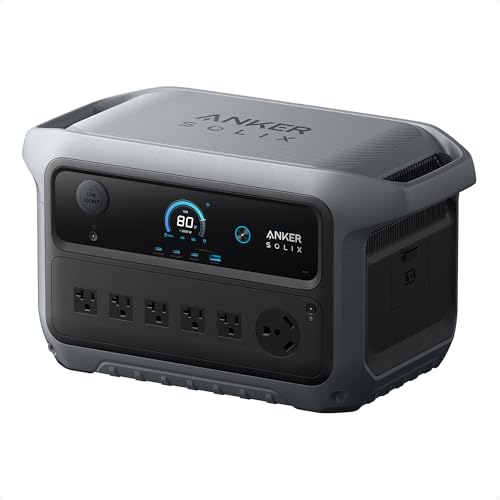
The Anker SOLIX C2000 Gen 2 Portable Power Station stands out as a top choice for anyone seeking reliable power during storms, home outages, or outdoor adventures. With a robust 2,400W rated power and a peak power of 4,000W, you can run multiple appliances, including your fridge for up to 32 hours. It’s lightweight and compact, making it easy to transport. You’ll appreciate its ultra-fast recharging options—fully charged in just 58 minutes via AC or solar. Plus, with a 5-year warranty and a stellar 4.8-star rating from customers, it’s a smart investment for peace of mind.
Best For: Those seeking a reliable and portable power solution for home backups, outdoor camping, or emergency situations.
Pros:
- Ultra-fast recharging: Fully charges in just 58 minutes via AC or solar.
- High capacity and power: Can power multiple appliances, including a fridge for up to 32 hours.
- Lightweight and compact design: Easier to transport than many competitors, making it ideal for outdoor use.
Cons:
- Higher initial cost: May be pricier compared to standard power banks.
- Limited expandable battery options: Requires additional purchases for increased capacity.
- Weight may still be cumbersome for some users: At 41.7 lb, it might be heavy for extended carrying.
Jackery Portable Power Station Explorer 300

When you need reliable power during outages or outdoor adventures, the Jackery Portable Power Station Explorer 300 stands out as an excellent choice. Weighing just 7.1 pounds and compactly sized, it’s easy to transport. With a 292Wh capacity, it can power devices like laptops and coolers. You can recharge it in 2 hours using the wall outlet or solar panel, thanks to its integrated MPPT controller. Plus, it offers multiple outputs, including two AC outlets and USB ports. Enjoy the convenience of maintenance-free, silent operation, backed by a 2-year warranty and a solid customer rating of 4.6 stars.
Best For: The Jackery Portable Power Station Explorer 300 is best for outdoor enthusiasts, campers, and anyone needing backup power during outages.
Pros:
- Lightweight and portable design at just 7.1 pounds, making it easy to carry on trips.
- Fast recharge time of 2 hours to 80% using a wall outlet or solar panel.
- Multiple output options including two AC outlets and various USB ports for versatile device compatibility.
Cons:
- Limited battery capacity of 292Wh may not support larger devices for extended periods.
- Solar panel not included, requiring additional purchase for solar charging.
- Price may be higher compared to basic power banks with less capacity and features.
Anker SOLIX C1000 Gen 2 Portable Power Station

For those seeking reliable power during storms or emergencies, the Anker SOLIX C1000 Gen 2 Portable Power Station stands out with its impressive 2,000W output and 1,024Wh capacity. You can power up to 10 devices simultaneously, ensuring your essentials stay running. Recharging is a breeze—just 49 minutes at 1,600W or 1.8 hours using solar power. Its compact design makes it 14% smaller and 11% lighter than similar models, making transport easy. With 10 years of InfiniPower, you can trust its durability, while the 10 ms UPS backup keeps your crucial equipment safe. Perfect for emergencies or off-grid living!
Best For: Individuals seeking a reliable power source for emergencies, remote work, tiny homes, and off-grid living.
Pros:
- High output capacity: Provides up to 2,000W of power, capable of running multiple devices at once.
- Fast recharging: Can be fully recharged in just 49 minutes, ensuring minimal downtime.
- Compact and lightweight design: 14% smaller and 11% lighter than similar models, making it easy to transport.
Cons:
- Limited solar recharging speed: Takes 1.8 hours to recharge via solar power, which may not be as quick as some users desire.
- Higher initial cost: As a high-capacity power station, it may be more expensive compared to lower-capacity alternatives.
- Dependence on app for full functionality: Some features, like TOU mode management, require the Anker app for optimal use.
EF ECOFLOW Portable Power Station DELTA 2

Looking for a reliable power source during storms or outdoor adventures? The EF ECOFLOW Portable Power Station DELTA 2 has you covered. With a robust 1024Wh capacity and an impressive 1800W output, it powers 90% of your appliances effortlessly. You can charge it from 0-80% in just 50 minutes via AC, or opt for solar panels for off-grid charging. Its expandable capacity allows you to increase it up to 3kWh, while the LFP battery guarantees longevity with over 3000 cycles. Plus, with 15 outlets, you can keep multiple devices running smoothly and quietly. Don’t forget the 5-year warranty for peace of mind!
Best For: Those seeking a versatile and reliable power source for home backup, camping trips, or RV adventures.
Pros:
- 7x faster charging: Reach 80% charge in just 50 minutes.
- Expandable capacity: Start with 1kWh and increase to 3kWh with additional batteries.
- Clean and quiet operation: Operates much more quietly than traditional generators.
Cons:
- Higher initial cost: The upfront investment may be significant for some users.
- Weight: At 1024Wh, it may be cumbersome for some to transport.
- Solar panels sold separately: Additional cost and purchase required for solar charging options.
Jackery Explorer 1000 v2 Portable Power Station

The Jackery Explorer 1000 v2 Portable Power Station is an ideal choice for those seeking reliable backup power during storms or outages. Weighing just 23.8 lbs, its compact design and foldable handle make it easy to transport. With a robust 1070Wh LiFePO4 battery, it offers 1500W AC output, perfect for powering essential devices. Fast charging gets it from 0% to 100% in just one hour. You’ll appreciate the versatility of multiple output ports, including USB-C and pure sine wave AC ports. Plus, the app lets you manage charging modes for maximum efficiency, ensuring you stay powered up when it matters most.
Best For: Those in need of a reliable, portable power source for outdoor adventures, emergency backup, or off-grid living.
Pros:
- Fast Charging: Fully charges from 0% to 100% in just 1 hour, ensuring quick readiness.
- Versatile Connectivity: Multiple output ports including USB-C and pure sine wave AC ports for various devices.
- Long Battery Lifespan: Maintains over 70% capacity after 4,000 charge cycles, providing longevity and reliability.
Cons:
- Weight: At 23.8 lbs, it may be heavier than some users prefer for portable use.
- Compatibility Limitations: Designed solely for use with Jackery solar panels; not compatible with other brands.
- PO Box Delivery Restrictions: Cannot be shipped to PO Box addresses, which may limit purchasing options for some customers.
Jackery HomePower 3000 Portable Power Station

When power outages strike, the Jackery HomePower 3000 Portable Power Station stands out as a reliable solution for homeowners, RV enthusiasts, and anyone in need of emergency backup. With a robust 3072Wh battery capacity, it can power essential appliances like your fridge and WiFi router for up to 15 hours. Its multiple ports—including AC, USB-C, and DC—ensure fast charging options. You can fully recharge it in just 1.7 hours or use solar panels to charge up to 80% in nine hours. Compact and durable, this power station is designed for longevity, making it a smart choice for any situation.
Best For: Homeowners, RV enthusiasts, and anyone needing reliable emergency backup power during outages.
Pros:
- Versatile power options: Multiple ports including AC, USB-C, and DC for charging various devices.
- Fast recharge time: Fully recharges in 1.7 hours, making it convenient for quick use.
- Durable design: Compact and lightweight, with enhanced battery lifespan through ChargeShield 2.0 technology.
Cons:
- Weight: At 59.52 pounds, it may be cumbersome for some users to transport.
- Price point: Considered higher in cost compared to smaller power stations.
- Solar charging time: Takes up to 9 hours to charge 80% using solar panels, which may not be ideal in urgent situations.
Factors to Consider When Choosing Storm Backup Power Systems
When choosing a storm backup power system, you need to take into account several key factors. Think about your power capacity requirements, outlet configurations, and how quickly the system charges. Don’t forget to weigh portability, weight, and important safety features to guarantee you’re fully prepared.
Power Capacity Requirements
Choosing the right power capacity for your storm backup power system is essential to guarantee it meets your needs during an outage. You’ll want to check the system’s capacity, usually measured in VA or watts, to ensure it can support your essential devices. For example, a unit with 1500VA or 1000W can power multiple electronics like computers and routers. Consider your typical energy consumption to gauge runtime—if a device has a 900W capacity, it may back you up for about 19 minutes at a 300W load. Look for systems featuring Automatic Voltage Regulation to enhance battery life. Finally, pay attention to battery types; lithium batteries often outlast traditional options, providing reliable power when you need it most.
Outlet Configuration Options
Selecting the right outlet configuration for your storm backup power system is crucial for effectively powering your essential devices during an outage. You should consider the number of battery backup outlets versus surge-only outlets to guarantee you can connect critical devices. Look for systems with various outlet types, including standard AC, USB ports for charging, and specialized ports for coaxial and Ethernet connections, enhancing versatility. Evaluate the total number of outlets; systems typically range from 7 to 12 outlets, allowing you to connect multiple devices at once. Also, check for right-angle plugs or extra-long power cords for better placement and reduced strain in tight spaces. Finally, configurations with Automatic Voltage Regulation (AVR) help protect sensitive electronics.
Charging Time Efficiency
Charging time efficiency plays an essential role in the effectiveness of storm backup power systems, especially during emergencies. Faster charging capabilities can greatly reduce downtime, ensuring you’re ready when the power goes out. Look for systems that can charge from 0 to 80% in as little as 50 minutes, as this enhances their immediate usability. Efficient recharging methods, like solar or AC input, offer flexibility in how quickly you can power the system back up after use. Additionally, technologies that optimize charging speed can extend the battery’s lifespan, maintaining its capacity over multiple cycles. Systems with various charging options, including car and solar, improve overall convenience, ensuring you have power available in diverse situations.
Portability and Weight
When it comes to storm backup power systems, portability and weight are key factors that can greatly impact your preparedness during an emergency. You’ll find many models weigh between 7 to 59 pounds, making them easier to transport to different locations when needed. Some compact options measure just 9.1 x 5.2 x 7.8 inches, so they fit snugly in tight spaces or storage areas. Lightweight designs enhance your mobility, allowing for quick setup and relocation during outages. Additionally, many portable power stations provide multiple charging methods—like AC, solar, or car—boosting their usability in various situations. Look for features like foldable handles, as they can improve handling and make transportation much more convenient for you.
Safety Features Included
Choosing a storm backup power system isn’t just about capacity and portability; safety features play an essential role in protecting both you and your devices. Look for systems equipped with Automatic Voltage Regulation (AVR), which corrects low voltage and surges without draining the battery. Surge protection features are vital, too, as they guard against power spikes that could damage your devices. A built-in Battery Management System (BMS) is another smart choice, monitoring battery performance for safe charging and discharging. Additionally, consider units with UPS functionality, providing an instant switch to battery power during outages, safeguarding critical devices from data loss. Finally, opt for systems that offer extensive warranties to guarantee peace of mind against potential power-related damages.
Warranty and Support Services
While evaluating storm backup power systems, warranty and support services are essential factors that shouldn’t be overlooked. Look for warranties covering 3 to 5 years, as this indicates the manufacturer’s confidence in durability. Pay attention to equipment protection guarantees, especially for damages from power surges; some warranties cover up to $75,000. Verify the warranty includes battery replacement provisions, since batteries may need maintenance or replacement over time. Additionally, check for manufacturer support services like accessible customer service, clear return policies, and thorough manuals. A product that offers a satisfaction guarantee or a 30-day return policy allows you to test its effectiveness in real-world conditions, confirming you make a wise choice for your storm backup needs.