If you’re looking to enhance your home’s energy efficiency, smart load management systems can be a game changer. These innovative devices not only help reduce utility costs but also offer real-time insights into your energy consumption. From energy monitors to smart plugs, there are various options tailored for your needs. Let’s explore the top choices that can transform how you manage energy in your home.
SIEMENS Inhab Smart Home Energy Monitor

If you’re looking to take control of your home energy usage, the SIEMENS Inhab Smart Home Energy Monitor is an excellent choice. This device monitors real-time electricity consumption, offering insights into both whole home and individual circuit levels. With the capability to track up to 16 branch circuits, you’ll receive accurate data without guesswork. Its advanced features, like Time of Use Management and personalized energy notifications, empower you to optimize your energy savings. Installation is straightforward, as it’s compatible with most electrical panels. With a solid customer rating and robust support, this monitor is a smart investment for any energy-conscious homeowner.
Best For: Energy-conscious homeowners who want to monitor and optimize their electricity usage in real-time.
Pros:
- Provides accurate real-time monitoring of whole home and individual circuit energy consumption.
- Advanced features like Time of Use Management and personalized notifications help maximize energy savings.
- Easy installation with compatibility for most electrical panels.
Cons:
- Requires a WiFi connection for full functionality and reporting.
- May be complex for users unfamiliar with electrical systems or installation procedures.
- Limited to monitoring up to 16 branch circuits, which may not suffice for larger homes.
Generac 7006 100 Amp Load Manager for Power Management

The Generac 7006 100 Amp Load Manager is an ideal solution for homeowners seeking efficient power management during outages. This system utilizes wire-free technology, allowing self-aware modules to prioritize essential loads, ensuring your important appliances stay powered. You can customize load priorities, making it easy to control what matters most. The enhanced lock-out feature blocks non-essential loads, optimizing generator recovery during frequency drops. With convenient external LED indicators, you can quickly monitor load status without accessing the electrical box. Weighing only 5.8 pounds, it’s a lightweight yet powerful addition to your home energy management strategy.
Best For: Homeowners looking for an efficient power management solution during outages with customizable load prioritization.
Pros:
- Efficient wire-free technology allows self-aware modules to manage loads autonomously.
- Customizable load prioritization enables users to keep essential appliances powered during outages.
- Convenient external LED indicators provide quick load status monitoring without needing to open the electrical box.
Cons:
- Limited to 100 Amp capacity, which may not support larger power needs.
- Manual power source might not be as convenient as fully automated systems.
- Customer feedback indicates a moderate rating of 4.2 out of 5, suggesting room for improvement.
SIEMENS Inhab Load Manager, Intelligent Energy Management System

For homeowners looking to optimize their energy consumption without the hassle of costly upgrades, the SIEMENS Inhab Load Manager stands out as an ideal solution. This intelligent and programmable energy management system maximizes your electrical panel’s capacity and efficiently manages power consumption using real-time data. It prevents overloads by disconnecting power to specific loads when necessary, ensuring safety. Compatible with any brand load center and residential EV chargers, it’s perfect for both existing homes and new builds. With a UL certification and a compact design, it’s a reliable choice for enhancing energy efficiency in your home.
Best For: Homeowners seeking to optimize energy consumption and prevent electrical overloads without the need for expensive upgrades.
Pros:
- Maximizes existing electrical panel capacity, eliminating the need for costly upgrades.
- Compatible with any brand load center and residential EV chargers, making it versatile for various setups.
- Real-time data management helps ensure safety by preventing system overloads.
Cons:
- Requires professional installation, which may add to initial costs.
- Limited to managing 2-pole loads up to 60A, which may not suffice for high-demand appliances.
- Average customer reviews (3.6 out of 5 stars) suggest mixed user satisfaction.
Kasa Smart Plug, Matter Compatible (2-Pack)

Kasa Smart Plug, Matter Compatible (2-Pack) is perfect for anyone looking to streamline their smart home experience without the hassle of managing multiple apps. These compact plugs are UL certified and support 15A/1800W, making them versatile for various devices. You can seamlessly control them using the Kasa App or voice commands through Siri, Alexa, or Google Assistant. Their Matter compatibility guarantees they work with platforms like Apple Home and Samsung SmartThings, enhancing security and energy efficiency. Plus, energy monitoring helps you track usage patterns, allowing you to optimize your consumption effortlessly. Enjoy a smarter, more efficient home today!
Best For: Individuals seeking to enhance their smart home experience with a reliable and compatible solution for controlling devices.
Pros:
- Matter Compatibility: Works seamlessly with multiple smart home platforms, simplifying control across devices.
- Energy Monitoring: Helps track energy usage to optimize consumption patterns effectively.
- Voice Control: Offers convenient control through popular voice assistants like Siri, Alexa, and Google Assistant.
Cons:
- Limited Plug Type: Only supports Type B plugs, which may not fit all sockets in certain regions.
- Weight Limitations: Max capacity of 15A/1800W may not be sufficient for high-power devices.
- Dependent on Wi-Fi: Requires a stable Wi-Fi connection for optimal performance and functionality.
Emporia Vue 3 Home Energy Monitor

Looking to take control of your home’s energy consumption? The Emporia Vue 3 Home Energy Monitor is your go-to solution. This UL Listed device installs easily in your circuit panel and supports various electrical systems. With 24/7 monitoring, you can track energy usage, prevent costly repairs, and automate management through the Emporia Energy App. Its real-time data accuracy of ±2% helps you stay informed, while the sixteen branch sensors allow for precise monitoring of critical loads like your air conditioner or water heater. Optimize your energy efficiency and save costs with this smart, reliable monitor!
Best For: Homeowners looking to monitor and optimize their energy consumption in real-time.
Pros:
- Provides 24/7 energy management and monitoring to help conserve energy and reduce costs.
- Easy installation with clamp-on sensors compatible with various electrical systems.
- Real-time data accuracy of ±2% ensures you have reliable information on your energy usage.
Cons:
- Requires a 2.4 GHz WiFi connection for monitoring, which may limit usability in some areas.
- Additional 200A sensor sold separately for certain system configurations.
- Data retention for minute-level monitoring is only for 7 days, which may not be sufficient for long-term analysis.
Kasa Smart Plug Power Strip HS300 with 6 Smart Outlets and 3 USB Ports
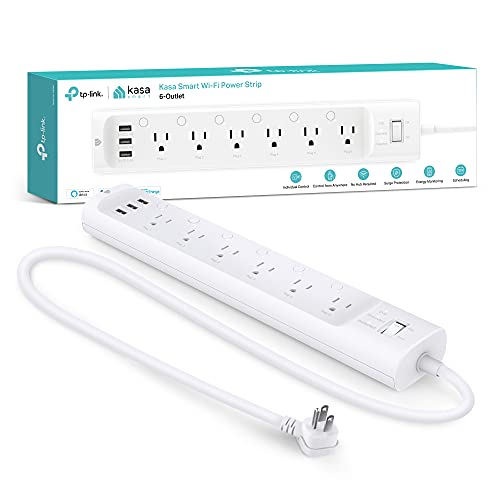
The Kasa Smart Plug Power Strip HS300 stands out as an excellent choice for tech-savvy homeowners seeking efficient control over their devices. With six smart outlets, you can manage each device independently, while three USB ports provide convenient charging at 5V/2.4A each. This surge protector not only shields your electronics but also offers energy monitoring through the Kasa Smart app. You can control everything remotely or via voice commands using Alexa or Google Assistant, making it compatible with most smart home setups. Lightweight and ETL certified, it’s a practical addition for enhancing your home’s energy efficiency.
Best For: Tech-savvy homeowners looking for efficient control and energy monitoring of their devices.
Pros:
- Six individually controlled smart outlets allow for flexible management of multiple devices.
- Three USB ports provide convenient charging options for mobile devices.
- Remote control and voice command compatibility with Alexa and Google Assistant enhances usability.
Cons:
- May be overkill for users with fewer devices, as it offers more outlets than necessary.
- Requires Wi-Fi for full functionality, which may limit use in areas with poor connectivity.
- Some users may experience setup challenges if they are not familiar with smart home technology.
Smart Home Energy Monitor with 16 Circuit Level Sensors

If you want to effectively manage your home’s energy consumption and save on electricity bills, the Smart Home Energy Monitor with 16 Circuit Level Sensors is an excellent choice. This device tracks real-time power usage and costs, making it perfect for rental homes and shared spaces. Installation is a breeze with clamp-on sensors that support various electrical configurations. Connected via 2.4GHz WiFi, it lets you monitor your energy usage anytime, anywhere, with impressive accuracy. Plus, it helps you customize electricity rates and track usage by room, ultimately lowering your bills while promoting environmental conservation. Enjoy smart savings today!
Best For: Individuals living in rental homes or shared apartments looking to monitor and manage their energy consumption effectively.
Pros:
- Real-time tracking of power usage and costs, allowing for immediate adjustments to save money.
- Easy installation process with clamp-on sensors that accommodate various electrical configurations.
- Customizable electricity rate templates help optimize spending during peak and off-peak hours.
Cons:
- Requires WiFi connection for remote monitoring, which may not be available in all locations.
- Limited to specific electrical configurations, which may not suit all home setups.
- Initial cost may be a barrier for some users compared to traditional energy monitors.
Tapo Smart Wi-Fi Power Strip with Energy Monitoring and Surge Protection

For anyone wanting to take control of their energy usage, the Tapo Smart Wi-Fi Power Strip with Energy Monitoring and Surge Protection stands out as a top choice. This power strip features six smart AC outlets you can control individually, plus three always-on USB ports. With energy monitoring, you can track consumption and schedule devices to turn off when not in use. Enjoy peace of mind with surge protection and overcharge prevention. It’s compatible with Alexa, Google Assistant, Siri, and Bixby, and you can manage it remotely via the Tapo app. Plus, it’s ETL certified for safety.
Best For: Those looking to enhance their energy management with smart technology and surge protection in their home or office.
Pros:
- Individually controlled smart AC outlets allow for customizable energy usage.
- Energy monitoring feature helps track consumption and encourages energy-saving habits.
- Compatible with major voice assistants for convenient control and automation.
Cons:
- Requires a stable Wi-Fi connection for optimal functionality.
- Limited to a 3-foot power cord, which may restrict placement options.
- Some users may find the mobile app interface less intuitive than expected.
Kasa Smart Plug Power Strip KP303 with Surge Protection and USB Ports
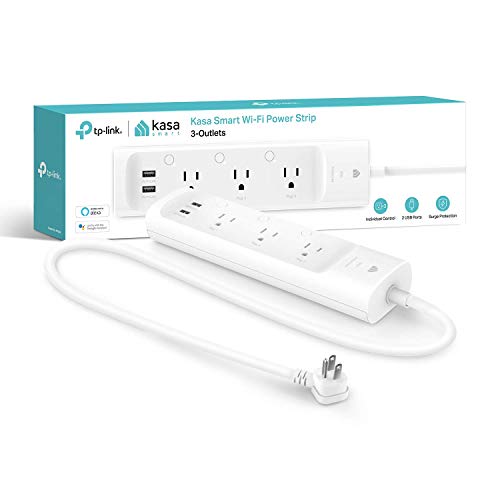
Looking to streamline your home’s power management? The Kasa Smart Plug Power Strip KP303 is your ideal solution. With three individually controlled smart outlets and two always-on USB ports, you can manage up to five devices effortlessly. It works seamlessly with Alexa and Google Assistant, allowing for hands-free operation. Use the Kasa Smart app to control your devices remotely and set schedules for added efficiency. Plus, the ETL-certified surge protection guarantees your electronics stay safe from power surges. Weighing just 1.1 pounds, it’s a compact yet powerful addition to your smart home setup.
Best For: Those looking to enhance their home automation with smart control over multiple devices while ensuring surge protection for their electronics.
Pros:
- Individually Controlled Outlets: Manage up to three devices independently, providing flexibility in usage.
- Voice Control Compatibility: Works seamlessly with Alexa and Google Assistant for hands-free operation.
- Surge Protection: ETL-certified design protects sensitive electronics from power surges.
Cons:
- Limited USB Ports: Only two USB ports may not be sufficient for users with multiple devices needing charging.
- Weight: At 1.1 pounds, it may be slightly heavier than some other power strips, which could affect portability.
- Requires Wi-Fi: Dependence on a Wi-Fi connection may limit functionality in areas with poor internet service.
TP-Link Tapo Smart Plug Wi-Fi Mini (4-Pack)

The TP-Link Tapo Smart Plug Wi-Fi Mini (4-Pack) stands out as an ideal choice for anyone seeking to streamline their home energy management. With a maximum power capacity of 1800W and 15A current, you can safely power multiple devices. Its energy monitoring feature helps you track usage, while programmable scheduling lets you automate operations during off-peak hours. You’ll appreciate the voice control compatibility with Alexa and Google Assistant, making operation hands-free. Plus, the compact design guarantees it won’t block adjacent outlets. With a solid 4.5-star rating, this smart plug is a reliable addition for optimizing your energy efficiency.
Best For: Individuals looking to enhance their home automation and energy efficiency with smart technology.
Pros:
- Energy Monitoring: Allows users to track and optimize energy usage with detailed statistics.
- Voice Control Compatibility: Easily integrates with Alexa, Google Assistant, and Samsung SmartThings for convenient hands-free operation.
- Compact Design: Fits into outlets without obstructing adjacent sockets, maximizing usability.
Cons:
- Wi-Fi Compatibility: Only supports 2.4G Wi-Fi, which may limit integration with some home networks.
- Maximum Load Limit: The 1800W power capacity may not be sufficient for high-power appliances.
- Limited Customer Support: Manufacturer warranty requires request, which may not be as accessible as other brands.
Factors to Consider When Choosing Smart Load Management Systems for Home
When choosing a smart load management system for your home, you need to contemplate several key factors. Think about how well the system monitors energy use, prioritizes loads, and integrates with your existing smart home setup. Safety and compliance are also essential, so make sure the system meets all necessary standards.
Energy Monitoring Capabilities
Choosing a smart load management system with robust energy monitoring capabilities is essential for optimizing your home’s energy efficiency. Look for systems that provide real-time energy usage monitoring, so you can gain instant insights into your consumption patterns and identify savings opportunities. It’s vital that the system can track energy usage at both the whole home and individual circuit levels, allowing you to analyze specific appliances or areas. Historical data tracking helps you spot trends over time, aiding informed energy management decisions. Additionally, choose solutions with customizable alerts for abnormal energy usage, which can signal potential appliance issues. Finally, opt for systems that integrate energy management features, like time-of-use and peak demand management, to optimize usage during off-peak hours for cost savings.
Load Prioritization Features
Energy monitoring capabilities lay the groundwork for effective energy management, but load prioritization features take it a step further by ensuring that your most critical devices stay powered during outages or peak demand. With these features, you can choose which appliances receive power, keeping essential items operational while shedding non-essential loads. Many advanced systems offer customizable settings, allowing you to define priorities based on your needs and usage patterns. Effective load prioritization can prevent system overloads, especially during peak times or when using generator power. Additionally, some systems use real-time data to automatically adjust load priorities, simplifying energy management. Enhanced lock-out features can block specific loads, ensuring critical devices remain powered without any manual effort on your part.
Installation and Compatibility
Before diving into a smart load management system, it’s crucial to guarantee compatibility with your home’s existing electrical setup. Check that the system works with your electrical panel and supports both new and existing installations. Look for options that accommodate various circuit types, including single-phase and three-phase configurations, to maximize versatility. Systems featuring clamp-on sensors can simplify installation, sparing you from extensive rewiring. Also, choose products that connect easily via standard Wi-Fi bands, like 2.4 GHz, for effortless remote monitoring and control. Finally, verify the load management system meets your home appliances’ amperage and voltage requirements to prevent overload and ensure safe operation. This careful consideration will set you up for successful energy management.
Smart Home Integration
As you explore smart load management systems, it’s important to evaluate how well they integrate with your existing smart home setup. Look for systems that are compatible with various smart home platforms, guaranteeing seamless communication with devices like voice assistants and automation hubs. Real-time energy monitoring is essential; it allows you to track consumption patterns and optimize your energy management effectively. Customizable scheduling features enable you to automate device operations during off-peak hours, enhancing efficiency and potentially lowering your utility bills. Additionally, systems that offer energy monitoring provide insights into your usage and costs, helping you make informed decisions. Finally, choose systems that support interoperability through protocols like Matter to make sure your devices work together smoothly.
Safety and Compliance
When selecting a smart load management system for your home, prioritizing safety and compliance is essential to guarantee both functionality and peace of mind. First, confirm the system is UL certified or meets other relevant safety standards, affirming it’s undergone rigorous testing. Look for systems with surge protection features to shield your appliances from voltage spikes that can cause damage. It’s also vital to verify compliance with local electrical codes, as these can affect installation and operation. A clear warranty and return policy indicate the manufacturer’s confidence in their product. Finally, check for cybersecurity measures to protect against unauthorized access and vulnerabilities in connected devices. Keeping these factors in mind will guarantee a safer and more reliable smart home experience.