When it comes to off-grid living, having a reliable generator system is essential for maintaining your independence. You want options that not only provide ample power but also guarantee portability and efficiency. With several top contenders available, the choice can be overwhelming. Understanding what features matter most can make a significant difference. Let’s explore the best generator systems that can meet your off-grid energy needs and enhance your sustainable lifestyle.
Anker SOLIX C1000 Gen 2 Portable Power Station

The Anker SOLIX C1000 Gen 2 Portable Power Station is perfect for off-grid enthusiasts who need a reliable power source without compromising on portability. With a powerful 2,000W output and a capacity of 1,024Wh, it can power up to 10 devices simultaneously. You’ll appreciate the ultra-fast recharging options, taking just 49 minutes at 1,600W. Weighing 14% less and sized 11% smaller than similar models, it’s easy to carry along on your adventures. Plus, with 10 years of InfiniPower, you can count on it for long-term use. This unit’s compact design makes it ideal for emergencies or remote work scenarios.
Best For: Off-grid enthusiasts and remote workers seeking a compact, high-capacity power solution.
Pros:
- Ultra-fast recharging: Achieve a full recharge in just 49 minutes at 1,600W.
- Impressive capacity: Power up to 10 devices with a robust 1,024Wh capacity.
- Long-lasting durability: Retains at least 80% capacity after 4,000 cycles, ensuring reliability over time.
Cons:
- Limited solar recharging speed: Takes 1.8 hours to recharge via solar at 600W.
- Higher initial investment: May be pricier compared to traditional power sources.
- Requires Anker app for advanced features: Some functionalities are app-dependent, which may not appeal to all users.
Anker SOLIX C2000 Gen 2 Portable Power Station
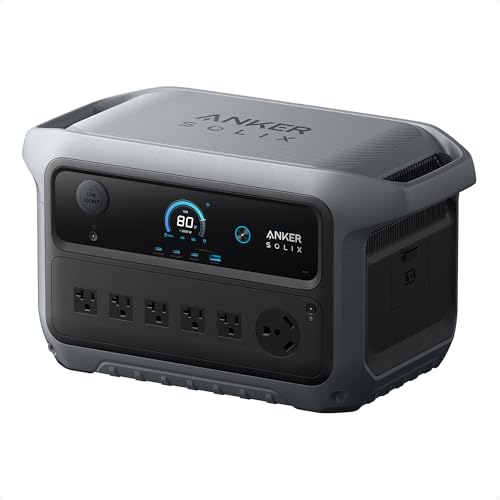
For anyone seeking a reliable power solution for off-grid living, the Anker SOLIX C2000 Gen 2 Portable Power Station stands out with its impressive peak power of 4,000W. With a 2,400W rated power and a robust 2048Wh LiFePO4 battery, it’s perfect for home backup or camping trips. You’ll appreciate its ultra-efficient design, consuming just 9W on standby, and its ability to run a dual-door fridge for up to 32 hours. Plus, you can recharge it in just 58 minutes via AC or solar. Lightweight and compact, it’s easy to take anywhere, ensuring you’re always powered up.
Best For: Those looking for a reliable and efficient power source for home backup, camping, or off-grid living.
Pros:
- Ultra-efficient standby power consumption of only 9W.
- Fast recharging capability, reaching 100% in just 58 minutes via AC or solar.
- Lightweight and compact design, making it easy to transport.
Cons:
- Higher upfront cost compared to traditional generators.
- Limited to 2,400W rated power, which may not support all high-demand appliances simultaneously.
- Additional battery required for maximum expandable capacity, increasing overall cost.
Jackery Explorer 1000 v2 Portable Power Station

Looking for a reliable power source for your off-grid home? The Jackery Explorer 1000 v2 Portable Power Station might be exactly what you need. With a robust 1070Wh LiFePO4 battery, it delivers 1500W of continuous power, perfect for your devices. Weighing just 23.8 lbs, its compact design includes a foldable handle for easy transport. Fast charging gets you from 0% to 100% in just one hour, while ChargeShield 2.0 guarantees safety. Plus, with multiple output ports and compatibility with Jackery solar panels, you’ll stay powered up and ready for anything. Enjoy over 10 years of battery longevity and dependable performance.
Best For: Those seeking a portable and reliable power solution for off-grid living or outdoor activities.
Pros:
- Fast charging capability, reaching 100% in just one hour.
- Long battery lifespan of over 10 years with excellent capacity retention.
- Multiple output ports, including USB-C and AC ports, for versatile device compatibility.
Cons:
- Weighs 23.8 lbs, which may be heavy for some users to carry.
- Only compatible with Jackery solar panels for solar charging, limiting options.
- Cannot be delivered to PO Box addresses, requiring a physical address for orders.
Jackery HomePower 3000 Portable Power Station

Whether you’re preparing for power outages, starting on an RV adventure, or needing reliable backup for essential appliances, the Jackery HomePower 3000 Portable Power Station stands out as an excellent solution. With a robust output of 3600W and a 3072Wh battery, it powers your fridge, lights, and more for up to 15 hours. Its charging options are versatile, featuring multiple ports and fast dual 100W PD ports. Plus, it recharges fully in just 1.7 hours. Compact and durable, it’s built for reliability with advanced ChargeShield technology, making it a top choice for off-grid living.
Best For: Those looking for a reliable portable power solution for home backup, RV adventures, or emergency situations.
Pros:
- Compact and lightweight design, making it easy to transport.
- Multiple fast charging options with dual 100W PD ports for quick device recharging.
- Long-lasting battery with 4000 cycles and 70% capacity retention for durability.
Cons:
- Heavier compared to some other portable power stations on the market.
- Solar charging efficiency may vary depending on weather conditions.
- Higher initial investment compared to smaller power banks.
Jackery HomePower 3600 Plus Portable Power Station

The Jackery HomePower 3600 Plus Portable Power Station stands out as an ideal choice for those seeking reliable energy independence in off-grid living. With a powerful 3600W AC output and a massive 3584Wh capacity, it can easily sustain a three-person household for over two weeks. You’ll appreciate its safety features, including high-temp resistant battery cells and a lifespan of 10 years. Charging is efficient, with options for solar and hybrid methods. Plus, its lightweight, portable design with wheels makes transport a breeze. Backed by a 5-year warranty, it’s a dependable solution for your energy needs.
Best For: Individuals or families seeking a reliable, portable power solution for off-grid living or emergency situations.
Pros:
- High capacity: Powers a 3-person household for over 2 weeks with 3584Wh capacity.
- Safety features: High-temp resistant battery cells ensure safety and longevity with a 10-year lifespan.
- Portable design: Lightweight and easy to transport with wheels and a telescopic handle.
Cons:
- Price point: Higher initial investment compared to smaller, less powerful power stations.
- Weight: While lighter than comparable models, it may still be heavy for some users to carry without assistance.
- Limited solar charging speed: Takes longer to charge via solar panels (4 hours) compared to hybrid or AC methods.
BLUETTI Elite 200 V2 Portable Power Station

For those seeking reliable power solutions for off-grid living, the BLUETTI Elite 200 V2 Portable Power Station stands out with its impressive 2600W continuous AC output. You can effortlessly run high-demand appliances like refrigerators and coffee makers, powering up to nine devices simultaneously. Its advanced energy management system minimizes standby power consumption, extending runtime. With a robust LiFePO4 battery, you’ll enjoy over 6,000 cycles and a lifespan of 17 years. Plus, you have three smart charging modes for flexibility and fast recharging. The package includes everything you need to get started, making it a smart choice for your off-grid lifestyle.
Best For: Those who need a reliable and efficient power source for high-demand appliances while off-grid or during emergencies.
Pros:
- High power output: Capable of delivering 2600W continuous AC power, ideal for running multiple high-demand devices.
- Long lifespan: Equipped with a durable LiFePO4 battery that lasts over 17 years and offers more than 6,000 charging cycles.
- Flexible charging options: Three smart charging modes provide quick recharge times and low noise operation.
Cons:
- Weight: May be heavier compared to smaller portable power stations, making it less convenient for frequent transport.
- Price: Higher initial investment compared to less powerful models.
- Limited solar charging capacity: Full solar recharge requires 1000W panels, which may not be accessible to all users.
Jackery Explorer 2000 v2 Portable Power Station

Designed for those seeking reliable, portable power, the Jackery Explorer 2000 v2 Portable Power Station stands out with its impressive 2042Wh capacity. Weighing just 39.5 lbs, it’s 41% lighter and 34% smaller than traditional 2kWh stations, making it easy to transport. With three AC ports delivering 2200W and a fast-charging USB-C PD 100W port, you’ll power up devices quickly. You can charge it fully in just 102 minutes or utilize solar panels for eco-friendly energy. Plus, its durable battery lasts up to ten years, ensuring you stay powered during outages or adventures with minimal noise.
Best For: Those seeking a lightweight and portable power solution for outdoor adventures, home backup, or small business needs.
Pros:
- Lightweight and Compact: 41% lighter and 34% smaller than conventional 2kWh power stations, making it easy to transport.
- Fast Charging Options: Fully charges in just 102 minutes or utilizes solar panels for eco-friendly energy in a few hours.
- Durable Battery Life: LiFePo4 battery offers up to 10 years of performance, providing reliable power during outages.
Cons:
- Weight Still Considerable: At 39.5 lbs, it may be heavy for some users compared to smaller power options.
- Limited Solar Panel Integration: Requires a specific straight plug (DC8020) for solar panel connection.
- Higher Initial Cost: The investment may be significant for those on a tight budget seeking portable power solutions.
Jackery Solar Generator 300 with 40W Solar Panel

Looking for a reliable power solution for your off-grid adventures? The Jackery Solar Generator 300 with a 40W solar panel is your go-to option. Weighing just 7.5 lbs, it’s 17% lighter than its competitors, making it easy to carry on hikes or camping trips. With a 292Wh capacity, you can power up to six devices simultaneously, including laptops and CPAP machines. Its premium LiFePO4 battery offers over 4,000 charge cycles, ensuring long-lasting use. Plus, you’ll enjoy a 3+2 year warranty and a 30-day return guarantee, giving you peace of mind for all your outdoor escapades.
Best For: Outdoor enthusiasts, campers, and travelers seeking a lightweight and reliable power source for multiple devices during off-grid adventures.
Pros:
- Lightweight: Weighs only 7.5 lbs, making it easy to transport.
- Versatile Power Output: Can support up to six devices simultaneously with various output options.
- Long Battery Life: Premium LiFePO4 battery allows for over 4,000 charge cycles and a service life of more than 11 years.
Cons:
- Limited Solar Charging Speed: Takes longer to reach full capacity with the included 40W solar panel compared to higher wattage options.
- Power Output Limitations: Rated at 300W, which may not be sufficient for high-power devices.
- No Built-in Charging for Higher Wattage Devices: May require additional accessories for devices that exceed the power output limit.
BLUETTI Portable Power Station AC180

The BLUETTI Portable Power Station AC180 is an ideal solution for off-grid enthusiasts and homeowners seeking reliable backup power. With a robust 1152Wh LiFePO4 battery and an impressive 1800W output, it can keep multiple devices running seamlessly. You’ll appreciate the rapid 1-hour full charge via AC input and the option for solar charging in under 3.3 hours. Its versatility shines whether you’re camping or needing emergency home power, activating in just 20 ms. Plus, the included accessories and a 5-year warranty offer peace of mind. With friendly customer support, you’re never alone on your off-grid adventures.
Best For: The BLUETTI Portable Power Station AC180 is best for outdoor enthusiasts, off-grid campers, and homeowners in need of reliable backup power.
Pros:
- Rapid charging: Fully charges in just 1 hour using AC input.
- Versatile power: Offers 1800W output with a peak capacity of 2700W for powering multiple devices.
- Solar capability: Can be charged using solar energy in under 3.3 hours, making it ideal for sustainable power solutions.
Cons:
- Weight: May be heavier compared to smaller power stations, making it less portable for some users.
- Limited solar input: Requires additional solar panels for optimal solar charging performance.
- Price point: Higher initial investment compared to basic portable power solutions.
Westinghouse 12500 Watt Dual Fuel Portable Generator

For homeowners seeking a reliable energy solution away from the grid, the Westinghouse 12500 Watt Dual Fuel Portable Generator stands out with its impressive 12,500 peak watts. It delivers 9,500 running watts on gasoline and 8,500 on propane, ensuring versatility. With a robust 457cc engine, you’ll enjoy up to 12 hours of run time from a 6.6-gallon tank. The generator features remote start for convenience and multiple outlet configurations with safety covers. Plus, it’s EPA compliant and comes with a 3-year limited warranty, giving you peace of mind as you power your off-grid lifestyle confidently.
Best For: Homeowners and outdoor enthusiasts looking for a reliable and versatile portable power solution during outages or off-grid adventures.
Pros:
- Versatile dual fuel options with high peak wattage for various applications.
- Remote start feature allows for convenient operation from a distance.
- EPA compliant with a 3-year limited warranty for added peace of mind.
Cons:
- Relatively heavy, making it less portable for some users.
- Requires minimal assembly, which may be a hurdle for those unfamiliar with generators.
- Initial fuel odor from factory testing may be off-putting to some users.
Factors to Consider When Choosing Generator Systems for Off-Grid Homes
When choosing a generator system for your off-grid home, you should consider several key factors. Think about your power capacity requirements, the availability of recharging options, and how portable the unit needs to be. Don’t forget to check its durability, lifespan, and safety features to guarantee it meets your needs effectively.
Power Capacity Requirements
Choosing the right power capacity for your off-grid home requires careful assessment of your energy needs. Start by calculating the total wattage of devices you’ll use simultaneously, which typically ranges from 1,000W to over 4,000W for common appliances. Don’t forget to factor in surge wattage—some appliances, like refrigerators and air conditioners, can demand up to three times their running wattage at startup. Next, evaluate your battery capacity in watt-hours (Wh); larger capacities, between 1,024Wh to 3,072Wh, allow for longer usage without recharging. Consider how long you need power; generators with larger fuel tanks or battery capacities can run for over 15 hours. Finally, think about expandable options to boost your total energy storage and output.
Recharging Options Availability
Considering the diverse energy needs of off-grid homes, the availability of various recharging options can greatly enhance your overall energy independence. Look for generator systems that provide multiple recharging methods, such as AC, solar, and car charging. Fast recharging capabilities are essential; systems that can reach full capacity in under two hours are ideal for minimizing downtime. Pay attention to solar input capacity; higher wattage options lead to quicker recharging and greater energy independence. Additionally, evaluate standby power consumption efficiency, as lower usage helps prolong battery life and reduces waste. Finally, opt for systems with smart features accessible via a mobile app, allowing you to manage power usage and recharging effectively in off-grid environments.
Portability and Weight Considerations
Portability and weight play essential roles in selecting a generator system for your off-grid home, especially if you value flexibility in your energy solutions. Lighter models are easier to transport and maneuver, making them ideal for various outdoor settings. Compact designs enhance portability, allowing for simple storage and transport, which is vital if you plan to move your generator frequently. Look for devices with built-in handles or wheels, as these features simplify carrying during camping trips or emergencies. Additionally, consider the weight-to-power ratio; some lighter generators deliver sufficient wattage without the burden of excessive weight. Smaller, lightweight generators often cater to specific needs, like powering small appliances, making them perfect for off-grid living where space and mobility are key.
Durability and Lifespan
When selecting a generator system for your off-grid home, durability and lifespan are key factors that can greatly impact your long-term satisfaction. Consider the battery technology; for example, LiFePO4 batteries can last over 10 years and retain about 70% capacity after 4,000 charge cycles. Look for systems with multi-layer protection to withstand extreme temperatures and various environmental conditions. High-quality generators often come with warranties of 5 years or more, reflecting their durability. Regular maintenance and proper usage are essential, as neglect can lead to premature failure. Additionally, evaluate the construction materials; robust casings provide better protection against physical damage and weather exposure, ensuring your generator lasts as long as possible.
Safety Features and Compliance
Safety features and compliance are essential elements to evaluate in generator systems for off-grid homes, as they guarantee both user protection and environmental responsibility. Look for automatic shutoff mechanisms that prevent overheating and low oil shutdowns, ensuring safe engine operation. Compliance with EPA regulations is vital to minimize emissions and protect the environment. Generators equipped with GFCI outlets safeguard against electrical shocks, especially in wet conditions, while rubber covers on outlets prevent accidental contact and shield against moisture and debris. Regular compliance testing and certification from regulatory bodies assure you that the generator meets industry safety standards and performance reliability. Prioritizing these features helps you choose a generator that enhances safety and maintains environmental integrity.