If you’re looking to enhance your home’s energy efficiency, exploring the best electrical load management systems is essential. These systems not only help prevent overloads but also let you control energy consumption more effectively. With options like the SIEMENS Inhab Load Manager and Generac 7006, there’s a solution to fit various needs. Curious about which systems stand out and how they can transform your energy usage? Let’s take a closer look at the top choices available.
SIEMENS Inhab Load Manager, Intelligent Energy Management System

If you’re looking to optimize your home’s energy consumption without the hassle of costly electrical upgrades, the SIEMENS Inhab Load Manager is an excellent choice. This intelligent and programmable energy management system maximizes your existing electrical panel capacity and prevents system overloads by intelligently disconnecting power to designated loads as needed. It’s compatible with various brands and efficiently manages 2-pole loads up to 60A, making it perfect for EV chargers and appliances. With easy installation and a durable outdoor enclosure, you can trust the SIEMENS Inhab Load Manager to enhance your energy efficiency and reliability in any setting.
Best For: Homeowners looking to optimize energy consumption without the need for costly electrical upgrades.
Pros:
- Maximizes existing electrical panel capacity, preventing expensive upgrades.
- Compatible with various brands of EV chargers and appliances, enhancing versatility.
- Easy installation by a qualified person ensures quick setup and functionality.
Cons:
- Requires a qualified professional for installation, which may add to initial costs.
- Limited customer reviews with an average rating of 3.6 out of 5 stars may indicate mixed experiences.
- Outdoor use may be limited by the IP rating of IP00, which offers no protection against dust or moisture.
SIEMENS Inhab Smart Home Energy Monitor

The SIEMENS Inhab Smart Home Energy Monitor is an excellent choice for homeowners looking to take control of their energy consumption. With real-time monitoring capabilities, it tracks your electricity usage at both the main and circuit levels, providing insights into up to 16 branch circuits. This device offers advanced features like Time of Use Management and personalized notifications for energy-saving opportunities. Installation is straightforward, fitting into existing electrical panels with all necessary components included. Rated 4.5 stars by users, it’s a reliable option for optimizing your energy usage and ensuring you’re always informed about your home’s energy performance.
Best For: Homeowners who want to monitor and optimize their energy consumption in real-time.
Pros:
- Comprehensive Monitoring: Tracks both whole home and individual circuit energy usage for detailed insights.
- Advanced Management Features: Offers tools for Time of Use Management and personalized alerts for energy savings.
- Easy Installation: Compatible with existing electrical panels and includes all necessary components for setup.
Cons:
- Limited to Electrical Panels: Requires installation in an electrical panel, which may not be suitable for all homes.
- Learning Curve: Users may need time to fully understand and utilize all advanced features effectively.
- Potential Compatibility Issues: May not work seamlessly with all smart devices or existing energy management systems.
Generac 7006 100 Amp Load Manager for Power Management

For homeowners who want reliable power management during outages, the Generac 7006 100 Amp Load Manager stands out with its efficient wire-free technology. This system allows you to prioritize essential loads, ensuring critical items stay powered when it matters most. With support for up to eight modules, you can customize your setup to fit your needs. Its enhanced lock-out feature prevents non-essential loads from using generator power, while the external LED status indicators let you monitor performance easily. Weighing just 5.8 pounds, it’s a compact solution for optimizing your energy usage during unexpected power interruptions.
Best For: Homeowners seeking efficient and customizable power management solutions during outages.
Pros:
- Efficient wire-free technology allows for reliable load prioritization and management.
- Customizable load prioritization enables users to keep essential items powered during outages.
- External LED status indicators provide easy monitoring of load performance without opening the electrical box.
Cons:
- Limited to 100 Amps, which may not be sufficient for larger homes or extensive power needs.
- Requires manual setup, which may be complex for some users without electrical knowledge.
- 30-day return policy may not provide enough time for thorough testing of the system’s effectiveness.
Emporia Vue 3 Home Energy Monitor

Looking to take control of your energy usage? The Emporia Vue 3 Home Energy Monitor lets you monitor your electricity in real-time, ensuring safety with its UL certification. Installation is a breeze, fitting into most circuit panels with clamp-on sensors. You’ll gain insights into your energy management 24/7, helping you save costs and prevent costly repairs. With the Emporia Energy App, you can automate management based on your energy needs. Real-time data is accessible through your smartphone or web app, and the system includes sixteen sensors for precise monitoring of critical appliances. Optimize your energy usage effectively!
Best For: Homeowners looking to monitor and optimize their electricity usage in real-time for cost savings and energy efficiency.
Pros:
- UL Listed for safety and reliability, meeting rigorous standards in the U.S. and Canada.
- Easy installation in most homes with clamp-on sensors and compatibility with various electrical systems.
- Real-time data monitoring via smartphone or web app, allowing for effective energy management.
Cons:
- Requires a stable 2.4 GHz WiFi connection for full functionality.
- Additional sensors for larger systems may incur extra costs (e.g., 200A sensor sold separately).
- May require some technical knowledge for installation in complex electrical setups.
Smart Home Energy Monitor with 16 Circuit Level Sensors

With 16 circuit level sensors, the Smart Home Energy Monitor is perfect for those living in rental homes or shared apartments. This compact device tracks your real-time power usage and electricity costs, helping you save money. It’s easy to install with clamp-on sensors and connects via 2.4GHz WiFi for remote monitoring. You can monitor energy usage for individual rooms or common areas, and it provides accurate data with 1% precision. Customize electricity rate templates to manage costs effectively. Plus, the 1-year warranty guarantees peace of mind while you work towards lowering your electric bills and promoting sustainability.
Best For: Those living in rental homes or shared apartments looking to monitor and manage their energy consumption effectively.
Pros:
- Real-time tracking of energy usage and electricity costs with 1% accuracy.
- Easy installation with clamp-on sensors and remote monitoring via 2.4GHz WiFi.
- Customizable electricity rate templates help manage costs during peak and off-peak hours.
Cons:
- Limited to single-phase and specific three-phase systems (no Delta support).
- Only a 1-year warranty, which may be shorter than some users prefer.
- Requires WiFi connectivity for remote monitoring, which may not be available in all locations.
Tapo Smart Wi-Fi Power Strip with Energy Monitoring and Surge Protection

The Tapo Smart Wi-Fi Power Strip stands out for its energy monitoring feature, making it an excellent choice for tech-savvy individuals who want to keep tabs on their energy consumption. With six individually controlled AC outlets and three always-on USB ports, you can easily manage devices. You’ll appreciate the surge protection, which safeguards your electronics, and the overcharge prevention that automatically shuts off outlets when devices are fully charged. Plus, it’s compatible with Alexa, Google Assistant, Siri, and Bixby, allowing for seamless voice control. The Tapo app also lets you schedule devices, optimizing your energy usage effortlessly.
Best For: Tech-savvy individuals who want to monitor and manage their energy consumption while ensuring the safety of their electronic devices.
Pros:
- Energy Monitoring: Allows users to track energy consumption for each outlet, promoting efficiency.
- Surge Protection: Safeguards connected devices from power surges, enhancing safety.
- Voice Control Compatibility: Works seamlessly with popular voice assistants like Alexa, Google Assistant, Siri, and Bixby.
Cons:
- Limited to 2.4 GHz Wi-Fi: Only connects via 2.4 GHz, potentially limiting performance in areas with strong 5 GHz networks.
- Weight: At 1.4 pounds, it may be considered heavier compared to other lightweight options on the market.
- Power Cord Length: The 3-foot power cord may not be sufficient for all setups, requiring additional extension solutions in some cases.
Generac Energy Manager

For homeowners seeking efficient control over their HVAC systems and backup generators, the Generac Energy Manager stands out as an ideal solution. It streamlines installation, saving you 15-30 minutes compared to traditional systems and can manage two HVAC systems independently. This device guarantees compliance with NEC home backup system sizing, which helps lower your overall acquisition costs. Plus, with a leading 5-year limited warranty, you gain peace of mind knowing you’re covered. Overall, the Generac Energy Manager combines quick installation, cost efficiency, and robust warranty support, enhancing your energy management experience at home.
Best For: Homeowners looking for efficient management of their HVAC systems and backup generators with a focus on quick installation and cost savings.
Pros:
- Quick installation saves 15-30 minutes compared to traditional systems.
- Cost-efficient by complying with NEC home backup system sizing, reducing overall acquisition costs.
- Robust warranty with a leading 5-year limited coverage for added peace of mind.
Cons:
- May require professional installation for optimal performance.
- Limited to managing two HVAC systems, which may not suit larger homes.
- Initial investment may still be significant for some homeowners despite long-term savings.
BLACKBOX 240V EV Charger (60-100A Service)
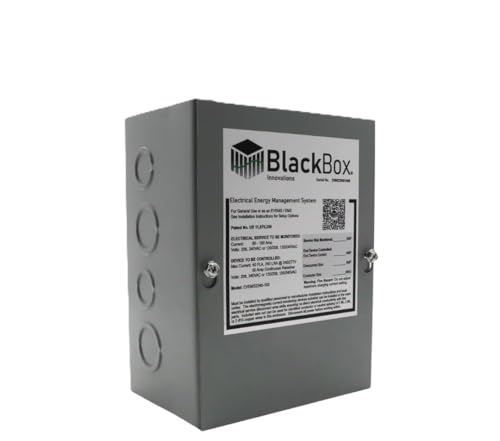
Looking for a smart solution to manage your electric vehicle charging needs? The BLACKBOX 240V EV Charger (60-100A Service) is designed to optimize your charging experience. It supports various charge rates, ensuring compatibility with any EV charger or 240V plug. With quick installation and no need for costly electrical upgrades, you can enjoy uninterrupted overnight charging without range anxiety. Safety is a priority, featuring fail-safe approvals for peace of mind. Plus, its compact design fits seamlessly into your space. Take advantage of this efficient system and simplify your EV charging today!
Best For: The BLACKBOX 240V EV Charger is best for electric vehicle owners seeking an efficient and cost-effective charging solution without the hassle of electrical panel upgrades.
Pros:
- Supports a wide range of charging rates, ensuring compatibility with various electric vehicles.
- Quick and easy installation typically takes only 30-45 minutes without needing to disconnect power.
- Cost-effective solution that eliminates the need for expensive electrical panel upgrades.
Cons:
- Installation requires a qualified electrician, which may add to initial costs.
- Limited to 240V systems, which may not be suitable for all charging environments.
- Some users may prefer a more advanced smart charging system with app integration.
EcoFlow PowerInsight Home Energy Manager for DELTA Pro 3 and Ultra

If you’re seeking an efficient way to manage your home energy consumption, the EcoFlow PowerInsight Home Energy Manager stands out with its intuitive 10-inch touchscreen. Compatible with the DELTA Pro 3 and Ultra, this device gives you real-time energy data, allowing you to track usage by day, month, or year. You can control appliances using Smart Plugs and adjust settings with ease. With modes like Eco and Storm Warning, it adapts to your needs. Weighing just 1.4 pounds and measuring 9.6 by 6.2 inches, it fits seamlessly into your home while optimizing energy management effortlessly.
Best For: Homeowners looking for a user-friendly solution to monitor and manage their energy consumption efficiently.
Pros:
- Intuitive touchscreen: The 10-inch display provides clear visuals and easy control.
- Real-time data tracking: Users can monitor energy usage by day, month, or year for better management.
- Appliance control: Ability to manage devices through Smart Plugs enhances convenience and efficiency.
Cons:
- Limited compatibility: Only works with DELTA Pro 3 and Ultra models, restricting usage for other devices.
- Weight and size: While compact, some users may still find it cumbersome to place in tight spaces.
- Warranty information: Warranty details are only available upon inquiry, which may be inconvenient for potential buyers.
BLUETTI Home Integration Kit for AC500 & B300S Portable Power Station
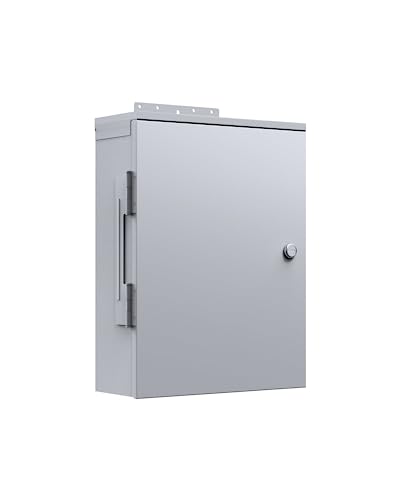
The BLUETTI Home Integration Kit is ideal for homeowners seeking a reliable backup power solution during outages, as it seamlessly connects the AC500 & B300S power stations to your main electrical panel. With a maximum capacity of 6144Wh, 120V, and 5000W, this kit guarantees you have 24/7 UPS home backup. It’s designed for compatibility with standard 100-120V US plug systems. To install, you’ll need a licensed electrician to verify safety and compliance. The kit includes a 50A outlet box, sub-panel, and necessary cables, making it an all-encompassing choice for optimizing your home’s energy usage.
Best For: Homeowners looking for a reliable and efficient backup power solution during outages.
Pros:
- 24/7 UPS home backup ensures continuous power availability during blackouts.
- High capacity of 6144Wh and 5000W supports multiple essential devices.
- Complete kit includes necessary components for easy integration with home systems.
Cons:
- Professional installation by a licensed electrician is mandatory, adding to overall costs.
- Limited compatibility with only 100-120V US plug versions may restrict use in other regions.
- Higher initial investment compared to other backup power solutions may not be suitable for all budgets.
Factors to Consider When Choosing Electrical Load Management Systems
When choosing an electrical load management system, you need to take into account several key factors. Think about system compatibility, installation complexity, and costs, as well as features like real-time monitoring and energy management capabilities. Don’t forget to check for safety certifications and standards to verify your system meets regulatory requirements.
System Compatibility Requirements
Choosing the right electrical load management system involves several key compatibility requirements that greatly impact your home’s energy efficiency. First, make certain the system is compatible with your existing electrical panel and can handle your specific amperage and voltage needs. Look for systems that easily integrate with various brands of EV chargers and accommodate different circuit types, like single-phase and three-phase. It’s vital that the system connects to a branch breaker without disrupting load calculations, allowing for accurate energy management. Also, verify that it supports real-time monitoring and reporting features to keep track of energy consumption. Finally, consider systems that offer flexible installation options for both new and existing homes to make the process seamless.
Installation Complexity and Costs
Selecting an electrical load management system isn’t just about compatibility; installation complexity and costs play a significant role in your decision. Depending on the system you choose, installation can vary greatly. Some systems require professional installation to meet electrical codes, while others might be easier for DIY enthusiasts. Don’t forget that costs can include labor and any necessary upgrades to your electrical panel. Many systems claim to cut installation time, saving you 15-30 minutes compared to traditional options, which can lower overall labor costs. If you plan to install it yourself, consider potential extra expenses for tools or specialized equipment, as some systems need specific knowledge for a seamless integration. Plan accordingly to avoid surprises!
Real-Time Monitoring Features
Understanding real-time monitoring features is essential for maximizing the benefits of your electrical load management system. These features let you track electricity consumption continuously, so you can make timely adjustments and save energy. With systems that provide up-to-the-minute data, you gain insights into your energy usage patterns. Look for systems that support whole home and circuit-level monitoring, as they measure energy usage at both the main panel and individual circuits. Real-time reporting often includes personalized notifications about energy-saving opportunities, alerting you to any abnormal energy behaviors. Accurate data collection, typically within ±2% accuracy, helps you avoid costly repairs and fosters efficient energy management strategies, ensuring you make the most out of your energy consumption.
Energy Management Capabilities
Real-time monitoring features set the foundation for effective energy management capabilities in electrical load management systems. You’ll want a system that provides real-time insights into your electricity usage, helping you make informed decisions that optimize consumption. Look for features like Time of Use Management and Peak Demand Management to help lower costs during peak hours. Advanced load shedding capabilities can automatically disconnect non-essential loads when demand is high, boosting your efficiency. Additionally, personalized energy notifications will alert you to abnormal usage patterns, giving you opportunities to save. Extensive monitoring options that cover both whole-home and circuit-level tracking allow for targeted energy management, ensuring you maximize efficiency throughout your space.
Safety Certifications and Standards
When choosing electrical load management systems, it’s important to evaluate safety certifications and standards that guarantee reliable and secure operation. Look for UL certification, which verifies the system meets rigorous safety benchmarks, reducing risks like overheating and short-circuiting. Products with IP ratings indicate their resistance to dust and moisture, significant for systems in diverse environments. Compliance with the National Electrical Code (NEC) is critical for safe installation and operation in residential settings. Additionally, make sure the system features overcurrent protection to prevent equipment damage and enhance user safety. Finally, consider cybersecurity measures adhering to secure design principles to protect against vulnerabilities in smart home systems. Prioritizing these certifications will help you make a safer choice.
Warranty and Support Options
Choosing the right warranty and support options can make a significant difference in your experience with electrical load management systems. Pay attention to the length and terms of the warranty, as they can vary widely; some systems offer standard limited warranties while others provide extended coverage. It’s essential to look for dedicated customer support channels to assist you with installation and troubleshooting. Evaluate the return policy, as a 30-day return guarantee can be helpful if the product doesn’t meet your needs. Additionally, check user reviews to gauge customer satisfaction regarding warranty fulfillment and support services. Finally, verify the warranty covers critical components for performance and safety, giving you peace of mind with your investment.
User-Friendly Control Interfaces
A user-friendly control interface makes all the difference in effectively managing your electrical load management system. Look for touch control methods that allow for intuitive operation and easy access to settings. Real-time data reporting lets you monitor energy consumption, so you can make adjustments instantly. A customizable alert system can notify you of abnormal energy usage or savings opportunities, keeping you engaged. Compatibility with mobile apps or smart home systems provides remote control options, enhancing convenience. Finally, clear visual displays and logical menu navigation guarantee you can easily understand and interact with the system. Prioritizing these features will help you optimize your energy usage effectively and efficiently.