As you explore the growing need for sustainable energy solutions, integrated home power systems present a viable option for eco-conscious consumers. These systems merge renewable energy sources with cutting-edge battery technology, offering reliable off-grid power. With top brands like BLUETTI and Anker leading the way, you’ll find features that enhance energy independence. But which systems stand out in today’s market? Let’s take a closer look at the top contenders.
Anker SOLIX C1000 Gen 2 Portable Power Station

If you need a reliable power source for emergencies or remote work, the Anker SOLIX C1000 Gen 2 Portable Power Station is your go-to solution. With a powerful 2,000W output and a capacity of 1,024Wh, it can power up to 10 devices simultaneously. You’ll appreciate its ultra-fast recharging in just 49 minutes, or opt for solar recharging if you’re off the grid. Compact and 14% smaller than similar models, it’s easy to carry. Plus, with a battery lifespan of up to 10 years and 4,000 cycles, you can trust it for long-term use. Don’t miss out on this versatile powerhouse!
Best For: Individuals seeking a reliable and portable power source for emergencies, remote work, or off-grid living.
Pros:
- Ultra-fast recharging in just 49 minutes at 1,600W.
- Compact and lightweight design, making it easy to transport and store.
- Long battery lifespan of up to 10 years with 4,000 cycles retaining 80% capacity.
Cons:
- Limited solar recharging speed compared to direct AC charging.
- May be overkill for users with minimal power needs.
- Requires an app for managing power in TOU mode, which may not appeal to all users.
Jackery Explorer 1000 v2 Portable Power Station

The Jackery Explorer 1000 v2 Portable Power Station is an ideal choice for outdoor enthusiasts and emergency preparedness advocates alike. With a robust 1070Wh LiFePO4 battery, you’ll enjoy reliable power wherever you go. It offers a 1500W AC output, perfect for charging multiple devices simultaneously. Weighing just 23.8 lbs, its compact design and foldable handle make it easy to transport. Fast charging from 0% to 100% in just one hour guarantees you’re never left powerless. Plus, with a lifespan of over 10 years and versatile connectivity options, it’s a smart investment for your power needs. Don’t miss out!
Best For: Outdoor enthusiasts and emergency preparedness advocates seeking a reliable and portable power source.
Pros:
- Fast charging capability allows for a full charge in just one hour.
- Long lifespan of over 10 years with excellent capacity retention after 4,000 cycles.
- Versatile connectivity options, including multiple output ports for simultaneous device charging.
Cons:
- Weighs 23.8 lbs, which may be considered heavy for some users.
- Not compatible with solar panels other than Jackery’s own models.
- Requires an actual address for delivery; cannot be shipped to PO Box addresses.
SIEMENS Inhab Smart Home Energy Monitor

For homeowners looking to gain precise control over their energy consumption, the SIEMENS Inhab Smart Home Energy Monitor stands out with its advanced real-time monitoring capabilities. This system tracks your entire home’s energy usage, from main circuits to individual branch circuits, giving you a detailed view of where your power goes. With features like Time of Use Management and personalized notifications, you can optimize your energy savings effectively. Installation is straightforward, as it fits most electrical panels. Weighing only 4.8 pounds, it’s compact yet powerful, ensuring you remain informed about your energy habits 24/7.
Best For: Homeowners seeking to monitor and optimize their energy consumption with advanced real-time tracking and management features.
Pros:
- Provides real-time monitoring of energy usage at both whole home and circuit levels.
- Features advanced energy management functions like Time of Use Management and personalized notifications for energy savings.
- Easy installation compatible with most electrical panels, making it accessible for various homes.
Cons:
- Initial setup may require some electrical knowledge for those unfamiliar with home wiring.
- Limited to monitoring only up to 16 branch circuits, which may not cover larger homes with more circuits.
- The device may require a stable WiFi connection for optimal functionality and notification features.
BLUETTI Elite 300 Solar Generator with 2×200W Solar Panels
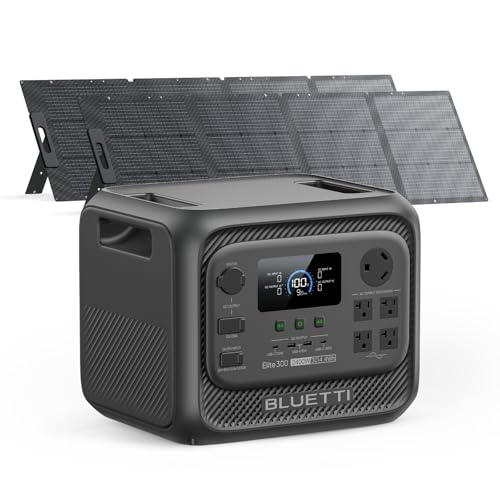
Looking for a compact and powerful solution for your off-grid adventures or home backup needs? The BLUETTI Elite 300 Solar Generator, paired with two 200W solar panels, is perfect for you. With a 3014.4Wh LFP battery, it delivers 2400W of continuous power and can handle a 4800W surge, ensuring your essential appliances stay operational. Recharge from 0-100% in just 7-15 hours using solar energy. It seamlessly connects to RV appliances and supports devices like refrigerators and CPAP machines. This efficient, lightweight solution is recognized as the world’s smallest 3kWh portable power station, making it an excellent choice for any situation.
Best For: Those seeking a compact, efficient power solution for off-grid adventures, RV trips, or reliable home backup during outages.
Pros:
- Compact and lightweight design, recognized as the world’s smallest 3kWh portable power station.
- Quick solar recharging capability from 0-100% in just 7-15 hours.
- Versatile compatibility with RV appliances and essential home devices, including refrigerators and CPAP machines.
Cons:
- Initial cost may be higher compared to traditional power sources.
- Solar panels are shipped separately, potentially increasing setup time.
- Limited output for high-demand appliances beyond the 2400W continuous power rating.
DJI Power 1000 V2 Portable Power Station

Ideal for outdoor enthusiasts and DIY aficionados, the DJI Power 1000 V2 Portable Power Station offers a robust capacity of 1024Wh and a stable output of 2600W, making it capable of powering 99% of your appliances. Weighing just 14.14 kg, it’s easy to transport for camping or RV trips. You’ll appreciate the four outlets and dual 140W USB-C ports for charging multiple devices. With a quick recharge time of 37 minutes to 80%, you won’t be left in the dark. Plus, its intelligent safety features guarantee quiet, reliable operation wherever you go. Enjoy a sustainable power solution with the DJI Power 1000 V2.
Best For: Outdoor enthusiasts and DIY aficionados looking for a reliable and portable power solution.
Pros:
- Quick recharge time of 37 minutes to 80% capacity ensures you stay powered up.
- Capable of powering 99% of appliances with its 2600W stable output.
- Lightweight design at 14.14 kg makes it easy to transport for camping or RV trips.
Cons:
- Requires separate adapters for MPPT and car charging modules.
- At 14.14 kg, it may still be considered heavy for some users compared to smaller options.
- Best Sellers Rank suggests it may not be as popular as other portable power stations in the market.
EF ECOFLOW DELTA 3 Ultra Plus Portable Power Station
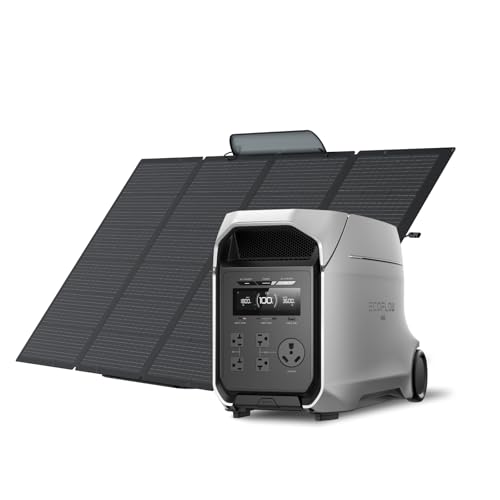
The EF ECOFLOW DELTA 3 Ultra Plus Portable Power Station stands out as an excellent choice for those seeking reliable power solutions, whether at home during outages or on outdoor adventures. With a 3072Wh LiFePO4 battery and 3600W output, it’s perfect for heavy-duty appliances. You can expand its capacity up to 11kWh, ensuring you’re prepared for extended trips or blackouts. Enjoy six charging methods, including solar panels and car chargers, achieving an 80% charge in under an hour. Plus, its <10ms UPS feature safeguards sensitive devices, making it a smart investment for anyone prioritizing reliable energy solutions.
Best For: Those seeking a reliable power source for home backup or outdoor activities, particularly in scenarios requiring heavy-duty appliance support and extended usage.
Pros:
- Expandable capacity from 3kWh to 11kWh allows for versatility in power needs during extended trips or outages.
- Fast charging capability, reaching 80% in under an hour through multiple methods, ensures quick readiness for emergencies.
- Uninterrupted power supply (UPS) feature provides seamless transition to battery power, protecting sensitive devices.
Cons:
- Weight and size may make it cumbersome for some users, especially during transport.
- Initial cost might be higher compared to basic portable power options, reflecting its advanced features.
- Limited solar panel output may require additional panels for optimal charging in off-grid situations.
BLUETTI Solar Generator Elite 200 V2 with 2 100W Solar Panels

For those who need reliable power during outages or enjoy off-grid adventures, the BLUETTI Solar Generator Elite 200 V2 stands out with its impressive 2073.6Wh capacity and dual 100W solar panels. It delivers 2600W of continuous AC power, perfect for running essential appliances like refrigerators and hair dryers. You can recharge it quickly—0-80% in just 50 minutes! Its durable LiFePO4 battery lasts over 6,000 cycles, ensuring long-term reliability. With the ability to support up to 9 devices simultaneously, this generator is versatile for any situation, providing peace of mind whether you’re at home or exploring the great outdoors.
Best For: Those seeking reliable power solutions for home backup, camping, or off-grid living.
Pros:
- High Capacity: 2073.6Wh capacity allows for extensive use of multiple devices.
- Fast Charging: Can reach 80% charge in just 50 minutes and full charge in 2 hours.
- Durable Battery: Features an automotive-grade LiFePO4 battery with over 6,000 cycles for long-lasting reliability.
Cons:
- Weight: The generator may be heavy for some users to transport easily.
- Initial Cost: The upfront investment could be significant for budget-conscious buyers.
- Solar Panels Shipped Separately: The solar panels are not included in the same shipment, which may delay setup.
Anker SOLIX C2000 Gen 2 Portable Power Station
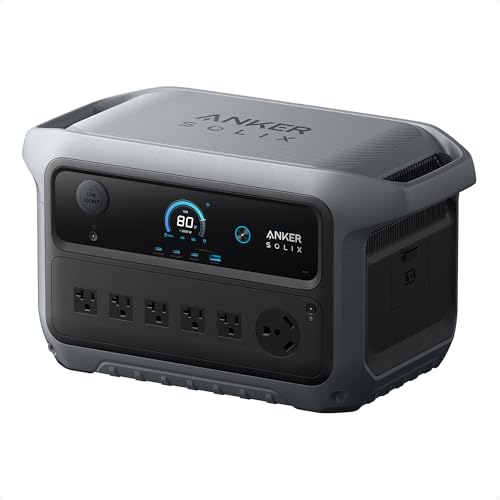
Looking for a reliable power solution during home outages or outdoor adventures? The Anker SOLIX C2000 Gen 2 Portable Power Station is your answer. With a peak power of 4,000W and a 2048Wh LiFePO4 battery, it efficiently powers multiple appliances, including fridges for up to 32 hours. It’s lightweight at just 41.7 lb and compact, making transport easy. You can recharge it in under an hour via AC or solar. Plus, its five-year warranty and stellar 4.8-star rating from 283 reviews confirm its reliability. Whether you need backup power or a camping companion, this station won’t let you down.
Best For: Those seeking a dependable power source for home backup, outdoor activities, or during power outages.
Pros:
- Ultra-efficient with only 9W standby power consumption.
- Fast recharging capabilities, achieving 100% charge in just 58 minutes via AC or solar.
- Lightweight and compact design, making it easy to transport.
Cons:
- Peak power of 4,000W may not be sufficient for all high-demand appliances.
- Requires additional battery for maximum expandable capacity of 4kWh.
- Limited to 2048Wh capacity, which may not meet the needs of prolonged power usage.
EF ECOFLOW DELTA Pro Ultra Power Station
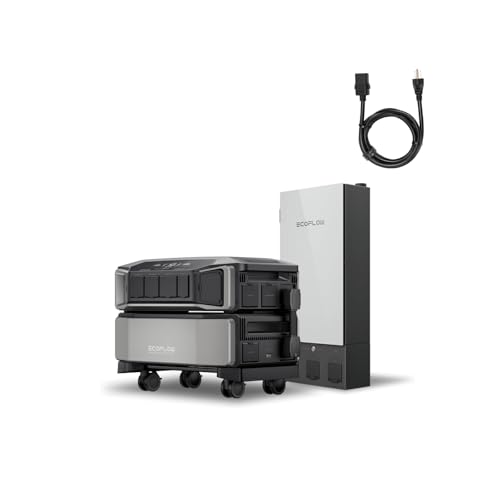
Introducing the EF ECOFLOW DELTA Pro Ultra Power Station, designed specifically for homeowners seeking a reliable backup power solution. With a massive 6144Wh capacity, this Lifepo4 battery backup can expand up to 90kWh, effortlessly powering heavy appliances like a 3-ton central air conditioner with its impressive 7200W output. You can recharge it in just 2 hours using various options, including solar and wall outlets. The EcoFlow Smart Home Panel 2 guarantees seamless operation, automatically switching power during outages to keep your home running smoothly. Plus, you can prioritize circuits via the app, optimizing usage and cutting energy costs.
Best For: Homeowners looking for a reliable and powerful backup power solution for their essential appliances during outages.
Pros:
- Fast Charging: Fully recharges in just 2 hours, making it quicker than other solar generators of its size.
- High Output Capacity: Supports a 7200W output, capable of running heavy appliances like a central air conditioner.
- Smart Management: The EcoFlow Smart Home Panel 2 allows for circuit prioritization and energy usage optimization through a dedicated app.
Cons:
- Separate Shipping: The DELTA Pro Ultra Power Station and Smart Home Panel 2 are shipped separately, which may delay full setup.
- Initial Cost: The upfront investment may be high for some homeowners compared to traditional backup systems.
- Limited to 240V Systems: While it supports both 120V and 240V, it may not be suitable for all home configurations or needs.
ECO-WORTHY Home Power Station Backup Power

The ECO-WORTHY Home Power Station is ideal for homeowners seeking reliable backup power solutions, especially if you need to run high-demand appliances like refrigerators and air conditioners. With a robust 10000W AC output and a 30720Wh LiFePO4 battery, this system supports your energy independence. It features a pure sine wave inverter and dual MPPT controllers, ensuring efficient power management. You can connect up to six inverters for a total of 60kW, and expand storage capacity by linking up to 32 batteries. Plus, it meets essential safety standards, giving you peace of mind during outages.
Best For: Homeowners looking for a reliable and high-capacity backup power solution for essential appliances during outages or off-grid living.
Pros:
- Supports high-demand appliances with a 10000W AC output and a 30720Wh LiFePO4 battery.
- Expandable system allows connection of up to six inverters and 32 batteries for increased power and storage capacity.
- Complies with important safety standards, providing peace of mind during use.
Cons:
- Initial investment may be high for some homeowners.
- Weight of the system is unspecified, which may complicate installation.
- Requires a certain level of technical knowledge for optimal setup and configuration.
Factors to Consider When Choosing Integrated Home Power Systems
When choosing an integrated home power system, you need to take into account several key factors. Think about your power capacity requirements, charging speed options, and how portable the system is. Don’t forget to assess battery lifespan and output compatibility to guarantee it meets your needs.
Power Capacity Requirements
Choosing the right integrated home power system requires careful consideration of your power capacity needs, as these systems are designed to support essential appliances during outages. First, calculate the total power capacity you need, often measured in watt-hours (Wh) or kilowatt-hours (kWh), to guarantee adequate runtime for your devices. Assess peak power requirements; systems should handle bursts of 2,000W to 7,200W to start high-demand appliances like refrigerators. Evaluate continuous power output for running multiple devices at once. Consider expandable capacity options for future upgrades, especially if your energy needs may grow. Finally, confirm the system can power critical appliances, like a refrigerator, for the desired duration, such as 32 hours or more.
Charging Speed Options
While evaluating integrated home power systems, charging speed options play a crucial role in ensuring you can quickly restore power when needed. Some systems can achieve a full charge in as little as 37 minutes, while others may take several hours with standard AC or solar inputs. Fast charging technology enhances your convenience, allowing certain systems to reach 80% charge in under an hour during outages. Many modern systems also offer multiple charging methods, such as AC outlets, solar panels, and car charging, giving you flexibility. If you’re considering solar options, note that some systems can recharge fully in about 2.4 hours with compatible solar panels, making them perfect for off-grid scenarios. Efficient standby power consumption also aids quicker recharging.
Portability and Size
Charging speed options greatly influence your experience with integrated home power systems, but portability and size are just as important. The dimensions and weight of these systems can considerably affect how easily you can transport and store them. Many models are designed to be compact and lightweight, making them perfect for outdoor adventures or emergency situations. Look for features like built-in handles for easier movement. Keep in mind that while a system with higher power capacity might be bulkier, balancing your power needs with portability is essential. Additionally, systems offering multiple recharging options, such as solar or car charging, provide flexibility in various environments, enhancing your overall convenience. Choose wisely to fit your lifestyle!
Battery Lifespan Considerations
When selecting an integrated home power system, understanding battery lifespan considerations is essential for ensuring long-term reliability and efficiency. Lithium iron phosphate (LiFePO4) batteries, for example, typically last over 10 years and can retain more than 70% of their capacity after around 4,000 charge cycles. However, your charging practices matter; faster charging may reduce lifespan, while optimized slower methods can enhance it. Additionally, temperature extremes can harm battery health, so keep your system in a stable environment. Regular maintenance and monitoring can help you spot issues early, preserving battery longevity. Finally, look for systems with advanced battery management systems (BMS), which optimize charging and prevent over-discharge, ultimately extending your battery’s life.
Output Compatibility Needs
To guarantee your integrated home power system meets your needs, you must carefully evaluate your output compatibility requirements. First, assess the total wattage needed for all devices; most home appliances require at least 2,000W. Don’t forget to take into account surge power ratings since some appliances, like refrigerators, may need over 3,000W for brief startup periods.
Check for compatibility with both AC and DC outputs to support all your devices, including USB-powered gadgets. The number of output ports matters too; a system with 5-10 ports allows you to power multiple devices simultaneously, enhancing convenience. Finally, verify your system offers pure sine wave output, protecting sensitive electronics from potential damage caused by irregular power supply.
Durability and Weather Resistance
Durability and weather resistance are essential factors to evaluate when choosing an integrated home power system, as they directly impact performance and longevity. High-quality lithium batteries often last over 10 years and retain a significant portion of their capacity after thousands of charge cycles. For outdoor components, verify they’re tested for extreme temperatures and moisture exposure to guarantee reliable performance. Look for systems with multi-layer protection against thermal runaway, assuring safety during harsh weather. Off-grid systems should include protective coatings and enclosures to shield against dust, rain, and UV rays. Regular maintenance and monitoring can also help you identify potential weather-related damage early, ultimately extending your system’s lifespan and functionality.
Smart Monitoring Features
Smart monitoring features are essential for maximizing the efficiency of your integrated home power system, as they allow you to track electricity usage in real-time. With circuit-level monitoring, you can see exactly how much energy individual appliances consume, helping you identify usage patterns. You’ll receive personalized energy notifications that alert you to savings opportunities or unusual behaviors, like leaving an appliance on. Additionally, advanced energy management functions, such as Time of Use Management and Peak Demand Management, help you optimize energy use during peak times. Integration with mobile apps lets you control and monitor your system remotely, enhancing convenience. By utilizing these smart features, you can greatly improve your home’s energy efficiency and reduce costs.
Installation and Setup Ease
Efficient energy management isn’t just about smart monitoring; it also hinges on how easily you can install and set up your integrated home power system. Look for systems that include installation components compatible with your existing electrical panels, as this can simplify the setup process. Many products come with pre-installed monitoring features, so you can track energy consumption right away, without extra steps. If you prefer a DIY approach, consider plug-and-play designs that let you connect everything easily. Clear user manuals and online support resources can guide you through the process. Systems that package all necessary components reduce complexity, ensuring you have what you need for a successful installation, making your shift to sustainable energy smoother.