A 24V LiFePO4 battery bank can power a trolling motor, RV, or off-grid system without the weight and maintenance of an equivalent lead-acid setup. But the right choice depends on more than the amp-hour rating: your load, available space, charging equipment, and operating temperatures all matter.
These ten options range from compact 100Ah batteries to larger-capacity models for longer runtimes. Use the guide below to narrow the field before checking each battery’s specifications against your system.
Best 10 24v Lifepo4 Battery Bank Picks for 2026
Best for Stackable Storage
ECO-WORTHY 24V 100Ah Metal-Case Battery

- Metal case and discharge switch
- Bluetooth 5.1 monitoring
- Stackable; supports up to 2P2S
Best For: Stackable RV or home solar storage
Best for Trolling Motors
LiTime 24V 100Ah Mini Marine Battery
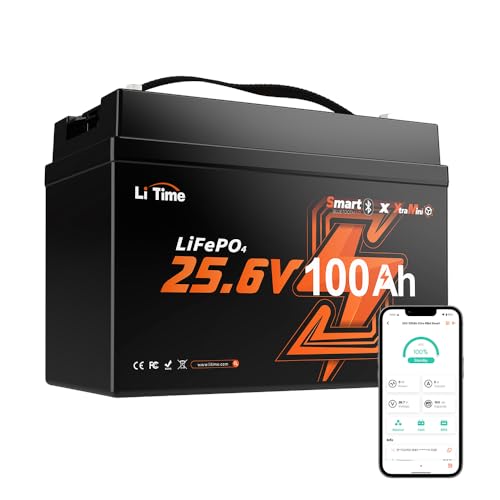
- Designed for 70–100 lb trolling motors
- Group 31 tray footprint; check box height
- Bluetooth app and IP65 housing
Best For: Compact 24V trolling-motor installations
Best for Flexible Charging
SUPER EMPOWER 24V 100Ah Battery

- 2.56kWh nominal energy; 100A BMS
- Guidance for lithium, solar, and generator charging
- Expands up to 2S4P
Best For: Off-grid systems with multiple charging sources
Best for Straightforward Expansion

- 2.56kWh nominal energy; 100A BMS
- Supports up to 2S4P expansion
- Check conflicting cycle-life claims
Best For: Expandable RV or solar energy storage
Solar Bank Builder
Dyness 24V 100Ah LiFePO4 Battery

- 2,560Wh nominal capacity
- Expandable to a stated 20.48kWh
- 100A BMS with low-temperature cutoff
Best For: Expandable solar and off-grid storage
Trolling Motor Pick
Elefast 24V 100Ah LiFePO4 Battery

- 300A one-second inrush rating
- 100A BMS with low-temperature protection
- Supports a stated 20.48kWh bank
Best For: 24V trolling motors and expandable RV power
Compact Expansion Pick
XZNY 24V 100Ah LiFePO4 Battery

- Claimed 30% smaller design
- Expandable to a stated 25.6kWh
- Defined cold-charge and discharge cutoffs
Best For: Space-limited RV and off-grid battery banks
Compact 100Ah Pick
24V 100Ah Deep-Cycle LiFePO4 Battery
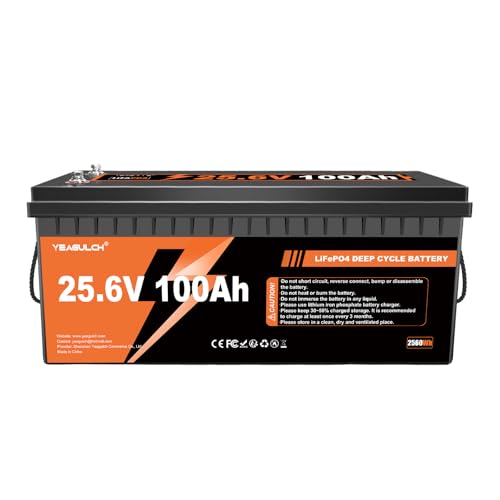
- 25.6V, 100Ah; about 2.56kWh
- Built-in 100A protective BMS
- Designed for deep-cycle storage, not starting
Best For: Smaller RV, solar, and marine 24V systems
Mid-Capacity Smart Pick
CYCCLEVOLT 24V 205Ah Bluetooth Battery

- 205Ah; stated 5,248Wh capacity
- Bluetooth status and fault monitoring
- 200A BMS with temperature protection
Best For: Monitored RV, boat, and solar storage around 5.25kWh
High-Capacity Pick
CYCCLEVOLT 24V 314Ah Bluetooth Battery
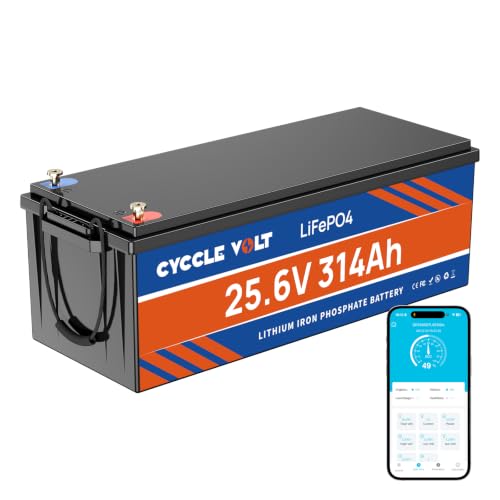
- 314Ah; stated 8,038Wh capacity
- Bluetooth app for status and faults
- 200A BMS; listed weight of 105 lb
Best For: Higher-runtime 24V RV, marine, and off-grid systems
Best for Stackable Storage – ECO-WORTHY 24V 100Ah Metal-Case Battery
If you’re building a 24v lifepo4 battery bank for an RV or home solar system, this ECO-WORTHY model combines a metal case, a discharge safety switch, and included stacking accessories. Its 25.6V, 100Ah rating provides 2.56kWh of nominal energy per battery.
Best For: Buyers who want a stackable battery with a metal enclosure and phone-based monitoring.
Pros:
- Metal casing and internal fixture add structural protection.
- Safety switch cuts the discharge circuit during connection or disconnection.
- Bluetooth 5.1 displays voltage, current, and capacity; supports up to 2P2S expansion.
Cons:
- At 50.7 pounds, it is heavier than the other batteries in this roundup.
- The supplied notes say a dedicated charger with pulse activation may be needed if the battery does not charge or discharge on arrival.
Its switch and stacking hardware make installation and expansion more convenient. Check that the 15.36-by-11.82-inch footprint fits your space, and plan for the BMS to stop charging below 20°F.
Best for Trolling Motors – LiTime 24V 100Ah Mini Marine Battery
For a 24v lifepo4 battery bank on a boat, the LiTime Mini is designed around 70–100 lb-thrust 24V trolling motors. Its narrow Group 31-style footprint helps in tight mounting spaces, while the app shows charge status on the water.
Best For: Boaters powering a 24V trolling motor who need a compact battery with Bluetooth monitoring.
Pros:
- Fits Group 31 trays and measures 13.11 by 6.93 by 9.45 inches.
- Bluetooth 5.0 app displays state of charge, voltage, current, and battery status.
- IP65 housing, smart BMS protections, and support for up to 4P2S expansion.
Cons:
- Its height prevents it from fitting standard sealed Group 31 battery boxes.
- Not intended for starting engines.
This is the most marine-focused choice here, with a stated 6,000-plus-cycle rating at 100% depth of discharge. Measure the enclosure—not just the tray—before ordering.
Best for Flexible Charging – SUPER EMPOWER 24V 100Ah Battery
This SUPER EMPOWER battery is a straightforward option for a 24v lifepo4 battery bank that may charge from shore power, solar, or a generator. It provides 25.6V, 100Ah, and 2.56kWh of nominal energy, with a 100A BMS for deep-cycle applications.
Best For: RV, marine, or off-grid storage setups using properly configured lithium-compatible charging.
Pros:
- Charging guidance covers a 24V LiFePO4 charger, lithium-configured solar controller, and generator paired with a lithium or DC-DC charger.
- BMS pauses charging below 32°F and discharging below -4°F.
- Supports up to two batteries in series and four in parallel for up to 20.48kWh.
Cons:
- Not suitable for engine starting or cranking.
- Non-lithium chargers are not recommended.
The charging instructions and expansion limit make this a practical choice to plan around. Confirm that its 20.94-by-8.13-by-8.56-inch case fits your installation rather than assuming every existing battery box will accommodate it.
Best for Straightforward Expansion – DUMFUME 24V 100Ah Battery
The DUMFUME is a conventional-format choice for a 24v lifepo4 battery bank in an RV, boat, or solar setup. One battery supplies 25.6V and 100Ah—2.56kWh of nominal energy—and its 100A BMS supports up to 2,560W of continuous output.
Best For: Buyers planning a multi-battery 24V or 48V-class storage system with compatible LiFePO4 charging.
Pros:
- Supports up to 2S4P expansion, or eight batteries total.
- 100A BMS protects against overcharge, over-discharge, overcurrent, high temperature, and short circuits.
- Weighs about 41.7 pounds and carries a five-year manufacturer warranty.
Cons:
- The manufacturer recommends keeping charging temperature at or above 41°F.
- The notes give conflicting cycle-life figures: 4,000-plus cycles in the bullets and 15,000-plus in the item highlight.
Its expansion options and stated output are useful for sizing an energy-storage system. Verify the applicable cycle-life rating with the seller, and use a compatible 29.2V LiFePO4 charger as recommended.
Solar Bank Builder – Dyness 24V 100Ah LiFePO4 Battery
The Dyness is a practical starting point for a 24v lifepo4 battery bank serving solar storage, an RV, or a marine house-power system. Its 25.6V, 100Ah rating provides 2,560Wh of nominal energy, and the manufacturer supports expansion up to a 4-parallel, 2-series configuration.
Best For: Buyers planning an expandable solar or off-grid battery bank.
Pros:
- Supports a stated maximum bank size of 51.2V, 400Ah, or 20.48kWh.
- Built-in 100A BMS includes low-temperature cutoff and other electrical protections.
- Manufacturer lists a five-year warranty and 4,000-plus deep cycles.
Cons:
- Not intended for engine starting or high-drain uses such as golf carts.
- No Bluetooth monitoring is listed in the supplied specifications.
Choose this model when a clearly specified expansion path matters more than starting or high-drain capability. Confirm your charger, inverter, and wiring match the intended bank configuration.
Trolling Motor Pick – Elefast 24V 100Ah LiFePO4 Battery
If your 24v lifepo4 battery bank must also serve a trolling motor, the Elefast offers a single 100Ah battery with a built-in 100A BMS. Its listed 2,560Wh nominal energy and 2-series, 4-parallel expansion support also make it relevant to RV and solar setups.
Best For: Buyers powering a 24V trolling motor who may later expand a solar or RV bank.
Pros:
- Manufacturer specifies a 300A, one-second inrush capability for motor startup.
- Supports expansion from 2,560Wh to a stated 20,480Wh.
- BMS includes low-temperature protection; manufacturer lists a five-year warranty.
Cons:
- This version is explicitly listed without Bluetooth.
- High-current startup capability is brief, not a continuous 300A rating.
The motor-oriented surge specification sets this battery apart, but size your system around its continuous 100A BMS rating. For charging, the manufacturer specifies a dedicated 29.2V lithium charger.
Compact Expansion Pick – XZNY 24V 100Ah LiFePO4 Battery
The XZNY suits a 24v lifepo4 battery bank where installation space is tight. The manufacturer describes this 25.6V, 100Ah model as 30% smaller than a standard 24V 100Ah battery, while supporting expansion up to two in series and five in parallel.
Best For: Space-constrained RV, marine, or off-grid installations that may need more capacity later.
Pros:
- Stated 2-series, 5-parallel support allows a bank up to 25.6kWh.
- 100A BMS stops charging at 32°F and discharging at -8°F.
- Manufacturer specifies 300A peak output for five seconds and a three-year replacement warranty.
Cons:
- Cold-temperature cutoff protects the battery but does not heat it for charging.
- The listed replacement warranty is three years, shorter than the five-year warranties stated for the other two models.
This is the strongest fit here when compact packaging and a larger stated parallel limit are priorities. Check the available space and your charger settings before building out the full bank.
Compact 100Ah Pick – 24V 100Ah Deep-Cycle LiFePO4 Battery
If you need a modest 24v lifepo4 battery bank for an RV, solar setup, or marine electronics, this 25.6V 100Ah battery provides about 2.56kWh of storage without stepping up to a larger unit.
Best For: Smaller 24V deep-cycle systems where 100Ah of capacity is sufficient.
Pros:
- About 2.56kWh of rated energy in a single battery.
- Built-in 100A BMS protects against overcharge, over-discharge, over-current, short circuits, and unsafe temperatures.
- LiFePO4 chemistry is intended for repeated cycling.
Cons:
- Less runtime per battery than the 205Ah and 314Ah options here.
- Not intended for engine starting or standard golf cart drive use.
This is the straightforward choice when your 24V load and runtime needs fit a 100Ah battery. Check your system’s current requirements against the 100A BMS before buying.
Mid-Capacity Smart Pick – CYCCLEVOLT 24V 205Ah Bluetooth Battery
For a 24v lifepo4 battery bank that needs more runtime and phone-based monitoring, this CYCCLEVOLT battery pairs a stated 205Ah capacity with Bluetooth app access to charge status, cell voltage, current, and fault codes.
Best For: RV, boat, or solar owners who want roughly 5.25kWh of storage and app monitoring in one battery.
Pros:
- Stated 5,248Wh capacity offers substantially more storage than a 100Ah unit.
- Bluetooth app displays state of charge and battery diagnostics.
- Built-in 200A BMS includes temperature protection.
Cons:
- At a listed 88 lb, it takes planning to lift and install.
- Series connections are recommended at no more than two batteries.
The capacity and monitoring features make this a practical middle ground. Confirm the approximately 20.5 × 10.6 × 8.7-inch footprint fits your battery space, and verify charging-temperature requirements for your setup.
High-Capacity Pick – CYCCLEVOLT 24V 314Ah Bluetooth Battery
If your 24v lifepo4 battery bank calls for substantial storage in a single case, this CYCCLEVOLT model lists 314Ah and 8,038Wh. Bluetooth monitoring helps you check its status without relying only on an external display.
Best For: Larger 24V RV, marine, or off-grid storage systems with room for a 105 lb battery.
Pros:
- Stated 8,038Wh capacity provides the most energy per battery of these three options.
- Bluetooth app shows state of charge, cell voltage, current, and fault codes.
- Built-in 200A BMS includes over-current, short-circuit, and temperature protection.
- Manufacturer lists expansion configurations up to 2S4P.
Cons:
- Listed 105 lb weight makes handling and mounting more demanding.
- The 200A BMS still sets a discharge-current limit despite the larger capacity.
Choose this one when longer runtime matters more than a small, easy-to-move battery. Check the 20.6 × 14.4 × 9.1-inch dimensions and your inverter’s current demand before committing.
How We Picked These 24v Lifepo4 Battery Bank Options
We organized the selected batteries around the specifications most useful to buyers: stated capacity, built-in battery management system (BMS) current rating, physical format, monitoring features, and advertised low-temperature protection. The list covers portable 100Ah choices and larger 200Ah-class and 300Ah-class batteries. Product descriptions are a starting point, not independent test results; confirm dimensions, weight, warranty terms, certifications, and current specifications with the seller before ordering.
Quick Comparison: Which Capacity Fits?
Most 24V-class LiFePO4 batteries have a nominal voltage of 25.6V. At that voltage, 100Ah is about 2.56kWh of nominal energy, 200Ah about 5.12kWh, and 300Ah about 7.68kWh. The listed 205Ah and 314Ah models have higher stated capacities, but their actual runtime still depends on the load, temperature, and usable discharge range. For a quick estimate, divide watt-hours by your average load in watts, then allow a margin for inverter losses and real-world conditions.
A 100Ah battery is a practical starting point for modest loads or limited space. Consider the larger options if you need longer time between charges and have room for their size and weight.
Key Buying Factors for a 24v Lifepo4 Battery Bank
Match the BMS to Your Load
Check the battery’s continuous discharge rating against the combined draw of your inverter, motor, and other equipment. For example, a 100A limit at 25.6V corresponds to roughly 2.56kW before system losses; a 200A rating allows more current if the rest of the installation supports it. Also verify peak-discharge limits for motor starts and inverter surges.
Check Charging and Cold-Weather Rules
Use a charger or solar controller with a suitable LiFePO4 charging profile, and verify its voltage and current settings against the battery manual. A low-temperature charging cutoff is valuable in unheated boats or storage compartments, but confirm whether the battery only blocks charging or also includes a heater. Never assume it can safely charge below freezing without checking its stated limits.
Confirm Fit, Monitoring, and Expansion
Measure the battery tray and cable routing, not just the open compartment. A metal case, compact enclosure, or Bluetooth app may make one option easier to live with, but these features do not replace checking terminal layout and installation requirements. If you plan to connect batteries in parallel or series, confirm the manufacturer permits that exact configuration and specifies matching requirements.
Who Should Buy Which 24v Lifepo4 Battery Bank?
Choose a compact or marine-focused 100Ah model for a trolling motor or a space-constrained RV installation, provided its current rating meets the load. A general-purpose 100Ah model suits a modest solar or backup setup where expansion is possible and manufacturer-supported. Consider the 200Ah-class battery for longer off-grid stays; look at the 300Ah-class option when runtime matters most and the added weight and space requirements are acceptable. In every case, size the battery to your energy use first, then verify electrical compatibility before buying.