Efficient HVAC equipment can still waste energy and performance when condensate drainage is poorly matched to the installation. The right pump helps remove water reliably while limiting unnecessary cycling, noise, and maintenance.
We compared 10 condensate pump systems across lift capacity, flow rate, voltage, safety features, noise, and installation flexibility to help you choose a practical fit for your system.
Best 10 Condensate Pump Systems for Reducing Energy Use Picks for 2026
Proven HVAC Workhorse

- 65 GPH flow with 15-foot shut-off height
- Overflow switch and 20 feet of tubing included
- Thermally protected 115V motor
Best For: Multi-purpose HVAC and dehumidifier drainage
Quiet High-Lift Pick
Ultra Quiet Mini Split Condensate Pump

- Below 16 dB(A) with soft-start operation
- 65.6-foot lift and universal 100–240V input
- Capacitive sensor, LED diagnostics, and overflow switch
Best For: Quiet, high-lift mini-split installations
Versatile Value Option

- 70 GPH flow with 16-foot vertical lift
- Five inlet ports and nearly 20 feet of tubing
- Safety switch and two-year warranty included
Best For: Flexible residential HVAC drainage setups
Compact Quiet Specialist

- 20 dBA operation with anti-vibration bracket
- 33-foot lift for systems up to 5.6 tons
- Piston design handles small particles and dirty condensate
Best For: Quiet 230V mini-split and fan-coil installations
Quiet Efficiency Pick
Automatic Condensate Drain Pump

- Brushless DC motor with quiet operation
- 155 GPH flow and 24-foot maximum lift
- Photoelectric sensor and overflow protection
Best For: Quiet, flexible indoor HVAC drainage
Compact HVAC Workhorse
Asurity ULTRACP-22 Condensate Pump
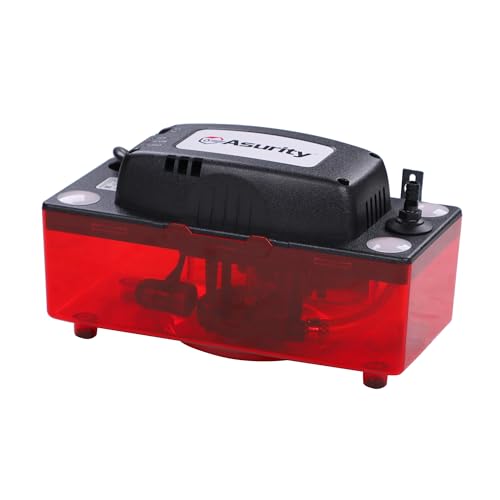
- Automatic 120V condensate removal
- 22-foot maximum lift and 1.8 GPM flow
- Handles condensate up to 160°F
Best For: Compact standard HVAC installations
Safety-Switch Value
HVAC Premium Condensate Removal Pump

- Automatic condensate detection and removal
- Safety switch supports an overflow alarm
- Includes 3/8-inch by 15-foot pipe
Best For: Multi-equipment HVAC setups needing alarm capability
Quiet Standard-Application Pick

- Automatic 120V condensate removal
- 22-foot maximum lift
- Quiet design with removable check valve
Best For: Standard HVAC/R systems needing quiet, routine condensate management
Safety-Switch Workhorse

- Overflow detection switch included
- Thermally protected 115V motor
- 80 GPH flow at 1-foot lift
Best For: Systems needing appliance shutdown or alarm capability for overflow protection
Mini-Split Installation Pick
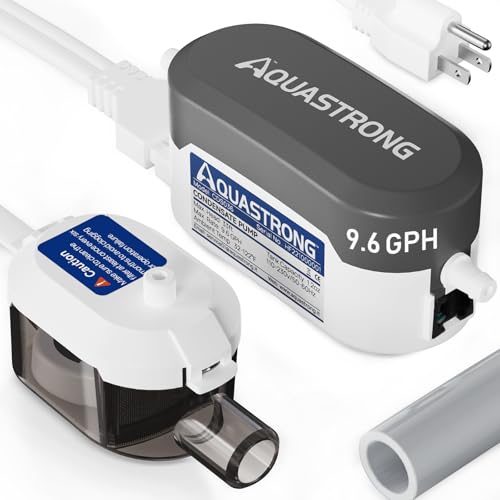
- Compact 115V/230V mini-split design
- 33-foot maximum lift
- 20 dB operation with safety switch
Best For: Tight HVAC spaces needing quiet operation and extended vertical lift
Proven HVAC Workhorse – Little Giant VCMA-15ULST
The Little Giant VCMA-15ULST is a practical choice among condensate pump systems for reducing energy use when you need dependable automatic drainage for an air conditioner, furnace, boiler, refrigerator system, or dehumidifier. Its 115-volt motor delivers up to 65 GPH at a 1-foot lift, while the compact vertical switch design helps conserve installation space.
Best For: Multi-purpose HVAC and dehumidifier installations requiring overflow protection and moderate lift capacity.
Pros:
- Handles up to 65 GPH with a 15-foot shut-off height.
- Includes an overflow detection switch that can shut down equipment or trigger an alarm.
- Includes 20 feet of vinyl tubing, a check valve, and a 6-foot power cord.
- Thermally protected motor and ABS construction support routine HVAC use.
Cons:
- Requires basic wiring knowledge to connect the safety switch.
- Its 115-volt design is less flexible than a universal-voltage model.
- At 60 watts, it is not the lowest-power option for every installation.
With its broad equipment compatibility and included safety components, this is a solid conventional pump for replacing gravity drainage. It is especially suitable when a straightforward, serviceable design matters more than ultra-quiet operation or very high lift.
Quiet High-Lift Pick – Ultra Quiet Mini Split Condensate Pump
For noise-sensitive rooms, this mini split model stands out among condensate pump systems for reducing energy use with soft-start operation, variable flow, and universal 100–240V compatibility. Its capacitive sensor avoids traditional moving float parts, and the 65.6-foot lift rating supports installations where long or vertical drain runs make gravity drainage impractical.
Best For: Bedroom, office, apartment, and other mini-split installations that need quiet operation and substantial lift.
Pros:
- Ultra-quiet operation is rated below 16 dB(A).
- Universal voltage supports 100–240V, 50/60Hz installations.
- Capacitive sensing eliminates common moving-float failure points.
- Includes LED diagnostics, overflow protection, and an internal motor fuse.
Cons:
- Its advanced calibration and sensor features may require more setup than a basic float pump.
- Specified flow varies with condensate level, at approximately 5.3–10.6 GPH.
- The compact design is intended primarily for mini-split and related HVAC applications.
This is the most feature-rich option in the group for quiet mini-split drainage. Its combination of universal power, high lift, sensor-based operation, and overflow safeguards makes it a strong fit for demanding or highly visible installations.
Versatile Value Option – Aquastrong 70 GPH HVAC Pump
The Aquastrong 70 GPH pump offers a useful balance of capacity and installation flexibility for condensate pump systems for reducing energy use. It automatically drains condensate from air conditioners, furnaces, dehumidifiers, and ice makers, with a 16-foot lift rating, multiple inlet ports, and included tubing for a relatively simple setup.
Best For: Residential or light-duty HVAC systems serving one or more condensate-producing appliances.
Pros:
- Provides up to 70 GPH flow and a 16-foot vertical lift.
- Five 1-inch inlet ports support flexible connections.
- Automatic safety switch can cut appliance power if the reservoir level rises too high.
- Includes 19.7 feet of tubing and a two-year warranty.
Cons:
- The float switch and reservoir should be cleaned every six months to help prevent clogging.
- It must be installed vertically on a flat surface or wall.
- The included 3.3-foot power cord may limit outlet placement.
Choose this model when connection flexibility and included accessories are priorities. Its slightly higher stated flow than the Little Giant is useful, though the shorter lift rating and routine float maintenance should be considered during installation planning.
Compact Quiet Specialist – Sauermann Si-30 Mini Pump
The Sauermann Si-30 is a compact option for condensate pump systems for reducing energy use in ductless and other mini-split installations. Its piston technology is designed to move small particles and dirty condensate, while the 20 dBA operating level and anti-vibration bracket help limit disturbance in occupied spaces.
Best For: Wall-mounted, ceiling, ducted, and fan-coil air conditioners where compact size and quiet operation are important.
Pros:
- Supports systems up to 5.6 tons or 20 kW with up to 33 feet of lift.
- Compact 2.6 × 1.8 × 2.4-inch pump mounts above the unit.
- Piston technology handles small particles and dirty condensate.
- Includes overflow shutdown, thermal protection, bracket, tubing, and detection components.
Cons:
- Maximum flow is 5 GPH, lower than the larger reservoir-style pumps here.
- This version uses 230V power and may not suit standard 115V installations.
- Its specialized mini-split design is less appropriate for broad appliance applications.
The Si-30 is a strong choice when the pump must stay unobtrusive and quiet while lifting condensate a considerable distance. Verify the available 230V supply and the system’s condensate volume before choosing it over a higher-flow general-purpose model.
Quiet Efficiency Pick – Automatic Condensate Drain Pump
For condensate pump systems for reducing energy use, this model stands out with a brushless DC motor designed for quiet, consistent operation. Its 155 GPH flow rate, 24-foot maximum lift, and photoelectric water-level sensor make it practical when gravity drainage is unavailable.
Best For: HVAC systems, furnaces, dehumidifiers, and ice makers in finished basements, utility rooms, and other indoor spaces where low noise and flexible placement matter.
Pros:
- Brushless DC motor operates at up to 30 dB(A) and is designed to consume less energy than traditional AC motors.
- 155 GPH flow rate and 24-foot maximum lift support demanding installations.
- Photoelectric sensor helps reduce sticking and unnecessary cycling.
- Transparent removable tank, overflow protection, LED indicators, and multiple inlet ports simplify monitoring and installation.
Cons:
- The 0.4-gallon tank requires periodic inspection and cleaning.
- Performance depends on proper discharge-line and check-valve installation.
This is the strongest choice here for buyers prioritizing quiet operation and efficiency-oriented design. Its compact wall- or floor-mount configuration also makes it adaptable to replacement and new-installation projects.
Compact HVAC Workhorse – Asurity ULTRACP-22 Condensate Pump
For condensate pump systems for reducing energy use in standard HVAC installations, the Asurity ULTRACP-22 offers automatic operation in a compact housing. Its 1.8 GPM flow rate, 22-foot lift, and 120V design suit air conditioners, furnaces, and dehumidifiers.
Best For: Space-constrained basements, attics, utility closets, and other standard HVAC/R installations requiring automatic condensate removal.
Pros:
- Automatically activates when the reservoir reaches a preset level.
- Provides up to 22 feet of vertical lift and a 1.8 GPM flow rate.
- Handles condensate temperatures up to 160°F.
- Compact housing retains four inlet holes, metal mounting tabs, and a removable check valve.
Cons:
- It is a 120V corded pump, so installation requires a suitable electrical connection.
- The supplied notes do not specify a low-noise rating or energy-consumption figure.
The ULTRACP-22 is a practical, economical option when you need reliable automatic drainage and useful lift capacity without a large footprint. It is especially well suited to conventional HVAC equipment in tight installation areas.
Safety-Switch Value – HVAC Premium Condensate Removal Pump
For condensate pump systems for reducing energy use in a range of HVAC applications, this 115V tank pump provides automatic collection and removal. Its automatic safety switch can be wired to an alarm, while the included 3/8-inch by 15-foot pipe supports a straightforward installation.
Best For: Ducted, floor-standing, chassis, and cassette HVAC units, as well as dehumidifiers, furnaces, condensing boilers, and air-conditioning equipment.
Pros:
- Automatically detects, collects, and removes condensate.
- Automatic safety switch can connect to an alarm for overflow warnings.
- Flame-retardant ABS tank and metal components are designed for durability and corrosion resistance.
- Includes 3/8-inch by 15-foot discharge pipe.
Cons:
- Its 4.6-meter maximum lift is lower than the lift ratings of the other listed pumps.
- The supplied notes do not provide a flow-rate specification.
- The larger tank-pump form may be less convenient in very tight spaces.
This model makes sense when overflow notification and broad equipment compatibility are more important than maximum lift. Verify the installation height and discharge connection before choosing it for a replacement project.
Quiet Standard-Application Pick – DiversiTech CP-22LP
For standard HVAC/R installations, the DiversiTech CP-22LP is a practical choice among condensate pump systems for reducing energy use. Its automatic operation, 22-foot lift, and vibration-dampening design support dependable condensate removal without adding unnecessary operating noise.
Best For: Standard 120V HVAC/R equipment that needs quiet, automatic condensate removal.
Pros:
- Automatic 120V operation with a 22-foot maximum lift.
- Handles condensate temperatures up to 160°F.
- Vibration-dampening feet and motor mounts help reduce noise.
- Removable check valve simplifies cleaning and maintenance.
Cons:
- Designed for 120V applications rather than dual-voltage installation.
- Its 22-foot lift may be insufficient for installations requiring greater elevation.
With a 1.6 GPM flow rate and a removable check valve, this model balances straightforward installation with convenient upkeep. It is especially suitable when quiet operation and routine service access matter.
Safety-Switch Workhorse – Little Giant VCMA-20ULS
The Little Giant VCMA-20ULS is a solid option for condensate pump systems for reducing energy use in HVAC, refrigeration, boiler, furnace, and dehumidifier applications. Its automatic switch, thermally protected motor, and overflow detection feature add useful operating safeguards.
Best For: HVAC or dehumidifier installations where overflow shutdown or alarm wiring is important.
Pros:
- Automatic 115V pump with an 80 GPH flow rate at 1-foot lift.
- Overflow detection switch can shut down an appliance or trigger an alarm.
- Thermally protected, fan-cooled motor is CSA certified for the US and Canada.
- ABS construction and stainless steel motor shaft support durability.
Cons:
- Overflow switch wiring requires basic electrical knowledge.
- Maximum water temperature is 140°F, lower than some competing models.
- Its 20-foot shut-off height is below the lift rating of the highest-capacity option here.
The VCMA-20ULS stands out when protection against overflow is a priority. The included six-foot cord and 1/2-gallon tank make it a practical replacement or new-installation choice, provided its 115V requirements and lift limit fit the system.
Mini-Split Installation Pick – Aquastrong 33-Foot Lift Pump
For compact installations, the Aquastrong mini split pump is a flexible entry in condensate pump systems for reducing energy use. Its small form factor, 33-foot lift, dual-voltage support, and 20 dB operation suit air conditioners, furnaces, and dehumidifiers where installation space is limited.
Best For: Mini-split and other tight-space HVAC installations requiring a high lift and safety switch.
Pros:
- Compact 4.9-by-1.8-by-2-inch design fits line-set covers and above-ceiling spaces.
- Supports 115V/230V applications and lifts condensate up to 33 feet.
- Quiet operation is rated at 20 dB.
- High-level safety switch can shut down equipment or activate an alarm.
Cons:
- Requires reservoir, float, and filter cleaning at least every six months.
- Installation requires vertical reservoir placement with the magnet facing upward.
- The 9.6 GPH maximum flow is lower than the listed flow rates of the larger pumps.
This Aquastrong model is the most space-conscious choice of the three and offers the greatest stated lift. Its visible removable tank and filter make inspection easier, while the included safety-switch wiring adds protection against high water levels.
How We Picked the Best Condensate Pump Systems for Reducing Energy Use
We focused on specifications that affect real-world drainage performance and operating efficiency: maximum lift, pumping rate, voltage compatibility, reservoir design, safety-switch provisions, noise claims, tubing, and serviceability. Models were selected for different HVAC applications, including mini-split air conditioners, central systems, refrigeration equipment, and dehumidifiers.
Energy savings from a condensate pump are usually indirect. A correctly sized pump helps HVAC equipment drain consistently, reduces the risk of overflow-related shutdowns or damage, and supports dependable operation. Oversizing can add unnecessary cost and noise, while undersizing may cause cycling, backups, or premature wear.
Quick Comparison
| Best For | What to Prioritize |
|---|---|
| Mini-split systems | Low noise, compact dimensions, compatible voltage, and sufficient lift |
| Central HVAC | Reliable float control, safety-switch integration, and adequate flow |
| Long vertical runs | Maximum head height with a margin above the measured lift |
| Replacement installations | Matching voltage, tubing size, reservoir layout, and wiring |
| Noise-sensitive rooms | Quiet operation and vibration-resistant mounting |
Key Buying Factors for Condensate Pump Systems for Reducing Energy Use
Lift, Flow, and Duty Cycle
Measure the vertical rise and horizontal routing before choosing a pump. Select a unit whose published maximum lift exceeds your actual requirement; performance generally falls as lift increases. Flow ratings should suit the equipment’s condensate output without relying on constant operation at the limit.
Voltage and Electrical Compatibility
Verify whether the pump requires 115V, 120V, 230V, or a broad 100–240V input. Confirm wiring, amperage, grounding, and local code requirements. A professional installer should handle hardwiring and any connection to HVAC shutdown controls.
Safety Controls and Maintenance
An automatic safety switch can shut down equipment or trigger an alarm if the reservoir level becomes excessive. Look for accessible tanks, removable check valves, clear tubing, and replacement parts. Clean the reservoir and inspect the inlet, discharge line, and float regularly.
Noise and Installation Space
For bedrooms, offices, and occupied living areas, compare stated decibel levels and use secure, vibration-resistant mounting. Compact pumps fit tight spaces but may have smaller reservoirs, making correct positioning and maintenance especially important.
Who Should Buy Which Condensate Pump Systems for Reducing Energy Use?
Choose a quiet, compact mini-split pump when the unit is installed above a drain or where gravity drainage is impossible. Central-air and furnace installations usually benefit from a standard tank pump with a safety switch and enough lift for the planned discharge route. Pick a higher-head model for basements, tall risers, or distant drain points, but leave operating margin rather than selecting solely by the headline maximum.
For energy-conscious buyers, the best option is not necessarily the highest-capacity pump. Match the pump to the system’s condensate volume, use the correct voltage, keep the discharge line short and properly routed, and maintain the reservoir and float. Professional installation is recommended whenever the pump interfaces with HVAC controls or electrical wiring.