The right conduit bender helps you create accurate bends with less rework, whether you are wiring a residential project, fitting commercial runs, or handling maintenance jobs.
We compared 10 conduit benders and bending sets across size compatibility, construction, portability, marking visibility, and practical value to help you choose the best match for your workload.
Best 10 Conduit Benders Picks for 2026
Best for Repeatable Bends
Klein Tools 51607 Aluminum Bender

- Angle Setter supports repeatable common angles
- Wide foot pedal improves stability and leverage
- Handles 3/4-inch EMT and 1/2-inch RMC or IMC
Best For: Consistent bends on recurring electrical installations
Best Heavy-Duty Option
IDEAL 1-Inch EMT Ductile Iron Bender
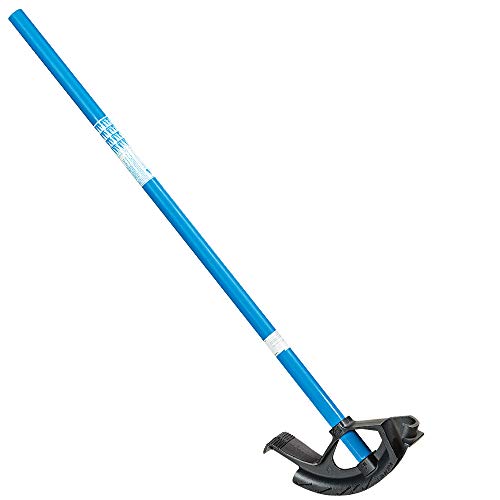
- Ductile iron construction emphasizes strength
- Works with 1-inch EMT and 3/4-inch rigid or IMC
- Raised markings and anti-slip surfaces aid control
Best For: Demanding daily use with compatible conduit sizes
Best Complete Kit
Klein Tools 80148 Conduit Bending Set

- Includes a bender and Accu-bend level
- Magnet track secures rare-earth magnets
- Vials display level, 90, 45, and 30 degrees
Best For: Measured bends with an integrated level
Best Lightweight 3/4-Inch Pick
IDEAL Aluminum 3/4-Inch EMT Bender

- Lightweight aluminum construction aids portability
- Heat-treated head has reinforced stress points
- Raised markings and anti-slip features improve control
Best For: Portable 3/4-inch EMT bending
Versatile Size Kit
3-Piece Aluminum Conduit Bender Set

- Includes 1/2-, 3/4-, and 1-inch heads
- Lightweight aluminum construction
- Handle not included
Best For: Multi-size EMT bending with a compatible handle
Fast Offset Bends
TEMCo Dual-Size EMT Offset Bender
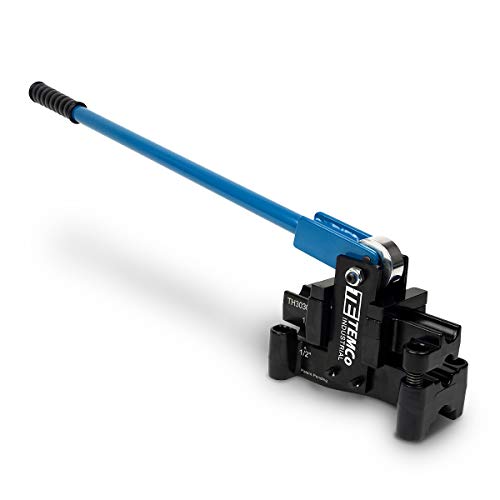
- Works with 1/2- and 3/4-inch EMT
- Makes offsets in one motion
- Tool-free die changes
Best For: Frequent electrical box offset bends
Precision Full Assembly
Klein Tools 1/2-Inch EMT Bender

- Complete assembly with handle and head
- Angle Setter supports repeatable bends
- Wide foot pedal improves leverage
Best For: Repeatable 1/2-inch EMT field work
Job-Site Ready Choice

- Includes a 38-inch steel handle
- Wide foot pedal for added leverage
- Angle indicators from 10° to 60°
Best For: Contractors needing a complete handled bender for repeat work
Multi-Size Value Set
Three-Head Aluminum Conduit Bender Set

- Covers 1/2-inch, 3/4-inch, and 1-inch EMT
- Includes three heads and three handles
- Marked angles and serrated gripping surfaces
Best For: Multi-size conduit work across compatible EMT, IMC, and RMC
Best for Repeatable Bends – Klein Tools 51607 Aluminum Bender
For electricians who need consistent results, this conduit bender combines a lightweight aluminum head with Klein’s Angle Setter technology. It handles 3/4-inch EMT and 1/2-inch RMC or IMC, with markings and alignment features suited to common bend types.
Best For: Repeated, accurate 3/4-inch EMT bends on busy electrical jobsites.
Pros:
- Angle Setter supports repeatable 10-, 22.5-, 30-, and 45-degree bends.
- Wide foot pedal and interior hook surface improve stability during bending.
- Bold cast markings support fast alignment for saddle and back-to-back bends.
- Aluminum construction keeps the assembled bender relatively easy to handle.
Cons:
- Designed around 3/4-inch EMT and 1/2-inch RMC or IMC rather than multiple EMT sizes.
- The compatible 3/4-inch Angle Setter is a separate accessory.
The 51607 stands out among conduit benders when repeatability matters. Its Angle Setter compatibility and clear markings make it a practical choice for installers who perform the same bend angles frequently.
Best Heavy-Duty Option – IDEAL 1-Inch EMT Ductile Iron Bender
This IDEAL conduit bender is built for 1-inch EMT, along with 3/4-inch rigid and IMC conduit. Its ductile iron construction emphasizes strength for demanding daily use, while raised markings and a serrated step help with visibility and control.
Best For: Heavy-duty bending where a durable ductile iron tool is preferred.
Pros:
- Ductile iron head provides more strength than malleable iron or aluminum, according to the supplied specifications.
- Compatible with 1-inch EMT and 3/4-inch rigid or IMC conduit.
- Raised markings on both sides make bend references easier to see.
- Serrated step and internal hook surface help reduce slippage.
Cons:
- At 6.6 pounds, it is heavier than aluminum alternatives in this roundup.
- It does not include a stated warranty.
For buyers prioritizing rugged construction over minimum weight, this IDEAL model is a straightforward choice. The ductile iron head and anti-slip features suit repeated, forceful bending of compatible conduit sizes.
Best Complete Kit – Klein Tools 80148 Conduit Bending Set
The Klein Tools 80148 is a two-piece conduit bending set that pairs an aluminum bender with a level for easier angle measurement. Its magnetic track, large vials, and top-view windows are designed to make alignment and readings more convenient while bending.
Best For: Electricians who want a coordinated bender-and-level setup for measuring bend angles.
Pros:
- Two-piece kit provides a bender and Accu-bend level in one package.
- Rare-earth magnets stay secured by the patented magnet track.
- Large vials show level, 90-, 45-, and 30-degree angles.
- Bold cast markings help align conduit for saddle and back-to-back bends.
Cons:
- The supplied notes do not specify the conduit diameter compatibility.
- At 6.98 pounds, the complete set is not the lightest option listed.
This set is a practical pick when angle measurement is as important as the bend itself. The attached level and multiple viewing angles can streamline setup for users who prefer an integrated conduit-bending kit.
Best Lightweight 3/4-Inch Pick – IDEAL Aluminum 3/4-Inch EMT Bender
This IDEAL conduit bender uses lightweight aluminum construction for easier transport while working with 3/4-inch EMT. The heat-treated head, reinforced stress points, raised markings, and grooved hook are aimed at dependable control during everyday bending.
Best For: Portable 3/4-inch EMT work where lower tool weight is useful.
Pros:
- Lightweight aluminum construction is easier to carry around a jobsite.
- Heat-treated head and reinforced stress points support durability.
- Raised markings on both sides improve visibility.
- Deeply serrated step and grooved internal hook help prevent slippage.
Cons:
- It is sized for 3/4-inch EMT rather than a broader range of conduit sizes.
- The supplied details list a corded-electric power source and 120-volt voltage, which do not align with the hand-powered design description.
- No warranty is stated in the supplied notes.
Among these conduit benders, this model makes the most sense for users who value manageable weight and work primarily with 3/4-inch EMT. Its reinforced aluminum head and anti-slip surfaces add practical jobsite utility.
Versatile Size Kit – 3-Piece Aluminum Conduit Bender Set
For projects that use several common conduit sizes, this set of conduit benders provides 1/2-inch, 3/4-inch, and 1-inch aluminum bending heads in one package. The heads include angle markings and serrated surfaces for controlled, repeatable bending. Keep in mind that a handle is not included.
Best For: DIYers and electricians who need multiple common EMT and compatible IMC/RMC sizes and already have, or plan to purchase, a suitable handle.
Pros:
- Includes three common sizes: 1/2 inch, 3/4 inch, and 1 inch.
- Lightweight aluminum construction helps reduce fatigue and resists corrosion.
- Serrated surfaces and engraved angle markings support secure, accurate bends.
Cons:
- Handle is not included.
- Using the heads on other steel pipe types may cause breakage or failure to bend.
This is a practical choice when size flexibility matters more than having a complete ready-to-use bender. Verify conduit compatibility and factor the cost of a handle into the purchase.
Fast Offset Bends – TEMCo Dual-Size EMT Offset Bender
This specialized conduit bender combines two offset sizes in one tool, handling both 1/2-inch and 3/4-inch EMT. Its one-motion design is intended to speed electrical box offsets, while the die can be changed without tools in less than a minute.
Best For: Professionals, industrial users, and DIYers who regularly make quick, consistent offsets in 1/2-inch and 3/4-inch EMT.
Pros:
- One tool bends both 1/2-inch and 3/4-inch EMT.
- One-motion offset bending can reduce time compared with a double bend using a hand bender.
- Tool-free die changes and lightweight aluminum construction improve job-site convenience.
Cons:
- Designed specifically for offsets rather than general-purpose conduit bends.
- Its larger, heavier package may be less convenient for occasional users.
Choose this model when electrical box offsets are a frequent task. Its dual-size setup offers useful flexibility, but users seeking saddles, back-to-back bends, or other general bends should consider a more versatile bender.
Precision Full Assembly – Klein Tools 1/2-Inch EMT Bender
For a ready-to-use option, this Klein Tools conduit bender is a complete 1/2-inch EMT assembly with a handle, head, and Angle Setter. Bold markings, a wide foot pedal, and an interior hook are designed to make alignment, leverage, and repeated bends easier.
Best For: Electricians and DIY users who want a complete 1/2-inch EMT bender for repeated 10-, 22.5-, 30-, and 45-degree bends, plus common saddle and back-to-back bends.
Pros:
- Complete assembly includes the handle, head, and Angle Setter.
- Angle Setter creates hard stops for repeatable bends and accounts for conduit spring back.
- Wide foot pedal, bold markings, and interior hook support stability and alignment.
Cons:
- Limited to 1/2-inch EMT.
- Less suitable if you need multiple conduit sizes or a compact head-only tool.
This is the strongest fit for users prioritizing repeatability and a complete setup over multi-size flexibility. Its built-in guidance features make it particularly useful for production-style 1/2-inch EMT work.
Compact Precision Pick – Aluminum Level-Gauge Conduit Bender
For shoppers comparing conduit benders, this compact aluminum head is designed for 3/4-inch EMT and 1/2-inch rigid conduit. Its embossed angle marks and built-in bubble level help with common stub-ups, offsets, and back-to-back bends without requiring a full-size bender.
Best For: DIYers, electricians, and contractors who already have a compatible 3/4-inch pipe bar and want a compact tool for their toolbox.
Pros:
- Built-in acrylic bubble level and markings for 10°, 22°, 30°, 45°, 60°, and 90° bends.
- Lightweight 1.57-pound die-cast aluminum head with a serrated foot pad.
- Uses a standard 3/4-inch threaded pipe bar as the handle, reducing storage needs.
Cons:
- Handle is not included.
- Limited to 3/4-inch EMT and 1/2-inch rigid conduit.
This is a practical choice when portability and visual angle checking matter most. Confirm that you already have a suitable pipe-bar handle before ordering.
Job-Site Ready Choice – 3/4-Inch EMT Aluminum Bender
This conduit bender pairs a reinforced aluminum head with a 38-inch steel handle for bending 3/4-inch EMT and 1/2-inch rigid conduit. A wide foot pedal, cast-in angle indicators, and manual operation make it suited to repeatable work on installation and service jobs.
Best For: Electricians, maintenance professionals, and contractors who want a complete handled bender for residential, commercial, or industrial projects.
Pros:
- Includes a 38-inch steel handle, so no separate pipe bar is required.
- Wide foot pedal improves leverage, stability, and control.
- Angle markings support 10°, 22.5°, 30°, 45°, and 60° bends.
Cons:
- Designed for only 3/4-inch EMT and 1/2-inch rigid conduit.
- Heavier and less compact than a bender head sold without a handle.
Choose this model if you prioritize leverage and a ready-to-use setup over minimal storage size. Its included handle can simplify job-site preparation.
Multi-Size Value Set – Three-Head Aluminum Conduit Bender Set
Among conduit benders, this three-piece set stands out for covering 1/2-inch, 3/4-inch, and 1-inch EMT sizes, plus specified IMC and RMC applications. Each aluminum head has engraved angles, while the included carbon-steel handles and serrated design support controlled manual bending.
Best For: Electricians and installers who need multiple dedicated bender sizes for varied EMT, IMC, and RMC conduit work.
Pros:
- Includes dedicated 1/2-inch, 3/4-inch, and 1-inch aluminum bender heads.
- Comes with three red carbon-steel handles.
- Serrated gripping surfaces help limit conduit slipping during bends.
- Engraved angle markings provide visual bending references.
Cons:
- Large 15.67-pound set requires more storage space.
- Use is specified for compatible EMT, IMC, and RMC sizes; other steel tubing may not bend properly.
This set offers the broadest size coverage of the three options, making it useful for varied conduit inventories. Its dedicated heads are preferable to forcing one bender onto incompatible tubing.
How We Picked the Best Conduit Benders
We focused on the features that affect real-world bending performance: compatible conduit sizes, EMT or rigid conduit support, material, handle or grip design, bend markings, and overall versatility. The selection includes single-size benders, multi-size sets, offset tools, and full assemblies from established brands as well as value-oriented alternatives.
Because a bender designed for 1/2-inch EMT is not interchangeable with one intended for 1-inch EMT or rigid conduit, size compatibility received particular attention. We also considered whether each tool is best suited to occasional DIY work, service calls, or repeated professional use.
Quick Comparison
- Best for a common 3/4-inch EMT size: Look for a dedicated 3/4-inch EMT bender with clear markings and a comfortable handle.
- Best for multiple conduit sizes: Choose a two-piece or three-piece set covering 1/2-, 3/4-, and 1-inch EMT.
- Best for portability: Aluminum models are generally easier to carry between jobs.
- Best for heavier-duty work: Ductile iron or rigid-compatible tools may offer greater durability for demanding applications.
- Best for offset work: A dedicated dual-size offset bender can be faster than making repeated layout calculations with a general-purpose tool.
Key Buying Factors for Conduit Benders
Conduit Size and Type
Confirm the exact trade size before buying. EMT, IMC, and RMC can require different bender profiles, even when their nominal sizes appear similar. A tool listing that supports 3/4-inch EMT may also specify 1/2-inch rigid, so check the manufacturer’s compatibility details rather than assuming all conduit types fit.
Material and Durability
Aluminum benders are lightweight and convenient for ladders, vehicles, and occasional installation work. Ductile iron models are typically heavier but can be a better choice when durability and stability matter more than carrying weight.
Markings and Usability
Easy-to-read degree marks, arrow indicators, star points, and placement guides help improve consistency. A secure handle and a well-defined shoe can also reduce slipping and make repeated bends less tiring.
Single Bender or Set
A single-size tool costs less and is easier to store if your projects use one conduit size most of the time. A set costs more upfront but can be more economical for electricians who regularly work with several EMT sizes.
Who Should Buy Which Conduit Benders?
Homeowners and occasional DIY users should favor an affordable aluminum bender or compact set that matches the conduit used for the project. Apprentices and service electricians may benefit from a multi-size kit with visible markings and broad EMT coverage. Professional installers should prioritize durable construction, comfortable handling, and compatibility with the conduit types they use daily. If your work includes frequent offsets, choose a purpose-built offset model to speed up repetitive layouts.