When it comes to maintaining power during outages, choosing the right essential load panel is vital. You want something that not only guarantees reliability but also simplifies your power management. With a variety of options available, each panel offers unique features tailored to different needs. So, what should you look for in an essential load panel? Let’s explore the top contenders that can keep your home or business powered, even when the grid goes down.
Generac 7006 100 Amp Load Manager for Power Management

If you’re looking for an efficient way to manage power during outages, the Generac 7006 100 Amp Load Manager is an excellent choice. This innovative device uses wire-free technology, allowing you to prioritize essential loads seamlessly. With support for up to eight modules, it adapts to your needs, shedding non-essential loads to guarantee critical items stay powered. The customizable load prioritization feature means you get to choose what matters most. Plus, the external LED indicators let you monitor load status without opening the electrical box, making power management quick and easy. With a solid customer rating, it’s a reliable option for any home.
Best For: Homeowners seeking a reliable and efficient solution for managing power loads during outages.
Pros:
- Efficient Wire-free Technology: Operates autonomously to prioritize essential loads and enhance generator recovery.
- Customizable Load Prioritization: Allows users to select which items to power during outages, ensuring critical needs are met.
- Convenient External LED Status: Easy monitoring of load status through visible indicators without needing to access the electrical box.
Cons:
- Limited to 100 Amps: May not be suitable for larger homes with higher power demands.
- Requires Manual Power Source: Not automatic; users must manually manage power during outages.
- Lightweight Design: Some users may prefer a more robust and heavier construction for durability.
Generac 200-Amp Automatic Generator Transfer Switch

The Generac 200-Amp Automatic Generator Transfer Switch is an ideal choice for homeowners seeking reliable power during outages. This open shift switch automatically transfers power from utility to generator, ensuring you’re covered when the grid fails. With integrated brownout protection, it manages voltage instability, keeping your systems safe. Designed for 200 AMP service, its durable aluminum enclosure suits outdoor installation. Weighing 30 pounds and measuring 6.5 x 13.5 x 30 inches, it’s easy to mount on walls. The hardened fuse control module enhances performance, making this switch a dependable option for your residential standby generator needs.
Best For: Homeowners looking for a reliable and automatic solution to ensure power continuity during outages.
Pros:
- Automatic power transfer ensures seamless switching from utility to generator during outages.
- Integrated brownout protection safeguards your electrical systems from voltage instability.
- Durable aluminum enclosure designed for outdoor use provides longevity and protection from the elements.
Cons:
- Outdoor installation only may not suit all residential setups.
- Heavier weight at 30 pounds could make installation more challenging for some users.
- Limited to 200 AMP service may not meet the needs of larger homes or commercial applications.
Anker SOLIX C2000 Gen 2 Portable Power Station
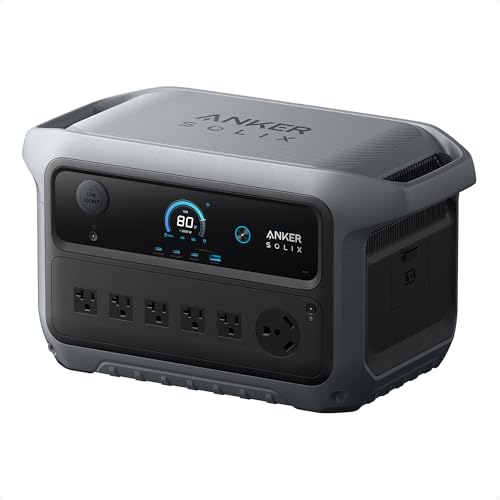
For those seeking a reliable power solution during home backups or outdoor adventures, the Anker SOLIX C2000 Gen 2 Portable Power Station delivers impressive performance and efficiency. With a peak power of 4,000W and a rated power of 2,400W, it can easily run multiple appliances, including most RV A/Cs. Its 2048Wh LiFePO4 battery provides up to 32 hours of runtime for a dual-door fridge. Recharge it quickly—100% in just 58 minutes via AC or solar. Weighing only 41.7 lbs and with compact dimensions, it’s easy to transport. Plus, enjoy a 5-year warranty and stellar customer reviews.
Best For: Those in need of a versatile and efficient power source for home backup, camping, or outdoor activities.
Pros:
- Ultra-fast recharging: Achieves a full charge in just 58 minutes via AC or solar.
- Expandable capacity: Can add a battery for up to 4kWh, increasing runtime significantly.
- Lightweight and portable: Compact design makes it easy to transport at only 41.7 lbs.
Cons:
- Higher upfront cost: May be more expensive compared to standard generators.
- Limited solar panel availability: Optional solar panel is sold separately, adding to the overall cost.
- Peak power limitations: While powerful, it may not support all high-demand appliances simultaneously.
Anker SOLIX C1000 Gen 2 Portable Power Station

Looking for a reliable power solution that’s both portable and powerful? The Anker SOLIX C1000 Gen 2 Portable Power Station delivers with a 2,000W output and a robust 1,024Wh capacity, allowing you to power up to 10 devices simultaneously. You can recharge it in just 49 minutes at 1,600W or use solar with 600W in 1.8 hours. Its compact design makes it 14% smaller and 11% lighter than similar models, perfect for on-the-go adventures. With a lifespan of 10 years and essential features like UPS backup, it’s ideal for emergencies, remote work, or off-grid living.
Best For: The Anker SOLIX C1000 Gen 2 Portable Power Station is best for outdoor enthusiasts, remote workers, and anyone in need of reliable power for emergency situations or off-grid living.
Pros:
- High power capacity with 2,000W output and 1,024Wh capacity, capable of powering up to 10 devices at once.
- Ultra-fast recharging options, including a 49-minute recharge time at 1,600W and solar recharging in 1.8 hours.
- Compact and lightweight design makes it easy to transport, being 14% smaller and 11% lighter than similar models.
Cons:
- Initial cost may be higher compared to traditional power solutions.
- Limited solar recharging speed, as it requires a 600W solar input which may not be available for all users.
- Battery lifespan is contingent on usage, with 80% capacity retention only after 4,000 cycles, which could vary based on charging habits.
Jackery Portable Power Station Explorer 300

Portable power enthusiasts will find the Jackery Portable Power Station Explorer 300 a perfect fit for their outdoor adventures and emergency backup needs. With a battery capacity of 292Wh, it weighs just 7.1 pounds, making it highly portable. You can recharge it to 80% in just 2 hours using a wall outlet or a 60W USB-C port. The Explorer 300 features 2 AC outlets and various USB ports, powering everything from laptops to coolers without any noise or fumes. Plus, it comes with a 2-year warranty, ensuring peace of mind for your adventures.
Best For: Outdoor enthusiasts, campers, and those seeking reliable backup power during outages.
Pros:
- Lightweight and portable at just 7.1 pounds, making it easy to carry on trips.
- Fast recharge time of 2 hours to 80% via wall outlet or USB-C, allowing quick turnaround between uses.
- Multiple output options including AC outlets and USB ports, enabling the powering of a variety of devices.
Cons:
- Limited battery capacity of 292Wh may not suffice for extended use or high-energy devices.
- Solar panel not included, requiring additional purchase for solar charging capabilities.
- Price point may be higher compared to basic power banks, reflecting its advanced features.
Generac RXG16EZA3 16-Circuit 100 Amp Transfer Switch
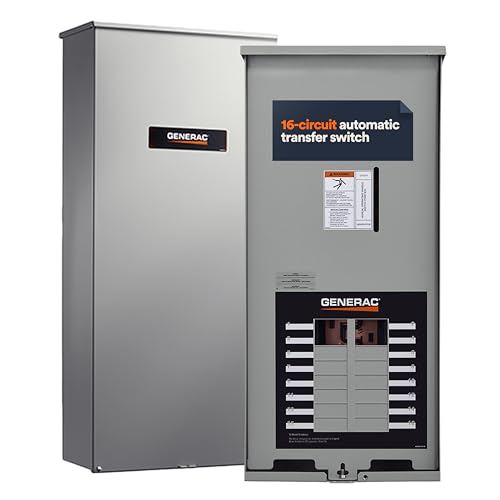
The Generac RXG16EZA3 16-Circuit 100 Amp Transfer Switch stands out as an excellent choice for homeowners seeking reliable backup power for essential circuits during outages. This automatic transfer switch is designed for air-cooled generators and features an integrated load center, perfect for large main services. With a durable aluminum NEMA 3R enclosure, it provides all-weather protection. The 16-space breaker panel allows you to customize your circuit needs. It’s vital to have this installed by certified electricians to guarantee peak performance. Rated 4.3 out of 5 stars, it’s a trusted option for seamless power management.
Best For: Homeowners looking for a reliable solution to provide backup power for essential circuits during outages.
Pros:
- Durable Construction: The aluminum NEMA 3R enclosure ensures all-weather protection and longevity.
- Customizable Circuit Needs: The 16-space breaker panel allows for tailored configuration of electrical circuits.
- Seamless Power Management: Heavy-duty contactors provide reliable switching between utility and generator power.
Cons:
- Professional Installation Required: Installation must be performed by certified electricians, which may add to overall costs.
- Limited to Air-Cooled Generators: This transfer switch is specifically designed for air-cooled generators, limiting compatibility with other types.
- Weight: At 28.5 pounds, it may require additional effort to install and handle.
Connecticut Electric EmerGen Transfer Switch – 50 Amp, 10-Circuit

For homeowners and small businesses seeking reliable power during outages, the Connecticut Electric EmerGen Transfer Switch – 50 Amp, 10-Circuit stands out as an ideal solution. With a capacity of 12,500 watts, it efficiently distributes power across 10 circuits, accommodating portable generators up to 50 amps. This switch is perfect for critical equipment like well pumps and HVAC systems. Its specialized design supports both 240-volt applications and standard household circuits. Plus, the complete installation kit includes a weather-resistant power inlet box and a 25-foot connecting cord. Safety features, including advanced rocker switch technology, guarantee protection for you and your generator.
Best For: Homeowners and small businesses looking for a reliable power solution during outages.
Pros:
- Efficient Power Distribution: Capable of distributing power across 10 circuits, accommodating essential equipment.
- Safety Features: Advanced double-throw rocker switch technology prevents back feeding, ensuring safety for both users and utility workers.
- Complete Installation Kit: Comes with all necessary components, including a weather-resistant power inlet box and a 25-foot connecting cord for easy setup.
Cons:
- Limited to 50 Amps: May not be suitable for larger homes or businesses with higher power needs.
- Requires Professional Installation: Proper installation may necessitate hiring a qualified electrician, adding to overall costs.
- Dependent on Portable Generators: Requires a compatible portable generator, which may not be included or readily available.
Generac HomeLink 30-Amp Portable Generator Transfer Switch
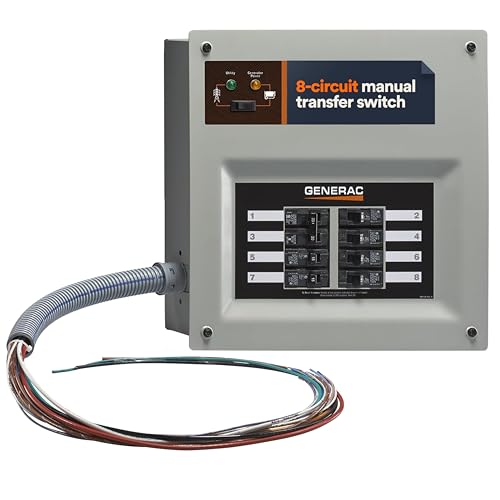
Looking for a reliable way to power essential circuits during an outage? The Generac HomeLink 30-Amp Portable Generator Transfer Switch is your solution. Pre-wired for 8 circuits and expandable to 10, this manual transfer switch routes generator power seamlessly to your home’s critical circuits. Weighing just 26 pounds, it’s compact yet powerful, supporting up to 30 amps and 3600 watts. An electronic rocker switch allows quick shifts between utility and generator power, while indicator lights keep you informed. Recommended installation by a certified electrician guarantees compatibility with various breakers, making it an excellent choice for your power management needs.
Best For: Homeowners looking for a dependable solution to power essential circuits during power outages.
Pros:
- Expandable Capacity: Pre-wired for 8 circuits and expandable to 10, providing flexibility for future power needs.
- Quick Operation: Electronic rocker switch allows for fast and easy switching between utility and generator power.
- Compatibility: Works with various breaker types and is compatible with Generac Home Standby Generators up to 11 kW.
Cons:
- Installation Requirement: Recommended to be installed by a certified electrician, which may incur additional costs.
- Limited Power Rating: Maximum power output of 30 amps and 3600 watts may not be sufficient for larger homes or appliances.
- Weight: At 26 pounds, it may be cumbersome for some users to handle during installation.
PN Series 200 Amp 8-Space Trailer Panel

Engineered for quick installation, the PN Series 200 Amp 8-Space Trailer Panel is an ideal choice for contractors and DIY enthusiasts alike. With its plug-on neutral design, you’ll appreciate the ease of setup and over 4 inches of wire bending space. This panel features two factory-installed ground bars and supports a 1-phase, 3-wire, 120/240V system, making it versatile for various applications. Its NEMA Type 3R enclosure guarantees durability for outdoor use, while the impressive interrupt rating of 22,000 AIC assures reliable performance. Plus, with a solid customer rating of 4.7 out of 5 stars, you can’t go wrong.
Best For: Contractors and DIY enthusiasts looking for a reliable and easy-to-install trailer panel for various electrical applications.
Pros:
- Plug-on neutral design allows for quick and hassle-free installation.
- Durable NEMA Type 3R enclosure ensures suitability for outdoor use.
- High interrupt rating of 22,000 AIC provides excellent performance and reliability.
Cons:
- The panel may be bulkier than some alternatives, making installation in tight spaces more challenging.
- Limited to 1-phase, 3-wire systems, which may not suit all applications.
- Some users may find the initial cost higher compared to basic panels.
Jackery Explorer 1000 v2 Portable Power Station

The Jackery Explorer 1000 v2 Portable Power Station is an ideal choice for outdoor enthusiasts and emergency preparedness aficionados. Weighing just 23.8 lbs, it’s compact and equipped with a foldable handle for easy transport. With a powerful 1070Wh LiFePO4 battery, it delivers 1500W AC output, peaking at 3000W. You can fast charge it from 0% to 100% in just one hour using the Jackery App. Enjoy versatile connectivity with various ports, including two USB-C and three AC outlets. Plus, its battery lasts over 10 years, retaining over 70% capacity after 4,000 cycles, ensuring reliable power for years to come.
Best For: Outdoor enthusiasts and emergency preparedness aficionados looking for a reliable and portable power source.
Pros:
- Fast charging capability from 0% to 100% in just one hour.
- Long battery lifespan of over 10 years with high capacity retention after multiple charge cycles.
- Versatile connectivity with multiple output ports, including USB-C and pure sine wave AC outlets.
Cons:
- Weighs 23.8 lbs, which may be heavy for some users to carry.
- Not compatible with solar panels other than Jackery’s own.
- Cannot deliver to PO Box addresses, requiring a physical address for orders.
Factors to Consider When Choosing Critical Load Panels for Generator
When choosing critical load panels for your generator, you need to take into account several key factors. Load capacity requirements, circuit configuration flexibility, and installation ease can greatly impact your setup. Additionally, don’t overlook safety features and compatibility with your generator to guarantee a seamless operation.
Load Capacity Requirements
Choosing the right critical load panel for your generator hinges on understanding load capacity requirements. First, assess the total wattage of the devices you’ll power during an outage to guarantee the panel can handle the load. Look for a panel with a current rating that meets or exceeds your generator’s output, typically available in 30 Amp, 50 Amp, or 100 Amp configurations. Don’t overlook starting wattage, as some appliances need a higher surge capacity than their running wattage. Make sure the panel has enough circuit positions for all essential circuits, with room for future expansion. Finally, ensure compliance with local electrical codes, as regulations can vary by region, impacting load capacity and installation practices.
Circuit Configuration Flexibility
Understanding circuit configuration flexibility is essential for optimizing your generator’s performance during outages. This flexibility allows you to customize power distribution based on your specific needs, effectively accommodating various electrical loads. Look for panels with multiple circuit spaces, like 16-circuit configurations, enabling you to prioritize and manage essential loads during emergencies.
Additionally, the ability to accept different breaker types—standard, tandem, GFCI, and AFCI—enhances your adaptability to circuit requirements. Some panels also feature plug-on neutral designs, which simplify installation and make circuit modifications easier. Efficient load management becomes possible with features that allow for specific load prioritization, ensuring that critical circuits stay powered when you need them most.
Installation Ease and Accessibility
Optimizing circuit configuration flexibility sets the stage for considering installation ease and accessibility in critical load panels for generators. First, check the installation requirements—whether the panel suits wall mount or outdoor enclosure placement. This guarantees it fits your available space. Look for user-friendly designs, like plug-on neutral features, which simplify the installation process and cut down on labor time. Ample wire bending space and factory-installed ground bars are essential for easier electrical connections. Choosing panels that allow circuit customization helps tailor load management to your specific power needs. Finally, make certain certified electricians can perform the installation, guaranteeing compliance with safety standards and regulations. This combination of factors will streamline your setup and enhance overall efficiency.
Safety Features and Compliance
When selecting critical load panels for generators, it’s vital to prioritize safety features and compliance with electrical standards to guarantee reliable operation. Look for panels that include integrated automatic transfer switches to prevent backfeeding, which protects utility workers during outages. Ascertain the panel meets NEC and UL ratings for safe and dependable use. If you plan an outdoor installation, a weather-resistant enclosure like NEMA Type 3R is essential to withstand environmental conditions. Additionally, features like brownout protection help manage voltage instability, safeguarding your devices. Finally, clear labeling and indicator lights for power status offer immediate visual feedback, enhancing user safety by showing whether the panel is receiving utility or generator power.
Compatibility With Generators
Safety features and compliance are just the starting points in selecting critical load panels for generators. First, make sure the panel matches your generator’s voltage and current ratings—typically 120/240V and 100-200 Amps. This guarantees compatibility and safe operation. Next, check if the panel supports the necessary circuits for the essential loads you want to power during an outage. Look for automatic transfer capabilities that enable seamless switching between grid and generator power without manual intervention. Additionally, verify that the panel includes integrated safety features like brownout protection to safeguard against voltage fluctuations. Finally, confirm that it meets local electrical codes and standards, ensuring it’s suitable for your specific generator model.
Material Durability and Protection
Choosing the right material for critical load panels is essential for ensuring their longevity and reliability. You’ll want to take into account durable options like aluminum or steel, which can withstand outdoor conditions and resist corrosion. Look for panels with NEMA ratings, such as NEMA 3R, indicating they’re designed to protect against rain, sleet, and snow. Heavy-duty contactors enhance durability, ensuring reliable switching between utility and generator power, which minimizes wear and tear. Additionally, proper insulation and weatherproofing are crucial to prevent moisture ingress, maintaining electrical integrity and safety. Finally, pay attention to the panel’s weight and construction; heavier panels typically provide better protection and stability against environmental factors.
Power Transfer Mechanism
Material durability plays a significant role in the performance of critical load panels, but the power transfer mechanism is equally important for guaranteeing reliable operation during outages. You can choose between manual and automatic systems, with automatic systems enabling seamless shifts from utility to generator power. Open transition transfer switches momentarily disconnect from the utility, preventing backfeed and enhancing safety. In contrast, closed transition switches allow a brief overlap of power sources, guaranteeing continuous supply. Additionally, consider brownout protection features to safeguard sensitive equipment from voltage instability. It’s vital that the transfer switch matches your generator’s capacity and your home’s load requirements, typically ranging from 30 Amps to 200 Amps, to guarantee efficient power management.
Warranty and Support Options
When it comes to critical load panels for generators, warranty and support options can greatly influence your decision. Consider the warranty duration offered; longer warranties often signal a manufacturer’s confidence in their product’s durability and performance. Look for clear support options, including accessible customer service to help with installation and troubleshooting. It’s essential that the warranty covers both parts and labor, as this can considerably lower your long-term maintenance costs. Be aware of any specific conditions that could void the warranty, like installation requirements or usage limitations. Finally, a robust return policy, such as a 30-day satisfaction guarantee, gives you peace of mind if the panel doesn’t meet your needs or expectations.