Finding the correct breaker before replacing an outlet, switch, or fixture can make a DIY electrical project faster and safer. The best circuit breaker finders combine reliable panel identification with practical outlet and GFCI testing features.
We compared 10 popular options based on testing functions, included adapters, display clarity, ease of use, and value for common household troubleshooting.
Best 10 DIY Circuit Breaker Finders Picks for 2026
Best Overall
Klein Tools ET310 AC Circuit Breaker Finder
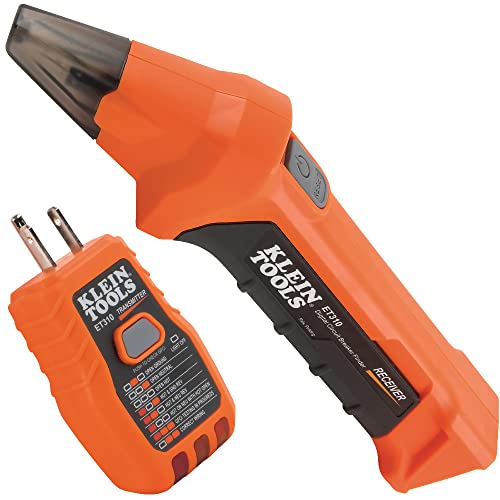
- Two-part transmitter and receiver system
- Visual and audible breaker confirmation
- Built-in GFCI outlet tester
Best For: Straightforward home circuit tracing
Best Feature Set
KAIWEETS KT301P Circuit Breaker Finder

- Backlit LCD shows voltage and signal strength
- Adds GFCI, wiring, and NCV testing
- Includes adapters and carrying case
Best For: Detailed residential and commercial diagnostics
Best Adapter Kit
Klein Tools ET310KIT Circuit Breaker Finder Kit

- Includes light-socket and grounding adapters
- Alligator clip supports bare-wire testing
- Adds GFCI testing to breaker tracing
Best For: Tracing outlets, fixtures, and bare wires
Best Ready-to-Use Kit
Digital LCD Circuit Breaker Finder & GFCI Tester

- LCD displays voltage and signal strength
- Includes batteries, screwdriver, and case
- Tests breakers, outlets, and GFCI protection
Best For: Portable household circuit troubleshooting
Complete Safety Kit
KAIWEETS Circuit Breaker Finder Kit

- Combines breaker tracing, GFCI testing, and non-contact voltage detection.
- Includes dual-sided wiring display and seven wiring-condition checks.
- Comes with adapters, flashlight-equipped tester, and carrying case.
Best For: DIYers wanting a broad electrical troubleshooting kit
Simple Digital Tracing
AstroAI Circuit Breaker Finder

- Uses a transmitter and digital receiver to locate household breakers.
- Provides beeps, red flashes, and panel illumination.
- Adds GFCI testing plus auto-shutdown and low-battery alerts.
Best For: Routine household breaker tracing and outlet checks
Display-Driven Diagnosis
Goldeep Circuit Breaker Finder

- Backlit LCD displays wiring status, voltage, and signal strength.
- Uses light, buzzer, and vibration alerts for breaker identification.
- Includes GFCI fault diagnosis, NCV detection, batteries, and adapters.
Best For: Users who prefer detailed visual and multi-alert feedback
Most Complete Kit
Digital Circuit Breaker Finder with GFCI Tester

- LCD shows voltage and signal strength
- Tests GFCI and six wiring conditions
- Includes three useful circuit adapters
Best For: DIYers wanting comprehensive circuit diagnostics
Easiest to Use
KAIWEETS Finder with Dual LED GFCI Tester

- Two-scan tracing needs no sensitivity adjustment
- Flashlight and audible breaker alerts
- Dual-sided six-LED GFCI display
Best For: Simple residential and maintenance troubleshooting
Best Overall – Klein Tools ET310 AC Circuit Breaker Finder
For DIY circuit breaker finders, the Klein Tools ET310 is a straightforward two-part system for tracing 90–120V AC circuits. Plug the transmitter into an outlet or fixture, then scan the electrical panel with the receiver for visual and audible confirmation.
Best For: Homeowners who want a simple breaker finder with an integrated GFCI tester.
Pros:
- Uses a transmitter and receiver for targeted breaker identification.
- Provides both visual and audible signals when the correct breaker is located.
- Includes a built-in GFCI outlet tester for checking wiring conditions and GFCI devices.
- Works on common 90–120V AC circuits.
Cons:
- Its stated operating range is limited to 90–120V AC circuits.
- The basic package does not list the expanded adapters included with the kit version.
The ET310 is a practical choice when you want familiar controls and essential circuit identification in one compact, battery-powered tool.
Best Feature Set – KAIWEETS KT301P Circuit Breaker Finder
The KAIWEETS KT301P stands out among DIY circuit breaker finders with a backlit LCD, outlet-wiring diagnostics, non-contact voltage testing, and multiple adapters. It is designed for North American 120V AC troubleshooting in residential or commercial settings.
Best For: DIYers and professionals who want expanded diagnostics and accessories in a portable kit.
Pros:
- LCD displays voltage from 30–150V, wiring status, and signal strength.
- Combines breaker finding, outlet testing, GFCI testing, and non-contact voltage detection.
- Automatic GFCI trip testing can display wiring conditions and retain readings with auto-hold.
- Includes light-socket, grounding, and alligator-clip adapters plus a carrying case.
Cons:
- The feature-rich interface may be more than needed for basic breaker identification.
- The supplied specifications identify it primarily for North American 120V AC circuits.
Choose the KT301P if reading voltage and signal strength, checking outlet faults, and carrying several connection options matter as much as locating the breaker.
Best Adapter Kit – Klein Tools ET310KIT Circuit Breaker Finder Kit
For DIY circuit breaker finders that need to reach beyond standard outlets, the Klein Tools ET310KIT adds practical connection options to the core transmitter-and-receiver design. It supports 90–120V AC circuit identification and includes adapters for lighting fixtures, grounding, and bare-wire testing.
Best For: DIY electrical troubleshooting involving outlets, light sockets, and accessible bare wires.
Pros:
- Provides visual and audible confirmation when the correct breaker is found.
- Includes a GFCI outlet tester for checking wiring and GFCI devices.
- Light-socket and 3-prong-to-2-prong adapters broaden connection options.
- Alligator-clip adapter supports testing on bare wires.
Cons:
- Designed around a 90–120V AC operating range.
- The additional adapters make the kit less minimal than the standalone finder.
The ET310KIT is the stronger pick when a standard outlet connection is not enough and you want the included accessories organized as one three-piece kit.
Best Ready-to-Use Kit – Digital LCD Circuit Breaker Finder & GFCI Tester
This digital kit gives DIY circuit breaker finders a readable way to monitor voltage and signal strength while tracing 90–135V circuits. It combines breaker finding, outlet testing, and GFCI testing, and arrives with batteries, a screwdriver, and a carrying case.
Best For: DIY users who want a complete, portable kit with LCD feedback and included batteries.
Pros:
- LCD provides real-time voltage and signal-strength information.
- Automatic GFCI testing and red/green indicators help identify wiring faults.
- Includes a transmitter, receiver, screwdriver, batteries, manual, and carrying case.
- Impact-resistant ABS housing and a 0.9-pound listed weight support portability.
Cons:
- Its stated compatible range is limited to 90–135V electrical circuits or outlets.
- The supplied notes identify it as a CAT II 135V tool, so it is not presented for higher-voltage systems.
This is a convenient option when you want digital readings and a ready-to-use package for household or compatible commercial circuit troubleshooting.
Complete Safety Kit – KAIWEETS Circuit Breaker Finder Kit
For DIY circuit breaker finders shoppers who want more than basic breaker tracing, the KAIWEETS kit combines a circuit breaker finder, GFCI tester, and non-contact voltage tester. Its adapters and carrying case also make it practical for checking outlets, light sockets, fixtures, and accessible wires.
Best For: Homeowners, DIYers, maintenance workers, and electricians who want breaker tracing plus voltage and outlet safety checks.
Pros:
- Includes a breaker finder, non-contact voltage tester, GFCI tester, adapters, and carrying case.
- Two-scan breaker tracing process operates on 90–120V AC circuits.
- Dual-sided GFCI tester displays seven common wiring conditions.
- Non-contact tester offers audible and visual alerts, dual voltage ranges, and a built-in flashlight.
Cons:
- The breaker finder is intended for 90–120V AC circuits.
- The kit has more components to organize than a basic breaker tracer.
This is the most comprehensive choice of the three for DIY electrical troubleshooting. The separate voltage tester adds a useful verification step before working around outlets, switches, or wires.
Simple Digital Tracing – AstroAI Circuit Breaker Finder
The AstroAI is a straightforward option among DIY circuit breaker finders, pairing a digital receiver with an outlet transmitter. Plug it into an outlet or light socket, scan the panel, and use its audio and visual alerts to identify the matching breaker in standard household circuits.
Best For: DIYers, homeowners, and electricians who need quick breaker identification with integrated GFCI testing.
Pros:
- Digital receiver is designed to filter interference and reduce manual testing.
- Audio and red-light alerts indicate the identified breaker.
- Built-in LED helps illuminate dark breaker panels.
- Includes GFCI testing, auto-shutdown, low-battery alerts, and four adapters.
Cons:
- Supports 90–120V AC systems, so its range is focused on standard household circuits.
- It does not include a separate non-contact voltage tester.
The AstroAI focuses on the core breaker-finding task without adding a separate voltage detector. Its transmitter, receiver, adapters, and GFCI function make it a practical general-purpose option for household circuit work.
Display-Driven Diagnosis – Goldeep Circuit Breaker Finder
For DIY circuit breaker finders users who prefer visible feedback, the Goldeep combines breaker tracing, outlet diagnosis, GFCI testing, and non-contact voltage detection. Its backlit LCD tracks wiring status, voltage, and signal strength, while the receiver adds red-light, buzzer, and vibration alerts.
Best For: DIY users and electricians who want multiple alerts and a backlit display for dim panels or tight work areas.
Pros:
- LCD shows outlet wiring status, voltage, and signal strength with backlighting.
- Receiver uses red light, buzzer, and vibration to identify the target breaker.
- GFCI tester checks six common wiring faults and supports automatic trip testing.
- Includes NCV detection, adapters, batteries, and a carrying case.
Cons:
- Its listed CAT II safety rating is 135V, so users should match it to the intended application.
- The feature-rich display and multiple alerts may be more than needed for basic breaker tracing.
The Goldeep stands out when readable measurements and several alert modes matter. Its LCD and vibration feedback can be especially useful when working in dim or confined spaces, while the built-in wiring diagnosis broadens its usefulness beyond breaker identification.
Most Complete Kit – Digital Circuit Breaker Finder with GFCI Tester
For DIY circuit breaker finders shoppers who want more than basic breaker tracing, this all-in-one kit combines circuit identification, outlet testing, and GFCI diagnostics. Its LCD shows voltage and signal strength, while the included adapters extend testing to light sockets and bare wires.
Best For: Homeowners and DIYers handling varied residential or commercial electrical troubleshooting tasks.
Pros:
- LCD provides real-time 90–135V readings and signal strength.
- Tests outlets, GFCI protection, and six common wiring faults.
- Includes light socket, grounding, and alligator clip adapters.
- Comes with batteries, screwdriver, manual, and carrying case.
Cons:
- Its broader feature set may be more than needed for simple breaker identification.
- Designed for 90–135V AC circuits, so compatibility is limited outside that range.
This is the strongest choice when diagnostic information and accessory flexibility matter more than having the simplest possible tool. The ETL-certified CAT II 135V rating and portable case add practical value for routine inspections.
Easiest to Use – KAIWEETS Finder with Dual LED GFCI Tester
Among DIY circuit breaker finders, the KAIWEETS KT302P emphasizes straightforward operation. Its two-scan process helps locate the matching breaker without manual sensitivity adjustments, and the receiver adds audible, visual, and flashlight assistance for darker panels.
Best For: Homeowners, maintenance staff, and electricians who want simple breaker tracing with clear indicators.
Pros:
- Two-scan operation avoids manual sensitivity adjustments.
- Receiver combines LED confirmation, audible alerts, and a flashlight.
- Dual-sided six-LED display makes GFCI results visible from either outlet orientation.
- Includes grounding, light socket, and alligator clip adapters.
Cons:
- Its operating range is limited to 90–120V AC circuits.
- The supplied notes do not mention an LCD voltage or signal-strength readout.
This model is a practical pick for routine breaker identification when ease of use is the priority. The dual-sided transmitter display is especially convenient when outlets are installed ground-up or ground-down.
Best Adjustable Tracing – NOYAFA Finder with NCV and GFCI Tester
DIY circuit breaker finders are easier to use when sensitivity can be fine-tuned near the target panel. The NOYAFA NF-827 offers adjustable receiver sensitivity, non-contact voltage detection, audible and visual alerts, and adapters for outlets, light fixtures, and bare wires.
Best For: DIYers who want adjustable tracing and added non-contact voltage functionality.
Pros:
- Adjustable sensitivity helps narrow down the correct breaker.
- Includes NCV detection, automatic shutdown, flashlight, and low-power indicator.
- Tests GFCI protection and works with standard 90–120V AC, 50/60Hz systems.
- Supplied EVA case and three adapters improve portability and compatibility.
Cons:
- Its stated operating range is limited to 90–120V AC systems.
- The notes do not specify an LCD readout for voltage or signal strength.
The NOYAFA stands out for users who prefer control over the tracing process rather than a fully preset scan. NCV detection and the included case make it a versatile option for basic electrical checks and circuit identification.
How We Picked the Best DIY Circuit Breaker Finders
We focused on tools designed for household 90–135V AC circuits and compared the features that matter most during real troubleshooting. Our evaluation considered breaker-identification accuracy, GFCI testing, voltage indication, display readability, included accessories, portability, and overall ease of use.
Combination kits received particular attention because adapters for light sockets, grounded outlets, and two-prong receptacles can make a finder more useful throughout an older or newer home. We also favored products with clear operating instructions and safety-oriented indicators, while recognizing that no handheld finder replaces proper electrical practices.
Quick Comparison
- Best basic option: A dedicated AC breaker finder is a sensible choice if you mainly need to identify the correct breaker.
- Best for broader testing: Kits that include a GFCI outlet tester and voltage tester provide more information at each outlet.
- Best for older homes: Models with light-socket and two-prong adapters offer better access to less-standard receptacles.
- Best for visibility: LCD-equipped finders make readings easier to interpret in dim panels or busy work areas.
Key Buying Factors for DIY Circuit Breaker Finders
Compatibility and Circuit Range
Check that the tool supports the voltage range used in your home. Most products here target standard North American residential circuits, but the stated range and outlet configuration can vary.
Breaker-Finding Performance
A finder should produce a clear, repeatable indication at the panel rather than forcing you to guess between nearby breakers. Keep the transmitter firmly connected and follow the manufacturer’s scanning procedure for the best result.
GFCI and Wiring Checks
A built-in outlet tester can identify common wiring conditions and help test GFCI operation. Treat these readings as screening information, not a complete inspection or diagnosis of every electrical fault.
Accessories and Usability
Consider whether you need a flashlight, non-contact voltage detection, light-socket adapter, grounding adapter, or dual-LED indicators. More accessories add versatility, but a simpler tool may be easier to carry and quicker for basic breaker mapping.
Safety Limitations
Turn off power before opening boxes or handling conductors, and never rely solely on a breaker finder to confirm that a circuit is de-energized. Use an appropriately rated meter or tester and consult a licensed electrician when wiring is damaged, unfamiliar, or unsafe.
Who Should Buy Which DIY Circuit Breaker Finders?
Choose a basic Klein Tools or comparable dedicated finder if your main goal is labeling breakers during routine home maintenance. Select a KAIWEETS, AstroAI, Goldeep, NOYAFA, or similar multifunction kit if you want outlet testing and additional indicators in one tool. A kit with multiple adapters is the better match for older homes, mixed receptacles, or light fixtures. For occasional DIY work, prioritize simple controls and clear instructions; for frequent troubleshooting, spend more on durable construction, broader testing functions, and a readable display.