A thermal camera can reveal heat patterns that ordinary phone cameras miss, helping you spot insulation gaps, overloaded circuits, plumbing leaks, and HVAC problems before they become expensive repairs.
These 10 DIY thermal imaging cameras range from compact phone-connected modules to higher-resolution handheld units. The right choice depends on the detail you need, the device you own, and how often you plan to use it.
Best 10 DIY Thermal Imaging Cameras Picks for 2026
Best Smartphone Add-On

- 192×192 infrared resolution with a 50° field of view
- USB-C plug-and-play smartphone operation
- -4°F to 752°F range with stated ±2% accuracy
Best For: Portable DIY inspections using a compatible smartphone
Best Touchscreen Controls
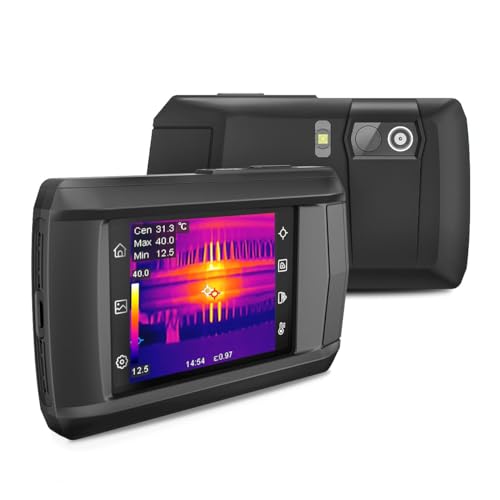
- 3.5-inch touchscreen with five viewing modes
- 50° field of view and configurable temperature alerts
- Live super resolution up to 240×240 viewing and capture
Best For: Easy-to-operate inspections with visual overlays and recording
Best High-Resolution Handheld
Thermal Master Thor002 Thermal Camera

- Enhanced 512×384 thermal view with 40mK sensitivity
- Up to 10.5 hours of battery life
- Wireless transfer, 32GB storage, and rugged IP54 design
Best For: Detailed, extended inspections and field documentation
Detailed Standalone Pick

- 320×240 display with TISR-enhanced thermal detail
- 8GB storage for over 20,000 images and videos
- Windows analysis software, alarms, laser, and IP54 housing
Best For: DIY inspections needing onboard storage and reporting tools
Most Portable Phone-Based Pick

- USB-C compatibility with supported phones and tablets
- 512×384 TISR-enhanced imagery at 25Hz
- Tiny 1.1-ounce design for on-the-go inspections
Best For: Portable inspections using a compatible USB-C mobile device
Best Home Inspection Pick

- 240 × 240 imaging and 25Hz refresh rate
- -4°F to 1,022°F measurement range
- Alarms, six palettes, and IP54 protection
Best For: Home, automotive, leak, and circuit inspections
Best Long-Use Option

- Thermal and thermometer modes
- Lightweight 240g design
- Up to 14 hours of battery life
Best For: Extended household, HVAC, and automotive inspections
Best Phone-Connected Pick

- 384 × 384 processed thermal images
- Compatible with iOS, Android, and Windows
- 30g design with analysis and reporting tools
Best For: Phone-based home, HVAC, electrical, and vehicle checks
Best Smartphone Add-On – GOYOJO GW192A Thermal Camera
For DIY thermal imaging cameras that travel easily, the GOYOJO GW192A turns a compatible smartphone into a compact infrared inspection tool. Its 192×192 sensor, 50° field of view, and USB-C plug-and-play setup suit quick checks around the home, vehicle, HVAC equipment, and electrical systems.
Best For: Smartphone users who want a portable camera for leak detection, HVAC checks, home inspections, and DIY troubleshooting.
Pros:
- USB-C plug-and-play design requires no separate battery or pairing.
- 192×192 infrared resolution and 50° field of view support detailed, broad-area scans.
- Measures from -4°F to 752°F with stated ±2% accuracy.
- Very compact design weighs just 0.48 ounces.
Cons:
- Requires a compatible Android or iPhone 15/16/17-series smartphone.
- Its temperature range is narrower than some dedicated handheld models.
The GW192A is a practical choice when portability and smartphone convenience matter most. It is especially appealing for DIY users who prefer using their phone for viewing and documentation rather than carrying another standalone device.
Best Value Handheld – GT24S UIRA-IR Thermal Camera
The GT24S is a dedicated option for DIY thermal imaging cameras, combining a native 256×192 sensor with UIRA-IR enhancement to display a 320×240 image. Its dual imaging and thermometer modes, automatic temperature tracking, and 25 Hz refresh rate make it well suited to routine property and equipment checks.
Best For: DIYers who want a standalone thermal camera for home inspection, plumbing, HVAC, electrical, and automotive checks.
Pros:
- Native 256×192 hardware imaging is enhanced to a stated 320×240 display.
- Thermal Imaging and localized Thermometer modes provide flexible measurement.
- Broad -4°F to 1202°F operating range with stated ±2% accuracy.
- 2500mAh battery provides up to 10 hours of continuous runtime.
Cons:
- At 198g, it is less pocket-sized than a smartphone plug-in camera.
- Its advertised enhanced 320×240 view is based on UIRA-IR processing rather than the native sensor resolution.
With long battery life and a wide temperature range, the GT24S offers a balanced setup for repeated DIY inspections. The adjustable emissivity, distance settings, palettes, and temperature alarm add useful control for different surfaces and tasks.
Best Touchscreen Controls – HSFTOOLS HP96 Thermal Imager
The HP96 brings phone-like touchscreen controls and automated scene recognition to DIY thermal imaging cameras. Its 96×96 infrared sensor works with live super resolution, visible-light imaging, multiple viewing modes, temperature alarms, and built-in recording for more organized inspections.
Best For: DIY users who value an easy touchscreen interface, image overlays, anomaly alerts, and onboard photo or video documentation.
Pros:
- 3.5-inch touchscreen supports intuitive adjustments for modes, palettes, and temperature ranges.
- Offers Thermal, Visual, Fusion, PIP, and Blending viewing modes.
- 50° field of view and automatic maximum, minimum, and center temperature tracking support broad scans.
- Built-in storage can hold approximately 30,000 thermal images and 20 hours of video, according to the notes.
Cons:
- The base infrared sensor resolution is 96×96, with 240×240 provided through live super resolution.
- Scene recognition does not provide moisture readings.
- Battery life is listed at up to 4 hours, shorter than some alternatives.
The HP96 is a strong fit for hands-on users who want a self-contained interface instead of a phone accessory. Its visible camera, flashlight, recording features, and configurable alerts make it convenient for documenting home and equipment issues.
Best High-Resolution Handheld – Thermal Master Thor002 Thermal Camera
For demanding DIY thermal imaging cameras, the Thermal Master Thor002 emphasizes detail, endurance, and field-ready features. Its X³ processing boosts a 256×192 infrared input to a stated 512×384 display, while a visible-light camera, 25 Hz refresh rate, six measurement points, and wireless transfer support more involved inspections.
Best For: Advanced DIYers and professionals handling electrical, HVAC, mechanical, building, and longer on-site inspections.
Pros:
- 512×384 enhanced thermal resolution, 40mK sensitivity, and a 3.5-inch display provide detailed viewing.
- Measures six points at once and supports adjustable emissivity.
- 5000mAh battery delivers up to 10.5 hours of use and supports 18W fast charging.
- Includes Wi-Fi and USB image transfer, 32GB storage, voice notes, QR file management, and 4× digital zoom.
Cons:
- At 3.12 pounds, it is substantially heavier than the other listed options.
- The 512×384 output is produced by X³ enhancement from a 256×192 infrared source.
- Its larger feature set may be more than casual DIY inspection requires.
The Thor002 is the most fully equipped choice here for users who need detailed reports, extended runtime, and rugged handling. IP54 protection, two-meter drop resistance, laser positioning, and temperature alarms add practical value for frequent field work.
Detailed Standalone Pick – FOXWELL RT280
For DIY thermal imaging cameras, the FOXWELL RT280 is a practical standalone option with an integrated display, broad temperature range, and PC-based analysis tools. Its TISR enhancement, automatic temperature-point tracking, and rugged housing make it suited to documenting home, electrical, HVAC, automotive, and mechanical inspections.
Best For: DIY users who want a handheld camera with onboard storage, inspection alerts, and Windows reporting software.
Pros:
- 2.8-inch 320×240 display with TISR-enhanced 240×180 thermal detail.
- Measures from -4°F to 1022°F with ±3.6°F / ±2% accuracy and high/low alarms.
- Stores over 20,000 images and videos on built-in 8GB eMMC storage.
- Includes laser targeting, LED illumination, nine palettes, 6.6-foot drop resistance, and IP54 protection.
Cons:
- PC analysis software is for Windows and is not compatible with Mac.
- The device is a standalone handheld rather than a phone-connected camera.
The RT280 is a strong fit when inspection records and on-device usability matter more than extreme portability. Its Windows software adds useful measurement and reporting capabilities, while its storage and rugged design support repeated field use.
Smart Inspection Pick – HSFTOOLS HF96 AI Thermal Camera
The HSFTOOLS HF96 adds AI scene recognition to the usual thermal-camera functions, making it an appealing choice among DIY thermal imaging cameras for users who want help identifying likely leaks or insulation gaps. It combines thermal imaging, temperature measurement, and laser targeting in one handheld unit.
Best For: Home energy checks, HVAC maintenance, and DIY users who value automated anomaly recognition and long battery life.
Pros:
- IntellFault AI scene recognition helps identify water-leak and insulation-gap locations.
- Live super resolution enhances images to 240×240, with below-50mK sensitivity and 25Hz operation.
- Measures -4°F to 1022°F with ±3.6°F accuracy and supports adjustable alarms and emissivity.
- Offers up to 11 hours of battery life, 4GB storage, Windows software, and IP54 protection.
Cons:
- The AI scene feature requires downloading the latest firmware from the HSFTOOLS website.
- It does not provide moisture readings.
- Its PC software is Windows-focused, which may limit Mac users.
The HF96 stands out for guided DIY inspection workflows, especially around insulation and water-leak checks. Its long runtime and generous storage are useful for extended projects, though the lack of moisture readings means it should not replace a dedicated moisture meter.
Most Portable Phone-Based Pick – TOPDON TC002C Duo
For DIY thermal imaging cameras that prioritize portability, the TOPDON TC002C Duo plugs into compatible USB-C phones and tablets instead of using a separate screen. Its compact design, high-resolution enhancement, and broad temperature range make it convenient for quick home, automotive, HVAC, and electrical checks.
Best For: DIY users who already own a compatible USB-C iPhone, iPad, Android, or Windows device and want a pocket-sized thermal camera.
Pros:
- Works with USB-C smartphones and tablets across iOS, Android, and Windows.
- Enhances 256×192 thermal imagery to 512×384 with TISR and 25Hz refresh.
- Measures -4°F to 1022°F with up to ±2°C or 2% error and supports photo and video recording.
- Weighs 1.1 ounces and measures 2.8 × 1.7 × 0.55 inches for easy portability.
Cons:
- Requires a compatible USB-C host device and the TopInfrared app.
- It is not compatible with Mac devices or Android 16 devices temporarily.
- It does not include a built-in display or onboard storage.
The TC002C Duo is the easiest option to carry and deploy if your phone or tablet is compatible. It offers strong stated resolution and sensitivity for its size, but buyers should verify device compatibility before choosing this phone-powered design.
Best Home Inspection Pick – Flagfront YXI96
For DIY thermal imaging cameras aimed at home, automotive, and circuit checks, the Flagfront YXI96 combines 240 × 240 super-resolution imaging with a broad temperature range. Its alarm function, multiple palettes, and durable handheld design make it practical for routine inspections.
Best For: Homeowners and DIY users checking leaks, circuits, vehicles, and other heat-related problems.
Pros:
- 240 × 240 super-resolution imaging with a 25Hz refresh rate
- Measures from -4°F to 1,022°F with stated accuracy within 2%
- Temperature alarms and highest, lowest, and center readings help flag abnormalities
- 6.6-foot drop resistance and IP54 dust/water resistance support field use
Cons:
- The supplied details do not specify wireless connectivity or computer software
- Its handheld design requires carrying a separate thermal imaging device rather than using a phone
The YXI96 is a well-rounded choice when you want a dedicated DIY thermal imager with clear resolution, alarm-based anomaly detection, and added physical protection for inspection work.
Best Long-Use Option – GT14S Thermal Imaging Camera
If you need DIY thermal imaging cameras for extended inspection sessions, the GT14S stands out with a lightweight 240g body and a built-in 2500mAh battery rated for up to 14 hours. It also switches between thermal imaging and thermometer modes for broader measurement needs.
Best For: DIY inspectors who want a lightweight camera for household, HVAC, automotive, kitchen, and insulation checks.
Pros:
- Dual thermal imaging and thermometer modes support both scanning and point readings
- NETD below 50mK detects temperature differences down to 0.05°C
- 50° field of view, adjustable emissivity, and custom high/low alarms aid anomaly detection
- 2500mAh battery provides up to 14 hours of continuous use
Cons:
- The supplied notes do not state the image resolution
- It uses button controls rather than a phone-connected workflow
The GT14S is especially appealing for mobile users who value low weight and long battery life, while its thermometer mode adds flexibility for quick numerical temperature checks.
Best Phone-Connected Pick – TOPDON TC001 Mini
For DIY thermal imaging cameras that work with devices you already own, the TOPDON TC001 Mini connects to compatible iOS, Android, and Windows hardware. Its 384 × 384 processed images, inspection tools, and compact 30g design make it convenient for quick checks and reporting.
Best For: DIY users who prefer phone- or Windows-based thermal imaging for home, HVAC, electrical, automotive, and leak investigations.
Pros:
- 384 × 384 thermal images from a 96 × 96 sensor with TISR processing
- ≤40mK sensitivity and a 25Hz refresh rate support responsive thermal detail
- Works with compatible iOS, Android, and Windows devices
- Offers measurement points, areas, isotherms, alarms, reports, and AI-assisted explanations
Cons:
- Requires a compatible phone or Windows device to operate
- It has no built-in battery, so use depends on the connected device
- Compatibility and software features may vary by device and platform
The TC001 Mini is a strong fit for portable, app-based inspections, particularly if you want analysis, reporting, and guided interpretation instead of a standalone camera display.
How We Picked the Best DIY Thermal Imaging Cameras
We focused on features that matter during real home, vehicle, workshop, and maintenance tasks: infrared resolution, temperature measurement, image clarity, viewing comfort, portability, compatibility, and ease of use. The selection includes phone-connected cameras and standalone handheld models so you can match the tool to your workflow.
Higher resolution generally makes it easier to identify small hot or cold spots from a distance, while features such as thermometer modes, laser pointers, scene detection, and enhanced image processing can speed up troubleshooting. Specifications should still be treated as a starting point; surface type, distance, reflected heat, and environmental conditions affect every thermal reading.
Quick Comparison
| Type | Best for | Main advantage |
|---|---|---|
| Phone-connected camera | Portable inspections and occasional DIY work | Uses your phone screen and storage |
| Standalone handheld camera | Frequent home, HVAC, or electrical checks | Ready to use without a separate device |
| Higher-resolution model | Finding smaller temperature differences | More detailed thermal images |
| Entry-level model | Basic leaks, drafts, and hot-spot checks | Lower cost and simpler operation |
Key Buying Factors for DIY Thermal Imaging Cameras
Infrared Resolution and Image Processing
Resolution affects how much detail appears in the thermal image. Models such as 192×192 are suitable for broad household checks, while 320×240, 384×384, or 512×384 sensors can show smaller targets more clearly. TISR or similar enhancement modes may improve perceived detail, but they do not replace native sensor resolution.
Temperature Range and Accuracy
Choose a camera with a range appropriate for your projects. Home inspection and HVAC work usually require less range than automotive, electrical, or industrial troubleshooting. Look for adjustable emissivity, a center-point temperature reading, and clearly stated accuracy. Shiny metal and reflective surfaces can produce misleading results.
Phone Compatibility and App Experience
Phone-based cameras are compact, but check the connector, operating-system support, case clearance, and required app before buying. USB-C models may work across Android and newer iPhone or iPad devices, while Lightning compatibility may be limited. A standalone camera is often more convenient if you do not want to manage cables or battery drain.
Display, Controls, and Practical Features
A built-in screen, laser pointer, thermometer mode, scene detection, image capture, and a comfortable grip can make fieldwork faster. For tight spaces, prioritize a lightweight design. For repeated inspections, consider battery life, storage, charging, and whether saved images include temperature data.
Who Should Buy Which DIY Thermal Imaging Cameras?
- For occasional household checks: Choose an affordable phone-connected or compact camera for drafts, insulation, leaks, and basic electrical hot spots.
- For HVAC and plumbing work: Prioritize a handheld model with a thermometer mode, useful temperature range, and enough resolution to trace gradual temperature changes.
- For electrical troubleshooting: Select a camera with clear hot-spot visualization, reliable measurement controls, and a comfortable standalone design if you work frequently.
- For detailed inspections: Choose a higher-resolution model, especially when examining small components, distant surfaces, or subtle insulation differences.
- For maximum portability: A phone-connected module is easiest to keep in a tool bag, provided your phone and the camera connector are compatible.
Whichever model you choose, use thermal imaging as a diagnostic aid rather than definitive proof of a fault. Confirm suspicious readings with appropriate electrical, plumbing, or HVAC tests, and follow safety procedures around energized equipment and hot surfaces.