Cold weather can make EV charging less convenient, especially when connectors, cables, and outdoor charging equipment face moisture, ice, road salt, and temperature swings. The right adapter helps maintain compatibility without compromising charging safety.
This roundup compares 10 options across NACS, CCS, J1772, and Type 2 standards, with attention to electrical ratings, sealing, locking mechanisms, and everyday winter usability.
Best 10 Electric Vehicle Charging Adapters for Cold Climates Picks for 2026
Certified Supercharger Access
Lectron Vortex Plus NACS-to-CCS Adapter

- UL 2252 certified by SGS
- 500A/1,000V DC rating
- Secure interlock design
Best For: Supported CCS1 EVs using compatible Tesla Superchargers
Cold-Weather Protection

- Operates from -30°C to 50°C
- Temperature monitoring and cutoff
- IP54 dust and water resistance
Best For: Cross-region CCS1 and CCS2 charging
Weatherproof AC Flexibility
Lectron J1772-to-Tesla Adapter

- Operates from -30°C to 50°C
- IP67 weatherproof rating
- Supports up to 80A/240V AC
Best For: Tesla and NACS EV owners using J1772 chargers
Temperature-Sensing Fast Charging

- Up to 500A/1,000V DC
- Dual temperature sensor switches
- Compact 11.8-ounce design
Best For: Eligible CCS1 EVs using compatible DC fast chargers
Compact Cold-Weather Connector
Type 1 to Type 2 EV Charging Adapter

- 32A, 240V AC charging support
- Operates from -30°C to 50°C
- Compact body with IP54 rain protection
Best For: Type 2 EVs using Type 1 public or portable AC chargers
High-Power DC Travel Adapter
NACS to CCS1 Adapter for Tesla Superchargers
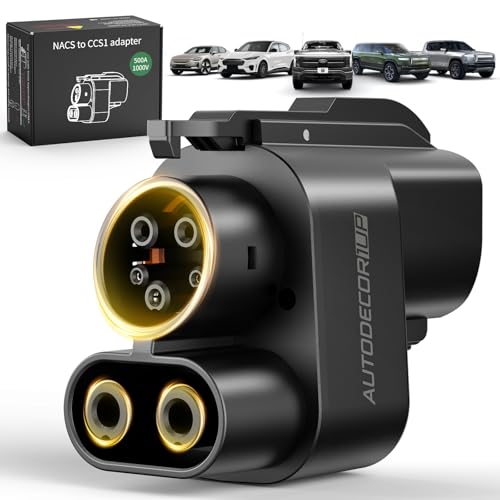
- Supports up to 250kW and 500A
- Designed for V3/V4 Tesla Superchargers
- IP65-rated with dual temperature sensors
Best For: Compatible CCS1 EVs needing supported Tesla Supercharger access
All-Weather AC Adapter
NACS to J1772 EV Charging Adapter

- Up to 80A at 240V AC
- IP55 weatherproof, rated to -22°F
- Compatible with Tesla Level 2 chargers
Best For: J1772 EVs using outdoor Tesla Wall Connectors or Destination Chargers
Cold-Ready Fast-Charging Access

- UL2252 certified with thermal monitoring and dual locking
- IP65 design for demanding outdoor conditions
- Up to 500A/1000V DC charging for authorized CCS1 EVs
Best For: Authorized non-Tesla CCS1 EV owners using high-speed charging networks
All-Weather Charging Flexibility

- Rated for operation from -30°C to 50°C
- IP65 water- and dust-resistant construction
- Supports up to 300A DC and 80A AC charging
Best For: CCS1 EV owners using CCS2 or Type 2 charging equipment
Weather-Resistant Home Charging

- IP67 protection for indoor or outdoor use
- UL2252 certified with temperature monitoring
- Up to 80A/240V Level 2 AC charging
Best For: J1772 EV owners using compatible Tesla AC charging equipment
Certified Supercharger Access – Lectron Vortex Plus NACS-to-CCS Adapter
For drivers comparing electric vehicle charging adapters for cold climates, the Lectron Vortex Plus is a high-power DC adapter with a secure interlock and UL 2252 certification. It is designed for supported CCS1 EVs that have automaker-authorized Tesla Supercharger access.
Best For: CCS1 EV owners who need a certified NACS-to-CCS adapter for compatible Tesla Supercharger locations.
Pros:
- UL 2252 certified by SGS for safety, thermal, and mechanical performance.
- 500A/1,000V rating supports high-speed DC charging.
- Built-in interlock helps maintain a secure connection.
- Two-year warranty and access to supported V3 and V4 Superchargers.
Cons:
- Only works with CCS1 EVs authorized for Tesla Supercharger access.
- Not compatible with Tesla vehicles or AC charging stations.
- Charging speed depends on the vehicle and Supercharger generation.
This is the strongest choice here for shoppers prioritizing documented certification and high-current DC performance. Confirm automaker compatibility before purchase, especially if winter travel plans depend on Supercharger access.
Cold-Weather Protection – XFGQMN CCS1-to-CCS2 Adapter
The XFGQMN CCS1-to-CCS2 adapter is a practical option for electric vehicle charging adapters for cold climates, with a stated operating range of -30°C to 50°C. It converts CCS1 connections to CCS2 and includes temperature monitoring that can pause charging when heat rises too far.
Best For: EV drivers crossing regions with CCS1 and CCS2 charging standards who want temperature and weather protection.
Pros:
- Operates in temperatures from -30°C to 50°C.
- Supports up to 400A/1,000V DC and 32A/250V AC.
- Temperature protection pauses charging above 85°C and can resume below 65°C.
- IP54-rated design with overvoltage, overcurrent, and overheat protection.
Cons:
- Some vehicles may require reinsertion before charging resumes after temperature protection activates.
- Actual charging speed varies by vehicle and charging system.
- Warranty information is not provided.
Its broad temperature range and protective controls make it appealing for mixed-weather travel. However, buyers should verify connector standards and vehicle protocols before relying on it for cross-region charging.
Weatherproof AC Flexibility – Lectron J1772-to-Tesla Adapter
For Tesla and NACS-alliance vehicles, the Lectron J1772-to-Tesla adapter expands access to Level 1 and Level 2 AC chargers. Its -30°C to 50°C operating range and IP67 weatherproof rating make it a useful consideration among electric vehicle charging adapters for cold climates.
Best For: Tesla and compatible NACS EV owners who want dependable access to J1772 AC charging at home, work, or on the road.
Pros:
- Rated for operation from -30°C to 50°C.
- Supports up to 80A and 240V AC.
- IP67 weatherproof construction suits outdoor charging.
- Compact plug-and-play design fits easily in a glove box.
Cons:
- Designed for AC charging rather than DC fast charging.
- Compatibility is focused on Tesla models and NACS-alliance EVs.
- Maximum charging rate depends on the vehicle and J1772 equipment.
This is a convenient cold-weather backup for everyday AC charging, particularly when J1772 stations are more available than NACS equipment. Its certifications and weatherproof rating add confidence for outdoor use, but it cannot provide DC fast charging.
Temperature-Sensing Fast Charging – A2Z EV Typhoon Pro Adapter
The A2Z EV Typhoon Pro is a high-current NACS-to-CCS1 adapter aimed at eligible CCS1 EVs using compatible Level 3 charging stations. Its dual temperature sensors can reduce power or stop charging when thresholds are reached, a useful feature when evaluating electric vehicle charging adapters for cold climates and changing battery conditions.
Best For: CCS1 EV drivers seeking a high-power DC adapter with integrated temperature response.
Pros:
- Rated up to 500A with liquid-cooled cables and 400A with non-liquid-cooled cables.
- Supports 100–1,000V DC charging.
- Dual sensors can derate or halt charging as temperatures rise.
- Compact 11.8-ounce design is easy to carry.
Cons:
- UL 2252 certification is in progress rather than completed.
- Not currently officially authorized for Tesla Supercharger use according to the supplied notes.
- Vehicle, station, cable, battery temperature, and network limits affect charging speed.
The Typhoon Pro offers impressive current capacity and more active temperature management than a basic adapter. Its pending certification and current network-authorization limitation make compatibility verification essential before purchase.
Compact Cold-Weather Connector – Type 1 to Type 2 EV Charging Adapter
For drivers comparing electric vehicle charging adapters for cold climates, this compact Type 1-to-Type 2 adapter offers a practical way to connect compatible vehicles to Type 1 public charging stations and portable chargers. It supports up to 32A and is rated for operation from -30°C to 50°C.
Best For: EV drivers with Type 2 vehicles who need a portable adapter for Type 1 AC charging stations and travel.
Pros:
- Supports up to 32A and 240V AC charging.
- Compact, palm-sized design is easy to store in a vehicle.
- IP54 rain protection and a stated operating range down to -30°C.
- Includes a 12-month replacement warranty and 24/7 online support.
Cons:
- Compatibility depends on the vehicle having a Type 2 charging connection.
- Designed for AC charging connections rather than high-power DC fast charging.
- The IP54 rating provides rain protection but is not a fully sealed waterproof rating.
This is a useful cross-regional charging accessory when connector compatibility and compact storage matter. Confirm your vehicle’s Type 2 inlet and the station’s Type 1 output before buying.
High-Power DC Travel Adapter – NACS to CCS1 Adapter for Tesla Superchargers
For long-distance drivers seeking electric vehicle charging adapters for cold climates, this NACS-to-CCS1 adapter is built for compatible CCS1 vehicles using V3 or V4 Tesla Superchargers. It supports up to 500A and 250kW, while dual temperature sensors and an IP65 rating add useful protection for demanding travel conditions.
Best For: Compatible Ford, Rivian, GM, Volvo, Polestar, Nissan, Mercedes-Benz, Honda, Lucid, Kia, Genesis, and Hyundai EVs that need access to supported Tesla Supercharger locations.
Pros:
- Supports up to 250kW, 500A, and 1000V DC input specifications.
- Designed for V3 and V4 Tesla Supercharger use.
- Built-in temperature sensors and IP65 water and dust resistance.
- Rated for 10,000 mating tests and a 6.5-foot drop test; includes one-year quality assurance.
Cons:
- Not compatible with home charging posts.
- Vehicle exclusions include certain Ford plug-in hybrids, 2012–2016 Ford Focus EVs, and 2013–2016 Chevy Spark EVs.
- The adapter stops working above 185°F and resumes after cooling.
This adapter can expand charging options on road trips, but its compatibility restrictions are important. Verify both your exact vehicle model and the Tesla charging station generation before relying on it for a journey.
All-Weather AC Adapter – NACS to J1772 EV Charging Adapter
For shoppers evaluating electric vehicle charging adapters for cold climates, the AFI NACS-to-J1772 adapter is designed for Level 1 and Level 2 AC charging in outdoor conditions. Its IP55 weatherproof housing is rated from -22°F to 122°F, and it supports up to 80A at 240V when the connected charging equipment and vehicle support those levels.
Best For: J1772 EVs and plug-in hybrids using Tesla Wall Connectors or Destination Chargers at homes, hotels, workplaces, apartments, and parking garages.
Pros:
- Supports up to 80A and 240V AC charging.
- IP55 weatherproof construction is rated for rain, snow, dust, and temperatures from -22°F to 122°F.
- Works with Tesla Level 2 chargers, including Gen 1 and Gen 2, according to the supplied notes.
- Includes a compact storage bag, one-year manufacturer warranty, and optional six-month extended warranty registration.
Cons:
- Limited to Level 1 and Level 2 AC charging; it is not a DC fast-charging adapter.
- The advertised 80A output requires compatible charging equipment and vehicle hardware.
- Users should confirm J1772 compatibility before purchasing, especially for plug-in hybrid applications.
With a broad temperature rating and weather-resistant housing, this is the most climate-focused option of the three for outdoor AC charging. Its main limitation is that it cannot provide DC fast-charging access.
Cold-Ready Fast-Charging Access – NACS to CCS1 DC Adapter
For drivers comparing electric vehicle charging adapters for cold climates, this NACS-to-CCS1 adapter emphasizes outdoor durability, safety monitoring, and high-power DC charging. Its IP65 enclosure and extreme-weather testing are useful considerations for winter road trips, provided your vehicle is an authorized CCS1-compatible model.
Best For: Non-Tesla CCS1 EV owners authorized to use North American high-speed charging networks.
Pros:
- UL2252-certified design with dual locking, thermal monitoring, and low-leakage circuitry.
- IP65 waterproofness and testing for extreme weather and heavy-duty conditions.
- Supports up to 500A/1000V DC charging, with claimed 10–80% charging in approximately 18–20 minutes depending on the vehicle and station.
- Access to more than 25,000 public fast-charging stations nationwide, subject to vehicle authorization.
Cons:
- Only works with authorized CCS1 vehicles; compatibility must be confirmed with the automaker.
- Not compatible with Tesla vehicles or AC charging stations.
- Actual charging speed varies by vehicle and charger.
This is a strong option for compatible CCS1 drivers who want high-power network access with weather-resistant construction. Confirm software, vehicle authorization, and connector compatibility before purchase.
All-Weather Charging Flexibility – CCS2 to CCS1 Adapter
This CCS2-to-CCS1 adapter is a practical candidate for shoppers seeking electric vehicle charging adapters for cold climates because it is rated for operation from -30°C to 50°C. It supports both DC fast charging and Type 2 AC charging, making it useful when charging equipment varies across a route.
Best For: CCS1 EV drivers who need compatibility with CCS2 DC stations and IEC Type 2 AC charging stations in changing weather.
Pros:
- Wide stated working-temperature range of -30°C to 50°C.
- IP65 protection against water and dust for rainy, snowy, or dusty conditions.
- Supports up to 300A/1000V DC and up to 80A AC charging.
- Silver-plated pure copper terminals are designed to improve conductivity and reduce heat generation.
Cons:
- Compatibility is limited to vehicles with CCS1 charging ports and suitable CCS2 or Type 2 equipment.
- It weighs about 2.43 pounds, which may be less convenient for compact storage.
- Maximum charging performance depends on the vehicle and charging station.
With its specified subfreezing operating range and dual AC/DC functionality, this adapter is well suited to varied charging environments. Verify your vehicle and station connector standards before relying on it for travel.
Weather-Resistant Home Charging – Lectron NACS to J1772 Adapter
For home and destination charging, this Lectron model is one of the more practical electric vehicle charging adapters for cold climates, with IP67 protection, reinforced housing, and built-in temperature monitoring. It converts NACS connections for J1772 EVs, but it is intended for Level 2 AC charging rather than Tesla Supercharging.
Best For: J1772 EV owners using Tesla Wall Connectors, Destination Chargers, or Mobile Connectors at home or on the road.
Pros:
- IP67 protection helps shield the adapter from dust and water for indoor or outdoor use.
- UL2252 certified and designed with built-in temperature monitoring.
- Supports up to 80A and 240V for high-speed Level 2 AC charging.
- Compatible with all J1772 EVs and includes a two-year warranty.
Cons:
- Not compatible with Tesla Superchargers.
- Limited to AC charging rather than DC fast charging.
- Actual charging output depends on the vehicle and charging equipment.
This is a sensible cold-weather adapter for J1772 drivers charging outdoors with compatible NACS equipment. Its IP67 rating adds useful weather protection, while the Supercharger limitation should be checked before buying.
How We Picked These Electric Vehicle Charging Adapters for Cold Climates
We focused on compatibility first, then compared each adapter’s stated voltage, amperage, charging mode, connector standard, weather-resistance claims, and safety features. Adapters with interlocks, durable housings, waterproof or weatherproof ratings, and clearly defined charging limits are better suited to exposed winter use than products with vague specifications.
Because cold-weather performance depends on the entire charging setup, an adapter’s rating is not a guarantee of faster charging. Your vehicle, charging station, cable, battery temperature, and local conditions can all reduce power.
Quick Comparison
| Adapter type | Best suited for | Important check |
|---|---|---|
| NACS to CCS1 | CCS1 vehicles using compatible Tesla Superchargers | Vehicle and station eligibility, plus locking compatibility |
| NACS to J1772 | J1772 vehicles using Tesla AC charging equipment | AC-only limits and maximum amperage |
| CCS1 to CCS2 | Connecting regional CCS standards | Whether AC, DC, or both charging modes are supported |
| J1772 to Type 2 | AC charging between Type 1 and Type 2 systems | Pin configuration, current rating, and connector fit |
Key Buying Factors for Cold-Climate EV Adapters
Compatibility and Charging Type
Match the adapter to your vehicle inlet and the charger plug. Do not assume that a physically compatible connector supports DC fast charging. NACS-to-CCS1 products are different from NACS-to-J1772 adapters, which are generally intended for AC charging.
Cold-Weather Construction
Look for robust molded housings, secure strain relief, sealed contacts, and an IP rating when the adapter will be used outdoors. Weather resistance helps with snow and moisture, but it does not mean the adapter should be left buried in ice, submerged, or connected while visibly wet inside the contacts.
Electrical Limits and Safety
Choose an adapter rated above the current your vehicle and charger can deliver, while following the lowest-rated component in the system. Safety interlocks, recognized certification, temperature monitoring, and clear manufacturer instructions are valuable. Never use a damaged, cracked, frozen, or overheated adapter.
Handling in Winter
A compact design is easier to store in the vehicle, but gloves can make stiff locking buttons and tight connectors difficult to operate. A tether, protective cap, or included case can help keep contacts clean and dry between uses.
Who Should Buy Which Electric Vehicle Charging Adapters for Cold Climates?
- CCS1 drivers needing Tesla fast charging: Choose a properly rated NACS-to-CCS1 adapter with an interlock and strong weather protection.
- J1772 drivers using Tesla AC equipment: Select a NACS-to-J1772 adapter rated for your vehicle’s maximum AC current.
- Drivers crossing CCS regions: Consider a CCS1-to-CCS2 adapter, but verify whether your intended setup requires AC, DC, or dual-mode operation.
- Type 1 and Type 2 AC users: A J1772-to-Type 2 adapter can be useful for compatible Level 1 or Level 2 connections, provided the pinout and current rating match.
For any of these Electric Vehicle Charging Adapters for Cold Climates, confirm vehicle approval and charger compatibility before purchase, and inspect the connector after every harsh-weather session.