If you’re looking to boost your home’s energy efficiency, choosing the right energy monitor is essential. With Ethernet connectivity, these devices offer reliable real-time tracking and data management. From the Emporia Vue 3 to the Sense Energy Monitor, each option has unique features that can help you optimize your energy usage. Discover which monitors stand out and how they can transform your energy management strategy for better savings.
Emporia Vue 3 Home Energy Monitor

If you’re looking for a reliable way to manage your home’s energy consumption, the Emporia Vue 3 Home Energy Monitor is the perfect choice. It’s UL Listed, ensuring safety and reliability while preventing hazards like overheating and short-circuiting. Installation is a breeze with clamp-on sensors that work in most circuit panels. You can easily monitor your appliances in real-time, gaining insights to reduce costs. The Emporia Energy App lets you automate settings, track solar usage, and export data effortlessly. With sixteen branch sensors for critical loads, you’ll have thorough control over your energy management and conservation efforts.
Best For: Homeowners looking to efficiently monitor and manage their energy consumption while ensuring safety and reliability.
Pros:
- UL Listed for safety, preventing hazards like overheating and short-circuiting.
- Easy installation with clamp-on sensors compatible with most circuit panels.
- Real-time monitoring and actionable insights to help reduce energy costs.
Cons:
- Requires a stable 2.4 GHz WiFi connection for full functionality.
- Additional sensor for 3-wire systems must be purchased separately.
- Limited cloud data retention for minute-level insights (only 7 days).
Eyedro Home Energy Monitor – Real-Time Electricity Usage Monitor

The Eyedro Home Energy Monitor stands out as the ideal choice for homeowners looking to gain real-time insights into their electricity usage. With its two 200A sensors and Ethernet connectivity, you can monitor your home’s energy consumption 24/7, whether you’re using solar, grid, or net metering. The MyEyedro cloud platform, accessible without a subscription, allows you to track energy waste and optimize your power system efficiently. Plus, it helps you identify energy hogs, ultimately lowering your utility bills. Supported by over a decade of reliable service, Eyedro empowers you to make informed energy choices effortlessly.
Best For: Homeowners seeking to monitor and optimize their electricity consumption with real-time insights.
Pros:
- Provides real-time data on energy usage and production, helping users save money.
- Compatible with both solar and grid energy systems, offering flexibility in monitoring.
- Access to the MyEyedro cloud platform without any subscription fees.
Cons:
- Requires two units to monitor both grid energy and solar generation simultaneously.
- Only compatible with 2.4 GHz WiFi networks or wired Ethernet, limiting connectivity options.
- Setup assistance may be necessary for less tech-savvy users, potentially leading to initial confusion.
Smart Home Energy Monitor with Circuit Sensor and Real-Time Tracking

For homeowners looking to optimize their energy usage, the Smart Home Energy Monitor (Model: EM16) stands out with its real-time tracking capabilities and advanced circuit sensors. This monitor supports up to 16 branch circuits, accurately measuring energy consumption with 98% precision. You can easily track power, current, and voltage using the Refoss app, helping you save 10%-20% on energy bills. The monitor also offers 36 months of historical data, smart consumption alerts, and effortless installation for various electrical systems. With its ETL certification and local data storage, you can manage your energy use confidently and efficiently.
Best For: Homeowners seeking to monitor and optimize their energy usage effectively.
Pros:
- Real-time energy monitoring allows for immediate adjustments to consumption habits.
- Supports a wide range of circuit configurations, making it versatile for different home setups.
- Local data storage ensures privacy and security without reliance on cloud processing.
Cons:
- Requires a firmware update for integration with Home Assistant, which may be a hassle for some users.
- The lack of API support limits advanced integrations with other smart home devices.
- The initial installation may be challenging for those unfamiliar with electrical systems.
Emporia Vue 3 Home Energy Monitor

Looking to take control of your energy consumption? The Emporia Vue 3 Home Energy Monitor offers real-time electricity usage tracking, ensuring you stay informed about your energy habits. This UL Listed device installs easily in your circuit panel and supports various home systems. With 24/7 monitoring, you can automate your energy usage and manage your solar production effectively. The Emporia Energy App allows you to receive actionable notifications and configure settings to reduce your bills. Plus, you can track individual appliances by adding branch sensors, giving you a thorough view of your energy consumption. Start optimizing your home today!
Best For: Homeowners looking to monitor and manage their energy consumption efficiently.
Pros:
- Real-time monitoring: Track electricity usage continuously to optimize energy habits.
- User-friendly app: The Emporia Energy App provides actionable notifications and easy configuration for energy management.
- Expandable system: Ability to add branch sensors for precise monitoring of individual appliances.
Cons:
- Requires Wi-Fi: A stable 2.4 GHz Wi-Fi connection is necessary for real-time data access.
- Additional cost for sensors: Branch sensors for appliance monitoring are sold separately, increasing overall investment.
- Installation complexity: May require professional installation for those unfamiliar with electrical systems.
Eyedro Business 3-Phase Energy Monitor (E5B-EW-E3-400A)

Designed specifically for businesses, the Eyedro Business 3-Phase Energy Monitor (E5B-EW-E3-400A) offers real-time monitoring that empowers you to track energy consumption and costs effectively. With high-resolution data accessible via My.Eyedro.com, you’ll see kWh, Watts, Amps, and more. Its 3 x 400A sensors allow non-invasive installation without special tools. You can connect via WiFi or Ethernet, and it supports various voltage options. Plus, you’ll enjoy 24/7 access to usage history, alerts, and detailed reports without any subscription fees. This monitor’s versatility makes it perfect for solar, grid-tie, and net metering applications.
Best For: Businesses looking for an efficient solution to monitor and manage their 3-phase energy consumption and costs in real-time.
Pros:
- High-resolution data and real-time monitoring available via My.Eyedro.com.
- Non-invasive installation with split-core sensors, requiring no special tools.
- Comprehensive data management features including alerts, reports, and 24/7 usage history without subscription fees.
Cons:
- Limited to 3-phase power systems, which may not suit all business types.
- Requires a North American power adapter; European adapters sold separately.
- Initial setup may require a learning curve for users unfamiliar with energy monitoring systems.
SIEMENS Inhab Smart Home Energy Monitor

The SIEMENS Inhab Smart Home Energy Monitor stands out for homeowners seeking thorough energy management. With real-time monitoring, you can track your energy usage 24/7 at both whole-home and circuit levels. This device connects directly to key appliances, ensuring no guesswork in your energy consumption. Its advanced features include time-of-use management, peak demand management, and personalized notifications for energy-saving opportunities. Weighing just 4.75 pounds and compatible with existing panels, installation is straightforward. Rated 4.4 stars by users, it’s a reliable choice for efficient energy management in your smart home. Plus, you get a 30-day return guarantee for peace of mind.
Best For: Homeowners looking for a comprehensive solution to monitor and manage their energy consumption effectively.
Pros:
- Real-Time Monitoring: Tracks energy usage continuously, allowing for informed decisions on energy consumption.
- Advanced Energy Management Features: Includes tools such as peak demand management and personalized notifications for savings opportunities.
- Easy Installation: Compatible with both new and existing electrical panels, making setup straightforward.
Cons:
- Weight: At 4.75 pounds, it may be bulkier than some users expect for an energy monitor.
- Limited to 16 Circuits: May not be suitable for larger homes with more than 16 branch circuits to monitor.
- Reliance on WiFi: The device requires a stable WiFi connection for optimal functionality, which can be a limitation in some areas.
Sungrass Home Energy Monitor for Real Time Electricity Usage
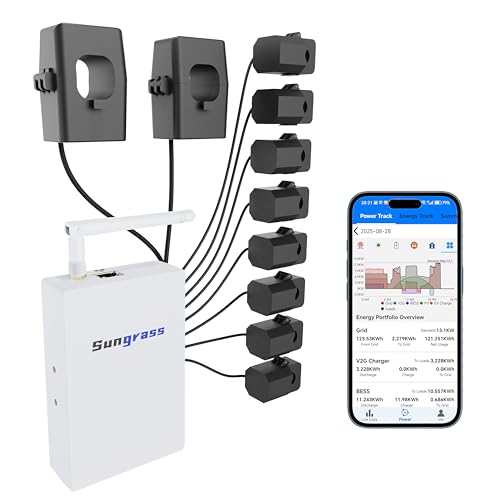
If you want to take control of your energy consumption and cut down on utility bills, the Sungrass Home Energy Monitor is an ideal choice. This device offers real-time electricity usage monitoring, allowing you to track your power consumption with 1-second updates. You can identify energy hogs and optimize your usage through intelligent analysis reports. Installation is a breeze with its plug-and-play design, and it connects seamlessly via WiFi or Ethernet. The app provides access to historical data and automated energy management options, ensuring you stay informed and efficient. Plus, it comes with a 1-year warranty for peace of mind.
Best For: Homeowners looking to monitor and optimize their energy consumption to reduce utility bills.
Pros:
- Real-time electricity usage monitoring with 1-second updates for immediate insights.
- Plug-and-play installation makes it easy to set up without professional help.
- User-friendly app access provides historical data and automated energy management options.
Cons:
- Requires WiFi or Ethernet connection for optimal functionality.
- Limited to monitoring 10 circuits, which may not be sufficient for larger homes.
- Monthly and yearly summaries are only retained for 36 months, which may limit long-term data analysis.
Sense Energy Monitor – Track Electricity Usage in Real Time
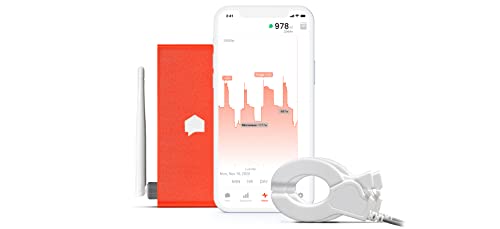
For homeowners looking to cut costs and reduce energy waste, the Sense Energy Monitor is a top choice. This device tracks your electricity usage in real time, giving you valuable insights into your home’s energy consumption. You can monitor usage from anywhere using iOS, Android, or web apps, making it easy to stay informed. Sense helps identify patterns and supports time-of-use rate plans, allowing you to optimize efficiency. Plus, you can set custom notifications for critical devices, ensuring you avoid potential issues. Currently, Sense is available only in the United States and Canada, perfect for those seeking smart energy solutions.
Best For: Homeowners in the United States and Canada looking to reduce energy costs and improve efficiency.
Pros:
- Real-time monitoring allows users to track energy usage from anywhere via iOS, Android, or web apps.
- Custom notifications help users stay aware of critical devices, preventing potential energy-related mishaps.
- Insights into consumption patterns enable families to optimize their energy use and take advantage of time-of-use rate plans.
Cons:
- Currently limited to the United States and Canada, restricting availability for international users.
- Installation may require professional assistance for those unfamiliar with electrical panels.
- Initial cost may be a barrier for some homeowners looking for energy-saving solutions.
Smart Home Energy Monitor with 16 50A Circuit Level Sensors

Homeowners looking to take control of their energy consumption will find the Smart Home Energy Monitor with 16 50A Circuit Level Sensors an ideal choice. This device provides real-time power usage and historical data directly through an app, making monitoring effortless. Installation is straightforward with clamp-on sensors, compatible with various electrical setups, including single-phase and three-phase systems. You can track multiple appliances, from HVAC systems to kitchen ranges, ensuring efficient energy use. With actionable notifications and a super privacy mode for local operation, you can effectively lower your electric bills while enjoying the convenience of smart technology.
Best For: Homeowners seeking to efficiently monitor and manage their energy consumption through real-time data and smart technology.
Pros:
- Easy installation with clamp-on sensors compatible with various electrical setups.
- Provides actionable notifications to help reduce electric bills and conserve energy.
- Supports privacy with a Super Privacy Mode for local operation without internet access.
Cons:
- Requires a WiFi connection, which may not be suitable for all users.
- Limited to a 1-year warranty, which may be shorter than some competitors.
- Performance may vary depending on the electrical system and configuration of the home.
Eyedro Business 3-Phase Energy Monitor (E5B-EW-E3-800A)
The Eyedro Business 3-Phase Energy Monitor (E5B-EW-E3-800A) stands out as a top choice for businesses and landlords seeking to optimize their energy efficiency. With real-time monitoring and high-resolution data, you can easily track your energy usage, solar generation, and even costs. Its split-core sensors handle high loads up to 800A, making it versatile for various voltage systems. You’ll appreciate the MyEyedro platform for its cloud-based data analysis and alerts for outages. Installation is straightforward, needing no special tools. Whether you’re managing budgets or monitoring tenants, this monitor provides the insights you need to enhance efficiency.
Best For: Businesses and landlords looking to optimize energy efficiency and monitor electricity consumption.
Pros:
- High-resolution real-time monitoring of energy usage, solar generation, and costs.
- Easy installation with non-invasive split-core sensors requiring no special tools.
- Cloud-based MyEyedro platform offers comprehensive data analysis and customizable alerts.
Cons:
- Requires a WiFi or Ethernet connection for full functionality.
- Limited to monitoring only 3-phase systems and may not be suitable for single-phase applications.
- Users may need to familiarize themselves with the MyEyedro platform for effective use.
Factors to Consider When Choosing an Energy Monitor With Ethernet
When you’re choosing an energy monitor with Ethernet, think about the connectivity options available and how they’ll fit into your home network. You’ll also want to assess the installation complexity and guarantee you can easily set it up. Plus, consider the accuracy of real-time data, historical data storage, and energy management features to maximize your efficiency.
Connectivity Options Available
Choosing an energy monitor with the right connectivity options can greatly impact your home’s efficiency, especially if you’re considering a wired Ethernet setup. Many energy monitors offer both WiFi (usually 2.4 GHz) and wired Ethernet, giving you flexibility based on your preferences and existing network. Wired Ethernet often guarantees a more stable connection, reducing issues like signal interference and dropouts. Some models even allow for simultaneous monitoring of grid energy and solar generation through separate Ethernet connections, which boosts accuracy. Be certain to check compatibility with your home network, as some monitors may need specific configurations. By having both WiFi and Ethernet options, you can select the best method for your home, assuring peak performance and data access.
Installation Complexity Assessment
Before diving into the selection of an energy monitor, it’s essential to assess the installation complexity, as this factor can considerably impact your overall experience. First, check if the energy monitor supports a non-invasive installation with plug-and-play features or if it requires complex wiring modifications. Verify the device is compatible with your home’s electrical system—whether it’s single-phase, split-phase, or three-phase—as this affects installation difficulty. Look for clamp-on sensors that simplify setup without direct wiring. Also, consider connectivity options; monitors offering both WiFi and wired Ethernet connections might be easier to install. Finally, choose monitors with clear installation instructions and reliable customer support to streamline your setup process and minimize challenges.
Real-Time Data Accuracy
Although you might be tempted to focus solely on features, real-time data accuracy is a critical factor to evaluate when selecting an energy monitor with Ethernet. Many devices offer accuracy levels of ±2%, ensuring you get reliable consumption readings. High-performing monitors provide instant feedback on your power usage, allowing you to make quick adjustments that can reduce energy consumption. Pay attention to the frequency of data reporting; some monitors update every second, while others may only provide data every minute or hour. Accurate real-time data helps you pinpoint energy-intensive appliances or peak times, enabling you to implement targeted energy-saving strategies and lower your costs effectively. Prioritizing accuracy will enhance your overall energy management experience.
Historical Data Storage
When evaluating energy monitors with Ethernet, consider how well they store historical data, as this feature can greatly enhance your understanding of energy consumption patterns. Look for monitors that retain data over extended periods, like hourly data indefinitely or monthly summaries for up to 36 months. The ability to export historical data is vital, as it helps you analyze energy efficiency and identify usage patterns for informed decision-making. Monitors that provide visualizations and charts for various time frames make it easier to track your energy costs. Additionally, access to historical data supports your participation in time-of-use rate plans, allowing you to adjust your consumption based on historical peak usage times.
Energy Management Features
Understanding historical data storage sets the stage for exploring energy management features that can greatly enhance your smart home’s efficiency. Effective energy management allows you to automate and control real power usage remotely, leading to significant cost savings. Many monitors support solar and net metering, enabling you to track both your energy consumption and renewable generation. Configurable settings for time-of-use management help you plan energy usage efficiently, taking advantage of lower electricity rates. Real-time data monitoring offers instant insights, empowering you to identify energy-wasting appliances and adjust your habits. Additionally, actionable notifications alert you to unusual energy spikes or savings opportunities, promoting proactive energy management and ensuring your home runs as efficiently as possible.
Compatibility With Systems
Choosing the right energy monitor for your home isn’t just about features; it’s crucial to guarantee compatibility with your existing systems. Start by ensuring the monitor fits your electrical setup, whether it’s single-phase, split-phase, or three-phase. You’ll want to verify it supports the necessary amperage, like 200A or 400A sensors, for accurate readings. Compatibility with home automation platforms, such as Home Assistant, is also key for seamless control. Look for monitors that connect via both WiFi (2.4 GHz) and wired Ethernet, giving you flexible installation options. Finally, confirm the device can handle any specific metering needs, like solar generation monitoring or net metering capabilities, to maximize your energy management efforts.
Alerts and Notifications
Alerts and notifications play an essential role in maximizing the effectiveness of your energy monitor. They keep you informed about unusual energy usage patterns, allowing you to take corrective actions that can reduce costs and conserve energy. Look for monitors that offer customizable notifications for critical devices, like alerts when appliances are left on or when energy usage exceeds your set thresholds. Real-time alerts can also notify you of power outages or internet connectivity issues, helping you respond quickly to maintain energy management. Additionally, some systems can alert you during peak energy demand times, enabling smarter consumption. Automated alerts reveal energy hogs, guiding you to optimize usage and potentially save money.