A basement can feel damp, stale, or musty when outdoor air exchange is limited. The right energy recovery ventilator (ERV) brings in filtered fresh air while helping retain indoor heating or cooling energy.
These 10 picks cover whole-house systems, compact ductless units, and smart wall-mounted models. Use the guide below to match airflow, installation style, controls, and moisture-management needs to your basement.
Best 10 Energy Recovery Ventilators for Basements Picks for 2026
Whole-Home Pick

- 120 CFM balanced airflow for homes up to 6,000 square feet
- Wall, ceiling, or floor mounting options
- Push-button controls and energy recovery core
Best For: Large homes needing whole-house basement ventilation
Compact Balanced Airflow
Panasonic WhisperComfort 60 ERV

- Adjustable 20–50 CFM airflow with boost up to 60 CFM
- Balanced supply and exhaust maintain neutral pressure
- Ceiling or wall mount installation
Best For: Smaller basements needing adjustable ventilation
Smart Single-Room Option
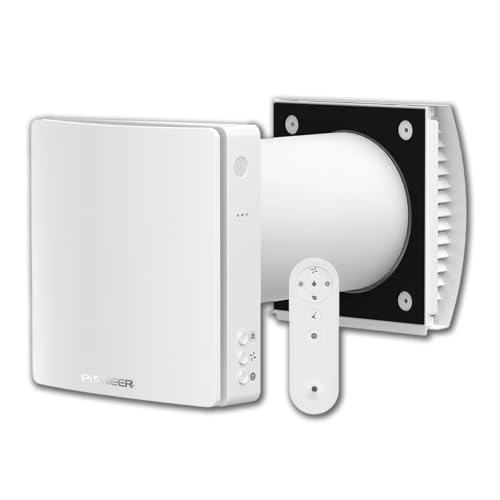
- Ductless wall installation with adjustable air channel
- Up to 35.3 CFM with F7 filtration
- Wi-Fi, remote, and onboard controls
Best For: Individual basement rooms without convenient ductwork
High-Capacity Flexible Pick
Panasonic Intelli-Balance Elite Plus ERV

- Adjustable airflow from 30 to 120 CFM
- Dual MERV 13 filters included
- Wall, ceiling, or floor mounting support
Best For: Larger basements needing flexible airflow and filtration
Best for Easy Setup
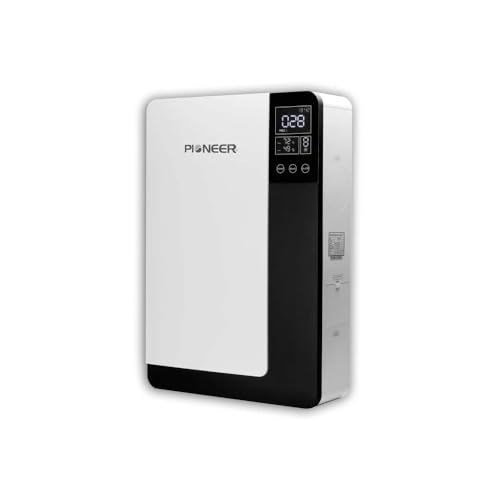
- 82% energy recovery with 35W power use
- PM2.5 and CO2 monitoring with automatic fan adjustment
- HEPA and activated charcoal filtration for rooms up to 500 sq. ft.
Best For: Feature-focused single-room basement ventilation
Flexible Ducted-System Option
Panasonic Intelli-Balance Elite
- 30–110 CFM adjustable airflow
- Dual MERV 13 filters included
- Ceiling, wall, or floor mounting options
Best For: Planned basement installations requiring configurable airflow
Best Ductless Retrofit

- Up to 88% heat or cooling recovery
- Through-wall installation for 6–20 inch walls
- Quiet operation as low as 0.2 sones
Best For: Quiet basement retrofits without existing ductwork
Best High-Capacity Pick

- 210 CFM airflow for larger spaces
- Auto-balancing with integrated LCD screen
- Wall, ceiling, or suspended installation
Best For: Larger basement ventilation projects needing higher airflow
Best Cold-Climate Value

- Electronic anti-frost protection
- Up to 162 CFM with three speeds
- Washable MERV 6 filters included
Best For: Cold-climate basements needing straightforward ventilation
Best Compact Control Option
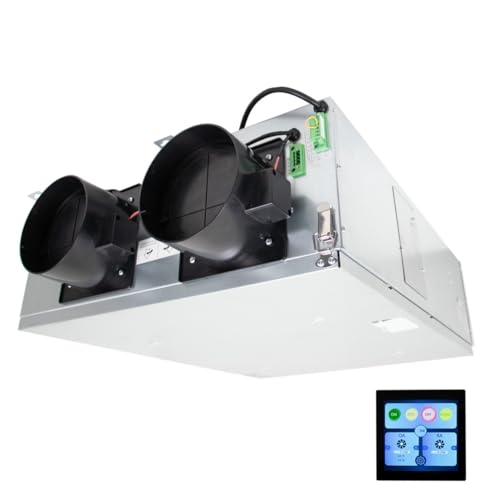
- Adjustable 40–100 CFM airflow
- Touchscreen panel and humidity sensor
- Washable filters with low-temperature protection
Best For: Smaller basements needing flexible airflow control
Whole-Home Pick – Aprilaire V22BEC 120 CFM ERV
For homeowners comparing energy recovery ventilators for basements, the Aprilaire V22BEC is a whole-house option designed for spaces up to 6,000 square feet. Its 120 CFM balanced exchange, multiple mounting choices, and energy recovery core make it suitable for improving fresh-air circulation while helping temper incoming air.
Best For: Large homes needing whole-house basement and indoor-space ventilation.
Pros:
- Provides balanced 120 CFM supply and exhaust airflow.
- Energy recovery core helps transfer heat and moisture between air streams.
- Supports wall, ceiling, or floor mounting with a templated bracket.
- Push-button controls and dual fan speed control simplify operation.
Cons:
- Its 50-pound, 27.5-inch-wide cabinet may require substantial installation space.
- Reported noise level is 53 dB.
- Designed for AC power and indoor installation.
The V22BEC stands out when basement ventilation is part of a broader whole-home plan. Check available mechanical-room or basement space and installation access before choosing this relatively large unit.
Compact Balanced Airflow – Panasonic WhisperComfort 60 ERV
The Panasonic FV-06VE1 is a practical choice among energy recovery ventilators for basements when you want tempered fresh air without the capacity of a larger whole-house system. It offers selectable airflow from 20 to 50 CFM, a boost setting up to 60 CFM, and ceiling or wall installation.
Best For: Smaller basement areas or homes needing adjustable, balanced ventilation.
Pros:
- Balanced exhaust and fresh-air supply help maintain neutral pressure.
- Selectable low airflow and occupant-controlled boost provide flexibility.
- High-efficiency capillary core recovers heat and helps maintain moisture levels.
- Static-pressure access ports support airflow verification for ASHRAE 62.2 compliance.
Cons:
- 60 CFM capacity is lower than the larger 120 CFM models in this roundup.
- Listed noise level is 2.5 sones.
- The listed dimensions may require careful planning for ceiling or wall installation.
This Panasonic is a sensible middle-ground unit for targeted basement ventilation. Its adjustable airflow is useful where demand varies, but larger homes or more extensive basement layouts may need greater capacity.
Smart Single-Room Option – Pioneer 50 Ductless ERV
For a basement room without convenient ductwork, the Wi-Fi-enabled Pioneer 50 offers a ductless approach to energy recovery ventilators for basements. It mounts through an exterior wall, delivers up to 35.3 CFM, and combines app, remote, and onboard controls with F7 filtration.
Best For: Individual basement rooms where ductless installation and smart controls are priorities.
Pros:
- Wall-mounted design uses an adjustable air-channel duct for different wall thicknesses.
- Wi-Fi app, handheld remote, and onboard controls provide multiple control methods.
- F7 filtration and washable prefilters address dust and other listed contaminants.
- Low average power draw and maximum sound output of 32.7 dB support efficient, quiet operation.
Cons:
- Maximum airflow is 35.3 CFM, so it is intended for single-room use rather than whole-house ventilation.
- A suitable exterior wall opening and outdoor cover installation are required.
- The notes recommend installing two units to take advantage of the system’s heat-recovery benefit.
The Pioneer 50 is especially appealing for a finished basement room or other space that lacks ducting. Its lower airflow makes room sizing important, while the filtration and connected controls add convenience.
High-Capacity Flexible Pick – Panasonic Intelli-Balance Elite Plus ERV
The Panasonic FV-12ESC1 is a high-capacity option for energy recovery ventilators for basements, with airflow adjustable from 30 to 120 CFM. Its brushless ECM motors, dual MERV 13 filters, and wall, ceiling, or floor mounting give it flexibility for larger or more demanding ventilation layouts.
Best For: Larger basement ventilation projects needing adjustable airflow and high-efficiency filtration.
Pros:
- Adjustable 30–120 CFM airflow supports different ventilation requirements.
- Dual brushless ECM motors automatically adjust speed under static pressure.
- Dual MERV 13 filters are included for incoming and outgoing air.
- Supports wall, ceiling, or floor mounting and several control options.
Cons:
- The listed dimensions indicate a substantial installation footprint.
- Wi-Fi control requires a compatible optional module.
- The supplied details identify the room type as bathroom, so basement application and installation should be confirmed for the specific project.
This model offers the broadest airflow range in the group and strong filtration features. It makes the most sense where basement ventilation needs may change, provided there is adequate space and the planned controls match the installation.
Best for Easy Setup – Pioneer ECOasis 150
Pioneer ECOasis 150 Ductless Wall-Mounted Single-Room Wi-Fi Energy Recovery Ventilator
Check Price On AmazonFor shoppers comparing energy recovery ventilators for basements, the Pioneer ECOasis 150 is a feature-rich ductless option for a single room up to 500 square feet. Its wall-mounted design combines energy recovery, air-quality monitoring, multi-stage filtration, and app control without requiring traditional ductwork.
Best For: Basements, bedrooms, or living areas where remote control, filtration, and continuous air-quality monitoring are priorities.
Pros:
- 82% efficient heat exchanger helps temper incoming outdoor air.
- PM2.5 sensor and CO2 monitor can automatically adjust the 8-speed fan.
- Four-stage filtration includes HEPA H10 and activated charcoal elements.
- Quiet operation from 23 to 37.9 dB(A), with Wi-Fi, touch, and remote controls.
Cons:
- Designed for single-room coverage rather than whole-home ventilation.
- Wall installation still requires suitable exterior access and electrical power.
The ECOasis 150 stands out when basement ventilation needs extend beyond basic air exchange. Its filtration and monitoring features are useful for stale air, dust, smoke, and odors, while the slim enclosure and low power use support everyday operation.
Flexible Ducted-System Option – Panasonic Intelli-Balance Elite
The Panasonic Intelli-Balance Elite is a larger ERV suited to basement projects that can accommodate ceiling, wall, or floor installation. It provides adjustable airflow from 30 to 110 CFM, allowing the system to be configured for balanced, positive, or negative pressure operation.
Best For: Basement renovations or larger indoor ventilation projects needing adjustable airflow, multiple mounting choices, and more configurable controls.
Pros:
- Adjustable 30–110 CFM airflow supports different pressure setups.
- Dual brushless ECM motors adjust speed for changing pressure conditions.
- Hygroscopic transfer core recovers heat and moisture for improved comfort.
- Includes dual MERV 13 filters and supports optional Wi-Fi and wall controls.
Cons:
- At 61.7 pounds, it is substantially heavier than the ductless single-room alternatives.
- The listed 45 dB noise level may be less suitable for especially quiet spaces.
- Its larger format can require more planning and installation work.
Choose this Panasonic when basement ventilation calls for configurable airflow rather than a compact through-the-wall unit. Its broad mounting flexibility and included controls make it adaptable, but the size and weight favor planned installations over quick retrofits.
Best Ductless Retrofit – VENTS-US TwinFresh Comfo
For basements without existing ductwork, the VENTS-US TwinFresh Comfo is a practical through-the-wall ERV designed for rooms up to 500 square feet. It delivers up to 30 CFM, recovers up to 88% of heat or cooling, and installs through walls 6–20 inches thick.
Best For: Basement retrofits, remodels, and individual rooms where traditional ductwork is impractical and quiet continuous ventilation is important.
Pros:
- Ductless installation avoids a separate mechanical room, balancing, and extensive ductwork.
- Recovers up to 88% of heat or cooling while using as little as 4.5 watts.
- Very quiet operation, rated as low as 0.2 sones.
- Humidity sensing, MERV 5 filtration, remote control, and cold-weather operation down to -4°F.
Cons:
- Its 30 CFM capacity is lower than the Panasonic’s maximum airflow.
- MERV 5 filtration is less intensive than systems supplied with MERV 13 or HEPA filtration.
- Through-wall installation is limited to walls 6–20 inches thick.
The TwinFresh Comfo is a strong fit when installation simplicity and low operating noise matter most. It offers targeted, room-by-room ventilation and can be paired with additional units, making it especially useful for basement spaces that lack accessible ductwork.
Best High-Capacity Pick – Broan B210E75RS AI ERV
For larger basements or homes needing stronger continuous ventilation, the Broan B210E75RS AI is one of the higher-capacity energy recovery ventilators for basements in this lineup. It delivers 210 CFM and includes VIRTUO™ auto-balancing, an integrated LCD screen, and flexible wall- or ceiling-mount installation.
Best For: Larger basement ventilation projects where higher airflow, automatic balancing, and flexible mounting are priorities.
Pros:
- Provides a substantial 210 CFM airflow capacity.
- VIRTUO™ technology offers auto-balancing and an integrated LCD screen.
- Supports suspended, wall, or ceiling installation.
- Includes chains, brackets, and a MERV 8 filter.
Cons:
- At 55 pounds, it may require careful installation support.
- The 270-watt rating is higher than some smaller units in this selection.
- Its larger 21-inch-deep housing may need substantial installation space.
The Broan stands out when basement ventilation demands exceed the capacity of compact ERVs. Confirm available space, mounting support, and duct layout before choosing this larger wall- or ceiling-mounted model.
Best Cold-Climate Value – VENTS-US Frigate ERV 120s
The VENTS-US Frigate ERV 120s is a practical option among energy recovery ventilators for basements, especially where freezing conditions are a concern. It combines balanced whole-house air exchange with electronic anti-frost protection, dual washable MERV 6 filters, and airflow up to 162 CFM.
Best For: Basements in colder climates that need freeze protection, simple controls, and moderate-to-high airflow.
Pros:
- Electronic anti-frost protection helps safeguard the recovery core in freezing conditions.
- Offers up to 162 CFM with three-speed operation.
- Enthalpy recovery transfers both heat and moisture.
- Includes washable MERV 6 filters and ceiling-mount brackets.
Cons:
- Uses standard 5-inch duct connections, which may limit ducting options.
- Its included MERV 6 filters provide less filtration detail than the Broan’s MERV 8 filter.
- The built-in three-key switch is simpler than a touchscreen control system.
This model offers a balanced feature set for basement installations exposed to cold weather. Its anti-frost system and washable filters reduce routine maintenance concerns, while the 162 CFM capacity suits many medium-sized applications.
Best Compact Control Option – Awoco 6-Inch ERV System
For smaller basement spaces or installations where adjustable airflow matters, the Awoco 6-inch ERV provides a compact alternative among energy recovery ventilators for basements. It offers separate 40-to-100 CFM airflow adjustment, a touchscreen control panel, washable filters, humidity sensing, and built-in low-temperature protection.
Best For: Smaller basements or homeowners who want variable airflow, humidity monitoring, and included controls.
Pros:
- Allows adjustable outside- and return-air flow from 40 to 100 CFM.
- Includes a touchscreen control panel and humidity sensor.
- Uses continuous-run brushless EC motors and washable filters.
- Includes two 6-inch round adapters, brackets, and a 70-inch power cord.
Cons:
- The 100 CFM maximum is lower than the other two units in this lineup.
- Requires 6-inch ducting, including insulated duct for exhaust and outside air.
- The listed 50 dB noise level may be noticeable in some basement areas.
The Awoco is appealing when installation space and airflow flexibility are more important than maximum capacity. Verify the required 6-inch duct arrangement and consider the unit’s listed noise level before placing it near living or work areas.
How We Picked the Best Energy Recovery Ventilators for Basements
We focused on ventilation capacity, installation flexibility, control options, filtration, energy recovery, and suitability for basement spaces. The lineup includes compact single-room ERVs for finished rooms as well as higher-capacity systems designed to connect to whole-home ductwork.
Because basement conditions vary widely, we also considered continuous-operation features, freeze protection, remote controls, Wi-Fi connectivity, and the practical needs of retrofit installations. Product capacity should always be checked against room size, occupancy, local ventilation requirements, and the manufacturer’s installation guidance.
Quick Comparison
| Best For | Recommended Type | What to Prioritize |
|---|---|---|
| One finished basement room | Ductless wall-mounted ERV | Quiet operation, compact size, simple controls |
| Large basement or several rooms | Whole-house ducted ERV | Airflow capacity, duct compatibility, balanced ventilation |
| Remote monitoring | Wi-Fi-enabled ERV | App controls, scheduling, reliable network setup |
| Cold climates | ERV with freeze protection | Defrost performance, insulation, low-temperature ratings |
| Energy-conscious operation | High-efficiency ERV | Heat and moisture recovery, continuous low-speed modes |
Key Buying Factors for Energy Recovery Ventilators for Basements
Airflow and Coverage
CFM indicates how much air the ventilator can move. A 30- to 60-CFM ductless unit may suit a small finished area, while larger basements or systems serving multiple zones may require roughly 100 CFM or more. Avoid choosing solely by square footage; ceiling height, occupancy, air leakage, and local code requirements also matter.
Ducted or Ductless Installation
Ductless ERVs are often easier for basement retrofits because they can ventilate a single room through an exterior wall. Ducted models provide more even coverage but may require professional design, balancing, and access to supply and return ductwork.
Humidity and Moisture Control
An ERV transfers some moisture between incoming and outgoing air, which can help moderate indoor humidity. It is not a dehumidifier, however. Basements with condensation, seepage, or persistently high humidity may still need drainage improvements and a dedicated dehumidifier.
Noise, Filtration, and Controls
For living areas, compare published sound ratings and look for low-speed or continuous ventilation settings. Replaceable filters protect the core and improve air quality, while timers, remote controls, sensors, and Wi-Fi access can make regular operation easier.
Who Should Buy Which Energy Recovery Ventilators for Basements?
- Choose a compact ductless unit for a single finished basement room or a retrofit where installing ducts is impractical.
- Choose a whole-house ERV when the basement is part of a larger ventilation plan and you need balanced airflow across several rooms.
- Choose a Wi-Fi model if scheduling, remote adjustments, or integration with a smart-home routine is important.
- Choose freeze-protection features for cold-weather installations where outdoor air temperatures can challenge normal operation.
Before purchasing, confirm electrical requirements, wall or ceiling clearances, exterior termination options, filter access, and whether professional installation or airflow balancing is required. For the best result, size the ERV as part of the home’s complete ventilation strategy rather than treating it as a standalone cure for basement moisture.