Finding the right EV diagnostic scanner means balancing electric-vehicle coverage, diagnostic depth, compatibility, and price. Some tools focus on reading basic fault codes, while others support bidirectional tests, battery-related diagnostics, service resets, and manufacturer-level functions.
Our roundup includes 10 options spanning everyday drivers, DIY owners, and professional technicians, so you can choose a scanner that matches your vehicle, skill level, and troubleshooting needs.
Best 10 EV Diagnostic Scanners for Cars Picks for 2026
Best All-Around EV Scanner

- Full-system EV and hybrid diagnostics
- Bidirectional tests and ECU coding
- 43+ resets with two years of updates
Best For: DIYers and independent technicians needing broad EV service coverage
Best Premium Workshop Platform

- EV testing and advanced active tests
- Topology mapping with ECU network analysis
- J2534 and integrated VCMI2 test hardware
Best For: Professional shops performing complex diagnostics and programming
Best for EV Battery Testing
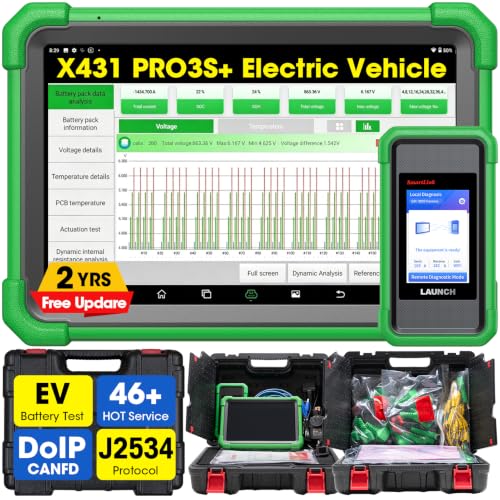
- In-vehicle and out-of-vehicle battery tests
- Included EV battery adapter kit
- J2534, topology mapping, and 46+ services
Best For: EV repair shops diagnosing battery packs and high-voltage systems
Best Simple Phone-Based Option
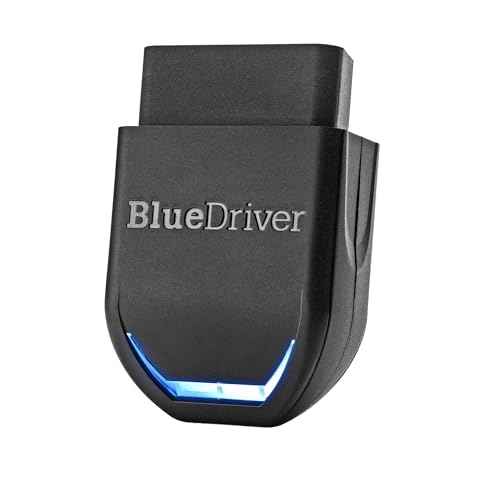
- Wireless iOS and Android operation
- Enhanced codes and verified repair reports
- No subscription fees or built-in display required
Best For: Vehicle owners handling routine checks and supported enhanced diagnostics
Professional EV Upgrade
Autel EVDiag Box EV Scanner Kit

- Adds high-voltage and battery-pack diagnostics to compatible Autel tablets
- Includes EV topology mapping, coding, programming, and service functions
- Comes with battery adapters, connectors, and jumper-cable options
Best For: Professional technicians who already own a compatible Autel MaxiSys tablet
Full-System Value Pick
FOXWELL NT604 Elite OBD2 Scanner

- Scans engine, ABS, SRS, and transmission systems
- Offers live data, I/M readiness, VIN identification, and data playback
- Includes a protective case and lifetime updates
Best For: DIY owners seeking affordable multi-system diagnostics without service resets
Wireless App-Based Choice

- Connects wirelessly to iOS and Android diagnostic apps
- Reads codes, live data, freeze-frame information, and I/M readiness
- Compact option for standard OBD-II checks on most 1996+ U.S. vehicles
Best For: Drivers who want phone-based check-engine diagnostics and sensor monitoring
Professional All-System Pick

- All-system engine, transmission, ABS, and SRS diagnostics
- 12+ service resets and battery testing
- Live data, AutoVIN, app support, and lifetime updates
Best For: Home mechanics and professionals needing broad diagnostics and service functions
Simple Check-Engine Choice

- Reads and clears engine fault codes
- Live data graphing and supported EVAP tests
- I/M readiness indicator and lifetime updates
Best For: DIY drivers focused on check-engine-light diagnosis and emissions readiness
Battery Testing Value

- Engine diagnostics plus 12V battery testing
- Cranking and charging-system evaluation
- Live data, freeze frame, and I/M readiness tools
Best For: Conventional vehicle owners needing engine and 12V starting-system checks
Best All-Around EV Scanner – LAUNCH X431 CRP919 EV
The LAUNCH X431 CRP919 EV is a versatile choice for drivers and technicians comparing EV diagnostic scanners for cars. It combines full-system diagnostics for electric, hybrid, and new-energy vehicles with bidirectional controls, ECU coding, CAN-FD/DoIP support, and more than 43 reset functions.
Best For: DIYers and independent technicians who want broad EV coverage and advanced service functions without stepping up to a larger professional platform.
Pros:
- Supports full-system diagnostics, live data, DTC clearing, and data recording.
- Bidirectional active tests can command components such as fans, pumps, lights, and windows.
- Includes ECU coding, adaptation, calibration, and 43+ reset services.
- Android 10.0, 4GB/64GB storage, a 7-inch screen, and two years of free updates.
Cons:
- CAN-FD and DoIP support requires an optional adapter.
- FCA gateway access requires registration with the AutoAuth service.
- Vehicle coverage and specific functions vary by make and model.
The CRP919 EV offers a strong mix of everyday service functions and deeper diagnostic controls. Its coverage limitations and adapter requirements should be checked against the vehicles you service, but the overall feature set makes it a practical midrange EV tool.
Best Premium Workshop Platform – Autel MaxiSys Ultra S2
The Autel MaxiSys Ultra S2 is aimed at professional shops that need more than basic scanning. Among EV diagnostic scanners for cars, it stands out for its EV testing, topology mapping, J2534 programming, enhanced PID analysis, AI assistance, and integrated VCMI2 testing hardware.
Best For: Large repair shops and professional technicians handling complex diagnostics, programming, network testing, and advanced vehicle systems.
Pros:
- Offers EV testing, 48+ service functions, and more than 3,000 active tests according to the supplied notes.
- Topology Mapping 3.0 helps visualize ECU network status and locate modules.
- VCMI2 combines VCI/J2534 pass-through, oscilloscope, multimeter, waveform generator, and CAN-bus testing.
- Supports ECU programming and coding for specified vehicles, including BMW and Mercedes-Benz programming applications.
Cons:
- Its extensive professional feature set may be excessive for occasional home use.
- Programming and coding availability is not universal and should be verified by vehicle.
- The supplied notes identify this as a North American version with a one-year Motor TruSpeed term.
The Ultra S2 is built as a high-end diagnostic workstation rather than a simple code reader. Its capabilities can justify the investment in a busy shop, especially where programming, network analysis, and EV testing are regular requirements.
Best for EV Battery Testing – LAUNCH X431 PRO3S+ EV
The LAUNCH X431 PRO3S+ EV is designed for technicians who need dedicated electric-vehicle functions. It pairs bidirectional diagnostics with J2534 pass-through, topology mapping, EV battery pack testing, and a supplied battery adapter kit, making it one of the more specialized EV diagnostic scanners for cars.
Best For: EV-focused repair shops that need to evaluate battery condition and work with high-voltage vehicle systems across many supported brands.
Pros:
- Supports in-vehicle and out-of-vehicle battery tests with SOC, SOH, temperature, and voltage readings.
- Includes a battery pack adapter kit with specialized cables, jumper wires, and OBD connectors.
- Provides J2534/D-PDU pass-through plus CAN, CAN-FD, and DoIP support.
- Offers topology mapping, ECU coding, 46+ services, and two years of free upgrades.
Cons:
- J2534 programming generally requires a laptop with OEM software.
- Specific EV brand coverage and functions should be confirmed before purchase.
- Its larger 10.1-inch shop-oriented design may be more than casual users need.
For shops working directly with EV battery systems, the included adapter kit and battery measurements are the main advantages. The PRO3S+ EV also leaves room for advanced module programming and network diagnostics as your workload grows.
Best Simple Phone-Based Option – BlueDriver Pro
BlueDriver Pro is a convenient alternative for drivers who want practical information without a dedicated handheld scanner. It connects to an iOS or Android device and provides enhanced diagnostics for supported vehicles, making it a user-friendly entry among EV diagnostic scanners for cars—though its supplied coverage is focused on gas-powered vehicles and select light-duty trucks rather than dedicated EV systems.
Best For: Everyday vehicle owners checking warning lights, used cars, readiness status, and supported ABS, SRS, TPMS, or transmission codes.
Pros:
- Reads and clears more than basic check-engine codes on supported vehicles.
- Provides live data, freeze frames, Mode 6 results, smog readiness, and technician-verified repair reports.
- Bluetooth connection works with iOS and Android phones or tablets.
- One-time purchase includes app access, updates, and no subscription fees.
Cons:
- The supplied notes describe gas vehicles from 1996 onward and select light-duty trucks, not dedicated EV coverage.
- Enhanced systems and functions vary by vehicle make, model, and year.
- It depends on a compatible phone or tablet instead of having a built-in display.
BlueDriver Pro is best viewed as a straightforward ownership and troubleshooting tool, not a replacement for a professional EV service platform. Its no-subscription app and repair-report features make it appealing for routine vehicle checks and supported enhanced-code diagnostics.
Professional EV Upgrade – Autel EVDiag Box EV Scanner Kit
For professional EV diagnostic scanners for cars, the Autel EVDiag Box is an upgrade kit designed to expand compatible Autel MaxiSys tablets into high-voltage and battery-pack diagnostic platforms. It adds EV-focused testing, topology mapping, guided procedures, and broad vehicle coverage for qualified technicians.
Best For: Autel Ultra, Ultra ADAS, MS919, or MS909 owners who need professional EV and hybrid diagnostics.
Pros:
- Supports high-voltage system and battery-pack diagnostics, including SOC, SOH, voltage, current, and temperature data.
- Adds EV topology mapping, ECU coding and programming, active tests, and more than 40 service functions when paired with a compatible tablet.
- Includes battery adapters, connectors, and jumper-cable options for multiple diagnostic approaches.
- Covers many electric, hybrid, gas, and diesel vehicles across U.S., European, and Asian brands.
Cons:
- It is an upgrade kit, not a standalone scanner; a compatible Autel MaxiSys tablet is required.
- High-voltage procedures require appropriate training and careful adherence to the supplied safety guidance.
This is the most advanced option in the group for EV specialists, but its capabilities and cost make the most sense for shops that already use compatible Autel hardware.
Full-System Value Pick – FOXWELL NT604 Elite OBD2 Scanner
The FOXWELL NT604 Elite is a practical alternative to basic code readers for shoppers comparing diagnostic scanners for cars. It covers the engine, ABS, SRS, and transmission systems, while adding live data, I/M readiness checks, a DTC library, and data playback without an extra software fee.
Best For: DIY owners who want broader system diagnostics than a basic check-engine scanner provides.
Pros:
- Works out of the box with its latest software already installed.
- Scans engine, ABS, SRS, and transmission systems across more than 60 car brands.
- Includes live data, I/M readiness, data playback, printing, and automatic VIN identification.
- Comes with a solid protective case and lifetime updates.
Cons:
- Does not support service functions such as oil reset, battery registration, ABS bleeding, throttle relearn, or ABS relearn.
- SRS crash or collision data cannot be cleared, and compatibility varies by vehicle make, model, and year.
Choose this model when you want a straightforward handheld scanner with four-system coverage. Confirm vehicle compatibility first, especially if you need maintenance resets or relearn procedures.
Wireless App-Based Choice – Veepeak OBDCheck BLE Scanner
The Veepeak OBDCheck BLE is a compact Bluetooth adapter for standard OBD-II diagnostics. Among diagnostic scanners for cars, it is best suited to drivers who prefer using an iOS or Android phone with a compatible third-party app to read codes, monitor live data, and check emissions readiness.
Best For: Smartphone users who want an inexpensive, portable check-engine diagnostic tool.
Pros:
- Supports iOS Bluetooth LE and classic Bluetooth on Android devices.
- Reads and clears check-engine codes, displays freeze-frame data and live sensor data, and checks I/M readiness.
- Works with several general and vehicle-specific apps, including Car Scanner ELM OBD2, Torque, OBD Fusion, and Dr. Prius.
- Compatible with most 1996-and-newer U.S. cars and light trucks for standard OBD-II functions.
Cons:
- Requires a compatible third-party app, and some apps or features may require separate payment.
- It is not a full-system or dedicated service tool; functions such as injector coding, EPB reset, ABS bleeding, oil resets, and relearns are not supported.
- EV and PHEV support depends on the app and vehicle.
This adapter is a good low-cost starting point for basic diagnostics and sensor monitoring, but buyers needing reliable manufacturer-level or maintenance functions should choose a dedicated scanner instead.
Professional All-System Pick – BLCKTEC 460T
For shoppers comparing EV diagnostic scanners for cars, the BLCKTEC 460T is a feature-rich option for broader vehicle troubleshooting and service work. It scans engine, transmission, ABS, and SRS systems, provides live data, and includes multiple reset functions. Check BLCKTEC’s compatibility tool first, since supported functions vary by vehicle.
Best For: Home mechanics and professionals who want all-system diagnostics and workshop-style service functions.
Pros:
- Reads and clears codes across engine, transmission, ABS, and SRS systems.
- Includes 12+ service functions, such as oil, EPB, SAS, DPF, BMS, TPMS, and throttle resets.
- Offers AutoVIN, AutoScan, live data graphing, freeze-frame data, and free lifetime updates.
- Pairs with the free RepairSolutions2 app for repair information, reports, and maintenance resources.
Cons:
- Feature availability depends on the vehicle’s year, make, and model.
- Its broad feature set may be more than needed for simple check-engine-light scans.
The 460T stands out when you need more than basic OBD2 code reading. Its all-system coverage and service resets make it the strongest choice here for deeper diagnostics, provided your vehicle supports the desired functions.
Simple Check-Engine Choice – FOXWELL NT301
If you are comparing EV diagnostic scanners for cars mainly to investigate a check engine light, the FOXWELL NT301 keeps the process straightforward. It reads and clears engine codes, displays live data, performs supported EVAP tests, and includes I/M readiness tools without requiring an app or subscription.
Best For: DIY drivers who primarily need engine-code diagnostics and emissions-readiness checks.
Pros:
- Reads and clears engine fault codes with a simple plug-and-play setup.
- Shows live sensor data in graphs and supports supported OBD2 EVAP testing.
- Includes one-click I/M readiness checks with a red-yellow-green indicator.
- Works with many 1996+ U.S. vehicles and offers lifetime free updates.
Cons:
- Does not provide dedicated ABS, SRS, TPMS, transmission, or full-system diagnostics.
- Does not offer service resets, key programming, or battery health testing.
- EVAP and other functions vary by vehicle compatibility.
The NT301 is a practical basic-to-intermediate code reader rather than a full professional scanner. Choose it when engine diagnostics, live data, and inspection preparation matter more than coverage of non-engine modules.
Battery Testing Value – ANCEL AD410 PRO
Among EV diagnostic scanners for cars, the ANCEL AD410 PRO is notable for combining engine-code reading with 12V battery, cranking, and charging-system tests. It is designed for quick plug-and-play checks, though it is not intended for EVs and does not diagnose ABS, SRS, or transmission systems.
Best For: Drivers who want one compact tool for engine diagnostics and conventional 12V battery-system testing.
Pros:
- Combines OBD2 engine diagnostics with battery health, cranking, and charging tests.
- Displays live data, waveform graphs, freeze-frame information, and I/M readiness status.
- Decodes more than 42,000 SAE trouble codes and requires no app or computer.
- Includes a clear screen, 10 languages, lifetime updates, and a compact design.
Cons:
- Does not support EVs.
- Does not diagnose ABS, SRS, or transmission systems.
- Battery testing is for 12V systems and requires the included battery clamp cable.
The AD410 PRO offers useful value for conventional gas and diesel vehicles when battery and starting-system checks are important. It is less suitable for EV owners or anyone needing comprehensive module-level diagnostics.
How We Picked These EV Diagnostic Scanners for Cars
We compared the selected scanners by diagnostic coverage, EV compatibility, supported vehicle systems, ease of use, connection method, update requirements, and overall value. We also separated basic OBD2 readers from advanced tools that offer bidirectional controls, topology views, J2534 pass-through, battery testing, or expanded service functions.
Compatibility is especially important for electric vehicles. A scanner may read generic powertrain codes without accessing high-voltage battery, charging, inverter, or manufacturer-specific systems. Always verify support for your vehicle’s make, model, year, and required EV functions before buying.
Quick Comparison
- Best for advanced EV diagnostics: Choose a professional bidirectional scanner with broad system access, active tests, and EV-specific software.
- Best for home code reading: A compact wired or Bluetooth OBD2 reader can identify common faults and clear basic check-engine codes.
- Best for phone-based use: Bluetooth adapters pair with a compatible app and are convenient for monitoring live data and reading codes.
- Best for service functions: Look for support for ABS, SRS, TPMS, battery management, electronic parking brake, oil, throttle, and steering-angle resets.
Key Buying Factors for EV Diagnostic Scanners for Cars
Vehicle and EV-System Coverage
Check whether the scanner supports your vehicle’s high-voltage battery system, charging equipment, motor control modules, inverter, thermal management, and battery-management system. Generic OBD2 access is useful but does not guarantee full EV diagnostics.
Diagnostic Depth
Basic readers are suitable for emissions-related codes and live data. Advanced models may provide full-system scans, topology mapping, coding, adaptations, active tests, and bidirectional controls. These features are valuable for technicians but may be unnecessary for occasional home use.
Connection and Usability
Wired scanners are generally straightforward and do not depend on phone compatibility. Bluetooth models are portable and convenient, but performance depends on the app, operating system, permissions, and adapter connection. A clear display and guided test results can make a major difference when diagnosing faults.
Updates, Subscriptions, and Support
Confirm how long software updates are included and whether advanced functions require an annual subscription. Also check update methods, manufacturer support, warranty coverage, and whether the tool can save or share diagnostic reports.
Who Should Buy Which EV Diagnostic Scanners for Cars?
Choose a professional EV scanner if you repair multiple makes, need active tests, or work with high-voltage systems and manufacturer-specific modules. Choose a midrange multi-system scanner if you handle ABS, SRS, transmission, battery, and service resets on family or customer vehicles. Choose a Bluetooth or basic OBD2 reader if your main goals are checking a warning light, viewing live data, monitoring readiness, or deciding whether a vehicle needs professional attention.
For any high-voltage repair, use the scanner as a diagnostic aid rather than a substitute for EV safety training, insulated equipment, and the manufacturer’s service procedures.