When it comes to home EV chargers, ensuring safety and performance is essential. Choosing the right EVSE tester can make all the difference in diagnosing issues and maintaining efficiency. With various options available, you might find it overwhelming to select the best one for your needs. Understanding the top contenders can simplify your decision-making process and help you invest wisely in your electric vehicle charging setup. Let’s explore the best EVSE testers that stand out in the market.
Fluke FEV100 Adapter Kit for Electric Vehicle Charging Station Testing

The Fluke FEV100 Adapter Kit is the ideal choice for electricians and DIY enthusiasts looking to guarantee the safety and functionality of electric vehicle charging stations. This kit is compatible with Test Type 1, Level 1, or Level 2 AC for EVSE, making it versatile for various setups. You can simulate the presence of an electric vehicle to test functionality and safety effortlessly. The wiring checks verify everything’s connected properly, while the PE pre-test feature confirms protective earth functionality. Plus, it performs GFCI troubleshooting and voltage verification with a digital multimeter, ensuring your charging station operates safely and efficiently.
Best For: Electricians and DIY enthusiasts who want to ensure the safety and functionality of electric vehicle charging stations.
Pros:
- Versatile Compatibility: Works with Test Type 1, Level 1, or Level 2 AC for EVSE setups.
- Comprehensive Testing: Simulates electric vehicle presence and performs thorough wiring, safety, and GFCI checks.
- Accurate Voltage Verification: Uses a digital multimeter for precise voltage readings during testing.
Cons:
- Limited to AC Testing: Only compatible with AC charging stations, not suitable for DC systems.
- Requires Multimeter: A digital multimeter is necessary for voltage verification, which may require additional investment.
- Potential Learning Curve: May require some technical knowledge for effective use, especially for DIY enthusiasts.
EVIQO Level 2 EV Charger (48 Amp, Hardwired)

Looking for a powerful charging solution for your electric vehicle? The EVIQO Level 2 EV Charger delivers with its 48 Amp, hardwired design and 11.5 kW output. Wall-mounted for home use, it features a 25′ charging cord, making it incredibly convenient. Enjoy charging speeds up to 46 miles of range per hour—nine times faster than portable chargers! With adjustable current settings and robust certifications, you’ll have peace of mind. Plus, the smart app integration allows remote control for scheduling and monitoring. Compatible with all EVs and PHEVs, it’s a reliable, efficient choice for your charging needs.
Best For: Those seeking a fast and efficient home charging solution for all electric vehicles and plug-in hybrids, including Tesla models.
Pros:
- Fast Charging: Provides up to 46 miles of range per hour, significantly faster than typical portable chargers.
- Smart Features: Offers remote control, scheduling, and monitoring via the EVIQO app for convenient usage.
- Durable Design: Built to withstand harsh weather conditions with NEMA 4/IP66 housing and steel shielding for internal protection.
Cons:
- Hardwired Installation: Requires professional installation which may add to initial costs.
- Dedicated Circuit Requirement: Needs a minimum 60 Amp dedicated circuit, which may not be available in all homes.
- Adapter Needed for Tesla: Tesla models require an additional adapter for compatibility with the J1772 connector.
EVqiaoyi Portable Type 1 EV Charger Tester

For homeowners and property managers seeking reliable performance from their EV chargers, the EVqiaoyi Portable Type 1 EV Charger Tester stands out with its intelligent detection features. Weighing just 2.97 pounds and measuring 7.87 x 6.3 x 2.66 inches, it’s both portable and durable. Designed for J1772 charging stations, this tester offers real-time data on a high-definition LED display. Its full-scenario application makes it perfect for various settings, from homes to commercial spaces. Plus, with a 30-day return policy and warranty options, you can confidently guarantee electrical safety in your EV charging solutions.
Best For: Homeowners, property managers, and electricians seeking a reliable tool for inspecting and maintaining EV charging stations.
Pros:
- Intelligent detection features with a high-definition LED display providing real-time test data.
- Portable and lightweight design allows for easy storage and transport, ideal for various inspection scenarios.
- Durable construction with an anti-fall and wear-resistant shell ensures long-lasting performance in complex environments.
Cons:
- Limited to Type 1 charging stations, which may not suit all EV users with different charging standards.
- Best Sellers Rank indicates it’s not a top-selling item, which may raise concerns about popularity or reliability.
- Warranty and support details require checking through the product link, which may not be immediately accessible.
Autel Home Level 2 EV Charger (50Amp, 240V)
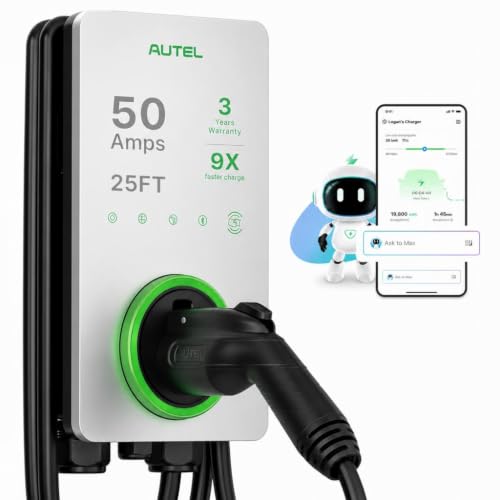
Offering impressive charging capabilities, the Autel Home Level 2 EV Charger (50Amp, 240V) is an ideal choice for electric vehicle owners seeking quick and efficient power. With a capacity of 12kW, it delivers up to 37 miles of range per hour, alleviating charging time concerns. The durable 25-foot cable suits both indoor and outdoor use, while its CSA certification and NEMA Type 4 rating guarantee protection against harsh weather. Plus, the Autel Charge APP allows you to manage charging times and optimize costs. Compatible with all electric vehicles, it comes with a 3-year warranty and 24/7 local support for peace of mind.
Best For: Electric vehicle owners looking for a fast, reliable, and versatile home charging solution.
Pros:
- High charging capacity of 12kW provides up to 37 miles of range per hour, minimizing charging time.
- Durable design with a 25-foot cable and NEMA Type 4 rating ensures functionality in various weather conditions.
- Smart technology through the Autel Charge APP allows for optimized charging schedules and potential cost savings.
Cons:
- Installation may require professional assistance, potentially increasing overall costs.
- Limited to a 3-year warranty, which may be shorter compared to some competitors.
- Dependence on app functionality for advanced features may not appeal to all users.
Autel Level 2 EV Charger (50 Amp Smart AI)
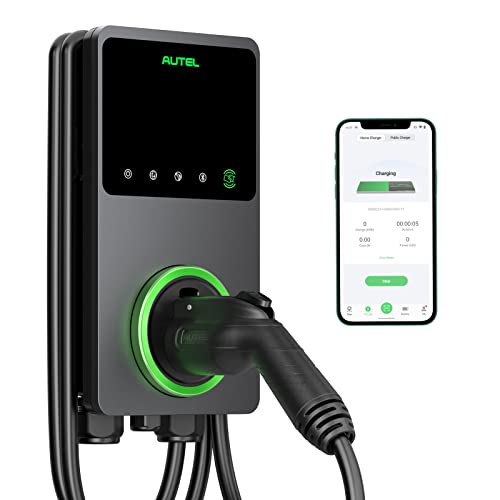
The Autel Level 2 EV Charger (50 Amp Smart AI) stands out as an ideal choice for electric vehicle owners seeking a powerful and efficient charging solution. With its 240-volt input, it charges any EV or plug-in hybrid up to nine times faster than a standard Level 1 charger. You’ll appreciate features like Wi-Fi and Bluetooth connectivity, allowing remote management through the Autel Charge app. Its durable design includes a 25-foot hardwired cable and NEMA 4X protection, ensuring safe indoor or outdoor use. Plus, with a three-year limited warranty, you can trust its reliability while enjoying local rebates and incentives.
Best For: Electric vehicle owners who require a high-speed, reliable charging solution for both indoor and outdoor use.
Pros:
- Fast Charging: Charges EVs up to 9 times faster than traditional Level 1 chargers.
- Smart Features: Wi-Fi and Bluetooth connectivity allows for remote management via the Autel Charge app.
- Durable Design: NEMA 4X protection rating ensures safe use in various weather conditions.
Cons:
- Weight: At 22.4 pounds, it may be cumbersome for some users to handle and install.
- Initial Cost: Higher upfront cost compared to basic Level 1 chargers.
- Installation Required: Being a hardwired charger, professional installation is necessary, which may add to the overall expense.
EVSE Charger Tester for Electric Vehicle Charging Station

If you’re looking to guarantee your electric vehicle charging station operates safely and efficiently, the EVSE Charger Tester is an excellent choice. This test adapter, designed for Mode 3 EVSE with a Type 2 connector, simulates the connection between your vehicle and the charger, ensuring everything functions correctly. With a maximum operating voltage of 600V and current capacity of 10A, it meets IEC standards for safety. Weighing just 1.84 pounds and featuring IP54 waterproof protection, it’s both portable and durable. Regular maintenance is easy—just use a damp cloth to keep it clean. Make your EV charging experience worry-free!
Best For: Electric vehicle technicians and charging station installers seeking a reliable tool for testing and ensuring the safety of EV charging stations.
Pros:
- Safety Compliance: Meets IEC standards, ensuring safe operation up to 600V and 10A.
- Durable Design: IP54 waterproof rating and portable weight make it suitable for varied environments.
- User-Friendly: Simple simulation test for easy connection verification between vehicle and charger.
Cons:
- Limited Current Capacity: Maximum current of 10A may not be sufficient for all charging station types.
- Specific Connectivity: Only compatible with Mode 3 EVSE systems featuring Type 2 connectors.
- Availability: New product, so limited market presence and customer reviews may affect purchasing confidence.
EVIQO Level 2 EV Charger for Tesla
For Tesla owners seeking a reliable and efficient charging solution, the EVIQO Level 2 EV Charger stands out with its impressive 48A output, delivering up to 46 miles of range per hour. Hardwired at 240V and featuring a 25ft cable, it requires a 60A dedicated circuit for peak performance. With Smart Wi-Fi and app control, you can manage charging remotely, customize current settings, and schedule off-peak sessions. It’s UL, ETL, FCC, and Energy Star certified, ensuring safety and reliability. Plus, easy installation comes with a wall mount kit, and you get 3 years of US-based support and warranty.
Best For: Tesla owners looking for a high-performance, smart charging solution that allows for remote management and customization.
Pros:
- Fast charging capability with up to 46 miles of range per hour.
- Smart Wi-Fi and app control for remote management and scheduling.
- UL, ETL, FCC, and Energy Star certified for safety and reliability.
Cons:
- Requires a 60A dedicated circuit for optimal performance, which may necessitate additional installation costs.
- NACS to J1772 adapter needed for compatibility with non-Tesla EVs (not included).
- Hardwired installation may not be suitable for all home setups.
Autel Home Smart Electric Vehicle Charger (50Amp, 240V)

Designed for homeowners seeking efficiency and convenience, the Autel Home Smart Electric Vehicle Charger delivers up to 50 amps of Level 2 charging. With its durable 25-foot cable, you can easily reach your vehicle, whether indoors or outdoors. The charger adds an impressive 37 miles of range per hour, making it a reliable choice for daily use. Plus, its smart features, like Wi-Fi and Bluetooth connectivity, let you control and schedule charging via the Autel Charge APP. Certified for safety and weatherproof against the elements, this charger guarantees longevity and performance, making it a smart investment for your electric vehicle.
Best For: Homeowners looking for an efficient and convenient charging solution for their electric vehicles.
Pros:
- High-speed charging capability adding 37 miles of range per hour.
- Durable 25-foot cable that remains flexible in extreme temperatures.
- Smart connectivity features with the Autel Charge APP for scheduling and management.
Cons:
- Requires hardwiring, which may necessitate professional installation.
- Price point may be higher compared to basic chargers.
- Limited to indoor/outdoor installation requirements, which may not suit all home layouts.
Triplett TEV300 Electric Vehicle Charger Test Kit
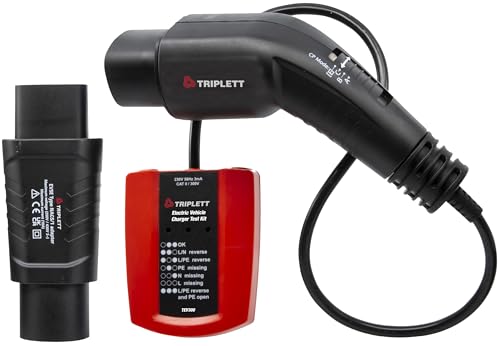
The Triplett TEV300 Electric Vehicle Charger Test Kit stands out as an essential tool for electricians and technicians who need reliable wiring testing for EV charging systems. This kit features LED GO/NO GO indications to simplify your inspections. It complies with EMC and Low Voltage directives, guaranteeing safety and performance. You’ll appreciate its ability to simulate a 20A current capability and various vehicle states through the built-in control pilot. Plus, it can simulate CP errors, helping you assess station behavior during faults. With the TEV300, you can confidently ascertain your EV charger installations meet necessary standards.
Best For: Electricians and technicians seeking a reliable and compliant tool for testing EV charging systems.
Pros:
- LED GO/NO GO indications simplify the inspection process, providing clear status updates.
- Complies with EMC and Low Voltage directives, ensuring safety and adherence to industry standards.
- Capable of simulating various vehicle states and CP errors, enhancing testing versatility.
Cons:
- May require additional training for users unfamiliar with EV charging systems.
- The complexity of features may be overwhelming for casual users or DIY enthusiasts.
- Limited to testing specific EV charger configurations, potentially restricting broader applications.
Autel Home Smart Electric Vehicle Charger (50Amp, 240V)

With a robust charging speed of up to 12kW, the Autel Home Smart Electric Vehicle Charger (50Amp, 240V) is the perfect choice for EV owners who prioritize efficiency and convenience. It adds an impressive 37 miles of range per hour, thanks to its 25-foot durable cable that works in extreme temperatures. This charger is CSA Certified and features weather resistance, ensuring safety against elements like snow and rain. Plus, with smart technology integration through the Autel Charge APP, you can manage your charging schedule effortlessly. Enjoy peace of mind with a 3-year warranty and 24/7 customer support from Autel.
Best For: EV owners looking for a high-efficiency charger that combines smart technology with robust safety features.
Pros:
- Fast Charging: Delivers up to 12kW, adding 37 miles of range per hour.
- Durable Cable: 25-foot cable operates efficiently in extreme temperatures down to -40℃.
- Smart App Integration: Allows for easy management of charging times and schedules through the Autel Charge APP.
Cons:
- Weight: At 18.16 pounds, it may be cumbersome for some users to handle during installation.
- Installation Required: Needs a professional electrician for installation, which can add to the overall cost.
- Limited Range of Compatibility: May not be compatible with all EV models, requiring users to check compatibility before purchase.
Factors to Consider When Choosing an EVSE Tester for Home Chargers
When choosing an EVSE tester for your home charger, you’ll want to take into account several key factors. Compatibility with charging standards, the testing features it offers, and how user-friendly the interface is can make a big difference. Don’t forget to check the build quality and safety certifications to guarantee you’re making a reliable choice.
Compatibility With Charging Standards
Choosing the right EVSE tester for your home chargers hinges on its compatibility with the specific charging standards used by your electric vehicle. Make certain the tester supports popular standards like J1772 for most EVs or NACS for Tesla models. It’s also vital to verify that the tester can handle the appropriate charging levels, such as Level 1 (120V) and Level 2 (240V), to match your home charging station’s specifications. Additionally, check if it supports both single-phase and three-phase systems, as this impacts charging speed and efficiency. Finally, confirm the tester complies with electrical safety standards like IEC/EN 61851 and can simulate various vehicle states to effectively diagnose any potential issues with your charging station.
Testing Features and Functions
A good EVSE tester should come equipped with essential testing features and functions to guarantee your home charging station operates safely and efficiently. Look for a model that simulates the presence of an electric vehicle, verifying your charger’s operational safety and performance. Thorough wiring checks, including protective earth (PE) pre-tests, are vital to confirm proper grounding. Additionally, choose a tester that supports GFCI troubleshooting to identify ground fault issues that could compromise safety. Voltage verification capabilities are also important, allowing you to measure and confirm charging voltage accurately. These features assure reliable performance and enhance your peace of mind while charging your electric vehicle at home.
User-Friendly Interface Design
Selecting an EVSE tester with a user-friendly interface can greatly enhance your testing experience. Look for a high-definition LED display that shows real-time test data clearly, making it easier to interpret results. An intuitive button layout allows quick access to essential functions, like simulating vehicle connections or starting tests. Clear labeling and instructional prompts will help reduce the learning curve, ensuring you can operate the tester effectively. Additionally, choose a model that offers customizable settings, such as current intensity adjustments, to fit different charging scenarios. Finally, prioritize responsiveness and ease of navigation, allowing you to switch between test modes and settings seamlessly without confusion. A user-friendly interface can make a significant difference in your overall satisfaction.
Build Quality and Durability
When evaluating EVSE testers for home chargers, it is vital to prioritize build quality and durability to guarantee reliable performance over time. Look for testers with sturdy, high-strength shells that can withstand wear and tear from frequent use. A waterproof rating of IP54 or higher is important for functionality in wet conditions, especially if you plan to use the tester outdoors. Consider the weight and portability; lighter models are easier to transport, while those intended for fixed installations may be more robust. Make certain the tester complies with safety standards like IEC/EN 61851-1, indicating rigorous testing. Finally, check that the internal components are designed for stability and precision, as this impacts performance during inspections and testing.
Safety Certifications and Ratings
Choosing the right EVSE tester for home chargers means paying close attention to safety certifications and ratings. Look for testers with UL, ETL, or CSA certifications, as these guarantee compliance with strict safety standards. An IP rating, like IP54 or NEMA Type 4, indicates the tester’s resistance to dust and water, making it suitable for varying environments. Essential safety features include overcurrent protection, overvoltage protection, and thermal regulation, which help prevent hazards during testing. Additionally, compliance with international standards like IEC/EN 61851-1 assures reliability and safety. Finally, consider a CAT rating, such as CAT III, for added assurance that your tester can safely handle high voltage applications. Prioritize these factors for a secure charging experience.
Portability and Storage Options
While portability might seem like a secondary consideration, it’s essential to factor it in when evaluating EVSE testers for home chargers. Look for testers that are lightweight and compact, making them easier to transport and store. A portable design that allows for easy mounting or fixing can save you time during setup and teardown. Many testers are built to withstand wear and tear, ensuring durability for outdoor use. It’s also smart to choose testers with built-in storage options or cases; these help protect your device and keep accessories organized. Finally, consider the handling features like grip surfaces or carrying handles, as these enhance portability and make your testing experience more convenient across different environments.
Warranty and Support Services
Although you might focus primarily on features and performance, warranty and support services are essential factors to take into account when selecting an EVSE tester for home chargers. A thorough warranty covering parts and labor for one to three years can provide you peace of mind. Look for reliable customer support, ideally with 24/7 availability, to assist you with troubleshooting and inquiries. A robust return policy, like a 30-day guarantee, lets you return the tester if it doesn’t meet your expectations. Additionally, manufacturers offering regular firmware updates guarantee your tester remains compatible with evolving EV technologies. Finally, consider positive feedback regarding warranty claims and support responsiveness, as these indicate a brand’s reliability and commitment to customer satisfaction.