If you want backup power that can grow with your needs, an expandable power station for home backup is a smart place to start. These systems give you essential outage coverage today, with room to add more battery capacity later.
Below, we focus on the most practical options for whole-home essentials, emergency refrigeration, Wi-Fi, medical devices, and fast recharge performance.
Best 10 Expandable Power Station for Home Backup Picks for 2026
High-Capacity Home Backup
ABOK Ark3600 Portable Power Station
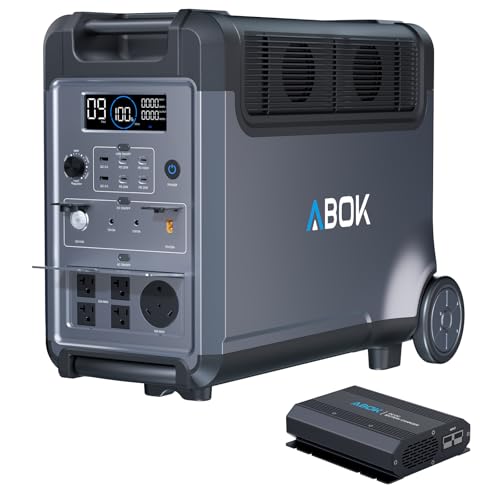
- 3840Wh battery expands to 11520Wh
- 3600W output, 4500W peak power
- 15 ports with fast AC and solar charging
Best For: Homeowners who want a high-capacity backup unit with serious expansion potential.
Best for Whole-Home Backup

- 3,600W AC output for essential household loads
- 3,584Wh LFP battery with long-cycle durability
- Expandable up to 21kWh for extended backup
Best For: Homeowners who want a scalable emergency power system for essential loads and longer outages.
Best Fast-Charging Backup
OUPES Mega 1 2000W Power Station

- 0-80% recharge in 36 minutes on AC
- Expandable to 5kWh with extra batteries
- <20ms UPS mode for sensitive devices
Best For: Homeowners who want a fast-charging, scalable backup station with UPS protection.
Best for Whole-Home Flexibility

- 3,600W output with 7,200W parallel support
- Expandable up to 21kWh per unit
- Plug-and-play setup with fast recharge options
Best For: Homes needing scalable backup power for appliances, outages, and easier setup.
Best for Fast Recharge
Anker SOLIX C1000 Gen 2 Portable Power Station

- 49-minute recharge gets you backup-ready fast
- 2,000W output and 10 ports support essentials
- 10 ms UPS mode helps protect sensitive devices
Best For: People who want a compact, fast-charging backup power station for outages, camping, and remote work.
Best for Whole-Home Expandability
BLUETTI AC200L Portable Power Station

- Expandable up to 8,192Wh for longer runtime
- 2,400W output with 3,600W power lifting
- Fast 0-80% AC recharge in about 45 minutes
Best For: Homeowners who want a scalable backup system with fast charging and RV-ready output.
Best for Quiet Home Backup
Jackery Explorer 2000 v2 Portable Power Station

- 2042Wh LiFePO4 battery with 2200W output
- 20ms UPS switching for outage protection
- Quiet, indoor-safe operation under 30dB
Best For: Homeowners needing quiet, reliable backup power for essential devices and short outages.
Best for High-Power Backups
Segway Cube 1000 Portable Power Station

- 2200W AC output handles bigger home-backup loads
- Expandable to 5kWh with optional battery packs
- Fast AC/solar charging and rugged IP56 construction
Best For: Homeowners who want a scalable backup station for outages and essential appliances.
Fastest Recharge
EcoFlow DELTA 2 Portable Power Station

- 0-80% recharge in about 50 minutes
- Expandable from 1kWh to 3kWh
- 1,800W output with 15 outlets
Best For: Home backup buyers who want rapid charging and a battery that can grow over time.
Best UPS Backup Pick
AFERIY 2048Wh 2400W Portable Power Station

- 2048Wh LiFePO4 battery with 3500+ cycles
- 2400W pure sine wave output, 4800W surge
- <10ms UPS switching with 16 output ports
Best For: Home backup buyers who want fast UPS response and reliable essential-device coverage.
High-Capacity Home Backup – ABOK Ark3600 Portable Power Station
If you want an expandable power station for home backup that can also handle camping and RV use, the ABOK Ark3600 is built around a large 3840Wh LiFePO4 battery, 3600W output, and expansion support up to 11520Wh. It aims to cover essential appliances during outages while still offering fast charging and a broad port selection for everyday devices.
Best For: Homeowners who want a high-capacity backup unit with serious expansion potential and enough output for most household essentials.
Pros:
- 3840Wh base capacity expands up to 11520Wh for longer backup runtimes
- 3600W rated output with 4500W peak power supports most household appliances
- Fast recharge options, including AC-only in about 3 hours and AC + solar combined in 1.29 hours
- 15 output ports plus wheels and a telescoping handle improve usability
Cons:
- Large capacity makes it a heavy, bulky unit compared with smaller stations
- Top-tier output and expansion features likely put it above casual-use budgets
- Solar panels are not included for those planning off-grid charging
This is a strong expandable power station for home backup if you want more than a basic battery box and need room to grow your system over time. It stands out most for buyers prioritizing capacity, appliance support, and flexible charging over compact size.
Best for Whole-Home Backup – Jackery HomePower 3600 Plus
If you want an expandable power station for home backup, the Jackery HomePower 3600 Plus is built for serious outage coverage with 3,600W AC output, 3,584Wh of LFP battery capacity, and room to scale up to 21kWh. It’s a strong fit for homeowners who want a portable system that can handle essential appliances today and grow into a more complete backup setup over time.
Best For: Homeowners who want a high-capacity backup unit for essentials, short outages, and expandable long-term emergency power.
Pros:
- 3600W output can support a wide range of household essentials
- Large 3584Wh LFP battery offers durable, long-life storage
- Expandable to 21kWh for much more backup runtime
- Useful for home backup, RV trips, and emergency readiness
Cons:
- Solar panels are optional and add to the total cost
- Higher capacity means it’s heavier and less grab-and-go than smaller units
This is a compelling expandable power station for home backup if you want strong baseline output now with the option to build a much larger energy reserve later. It’s best for buyers who prioritize outage resilience and modular growth over compact size.
Best Fast-Charging Backup – OUPES Mega 1 2000W Power Station
If you want an expandable power station for home backup that can recharge quickly and scale with your needs, the OUPES Mega 1 is a strong contender. It pairs a 1024Wh LiFePO4 battery with 2000W output, UPS support, and expansion up to 5kWh, making it practical for outages, essentials, and heavier loads.
Best For: Homeowners who want fast recharging, UPS protection, and a scalable battery setup for short outages or growing backup needs.
Pros:
- Very fast AC charging, with even quicker results when solar is added.
- Expandable from 1024Wh to 5120Wh with extra batteries.
- 2000W continuous output and 4500W surge cover many home essentials.
- <20ms UPS switching helps protect sensitive electronics during outages.
Cons:
- Expansion requires buying extra batteries separately.
- Not as large as full whole-home backup systems.
For buyers comparing an expandable power station for home backup, this model stands out for speed, scalability, and practical UPS protection rather than raw capacity alone. It’s a smart fit if you want a flexible backup solution that can grow over time.
Best for Whole-Home Flexibility – Jackery HomePower 3600 Plus
If you want an expandable power station for home backup that can handle real household loads, the Jackery HomePower 3600 Plus stands out for its 3,600W output, dual-voltage support, and expansion potential. It’s built to keep essentials running during outages, while the included solar panels add a practical off-grid charging option.
Best For: Homes that need serious backup capacity for appliances, long outages, and easy plug-and-play setup without a permanent install.
Pros:
- 3,600W output, or 7,200W in parallel, for heavier home appliances
- Expandable capacity up to 21kWh per unit for much longer backup time
- Plug-and-play setup with no complex installation required
- Fast recharge options, including hybrid AC+DC in about 2 hours
Cons:
- Large capacity and expansion features will be overkill for light-duty users
- Solar panels may arrive separately from the power station
- Premium capability comes with a premium price tag
This is a strong choice if you need an expandable power station for home backup that can scale from emergency essentials to a much larger whole-home support setup. It’s especially appealing for buyers who want high output, fast charging, and simple operation in one package.
Best for Fast Recharge – Anker SOLIX C1000 Gen 2 Portable Power Station
If you want an expandable power station for home backup that can recover quickly after an outage, the Anker SOLIX C1000 Gen 2 stands out for its 49-minute recharge time and 2,000W output. Its 1,024Wh LiFePO4 battery gives you a solid starting point for essentials like routers, lights, laptops, and CPAP machines, while the compact design makes it easier to move between rooms or take on the road.
Best For: Homeowners, campers, and remote workers who need fast recharging, reliable UPS backup, and a compact power station for everyday emergency use.
Pros:
- 49-minute HyperFlash recharging is unusually fast for backup readiness
- 2,000W output with 10 ports handles a wide range of household devices
- 10 ms UPS switchover helps keep sensitive gear running during outages
- Compact, lighter build is easier to store and move than many rivals
Cons:
- 1,024Wh capacity may be modest for longer whole-home backup needs
- 600W solar input is solid, but not the highest in this class
- App-enabled fast charging adds a bit of setup for first-time users
Overall, this is a strong fit if you want an expandable power station for home backup that prioritizes speed, portability, and dependable short-term coverage over maximum battery size. It is especially appealing for buyers who value quick recovery between outages and a practical, all-around emergency power setup.
Best for Whole-Home Expandability – BLUETTI AC200L Portable Power Station
The BLUETTI AC200L stands out if you want an expandable power station for home backup that can start with a strong base and grow with your needs. Its 2,048Wh LiFePO4 battery, 2,400W output, and support for multiple expansion batteries make it a flexible choice for keeping essential appliances running during outages.
Best For: Homeowners who want a scalable backup system with fast recharging, RV support, and enough output for serious emergency use.
Pros:
- Expandable up to 8,192Wh for longer backup runtime
- 2,400W output with 3,600W power lifting for heavier loads
- Fast recharge options, including 0-80% in about 45 minutes on AC
- Useful port selection, including 30A RV output and 100W PD
Cons:
- Expansion batteries add significant cost and bulk
- Heavier and less portable than smaller power stations
- Maximum value depends on buying extra battery packs
For buyers prioritizing long-term flexibility, the AC200L is a strong expandable power station for home backup because it combines high output, fast charging, and modular capacity in one system. It makes the most sense if you want a unit that can handle both everyday backup needs and larger outage scenarios.
Best for Quiet Home Backup – Jackery Explorer 2000 v2 Portable Power Station
The Jackery Explorer 2000 v2 is a practical expandable power station for home backup if you want a compact 2kWh-class battery with enough output for essentials during outages. With 2042Wh of capacity, 2200W output, USB-C PD charging, and UPS-style switchover, it’s built for keeping key devices running without the noise or fumes of a gas generator.
Best For: Homeowners who want quiet, indoor-safe backup power for routers, lights, phones, and other critical electronics.
Pros:
- 2042Wh capacity and 2200W output cover most home backup essentials
- 20ms UPS switching helps keep sensitive devices powered through outages
- Quiet operation under 30dB is ideal for bedrooms and workspaces
- Lightweight for its class at 39.5 lbs with a compact LiFePO4 design
Cons:
- Solar panels are optional, so off-grid setup adds extra cost
- Not enough capacity for long-running whole-home backup loads
Overall, this is a strong expandable power station for home backup if you value portability, low noise, and reliable short-term emergency coverage more than maximum runtime. It makes the most sense for essential circuits and device charging rather than heavy appliance use.
Best for High-Power Backups – Segway Cube 1000 Portable Power Station
The Segway Cube 1000 is a strong pick if you want an expandable power station for home backup with enough output to handle heavier appliances, not just phones and routers. Its 2200W inverter, fast recharge times, and optional expansion to 5kWh make it a practical fit for outages, off-grid use, and emergency prep.
Best For: Homeowners who want a higher-output backup unit that can grow with their needs and support essential appliances during outages.
Pros:
- 2200W AC output with support for more demanding household loads
- Expandable capacity up to 5kWh with sold-separately battery packs
- Fast charging from AC or solar, plus dual 100W USB-C ports
- LiFePO4 battery and rugged IP56-rated build for long-term reliability
Cons:
- Expansion batteries are sold separately, so full capacity costs more
- Heavier, bulkier design than smaller portable power stations
- Overkill if you only need backup for small electronics
If you want an expandable power station for home backup that leans more toward serious emergency power than basic portable charging, the Cube 1000 is an appealing middle ground. It combines high output, long battery life, and modular growth in a package that’s easier to scale than many fixed-capacity units.
Fastest Recharge – EcoFlow DELTA 2 Portable Power Station
If you want an expandable power station for home backup that can recharge quickly and cover most essentials, the EcoFlow DELTA 2 is a strong fit. Its 1,024Wh LiFePO4 battery, 1,800W AC output, and optional solar input make it practical for outages, road trips, and off-grid use.
Best For: Homeowners who want fast wall charging, solid appliance support, and room to expand capacity later.
Pros:
- Charges from 0-80% in about 50 minutes with AC power
- Expandable from 1kWh to up to 3kWh with extra batteries
- 1,800W output and 15 outlets can handle many everyday devices
- LiFePO4 battery chemistry is built for long cycle life
Cons:
- Expansion batteries are sold separately
- 1,024Wh base capacity may be modest for longer outages
- Solar panel input is useful, but panels are optional extra cost
Overall, the DELTA 2 stands out if speed matters and you want an expandable power station for home backup that can start small and scale as your needs grow. It balances fast charging, strong output, and long-term battery durability better than many similarly sized units.
Best UPS Backup Pick – AFERIY 2048Wh 2400W Portable Power Station
If you want an expandable power station for home backup that can also handle camping and mobile use, the AFERIY P210 stands out for its 2048Wh LiFePO4 battery, 2400W output, and fast UPS switching. It’s built to keep essential devices running during outages while offering enough ports and capacity for everyday charging needs.
Best For: Homeowners who want a reliable backup unit for routers, lights, medical devices, and other essential electronics during short power outages.
Pros:
- 2048Wh LiFePO4 battery with 3500+ cycles for long service life
- 2400W pure sine wave output with 4800W surge for heavier loads
- <10ms UPS response helps keep critical devices powered through outages
- 16 output ports plus app control for flexible everyday use
Cons:
- At 48.5 lbs, it’s portable but not ideal for frequent lifting
- Solar panel is optional, so off-grid expansion costs extra
- Premium feature set can push it above basic backup budgets
For buyers prioritizing uptime and clean power over ultra-light portability, this is a compelling expandable power station for home backup. The strong battery chemistry, UPS function, and wide port selection make it especially practical for keeping household essentials online.
How We Picked the Best Expandable Power Station for Home Backup
We prioritized models that balance real-world home backup usefulness with upgrade potential. That means strong AC output, LiFePO4 battery chemistry, UPS or fast-switch support where available, and modular expansion paths that can extend runtime without forcing a full system replacement.
We also looked at charging speed, outlet variety, portability, and whether the unit makes sense for short outages, multi-day emergencies, or heavier household loads.
Quick Comparison: What Sets Them Apart
Some units are best as compact backup hubs for a few essentials, while others are built to scale into much larger backup systems. Higher-capacity options are better if you need refrigerator support, CPAP runtime, or the flexibility to add solar and extra batteries over time. Smaller systems may fit apartments, condos, or users who only need to keep electronics and communication gear running.
Key Buying Factors for an Expandable Power Station for Home Backup
Battery Capacity and Expansion Limit
Start with your outage needs, then check how much the base battery offers and how far it can expand. A larger starting capacity is useful for immediate resilience, but expansion support matters more if you expect longer outages or want to build a stronger system later.
Output Wattage and Surge Handling
Match the inverter rating to the devices you actually plan to run. Refrigerators, sump pumps, microwaves, and power tools can require higher surge power even if their running wattage looks modest. For a home backup setup, headroom is important.
Charging Speed and Solar Input
Fast AC charging is helpful before storms, while solar input supports longer emergencies and off-grid use. If you expect repeated outages, a system that recharges quickly can be as valuable as a larger battery.
UPS and Pass-Through Behavior
If you need protection for routers, desktops, or medical equipment, look for low-transfer UPS support. That can reduce interruption when the grid drops.
Port Selection and Usability
Multiple AC outlets, USB-C PD, DC outputs, and app controls all improve everyday usability. A good Expandable Power Station for Home Backup should be easy to monitor and simple to expand.
Who Should Buy Which Expandable Power Station for Home Backup?
Choose a higher-capacity expandable system if you want to keep critical appliances running for longer stretches or plan to add batteries over time. Choose a mid-size model if you want a reliable emergency station for essentials without the cost or footprint of a larger setup. Choose a compact expandable option if your priority is communication gear, lighting, and small-device backup with some future growth potential.
If your household backup plan includes heavy loads or multi-day autonomy, focus on expansion ecosystem, charging flexibility, and inverter strength first. If your needs are lighter, portability and fast recharge may matter more than maximum capacity.