Reliable solar power can make an off-grid cabin more comfortable without committing to a permanently mounted array. Folding panels are especially useful when you need to move, store, or reposition your system as weather and seasons change.
This roundup compares 10 portable options ranging from compact 100-watt chargers to larger 400-watt systems. We focus on usable output, setup, power-station compatibility, weather resistance, and the needs of cabin owners.
Best 10 Folding Solar Panels for Off-Grid Cabins Picks for 2026
Best All-in-One Kit
Renogy 200W Portable Solar Suitcase
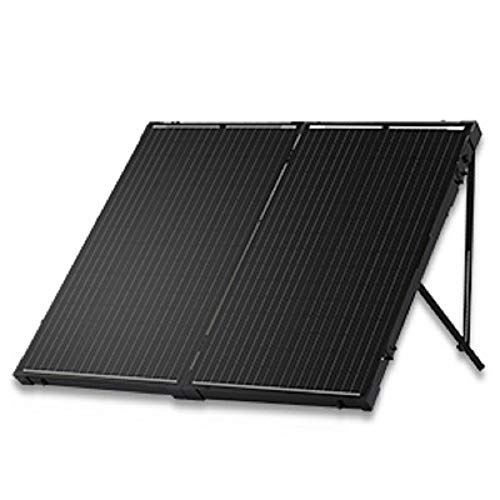
- 25% N-Type cell efficiency
- Pre-installed 20A PWM controller
- Adjustable kickstand and suitcase design
Best For: 12V cabin battery charging with a ready-to-use kit
Best High-Output Option
Renogy 400W Portable Solar Panel

- 400W maximum output
- IP67, ETFE, and fiberglass construction
- Parallel wiring helps with partial shade
Best For: Higher-capacity cabin and emergency backup charging
Best Fixed Cabin Kit
ECO-WORTHY 200W Solar Panel Kit

- Two 100W monocrystalline panels
- Includes 30A PWM controller and brackets
- Supports 12V parallel or 24V series wiring
Best For: Semi-permanent cabin or shed installations
Best Complete Cabin Kit
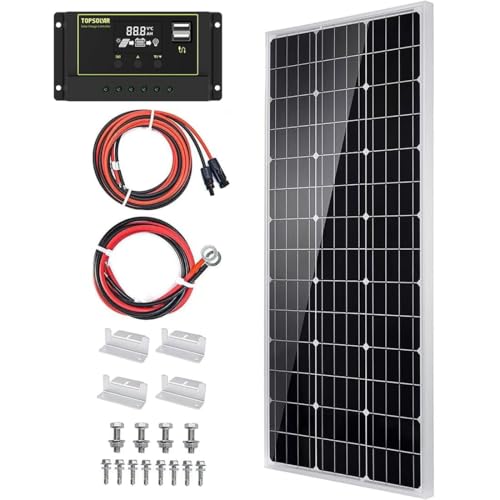
- Includes 30A PWM charge controller and cables
- Expandable to 260W at 12V or 520W at 24V
- Rigid, weather-ready mounting design
Best For: Small 12V cabin, RV, boat, and backup systems
Best High-Output Portable Option

- 25% efficiency with N-Type 16BB cells
- Folds compactly and weighs about 13.9 pounds
- Includes USB-C PD and dual USB-A outputs
Best For: Portable power-station charging at cabins, RVs, and campsites
Best Lightweight Multi-Connector Pick
ZOUPW 100W Portable Solar Panel

- About 7.98 pounds with 25% stated efficiency
- Includes a 5-in-1 cable for multiple power stations
- ETFE build with IP67 waterproof rating
Best For: Lightweight, flexible charging around cabins and campsites
Best RV-Ready Kit
Go Power GP-PSK-130 130W Folding Solar Panel Kit

- 130W output with a 10-amp controller
- Adjustable legs and durable nylon case
- Multiple battery and equipment connections
Best For: Vehicle-based cabin setups using AGM or lithium batteries
Best High-Output Value
TPDEFZQ 220W Portable Folding Solar Panel

- 220W output with 25% stated efficiency
- Four adjustable kickstands for positioning
- Includes multi-device cables and USB outputs
Best For: Cabins charging compatible power stations and USB devices
Best Power-Station Compatibility
SOKIOVOLA 200W N-Type Folding Panel
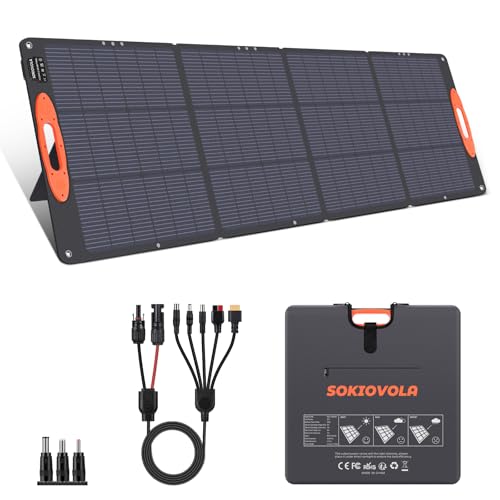
- 200W output with 25% stated efficiency
- Multi-connector cable for popular power stations
- ETFE coating and compact folding design
Best For: Cabins using Jackery, EcoFlow, Bluetti, Anker, or similar power stations
Best All-in-One Kit – Renogy 200W Portable Solar Suitcase
For shoppers comparing folding solar panels for off-grid cabins, this Renogy 200W suitcase stands out as a ready-to-use option for 12V battery systems. It includes a pre-installed 20A PWM charge controller, adjustable kickstand, and MC4 output cables, making setup straightforward while keeping the system portable.
Best For: Cabin owners who want a compact 200W panel with an included charge controller for 12V battery charging.
Pros:
- 25% N-Type cell efficiency with stated low-light performance.
- Folds into a suitcase-style form and includes an adjustable aluminum kickstand.
- Includes a pre-installed 20A PWM controller and a cable with a 15A fuse.
- Tempered glass, aluminum framing, and an IP65-rated junction box support outdoor use.
Cons:
- At about 28.5 pounds, it is less convenient to carry than lighter folding models.
- MC4 output cables are included, but a Renogy 4-in-1 adapter is sold separately.
- The included PWM controller may be less efficient than an MPPT controller in some setups.
This is a practical choice when you want a portable panel and basic charge-control hardware in one package. Check your battery and power-station voltage, connector, and current requirements before buying.
Best High-Output Option – Renogy 400W Portable Solar Panel
Among folding solar panels for off-grid cabins, this Renogy 400W model is aimed at higher-capacity charging and backup needs. Its 30.2-pound suitcase format, carry case, reinforced construction, and parallel wiring make it suited to users who prioritize output and outdoor durability over the lightest possible load.
Best For: Off-grid cabins, RVs, and emergency backup setups using compatible high-capacity power stations or 12V/24V battery systems.
Pros:
- 400W maximum output with stated 23% efficiency.
- Fiberglass reinforcement, ETFE coating, corner protection, and IP67 waterproofing support rugged outdoor use.
- Parallel wiring is designed to reduce the effect of individual shadows from trees or clouds.
- Folds to approximately 27.9 by 33.7 by 3.2 inches and includes a carry case.
Cons:
- A compatible solar charge controller is not included for 12V or 24V battery systems.
- MC4 cables are provided, while the Renogy 4-in-1 adapter cable is sold separately.
- Actual output can vary with shade, sun angle, cable length, and power-station input limits.
This panel makes sense when a cabin system can accept its higher output and you need more charging capacity than a 200W model provides. Confirm the input limits of your power station before connecting it.
Best Fixed Cabin Kit – ECO-WORTHY 200W Solar Panel Kit
Unlike suitcase-style folding solar panels for off-grid cabins, this ECO-WORTHY package is a two-panel installation kit designed for a more permanent setup. It includes two 100W monocrystalline panels, mounting brackets, a 30A PWM controller, solar cables, and connectors for building either a 12V parallel or 24V series system.
Best For: Cabin sheds and other locations where you can mount two rigid panels and want included installation hardware and charge control.
Pros:
- Includes two 100W monocrystalline panels for a 200W total system.
- Supports series or parallel wiring for 24V or 12V configurations.
- Package includes Z brackets, a 30A PWM controller, cables, and connectors.
- Aluminum frames and an IP65-rated junction box are designed for outdoor use.
Cons:
- These are rigid panels, not a folding suitcase-style design.
- At approximately 31.6 pounds, the kit is not especially lightweight for frequent transport.
- The listed upper temperature rating is 85°F, so installation conditions should be considered carefully.
This is better suited to a semi-permanent cabin array than to portable weekend use. Choose it if brackets and wiring flexibility matter more than rapid folding setup and easy relocation.
Best Lightweight Choice – ZOUPW 220W N-Type Folding Panel
For portable folding solar panels for off-grid cabins, the ZOUPW 220W model combines a relatively light 15.9-pound design with broad power-station compatibility. Its included 5-in-1 cable, IP67-rated panel construction, and built-in USB ports make it useful when you need flexible charging away from conventional power.
Best For: Cabin users who move equipment frequently and want direct USB charging alongside power-station connectivity.
Pros:
- 220W output with stated 25.6% conversion efficiency and N-Type 16BB cells.
- Weighs about 15.9 pounds and folds to approximately 25.39 by 22.99 by 1.97 inches.
- Includes a 5-in-1 cable for several common power-station connector types.
- Built-in USB-A QC3.0 and USB-C PD 45W ports support direct device charging.
Cons:
- The junction box is not waterproof and should be kept dry.
- Its 12-month warranty is shorter than the coverage listed for some competing panels.
- As with other portable panels, real-world output depends on sunlight and connected-device limits.
This is a strong fit for a mobile cabin setup where low carrying weight and connector flexibility are priorities. Keep the junction box protected from rain even though the panel itself is rated IP67.
Best Complete Cabin Kit – Topsolar 100W 12V Solar Kit
For shoppers comparing folding solar panels for off-grid cabins, the Topsolar kit is a practical fixed-installation alternative when you need a 12V battery-charging setup rather than a portable panel. It includes a 30A PWM charge controller, mounting hardware, and solar cable for a more complete installation.
Best For: Cabins, RVs, boats, and backup systems using 12V batteries.
Pros:
- Includes a 30A charge controller with protection against overcharge, overvoltage, discharge, short circuits, and reversed polarity.
- Comes with Z mounting brackets and red-and-black solar cable.
- Can expand to 260W in a 12V system or 520W in a 24V system.
- Tempered glass and an aluminum frame are designed to withstand stated wind and snow loads.
Cons:
- At 15.84 pounds and roughly 45.6 inches long, it is less convenient to carry than folding options.
- The 100W output is more suited to modest 12V loads than high-demand cabin appliances.
- It is a conventional rigid panel, not a foldable portable design.
The built-in charge-control hardware and mounting accessories make this a straightforward choice for a small, semi-permanent cabin power system. Choose it when installation convenience and expandability matter more than packability.
Best High-Output Portable Option – Renogy 200W Foldable Panel
The Renogy 200W panel is a strong portable pick for anyone seeking folding solar panels for off-grid cabins with a compatible power station. Its 25% efficiency rating, folding format, built-in stands, and direct USB charging make it useful when the panel needs to move between a cabin, vehicle, or campsite.
Best For: Power-station owners who want portable 200W charging and direct USB output.
Pros:
- Uses 16BB N-Type cells with a stated 25% efficiency.
- Folds to approximately 23.72 by 22.99 by 1.97 inches and weighs about 13.9 pounds.
- Provides USB-C PD 45W and dual USB-A ports for charging small devices directly.
- Four kickstands support 40°, 50°, and 60° positioning angles.
Cons:
- MC4 output is included, but the 4-in-1 adapter is sold separately.
- Compatibility depends on the power station meeting the panel’s requirements.
- At nearly 14 pounds, it is portable but not especially lightweight for backpacking.
With twice the rated wattage of a typical 100W portable panel, this Renogy model can better suit a cabin owner who periodically needs faster power-station charging. Verify your power station’s input requirements and plan for the separate adapter if needed.
Best Lightweight Multi-Connector Pick – ZOUPW 100W Portable Solar Panel
For compact folding solar panels for off-grid cabins, the ZOUPW 100W panel emphasizes easy transport and broad power-station compatibility. It weighs about eight pounds, uses N-Type 16BB cells, and includes a 5-in-1 cable intended for several common connector formats.
Best For: Cabin users who move a lightweight panel between power stations, vehicles, and outdoor charging spots.
Pros:
- Offers a stated 25% efficiency and N-Type 16BB cell design for low-light performance.
- Weighs approximately 7.98 pounds and folds to about 23.39 by 23.23 by 1.77 inches.
- Includes connectors for DC8020, XT60, Anderson, DC7909/8mm, and DC5521 formats.
- ETFE construction and an IP67 waterproof rating support outdoor use; immersion is not recommended.
Cons:
- Its 100W rating provides less charging capacity than the 200W Renogy option.
- The panel still requires suitable sunlight and positioning for its rated output.
- It is designed for portable charging rather than direct 12V battery-system installation with a dedicated charge controller.
The ZOUPW is appealing when portability and connector flexibility are priorities. Its included cable can simplify pairing with supported power stations, while the 100W capacity keeps the unit lighter and easier to reposition around a cabin.
Best RV-Ready Kit – Go Power GP-PSK-130 130W Folding Solar Panel Kit
For cabins that need a straightforward way to recharge AGM or lithium batteries, the Go Power GP-PSK-130 is a practical choice among folding solar panels for off-grid cabins. Its adjustable legs, integrated 10-amp controller, and multiple connection options make setup simple, though its 28.7-pound weight favors vehicle-based use over long-distance carrying.
Best For: RVs, cabin owners, campers, and marine users who want a ready-to-connect 130W battery-charging kit.
Pros:
- Folding design and heavy-duty nylon case simplify storage and transport.
- Adjustable legs help position the panels toward available sunlight.
- Includes battery clamps, ring terminals, SAE, XLR, and Anderson-style connections.
- Supports AGM and lithium batteries with a 10-amp controller.
Cons:
- At 28.7 pounds, it is heavier than the other listed portable panels.
- Its 130W output may be limiting for larger cabin power demands.
This is the most complete battery-charging package of the three, especially when compatibility with different battery connections matters. Choose it when convenience and rugged portability are more important than maximum wattage.
Best High-Output Value – TPDEFZQ 220W Portable Folding Solar Panel
The TPDEFZQ 220W panel combines high output with a relatively light 15.21-pound design, making it a strong option among folding solar panels for off-grid cabins. Its four kickstands, 25% efficiency rating, included cable set, and USB outputs support flexible charging, but the control box should be protected from water.
Best For: Cabin users who need higher solar output for compatible power stations, laptops, phones, and other USB devices.
Pros:
- 220W maximum output and 25% stated conversion efficiency provide substantial charging capacity.
- Four adjustable kickstands make positioning and setup quick.
- Includes a 10-foot 5-in-1 cable, adapters, USB-A ports, and a USB-C port.
- Folded dimensions and a 15.21-pound weight support relatively easy transport.
Cons:
- The control box is not waterproof and should not be soaked.
- It cannot store electricity without a separate battery or power station.
With the highest rated output here, this panel suits cabins that already use a compatible portable power station. Verify the station’s input limits before buying so the panel’s capacity is not unnecessarily restricted.
Best Power-Station Compatibility – SOKIOVOLA 200W N-Type Folding Panel
The SOKIOVOLA 200W panel is designed around portable power-station compatibility, making it a useful contender among folding solar panels for off-grid cabins. It offers 25% stated efficiency, ETFE construction, a magnetic carry handle, and a broad connector set for systems from Jackery, EcoFlow, Bluetti, Anker, and other brands.
Best For: Cabin owners who recharge a portable solar generator and want broad connector compatibility in a foldable format.
Pros:
- 200W maximum output with 25% stated conversion efficiency.
- Includes MC4-to-multi-connector cabling for several popular power-station brands.
- ETFE coating is described as waterproof, dustproof, and durable.
- Magnetic handle and compact 21-by-23-inch folded size aid transport.
Cons:
- At 16.3 pounds, it may be cumbersome for extended backpacking or hiking.
- Actual charging can be limited by a power station’s maximum solar input.
This is a balanced option for cabins built around a portable power station rather than direct battery charging. Confirm the station’s input ceiling and connector requirements before purchasing to get the expected benefit from its 200W rating.
How We Picked These Folding Solar Panels for Off-Grid Cabins
We selected panels across several useful power classes, including compact 100W and 130W models, midrange 200W and 220W options, and higher-capacity 400W systems. We considered portability, included charge controllers, kickstand adjustability, connector compatibility, stated efficiency, and protection against outdoor conditions.
Because a cabin setup may charge either a battery bank or a portable power station, compatibility matters as much as headline wattage. Products with built-in controllers can simplify connections to batteries, while power-station-oriented panels may be better suited to plug-and-play use.
Quick Comparison
| Power class | Best suited to | Main advantage |
|---|---|---|
| 100W–130W | Small loads and backup charging | Lower weight and easier storage |
| 200W–220W | General cabin battery charging | Good balance of output and portability |
| 400W | Higher daily energy demand | More generation when sunlight is limited |
Key Buying Factors for Folding Solar Panels for Off-Grid Cabins
Power Output and Daily Energy Needs
Estimate what you will run and for how long. Lights, phones, radios, and small electronics may work with 100W to 200W, while refrigerators, tools, pumps, and frequent battery charging can justify 220W or 400W. Actual production varies with shade, angle, season, and temperature, so avoid sizing a system at its theoretical maximum.
Battery and Power-Station Compatibility
Check voltage, connector type, maximum solar input, and whether a charge controller is included. A PWM controller may be adequate for a basic 12V battery system, while a compatible MPPT controller can generally harvest more energy in changing conditions. For portable power stations, confirm the panel’s open-circuit voltage and input limit before connecting it.
Portability and Setup
Folding panels are easier to store than fixed arrays, but larger models can be bulky and heavy. Look for sturdy handles, adjustable kickstands, manageable folded dimensions, and cables long enough to place the panel in full sun while the battery stays sheltered.
Outdoor Durability
Water-resistant construction, reinforced seams, protective cases, and strong hinges are valuable for cabin use. Even weather-resistant panels should be folded and stored dry when conditions are severe. Keep panels clear of snow, leaves, and branches to maintain output.
Who Should Buy Which Folding Solar Panels for Off-Grid Cabins?
Choose a 100W or 130W model if your priority is emergency charging, lightweight transport, or occasional weekend use. A 200W or 220W panel is the most versatile choice for many cabins, offering useful charging capacity without the storage demands of a very large array. Choose a 400W system when you have substantial daily energy needs, a large battery, and enough clear ground or deck space for setup.
Before buying, list your appliances, battery capacity, expected sunlight, and preferred storage location. The best Folding Solar Panels for Off-Grid Cabins are not necessarily the highest-rated or most powerful; they are the ones that match your energy budget, charging hardware, and ability to reposition them safely.