A generator can be loud, but the right exhaust setup depends on more than a promise to cut noise. Muffler fit, pipe routing, heat clearance, and carbon monoxide safety all matter.
These eight picks include standalone silencers and exhaust-extension kits. Use the guide below to narrow down which style fits your generator and installation.
Best 8 Generator Silencer Muffler Picks for 2026
Heat-Wrapped Kit
Stainless Steel Exhaust Extension

- Stainless steel flex pipe
- Three adapters and sealing gaskets
- Includes wrap and rain cap
Best For: A bundled exhaust extension with heat protection
Brand-Flexible Option
Universal Stainless Steel Silencer Kit

- Flexible exhaust pipe
- Stainless steel muffler
- Check outlet size for fit
Best For: Compatible generators needing flexible exhaust routing
Three-Adapter System

- Three adapter styles
- Two-foot flex tube and glass pack
- Not a dramatic noise fix
Best For: Projects needing multiple muffler attachment options
Through-Wall Hardware

- Insulated mounting plate
- About two feet of 304 steel hose
- Fit may require modification
Best For: Installations requiring a mounting plate and adapters
Enclosure Setup
25.53-Inch Exhaust Extension Kit

- 25.53-inch flexible stainless hose
- Three adapters and wall plate
- Targets exhaust noise, not engine noise
Best For: Generator shed or box exhaust routing
Replacement Muffler
3.93-Inch Tube for Select Generators
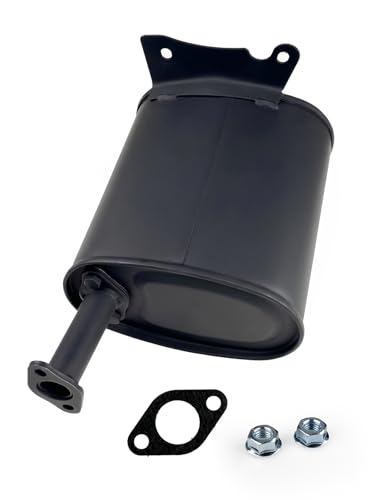
- Straight 10 cm tube required
- Gasket and two nuts included
- Check model images and measurements
Best For: A matching muffler replacement
Longer Hose Option

- Trimmable 42-inch stainless hose
- Three adapters and wall plate
- Check exhaust-outlet fit
Best For: Longer enclosure exhaust runs
Two-Hole Fit
Integrated 60-Inch Exhaust Extension

- For specified two-hole outlets
- Routes exhaust up to 60 inches
- Excludes three- and four-hole flanges
Best For: Listed models with matching outlet holes
Heat-Wrapped Kit – Stainless Steel Exhaust Extension
This generator silencer muffler kit combines a stainless steel flexible pipe with an add-on muffler assembly for routing exhaust away from the generator. Its included wrap, gaskets, and clamps make it a relatively complete package for a planned outdoor setup.
Best For: Buyers who want an exhaust extension with heat wrap and several adapter options.
Pros:
- Includes three adapters, two sealing gaskets, clamps, and a rain cap.
- Stainless steel flex pipe allows for different routing configurations.
- Full-length heat wrap adds thermal protection around the pipe.
Cons:
- Exhaust dimensions must be checked before ordering.
- It must be added to, not substituted for, the factory muffler.
This is a practical choice when you need the installation accessories together. Use it only where the generator has proper outdoor ventilation; an extension does not make an enclosed operating space safe.
Brand-Flexible Option – Universal Stainless Steel Silencer Kit
If you are comparing a generator silencer muffler for different portable-generator brands, this kit pairs a stainless steel muffler with flexible piping. It is described as compatible with brands including Firman, Honda, Champion, and Westinghouse, subject to outlet fit.
Best For: Shoppers seeking a flexible exhaust-routing and noise-reduction kit for a compatible portable generator.
Pros:
- Stainless steel construction is intended to resist heat and corrosion.
- Flexible pipe accommodates different exhaust-outlet positions.
- Designed to direct exhaust away from occupied areas during properly ventilated operation.
Cons:
- Generator exhaust-outlet size needs verification before purchase.
- The supplied notes do not specify pipe length or a measured noise reduction.
Its appeal is the combination of adaptable routing and an add-on silencer. Confirm your generator’s connection dimensions rather than relying on brand compatibility alone.
Three-Adapter System – Zombiebox Exhaust Extension
The Zombiebox generator silencer muffler extension is built around three adapter styles—a useful distinction when a stock muffler outlet does not match a single mounting pattern. The kit adds a two-foot flex tube and glass-pack component without replacing the generator’s original muffler.
Best For: Buyers who want several attachment approaches for an exhaust-extension project.
Pros:
- Includes slip-on, bolt-on, and collector-style adapter options.
- Comes with a wall mounting plate, clamps, and a two-foot flexible tube.
- Aluminized steel alloy, galvanized sheet metal, and coated parts are specified for corrosion resistance.
Cons:
- Adapters may need modification or supplied self-drilling screws for mounting.
- The maker says it changes exhaust tone but will not make a generator dramatically quieter.
- The listing states no free returns.
Choose this for mounting flexibility rather than a promise of major noise reduction. Follow generator safety guidance: routing exhaust out of a shed or garage does not by itself make running a generator there safe.
Through-Wall Hardware – Insulated-Plate Silencer Kit
This generator silencer muffler kit includes an insulated through-wall mounting plate, an add-on silencer, and roughly two feet of stainless steel flexible hose. It also supplies three adapters for fitting the assembly to a generator’s stock muffler outlet.
Best For: Buyers planning an exhaust-routing installation that calls for a mounting plate and multiple adapters.
Pros:
- Includes an insulated mounting plate, three adapters, and a silencer.
- Comes with approximately two feet of 304 stainless steel flex hose and two 304 stainless steel U-shaped clamps.
- Supplies self-tapping screws for outlets where mounting holes do not line up.
Cons:
- Some generators may require adapter modification or drilling.
- The title’s 52% noise-reduction claim is not supported by a test method in the supplied notes.
The supplied hardware is the main reason to consider this kit. Check your outlet and installation requirements first, and do not treat a through-wall exhaust connection as permission to operate a generator in an enclosed space.
Enclosure Setup – 25.53-Inch Exhaust Extension Kit
This generator silencer muffler kit combines a flexible exhaust hose, three adapters, and an external silencer for routing exhaust out of a generator shed or box. It targets exhaust noise, not the generator’s mechanical noise.
Best For: Buyers setting up a generator enclosure who need a flexible exhaust run and multiple adapter options.
Pros:
- Includes a 25.53-inch corrugated 304 stainless steel hose, wall plate, clamps, and heat-resistant tape.
- Three adapters and included self-tapping screws offer options for different muffler outlets.
- Coated alloy-steel silencer is designed for outdoor conditions.
Cons:
- Must be used with a generator shed or box, according to the product instructions.
- Connector fit must be checked before purchase; it will not quiet mechanical noise.
The stated exhaust-noise reduction is over 80%, but the practical first step is confirming outlet fit and planning the enclosure pass-through. Keep the generator’s built-in muffler in place as instructed.
If you need a replacement generator silencer muffler rather than an enclosure exhaust kit, this model is listed for Champion 6500/7800 CSA40017 and certain generators with compatible clone engines. Fit hinges on its straight 10 cm (3.93-inch) tube.
Best For: Replacing a matching 3.93-inch-tube muffler on a listed Champion or compatible clone-engine generator.
Pros:
- Includes a mounting gasket and two nuts.
- Listed for select Champion models and a range of compatible clone-engine generators.
Cons:
- Does not fit 9 cm, 11 cm, or bent 11 cm muffler tubes.
- Engine family alone does not confirm fit; the product images and measurements need checking.
This is the more direct choice when an existing muffler needs replacing. Measure the tube the way the listing shows before ordering, since similarly named generators can use different mufflers.
This generator silencer muffler kit stands out for its 42-inch flexible 304 stainless steel hose, which can be cut to length for an enclosure exhaust route. Three adapters and a wall-mount plate round out the setup.
Best For: Buyers who need a longer, adjustable exhaust hose for routing through a generator enclosure wall.
Pros:
- 42-inch corrugated stainless steel hose can be bent and trimmed to fit the planned run.
- Includes three adapters, self-tapping screws, a heat-resistant gasket, wall plate, and installation supplies.
- Coated alloy-steel silencer has a vent grille designed to reduce exhaust noise.
Cons:
- Generator exhaust-outlet compatibility still needs to be checked.
- The claimed noise reduction of more than 85% may not describe the reduction in total generator noise.
Choose this kit when the extra hose length is useful, not solely for its noise-reduction claim. Plan the wall pass-through and follow the supplied installation instructions to avoid stressing the hose or trapping heat.
Generator Exhaust Extension Silencer Kit, Generator Muffler Generator Exhaust Hose
Check Price On AmazonThis integrated generator silencer muffler and exhaust extension is intended for specific two-hole spark-arrester outlets, including listed Firman Tri-Fuel, AIVOLT, and Champion models. Its stated reach is 60 inches, but flange fit is the deciding factor.
Best For: Owners of a listed generator with a matching two-hole outlet who want an integrated exhaust extension.
Pros:
- Integrated design routes exhaust out of a shed or up to 60 inches away.
- Installation instructions say to retain the original generator muffler and attach at its outlet.
- Lists specific compatible generator models and two-hole spacing requirements.
Cons:
- Not suitable for three- or four-hole flanges; Firman P8008 and Predator 9000 are specifically excluded.
- Integrated assembly cannot be taken apart, and noise reduction varies by engine model.
Verify the spark-arrester hole count and 1.5- to 2-inch spacing before buying. The listed 10–40% noise reduction is a product claim, so treat fit and exhaust routing as the stronger reasons to choose it.
How We Picked These Generator Silencer Muffler Options
We selected eight products covering mufflers, flexible exhaust extensions, multi-adapter kits, and through-wall mounting setups. The comparison focuses on the details a buyer can check before ordering: stated generator compatibility, connection style, included components, intended installation, and any limits noted in the product name. A claim such as “reduce noise by 52%” is a seller claim, not a result we independently verified; actual sound levels depend on the generator and installation.
Quick Comparison: Which Style Fits Your Setup?
Start with what you need to change. A standalone silencer is the simpler category if your goal is to replace or supplement a compatible muffler. A flexible extension kit is aimed at directing exhaust away from a suitable outdoor setup. Kits with three adapters may offer more connection options, but they do not guarantee a fit. Through-wall kits add mounting hardware for an enclosure installation and call for particular attention to heat, sealing, and ventilation. The Zombiebox option is an exhaust-extension system with three adapters; check its connection and intended use rather than assuming it is a direct muffler replacement.
Key Buying Factors for a Generator Silencer Muffler
Confirm the Exhaust Connection
Match the outlet diameter, flange or clamp style, bolt spacing, and available clearance to your generator’s exact model. For example, the Champion-oriented 5–9 kW listing specifies a 3.93-inch tube, but wattage and brand alone cannot establish fit. Check the manufacturer’s dimensions and instructions before buying.
Separate Noise Reduction from Exhaust Routing
An extension primarily changes where exhaust exits; a muffler is intended to reduce exhaust noise. Neither will eliminate engine, cooling-fan, or vibration noise. Treat percentage reductions and “quiet” labels as estimates unless the listing provides comparable test conditions.
Plan for Heat and Carbon Monoxide
Never run a portable generator indoors, in a garage, or in an attached shed—even with an exhaust hose. An extension is not a substitute for operating the generator outdoors at the distance specified by its manufacturer, away from doors, windows, and vents. If you are considering a purpose-built outdoor enclosure, follow both the generator and enclosure manufacturers’ instructions for ventilation, fire clearance, exhaust backpressure, and weather protection. Use working carbon monoxide alarms in occupied buildings.
Check Materials and Installation Needs
Stainless steel and flexible pipe can be useful for outdoor exposure and routing, but confirm the kit includes the adapters, clamps, plate, and insulation your installation requires. Keep runs and bends within the manufacturer’s limits; an unsuitable exhaust setup can create leaks, overheating, or excessive backpressure.
Who Should Buy Which Generator Silencer Muffler?
Choose a model-specific muffler when verified fit and a simpler replacement matter most. Consider a multi-adapter kit if you need connection options and can confirm one matches your outlet. A flexible extension suits buyers who need to direct exhaust in a manufacturer-approved outdoor installation. Reserve a through-wall kit for a compatible, purpose-built outdoor enclosure—not an indoor workaround. If you cannot verify fit and safe installation, consult the generator manufacturer or a qualified technician before purchasing.