Smoke can make outdoor air unsafe to bring indoors, but tightly sealed homes still need controlled ventilation. The best heat recovery ventilators for smoke help exchange stale indoor air while limiting unnecessary energy loss and supporting cleaner-air strategies.
This roundup compares whole-house, ducted, and single-room models by airflow, filtration, controls, installation flexibility, and suitability for different home sizes. Remember that an HRV or ERV is not a substitute for a properly sized HEPA air purifier during severe smoke events.
Best 10 Heat Recovery Ventilators for Smoke Picks for 2026
High-Capacity Choice

- 230 CFM capacity
- MERV 8 and HEPA filter options
- LCD screen with airflow self-adjustment
Best For: Larger homes needing higher ventilation capacity
Compact HVAC-Compatible Pick
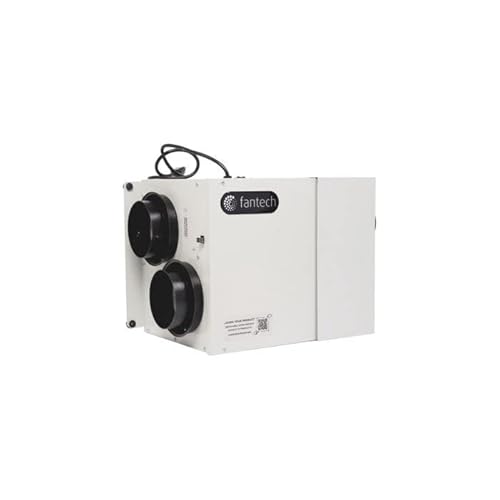
- Up to 82 CFM airflow
- Washable MERV 8 filter
- Flexible installation positioning
Best For: One- to two-bedroom homes with limited installation space
Balanced Mid-Size Option
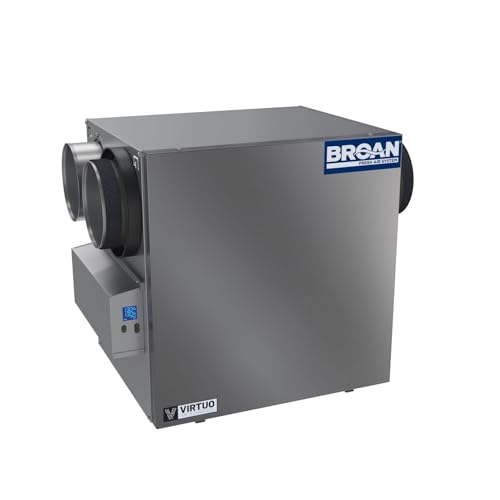
- 100 CFM residential ventilation
- MERV 8 filters
- Wall or ceiling mounting with LCD control
Best For: Homes needing moderate airflow and flexible installation
Cold-Climate Compact Pick

- 70 CFM balanced ventilation
- Recirculation defrost for cold climates
- Energy Star qualified design
Best For: Compact homes needing year-round ventilation in colder regions
Best Smart Compact Pick
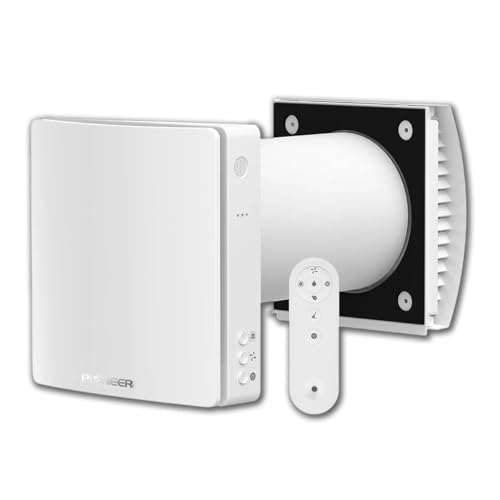
- 97% heat recovery with 6–8W input power
- F7 (MERV 13) filter and CO2 monitoring
- Wi-Fi, remote, and quiet wall-mounted operation
Best For: Efficient single-room ventilation with smart controls
Best Simple Wi-Fi Option
6-Inch Ceramic Heat Recovery Ventilator
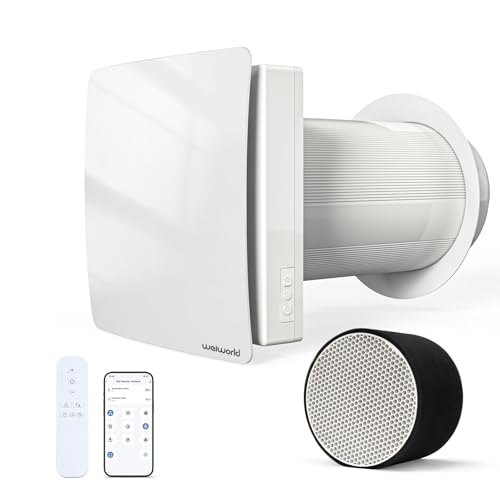
- Up to 90% heat recovery
- Tuya app, remote, and three airflow modes
- Quiet 8.5W EC motor below 30 dB
Best For: Flexible single-room ventilation in utility and living spaces
Best Smoke-Focused Filtration
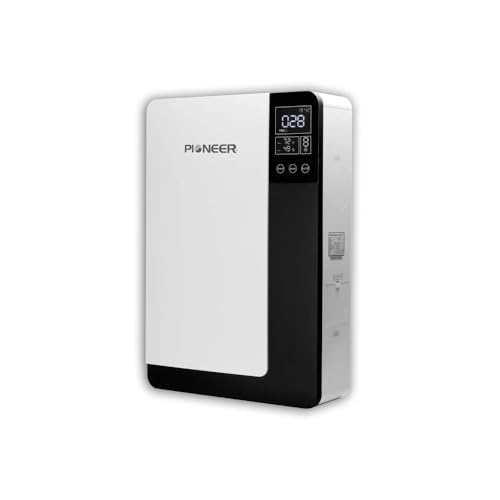
- HEPA H10 and activated charcoal target smoke and odors
- PM2.5 and CO2 sensors automate ventilation
- Designed for rooms up to 500 square feet
Best For: Smoke, odor, and particulate filtration in larger rooms
Cold-Climate Air Exchange

- Up to 162 CFM with low-speed power use as low as 19 watts
- Electronic anti-frost protection for freezing conditions
- Washable MERV 6 filters and standard 5-inch duct connections
Best For: Whole-house ventilation in colder climates
Smart Airflow Control
- 150 CFM capacity for residential ventilation
- Wall- or ceiling-mounted installation options
- VIRTUO™ Air Technology with remote control
Best For: Flexible residential installations with remote operation
Large-Home Comfort Ventilation

- 120 CFM capacity for homes up to 6,000 square feet
- Recovers heat and moisture to support indoor comfort
- Wall, ceiling, or floor mounting options
Best For: Large homes needing balanced whole-house ventilation
High-Capacity Choice – Broan B230H75RT AI Series HRV
For larger homes or more demanding ventilation needs, the Broan B230H75RT is a 230 CFM option to consider among heat recovery ventilators for smoke. Its VIRTUO technology, MERV 8/HEPA filter options, airflow verification, and self-adjustment features support a more controlled indoor-air-quality setup.
Best For: Larger residential spaces needing higher airflow and adjustable ventilation controls.
Pros:
- 230 CFM capacity provides substantially higher airflow than compact models.
- Offers MERV 8 and HEPA filter options.
- Includes airflow verification, balancing, and self-adjustment technology.
- Universal top- and side-port platform with a built-in LCD screen.
Cons:
- Its 55-pound, 21-by-24.8-by-20.8-inch cabinet may require substantial installation space.
- Wall-mounted or suspended installation may be more involved than compact alternatives.
- The supplied specifications do not identify a dedicated smoke-filtration rating.
This is the strongest fit of the group when airflow capacity and configuration flexibility matter most. Treat it as a ventilation component rather than a standalone smoke purifier, and confirm filter and installation requirements for your home.
Compact HVAC-Compatible Pick – Fantech AEV80 Air Exchanger
The Fantech AEV80 is a compact air exchanger for smaller homes, offering airflow up to 82 CFM at 0.2 inches of static pressure. For shoppers comparing heat recovery ventilators for smoke, its washable MERV 8 synthetic filter and HVAC compatibility provide a practical starting point for ongoing ventilation.
Best For: One- to two-bedroom homes seeking a compact, HVAC-compatible ventilator.
Pros:
- Airflow up to 82 CFM is sized for one- to two-bedroom homes.
- Includes a washable MERV 8 synthetic filter.
- Can be installed in any position.
- External three-position switch offers low, standby, and medium settings.
Cons:
- Lower airflow makes it less suitable for larger homes or heavy ventilation demands.
- It provides an MERV 8 filter rather than a supplied HEPA option.
- The notes do not specify a dedicated smoke-removal performance rating.
Its small footprint and flexible mounting make the AEV80 a straightforward choice where space is limited. The washable filter can simplify upkeep, but buyers should confirm that its airflow and filtration level match their smoke-related concerns.
Balanced Mid-Size Option – Broan B110H65RS AI HRV
The Broan B110H65RS delivers 100 CFM of heat-recovery ventilation in a wall- or ceiling-mounted design. For those evaluating heat recovery ventilators for smoke, its MERV 8 filters, integrated LCD screen, and energy-efficient PMSM ECM fan motors offer useful features for residential air exchange.
Best For: Residential users wanting a moderate-capacity HRV with built-in controls and flexible mounting.
Pros:
- 100 CFM capacity suits moderate residential ventilation needs.
- MERV 8 filters provide a defined filtration specification.
- Wall- or ceiling-mounted design with side ports supports installation flexibility.
- Integrated LCD screen and touch control simplify operation.
Cons:
- Its MERV 8 filtration is less substantial than models supplied with HEPA options.
- At 42 pounds, installation may still require adequate support.
- The supplied information does not provide a dedicated smoke-filtration rating.
This model occupies a useful middle ground between compact and high-capacity units. It is worth considering when you want more airflow than a small exchanger provides without moving to the larger B230H75RT platform.
Cold-Climate Compact Pick – Fantech VHR 70R ES HRV
The Fantech VHR 70R ES is a compact, Energy Star qualified HRV designed to continuously bring in fresh air while exhausting an equal amount of contaminated air. Its recirculation defrost system and 70 CFM airflow make it a practical option for shoppers considering heat recovery ventilators for smoke, especially where year-round operation in cold climates matters.
Best For: Compact homes in cold climates needing continuous balanced ventilation.
Pros:
- Recirculation defrost supports use in cold climates.
- Transfers heat from outgoing air to temper incoming air during winter.
- Pre-cools incoming air during summer when paired with air conditioning.
- Three speeds and remote control provide operating flexibility.
Cons:
- 70 CFM airflow is lower than the other listed Broan models.
- The supplied notes do not state a MERV or HEPA filter rating.
- Its listed mounting and installation details may require careful planning for the intended location.
The VHR 70R ES stands out for its compact, all-season heat-recovery design and cold-weather defrost feature. Because the supplied specifications do not identify a filter rating, verify the filtration arrangement separately if smoke particle reduction is your primary goal.
Best Smart Compact Pick – Pioneer 50 Single-Room ERV
For shoppers comparing heat recovery ventilators for smoke, the Pioneer 50 is a compact, wall-mounted option with an F7 (MERV 13) filter designed to capture dust and other airborne impurities. Its 97% heat recovery, app control, and built-in CO2 sensor add useful comfort and ventilation features for a single room.
Best For: Single rooms where quiet operation, app control, and higher-grade particulate filtration are priorities.
Pros:
- F7 (MERV 13) filtration helps remove dust and other contaminants.
- Up to 97% heat recovery with low 6–8W input power.
- Wi-Fi app, remote, and onboard controls, plus a built-in CO2 sensor.
- Quiet operation rated up to 32.7 dB(A), with airflow up to 35.3 CFM.
Cons:
- Single-room design may require two units for balanced whole-home use.
- Its listed filtration focuses on dust and VOC-related impurities rather than specifically naming smoke capture.
The Pioneer 50 stands out when efficiency and smart monitoring matter as much as ventilation. It is a strong fit for targeted room-by-room air improvement, though buyers seeking explicitly smoke-focused filtration may prefer a model with activated carbon and HEPA media.
Best Simple Wi-Fi Option – 6-Inch Ceramic Heat Recovery Ventilator
This 6-inch ceramic unit is a practical choice among heat recovery ventilators for smoke when you want wall-mounted ventilation with remote and Tuya app control. It recovers up to 90% of exhaust heat and offers fresh-air, exhaust, and recirculation modes, although its supplied notes specify a washable G4 filter rather than a smoke-specific filter.
Best For: Apartments, offices, garages, sheds, and other spaces needing flexible single-room ventilation.
Pros:
- Ceramic heat exchanger recovers up to 90% of heat energy.
- Tuya app and remote control provide convenient operation.
- Three airflow modes support fresh air, exhaust, and recirculation.
- Quiet EC motor operates below 30 dB with an 8.5W rating.
Cons:
- The listed G4 filter is less substantial than HEPA or activated-carbon filtration for smoke.
- Its 60 m³/h airflow capacity is lower than some larger room ventilators.
- Wall installation requires a suitable 150 mm opening and a wall thickness within its 250–500 mm adjustment range.
This model emphasizes flexible installation, low energy use, and straightforward controls. It can help exchange stale indoor air, but shoppers dealing with smoke should verify that its G4 filtration meets their needs before choosing it over a unit with dedicated smoke and odor filtration.
Best Smoke-Focused Filtration – Pioneer ECOasis 150 ERV
For shoppers specifically seeking heat recovery ventilators for smoke, the Pioneer ECOasis 150 is the most directly targeted option in this roundup. Its four-stage system combines HEPA H10 and activated charcoal filtration with PM2.5 monitoring, and the unit is designed to filter smoke, odors, dust, and other listed contaminants in rooms up to 500 square feet.
Best For: Living spaces where smoke, odors, PM2.5 particles, and automated air-quality monitoring are key concerns.
Pros:
- HEPA H10 and activated charcoal filtration are specified for smoke and odors.
- Built-in PM2.5 and CO2 sensors can adjust the 8-speed fan automatically.
- 82% efficient heat exchanger tempers incoming outdoor air.
- App, touch-screen, and remote controls with humidity, temperature, and scheduling features.
Cons:
- At 35W, it uses more power than the smaller Pioneer 50.
- The 22-pound, 26-inch-wide body is larger and heavier than the compact alternatives.
- Noise is listed as high as 37.9 dB(A), so it may be more noticeable at maximum settings.
The ECOasis 150 is the strongest match for smoke-related air concerns because its supplied specifications explicitly mention smoke and odor capture. Its larger footprint and higher power draw are reasonable trade-offs for broader filtration, monitoring, and coverage up to 500 square feet.
Cold-Climate Air Exchange – VENTS-US Frigate ERV 120S
If you need heat recovery ventilators for smoke, the VENTS-US Frigate ERV 120S offers continuous balanced air exchange with washable MERV 6 filters on both the supply and exhaust sides. Its enthalpy core also transfers heat and moisture, while airflow reaches up to 162 CFM.
Best For: Whole-house ventilation in colder climates where freeze protection, flexible mounting, and straightforward three-speed control matter.
Pros:
- Electronic anti-frost protection helps safeguard the core in freezing conditions.
- Up to 162 CFM of airflow with power consumption as low as 19 watts on low speed.
- Includes washable MERV 6 filters and supports standard 5-inch duct connections.
- Ceiling-mountable steel housing includes mounting brackets.
Cons:
- The included MERV 6 filtration may be less suitable when finer particle filtration is a priority.
- Its built-in control offers three basic settings rather than advanced automatic controls.
With solid airflow, low-speed efficiency, and freeze protection, this ERV is a practical option for homes that need steady ventilation through cold weather. For smoke-related concerns, remember that the supplied notes describe basic washable filtration rather than specialized smoke filtration.
Smart Airflow Control – Broan B160H65RS AI 150 CFM
For shoppers comparing heat recovery ventilators for smoke, the Broan B160H65RS AI is a wall- or ceiling-mounted 150 CFM ventilator designed for residential air-quality applications. Its VIRTUO™ Air Technology and remote control add convenience when managing whole-house ventilation.
Best For: Residential installations that need a higher-capacity ventilator with wall or ceiling mounting and remote operation.
Pros:
- Provides up to 150 CFM of ventilation capacity.
- Supports both wall-mounted and ceiling-mounted installation.
- Includes VIRTUO™ Air Technology and remote-control operation.
- Comes from Broan, a provider of home ventilation and air-quality solutions.
Cons:
- The supplied notes do not specify filter type, smoke-specific filtration performance, or heat-recovery effectiveness.
- At 42 pounds, installation may require careful planning and support.
- The listed power draw is 163 watts.
This Broan model is worth considering when mounting flexibility and remote control are more important than detailed filtration specifications. Because the supplied information does not identify smoke-focused filter performance, verify its filtration setup before choosing it specifically for smoke reduction.
Large-Home Comfort Ventilation – Aprilaire V22BEC 120 CFM ERV
The Aprilaire V22BEC is a 120 CFM ERV for homes up to 6,000 square feet, making it a useful option when evaluating heat recovery ventilators for smoke alongside broader whole-house air-quality needs. Its energy recovery core tempers incoming air using heat and moisture from exhaust air.
Best For: Large homes needing balanced ventilation, flexible mounting, and simple push-button airflow controls.
Pros:
- Designed for homes up to 6,000 square feet with 120 CFM airflow.
- Recovers heat and moisture to help reduce HVAC load and maintain comfort.
- Offers wall, ceiling, or floor mounting with a templated bracket.
- ETL, HVI, and UL specifications are listed, and one-person installation features are included.
Cons:
- The supplied notes do not specify a dedicated smoke filter or filtration grade.
- Listed noise is 53 dB, which may be noticeable in some locations.
- At 50 pounds, mounting and placement require adequate support.
The V22BEC stands out for broad mounting flexibility and whole-home capacity, while its recovery core is intended to preserve indoor comfort across different climates. If smoke removal is the primary goal, confirm the filtration details and consider whether additional air cleaning is needed.
How We Picked the Best Heat Recovery Ventilators for Smoke
We focused on the features that matter most when outdoor air quality is poor: controllable airflow, filter design, heat-exchange performance, installation type, and compatibility with existing HVAC systems. We also considered whether each unit is intended for whole-home ventilation or one-room use, since coverage and ductwork requirements vary significantly.
Product listings can differ by installation kit, filter configuration, and regional specifications. Confirm the current manual, replacement-filter availability, electrical requirements, and local code requirements before buying. During wildfire smoke or other hazardous-air events, use the manufacturer’s guidance and reduce or pause outdoor-air ventilation if appropriate.
Quick Comparison
| Best For | Models To Consider | What To Look For |
|---|---|---|
| Large or whole-home systems | Broan B230H75RT, Aprilaire V22BEC, VENTS-US Frigate ERV 120s | Higher airflow, duct connections, balanced ventilation, and accessible filters |
| Medium-size homes | Broan B160H65RS, Fantech AEV80, Fantech VHR 70R ES | Moderate capacity, HVAC compatibility, and straightforward controls |
| Smaller homes or targeted ventilation | Broan B110H65RS | Compact installation, adjustable operation, and wall or ceiling mounting |
| Single-room applications | Pioneer 50, Pioneer ECOasis 150, 6-inch ceramic-exchanger unit | Room size, wall penetration, noise, controls, and filter access |
Key Buying Factors for Heat Recovery Ventilators for Smoke
Filtration and Smoke Control
Heat recovery does not automatically remove fine smoke particles. Check the supplied filter rating, whether a higher-efficiency filter is supported, and how often filters must be replaced. A dedicated HEPA purifier may still be necessary for fine-particle reduction.
Airflow and Coverage
Choose capacity based on the home’s size, occupancy, air-change needs, and duct design—not simply the highest CFM rating. Oversizing can increase noise and energy use, while undersizing may leave bedrooms or living areas poorly ventilated.
Installation and Controls
Ducted units generally provide more even coverage but require suitable connections, condensate management, balancing, and professional installation. Single-room models are simpler but cannot ventilate an entire home. Timers, boost modes, humidity sensors, LCD controls, and Wi-Fi access can make it easier to adjust operation as conditions change.
Climate and Maintenance
Look for freeze protection if you live in a cold climate, and verify whether the unit is an HRV or ERV. ERVs transfer some moisture as well as heat, which may benefit certain climates and homes. Plan for regular filter cleaning or replacement and periodic inspection of the core, fans, ducts, and outdoor intake.
Who Should Buy Which Heat Recovery Ventilators for Smoke?
Choose a higher-capacity ducted model such as the Broan B230H75RT, Aprilaire V22BEC, or VENTS-US Frigate ERV 120s when you need whole-home ventilation and have suitable ductwork. The Broan B160H65RS, Fantech AEV80, or Fantech VHR 70R ES fit buyers seeking moderate capacity with HVAC integration.
For a smaller home or a focused installation, the Broan B110H65RS is easier to match to limited airflow needs. Renters, additions, bedrooms, and spaces without ductwork may be better served by the Pioneer 50, Pioneer ECOasis 150, or a compact ceramic-exchanger unit. Whichever model you choose, pair ventilation decisions with indoor-air monitoring and a properly sized portable purifier when smoke pollution is the primary concern.